Italienischer Pinienhain am Meer (Ölstudie) — History & Analysis
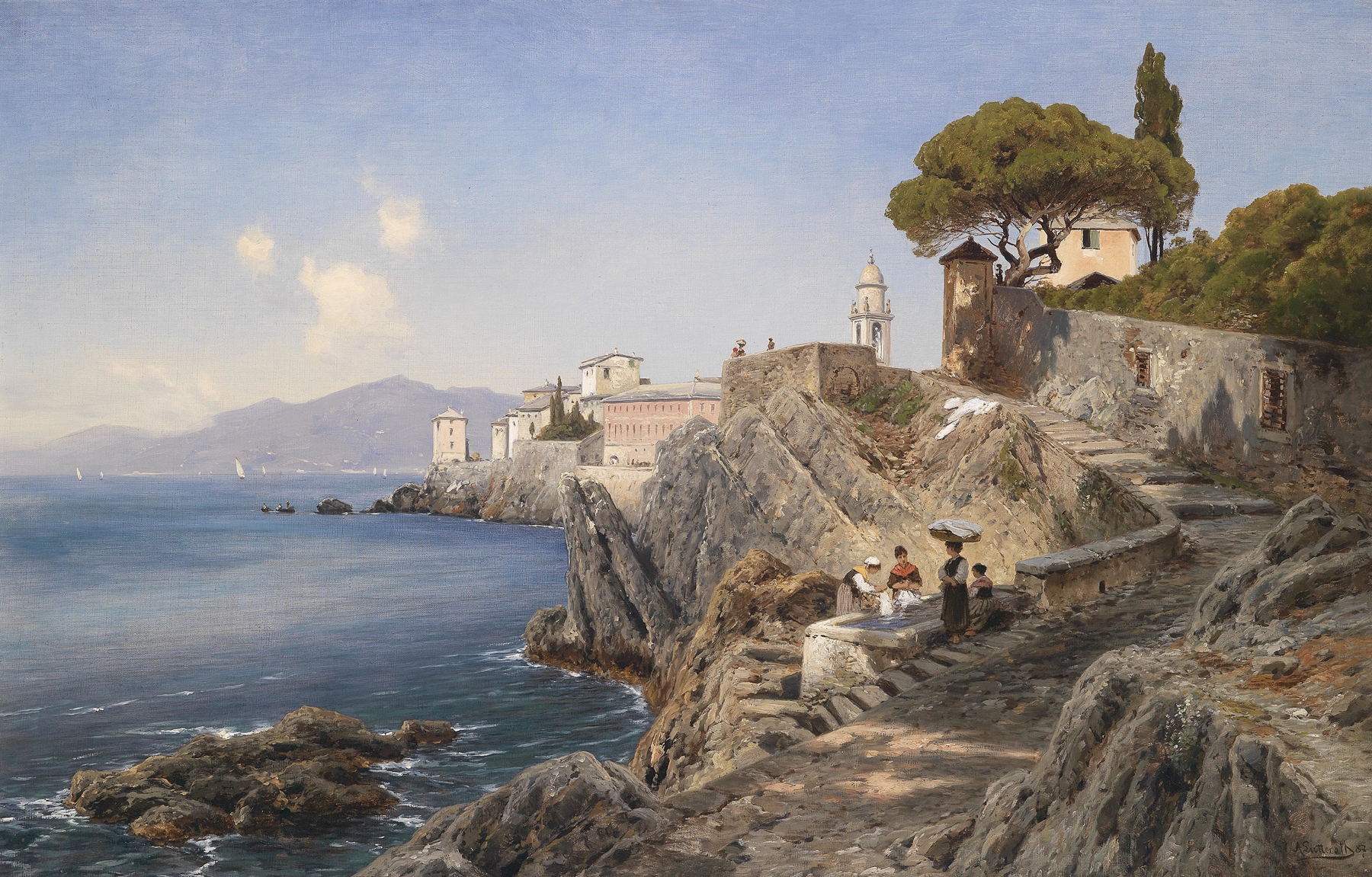
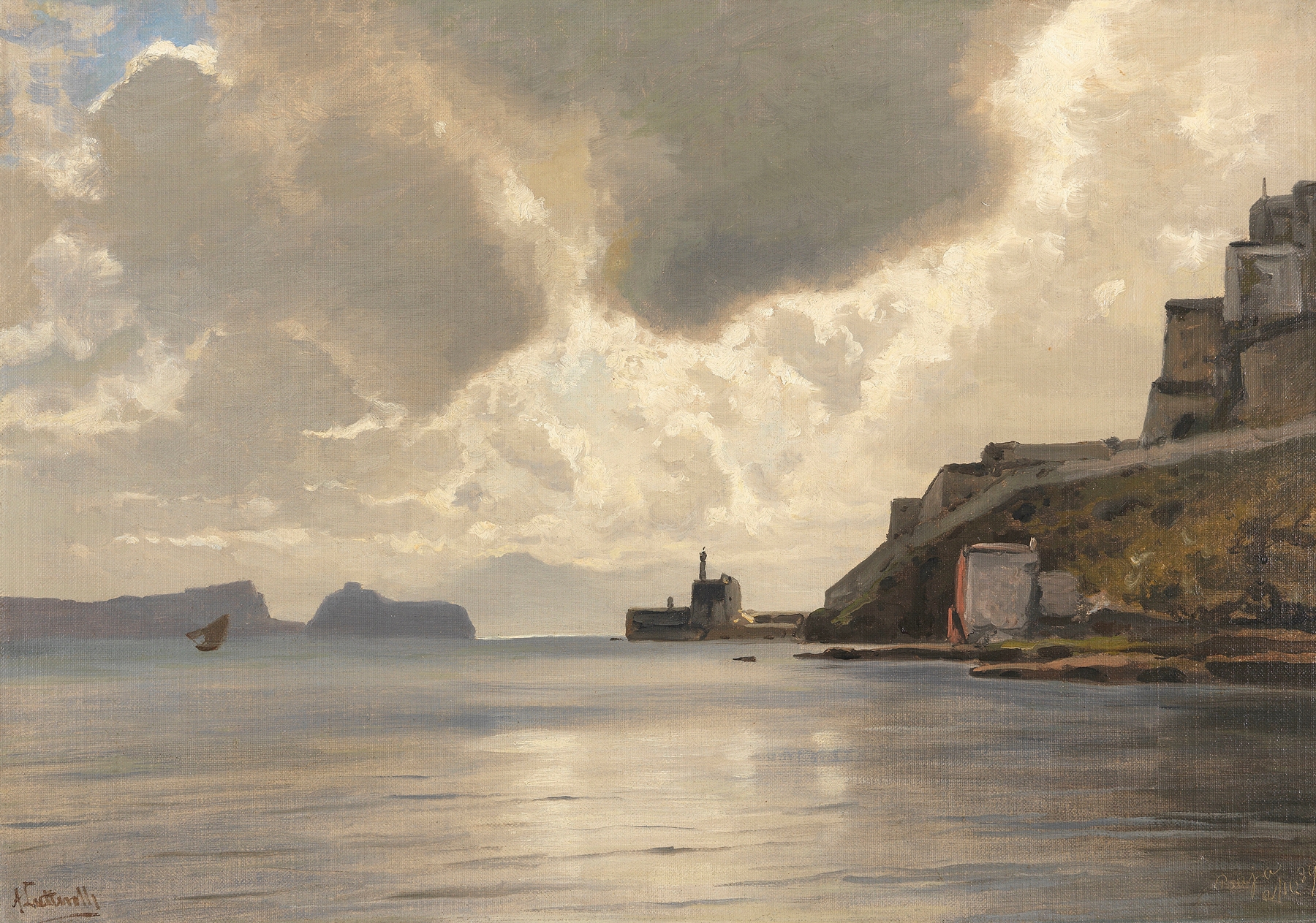
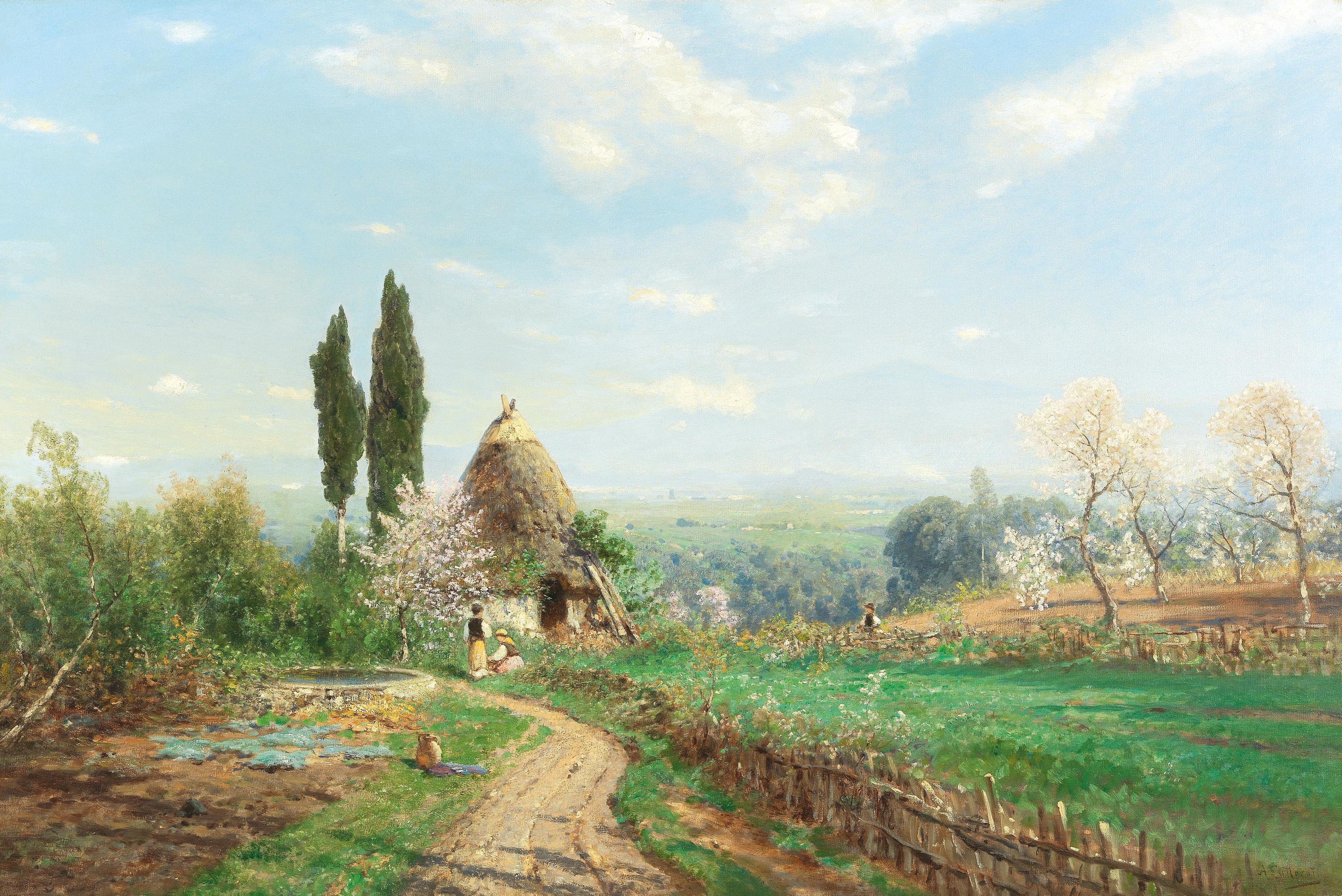
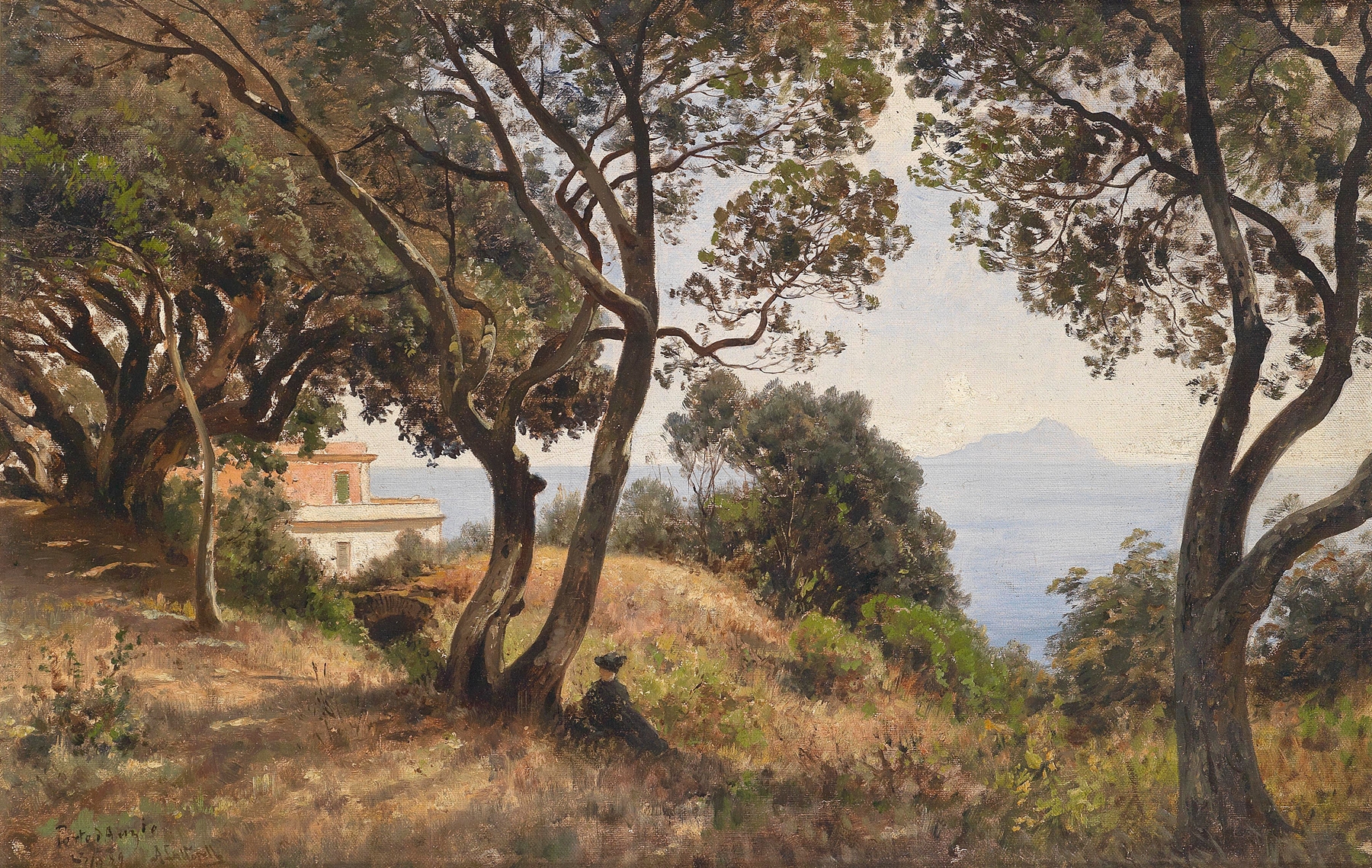
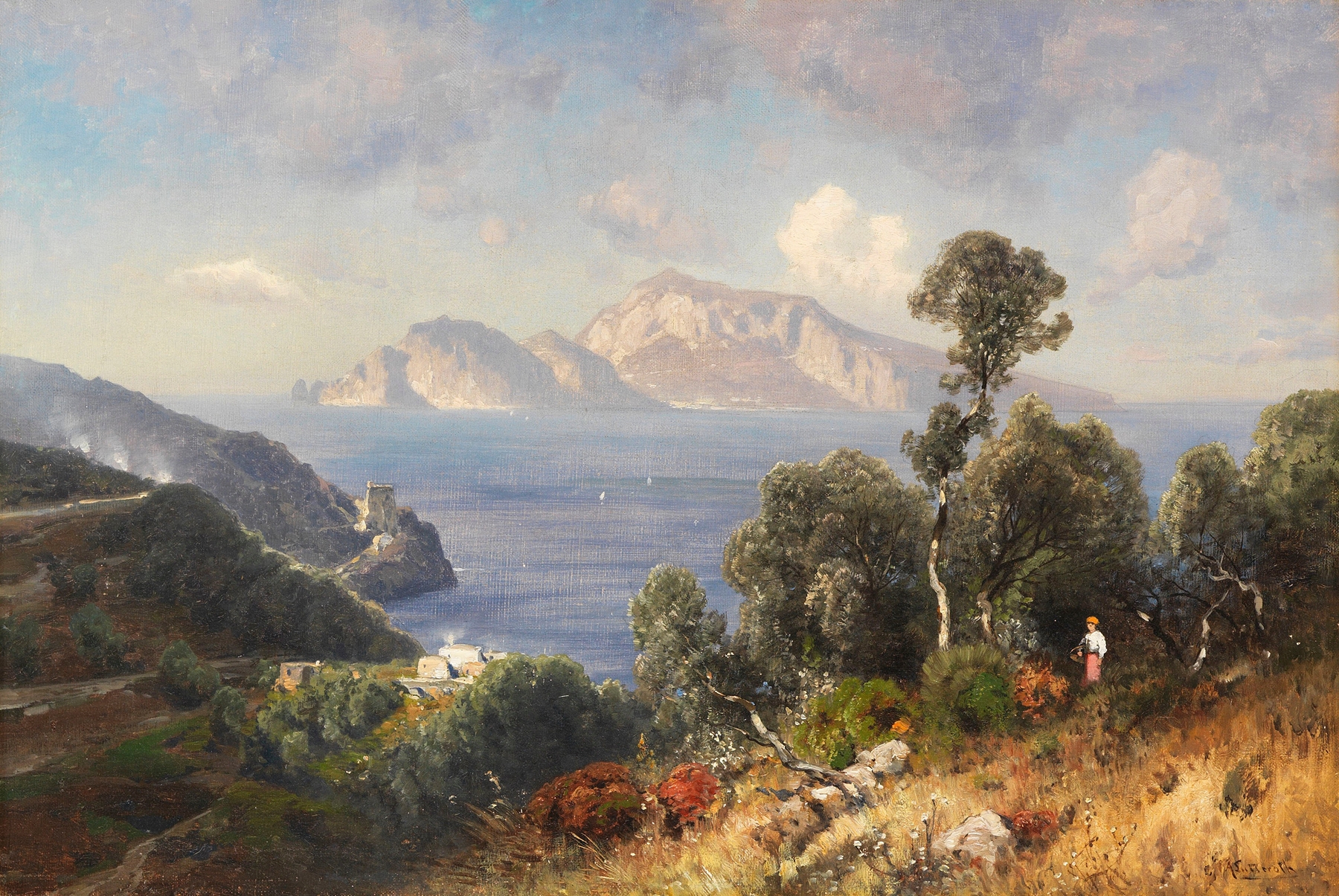
What secret hides in the quiet of the canvas? In Italienischer Pinienhain am Meer, color whispers tales of serenity and longing, beckoning the viewer to explore its depths. Look to the vibrant greens that dominate the left side, where the towering pines stand guard against a shimmering expanse of blue. The artist’s fluid brushstrokes create a sense of movement, suggesting a gentle breeze that stirs the leaves and ripples the water below.
Notice how the light dances across the surface, illuminating the scene with a tranquil luminosity that feels almost tangible, inviting you to step closer into this Mediterranean embrace. Yet, beneath the surface, a tension brews between the stillness of the trees and the restless sea. The contrast of the sturdy pines against the fluid water hints at the duality of nature—strength and fragility intertwined. The golden hues of sunlight filter through the branches, evoking warmth but also a fleeting moment, as if reminding us that such beauty is transient and must be cherished.
Each layer of paint reveals not merely the landscape, but also the emotional resonance of a moment suspended in time. Ascan Lutteroth painted Italienischer Pinienhain am Meer in 1868 during a period marked by the rise of plein air painting, which encouraged artists to capture natural landscapes directly from life. Working in Italy, he immersed himself in the lush scenery, reflecting both personal exploration and the broader artistic movements of his time, characterized by an increased focus on nature and light. This piece stands as a testament to his ability to meld observation with emotion, encapsulating the essence of a tranquil yet vibrant world.