La rue du Caire, à l’Exposition de 1889 — History & Analysis
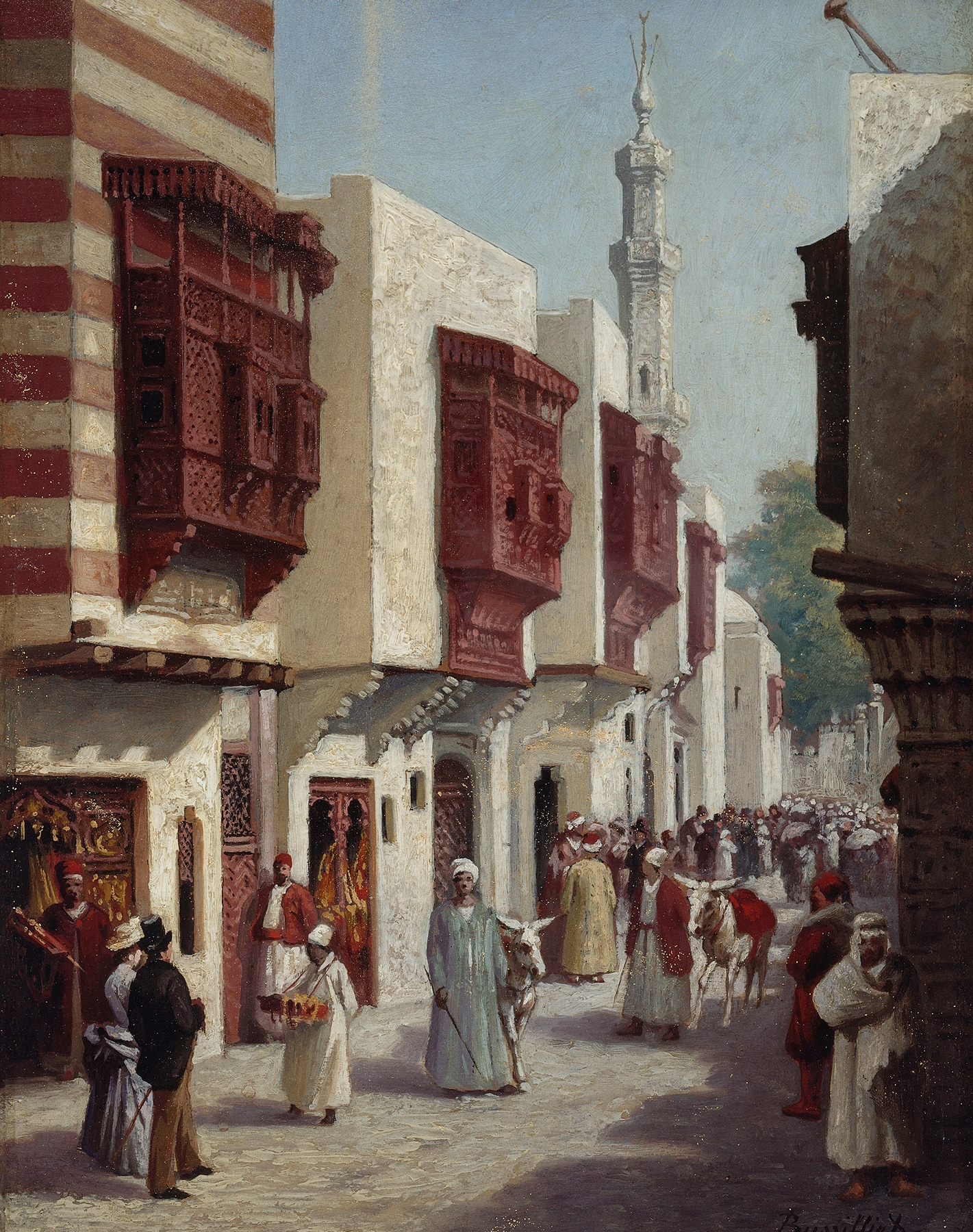
Could a single brushstroke hold eternity? In La rue du Caire, à l’Exposition de 1889, movement is not just represented; it dances before the viewer, weaving through the fabric of the scene and the era, inviting us to step into a vibrant moment of history. Look to the left at the bustling figures, their bodies captured in dynamic poses that convey both urgency and joy. The artist’s use of warm, inviting colors creates a sense of liveliness, with strokes blurring the edges of movement, as if the people could leap from the canvas.
Notice the sunlit buildings in the background, their warm terracotta hues contrasting with the cool shadows cast by the throng, establishing a rhythm that resonates throughout the composition. In this lively portrayal, the interplay of light and shadow serves not just as a backdrop, but as a commentary on the fleeting nature of time. The interaction between the crowd and the sturdy architecture reflects the coexistence of tradition and modernity, as if the past is being embraced by the future. Each fleeting gesture holds a deeper significance, an echo of the hopes and dreams of those gathered amid the buzz of the 1889 Exposition.
Created during a pivotal time in France, the work emerged as C. Bussilliet found himself amidst a cultural revolution, where art and technology intertwined in unprecedented ways. Painted in the heart of Paris, this piece encapsulated an era of progress and optimism, reflecting a world on the brink of modernity, forever reshaping how life itself would be viewed and depicted.