Landscape—Scene from ‘Thanatopsis’ — History & Analysis
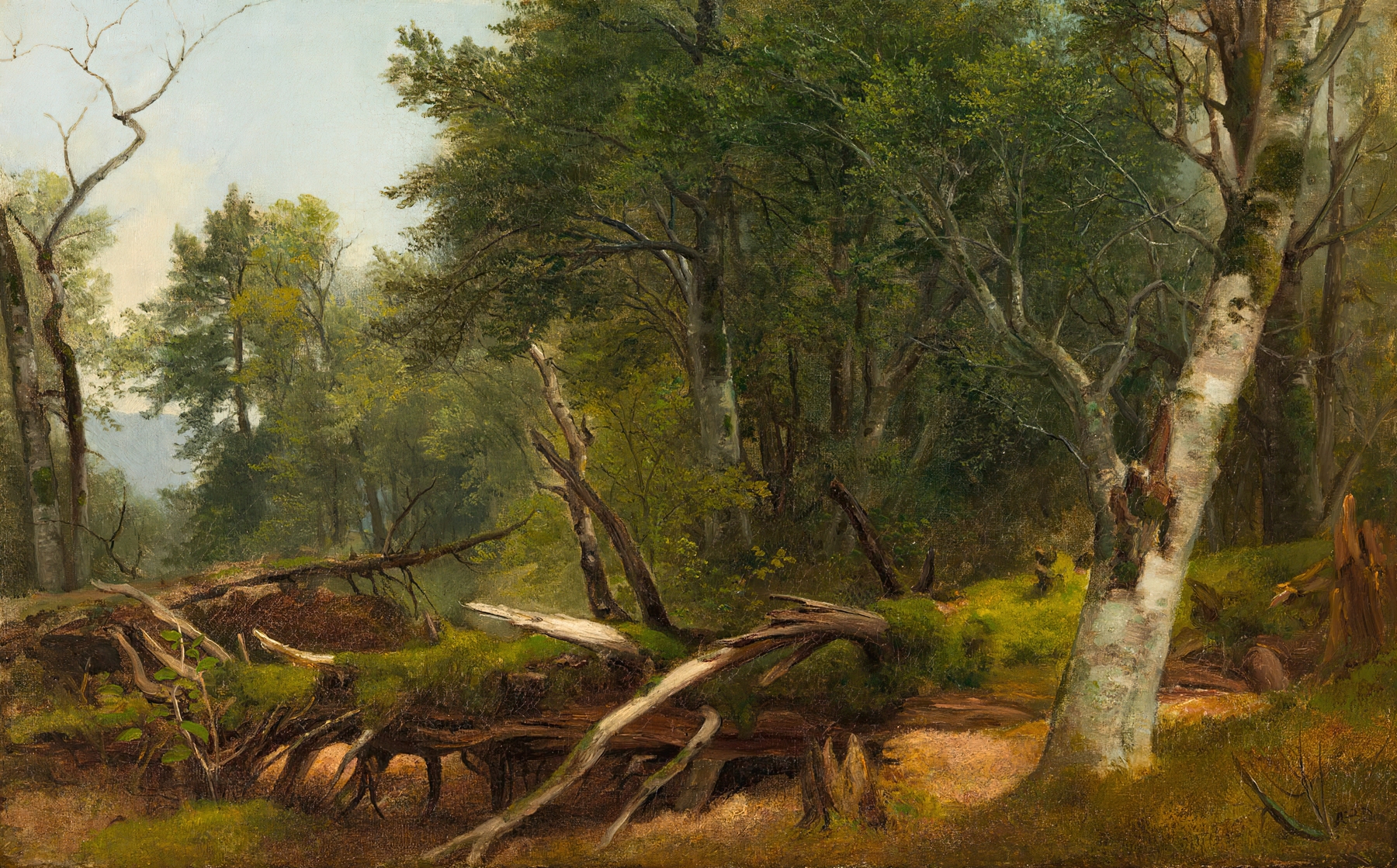
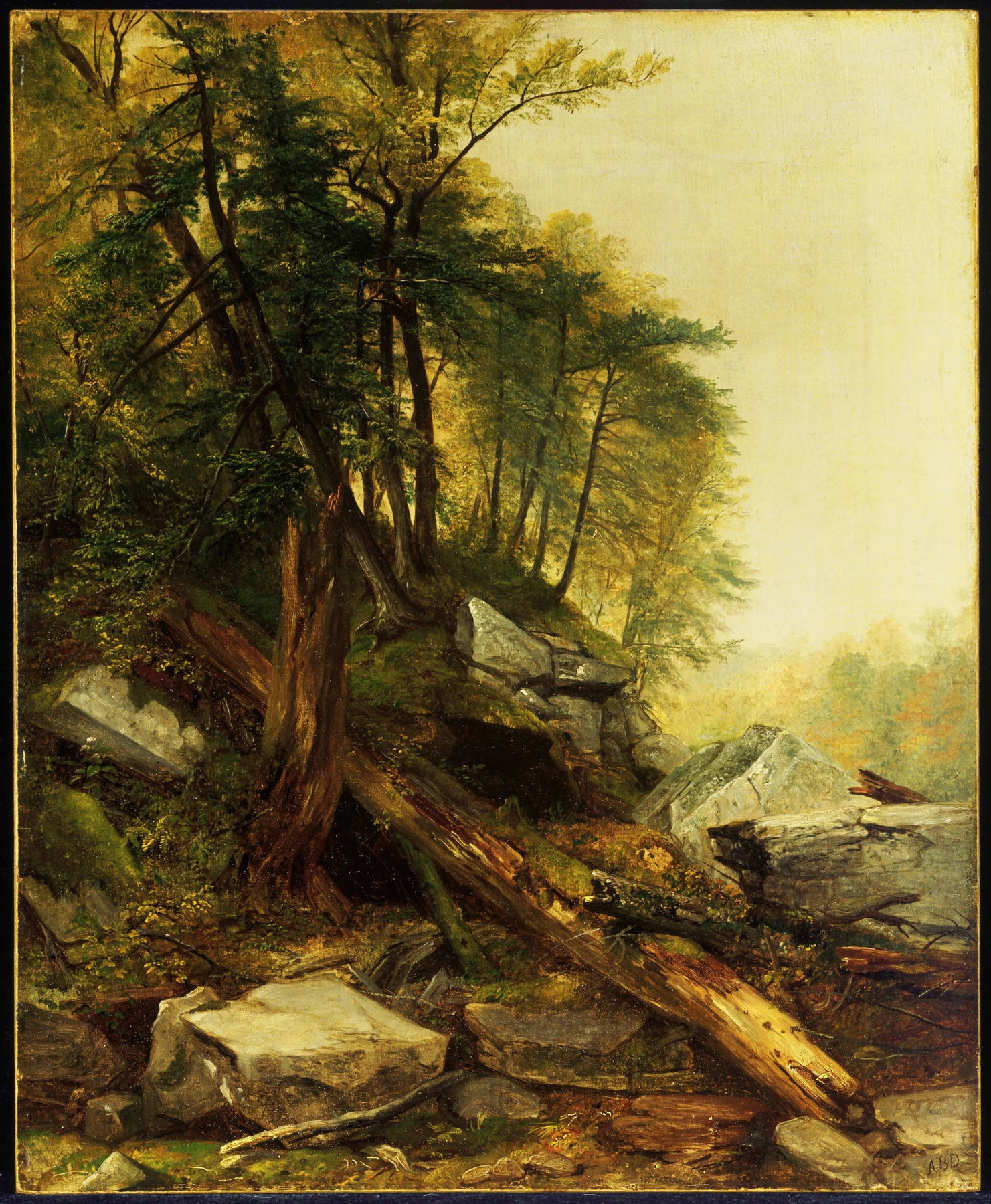
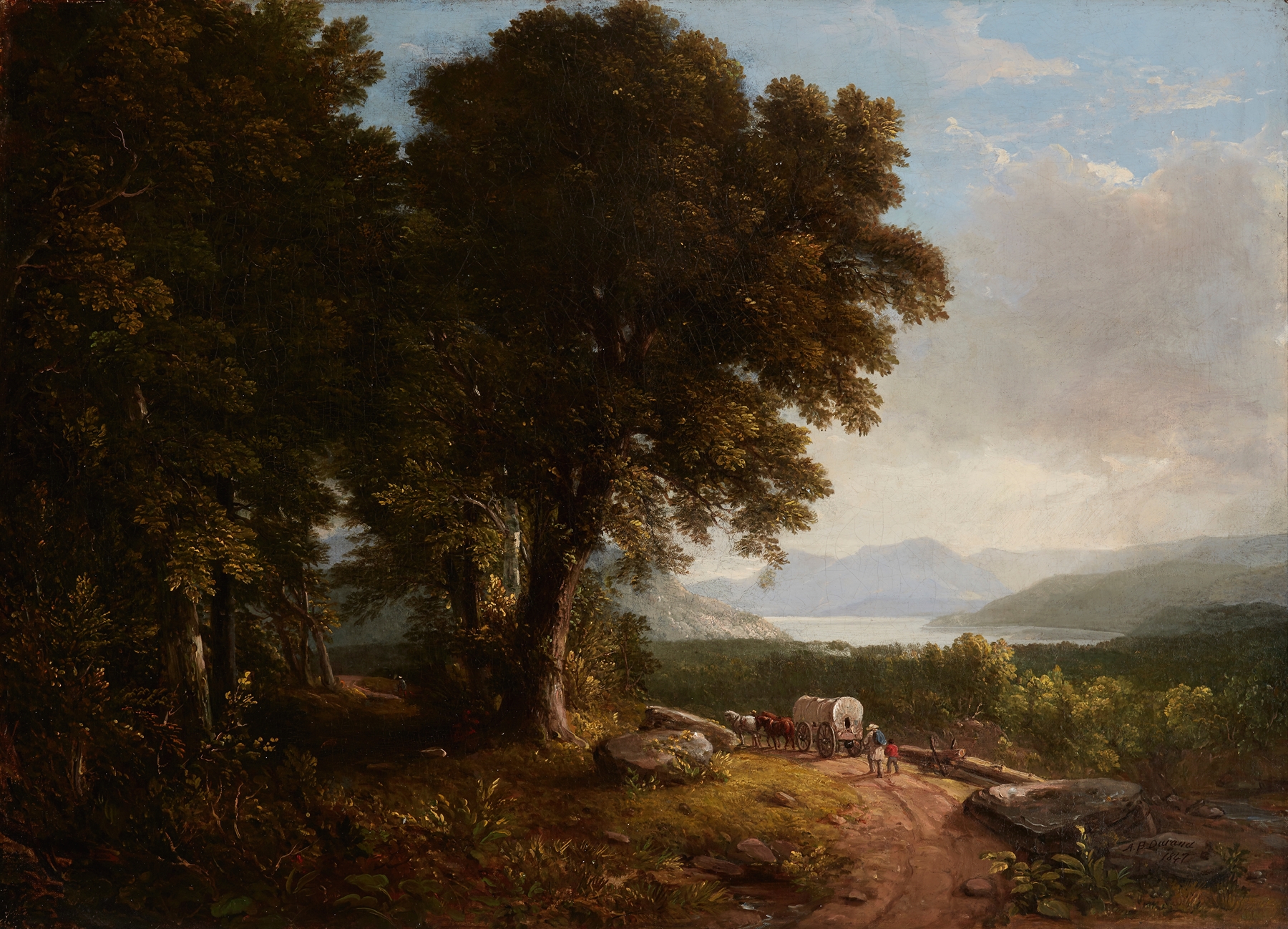
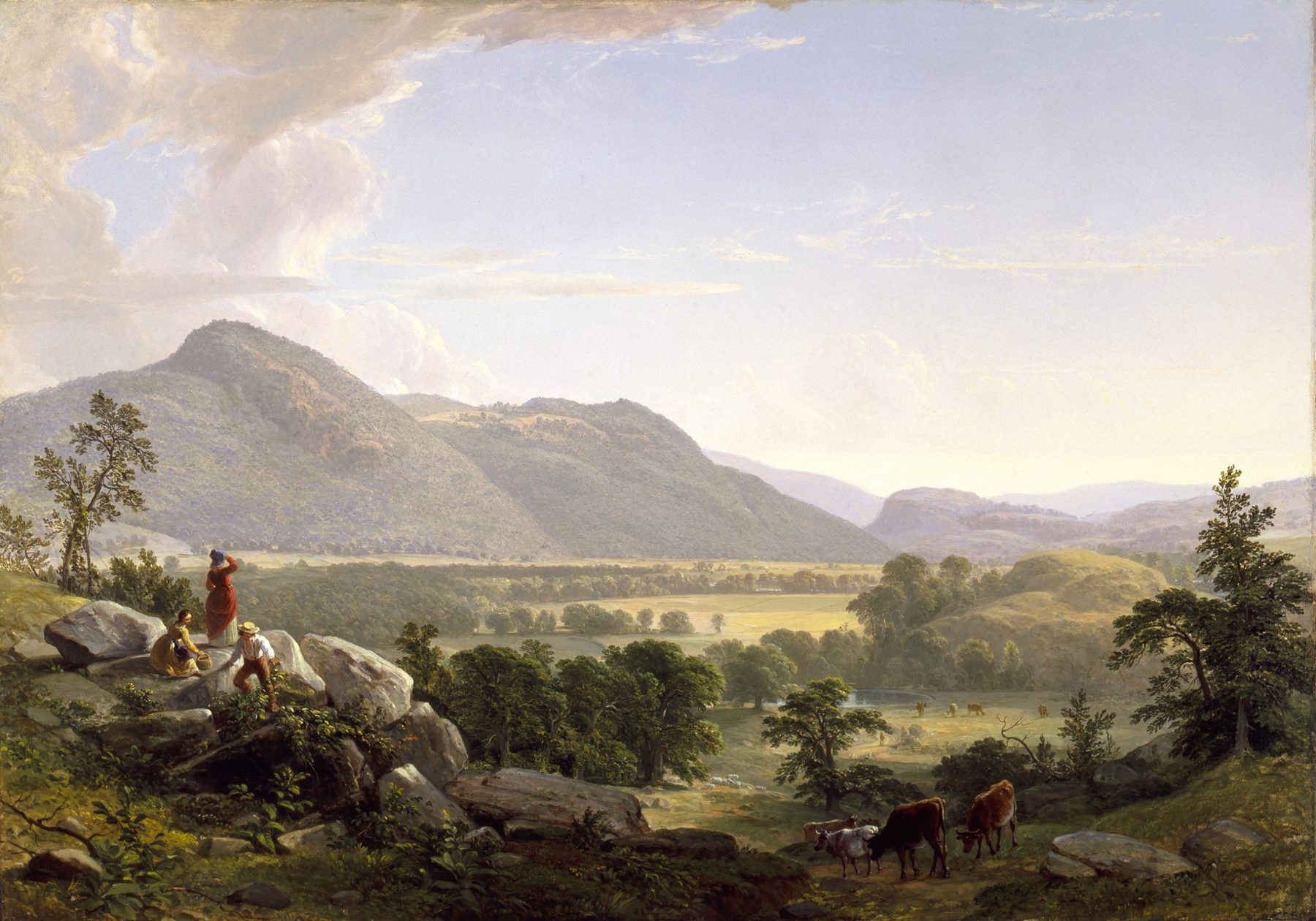
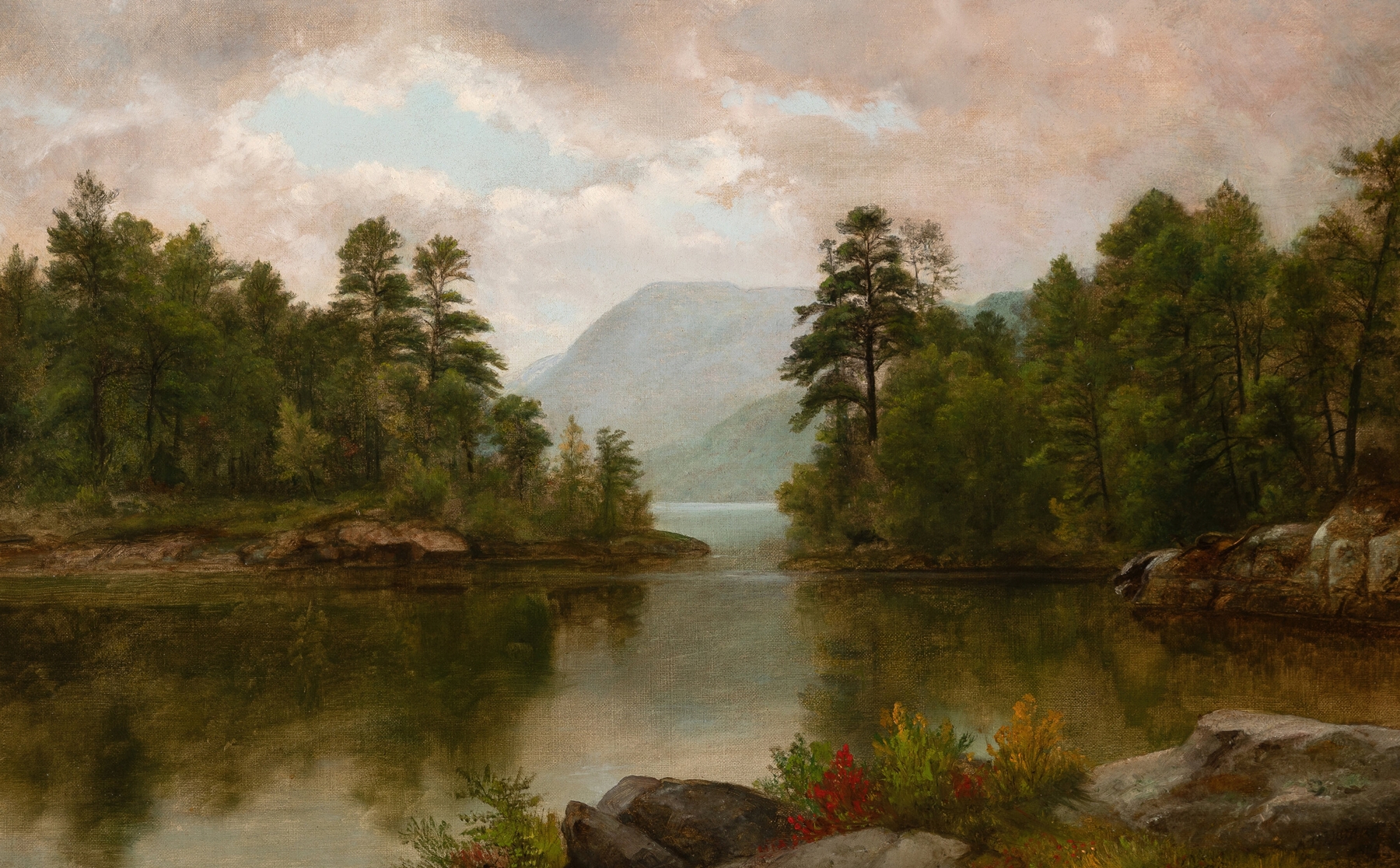
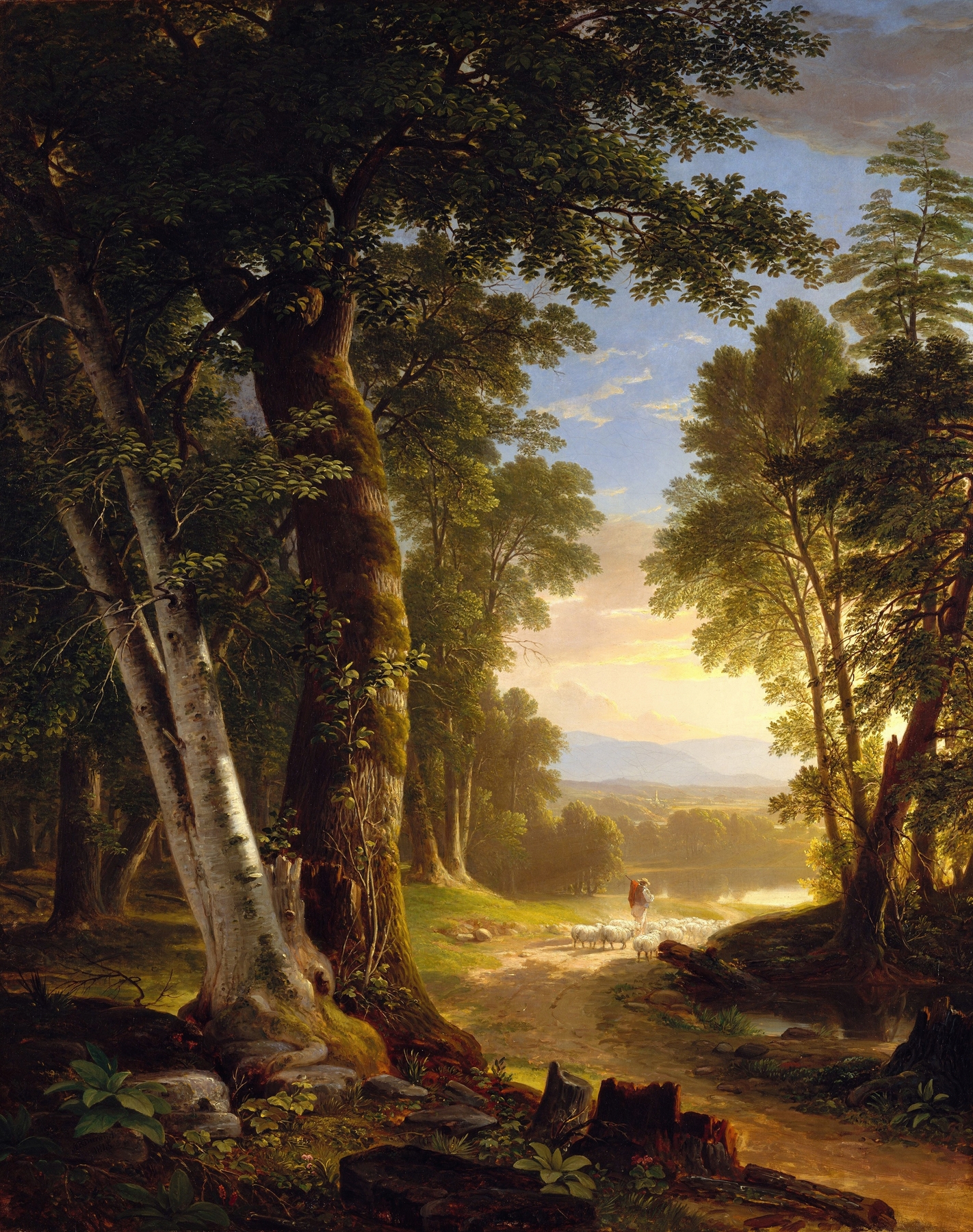
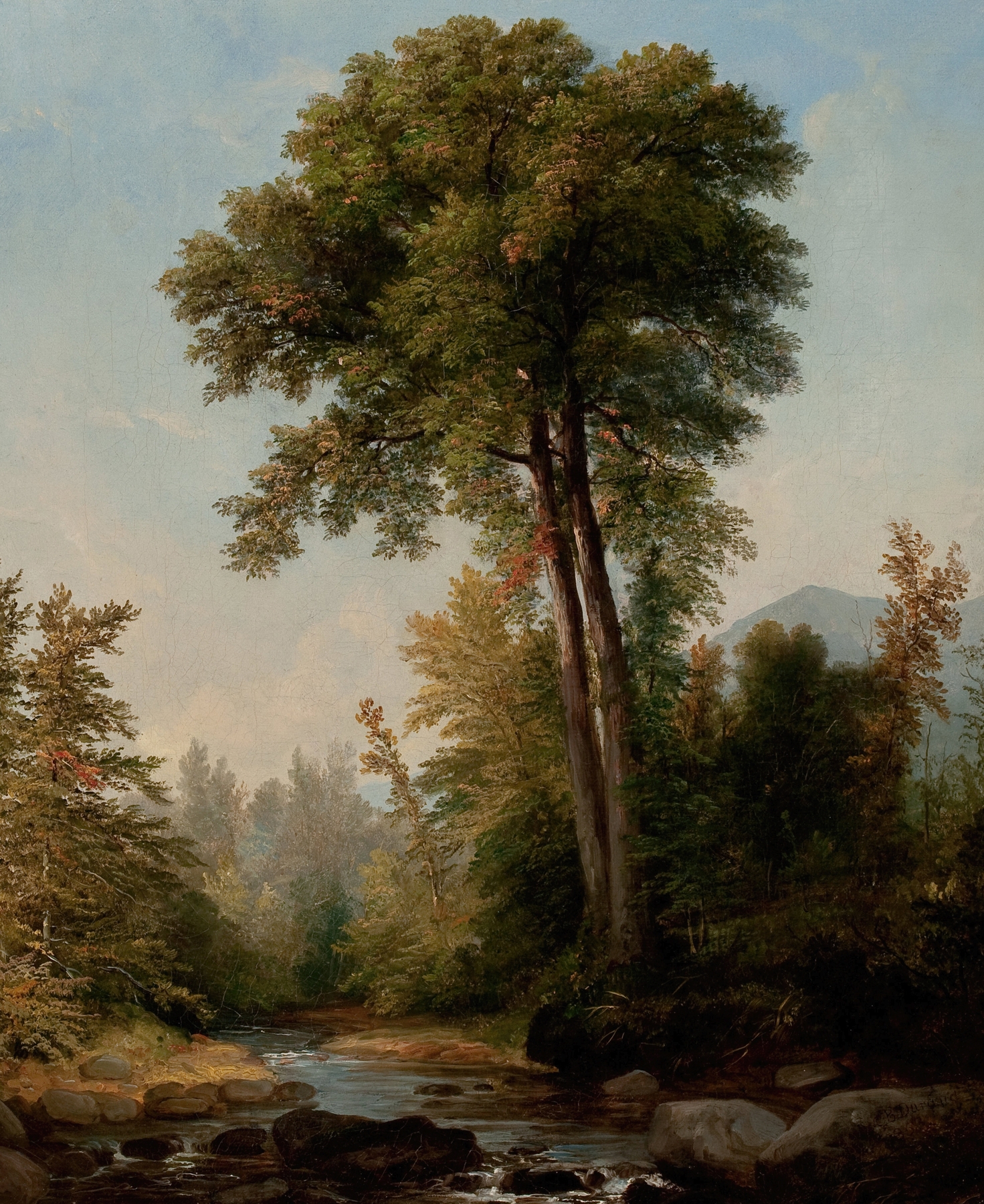
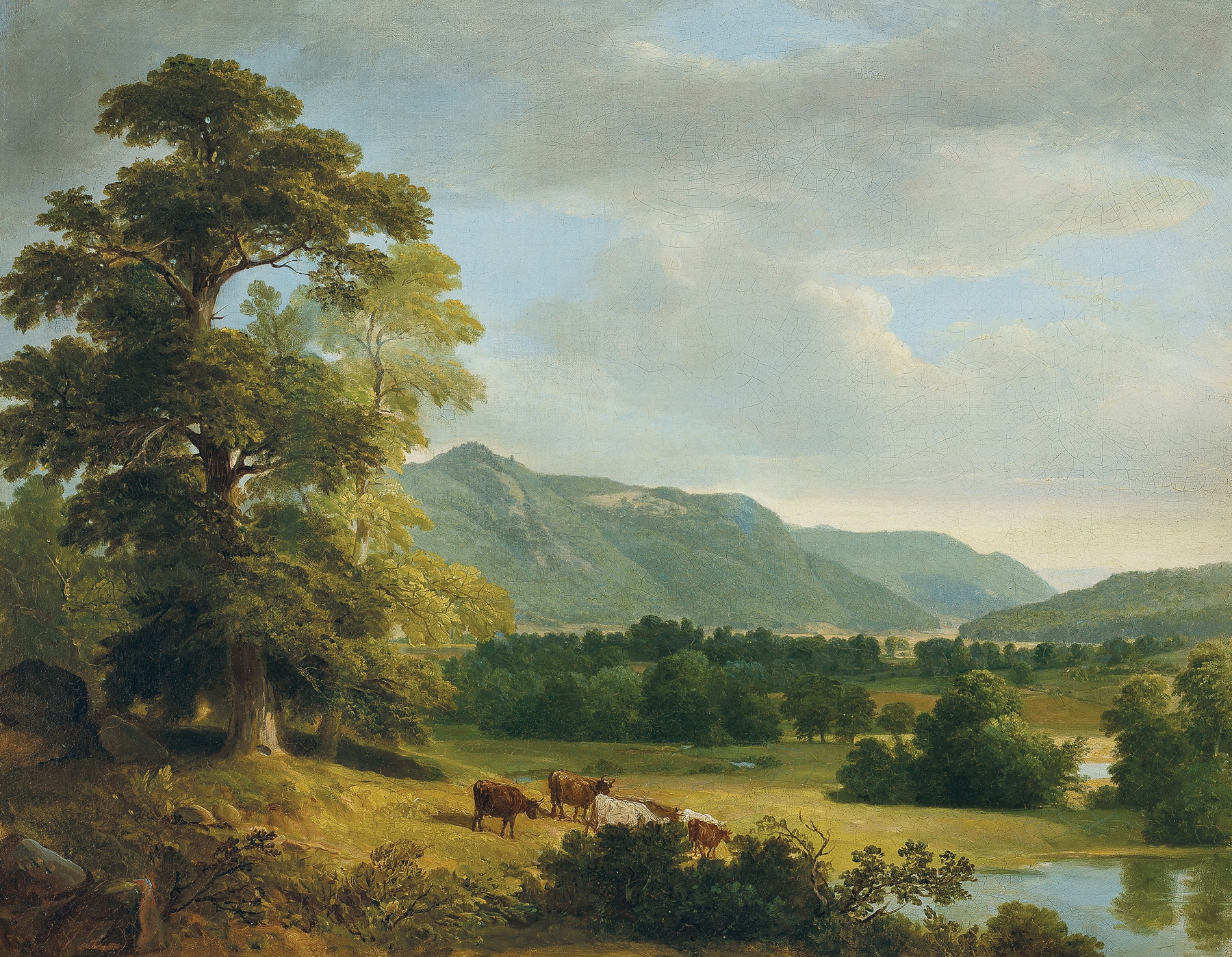
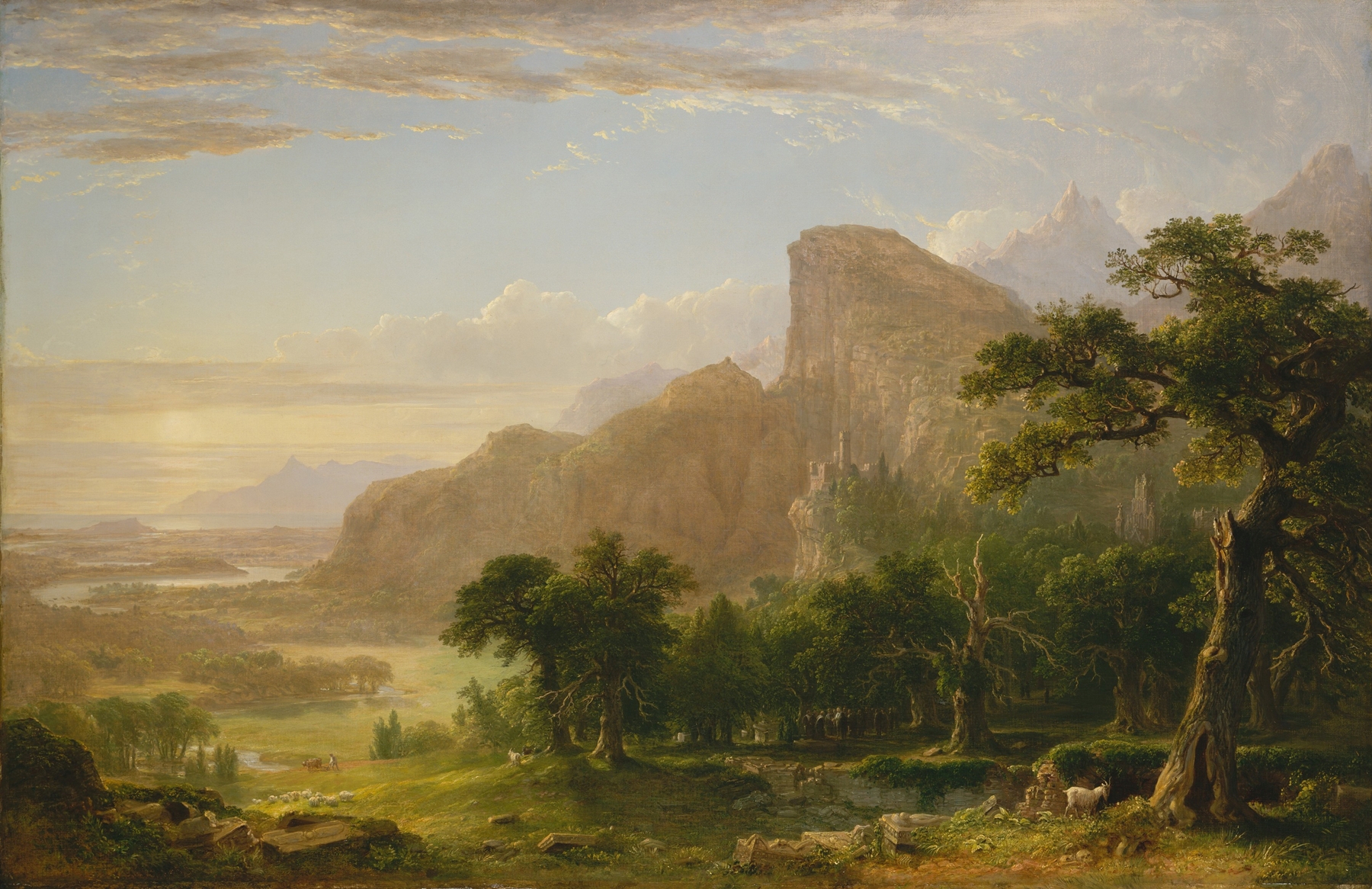
“To paint is to remember what time wants us to forget.” In a world swept away by the relentless march of progress, the act of capturing a moment in nature becomes an act of defiance, a way to honor the fleeting beauty of existence. Look to the center of the canvas, where a tranquil river winds through a lush valley, flanked by majestic trees that rise like guardians of the landscape. Notice how the dappled sunlight filters through the leaves, creating a dance of warm golds and cool greens that invites you deeper into the scene. The meticulous brushwork reveals a harmony of textures, from the smooth flow of the water to the rugged bark of the trees, all harmonizing to celebrate nature’s splendor.
Yet, beneath this serene beauty lies a tension between life and decay, as the title suggests. The river flows gently, a symbol of time’s passage, while the dark shadows in the background evoke a sense of foreboding, hinting at the inevitable cycle of life and death. Every leaf and ripple holds a quiet revelation, an invitation to reflect on our own impermanence amid nature’s enduring presence.
Asher Brown Durand painted this work in 1850, during a period of burgeoning appreciation for American landscapes. He was a key figure in the Hudson River School, a movement that sought to elevate the natural world through art. At this time, America was grappling with rapid industrialization, as artists like Durand sought solace and inspiration in the untouched beauty of their surroundings, preserving moments that would soon vanish from memory.