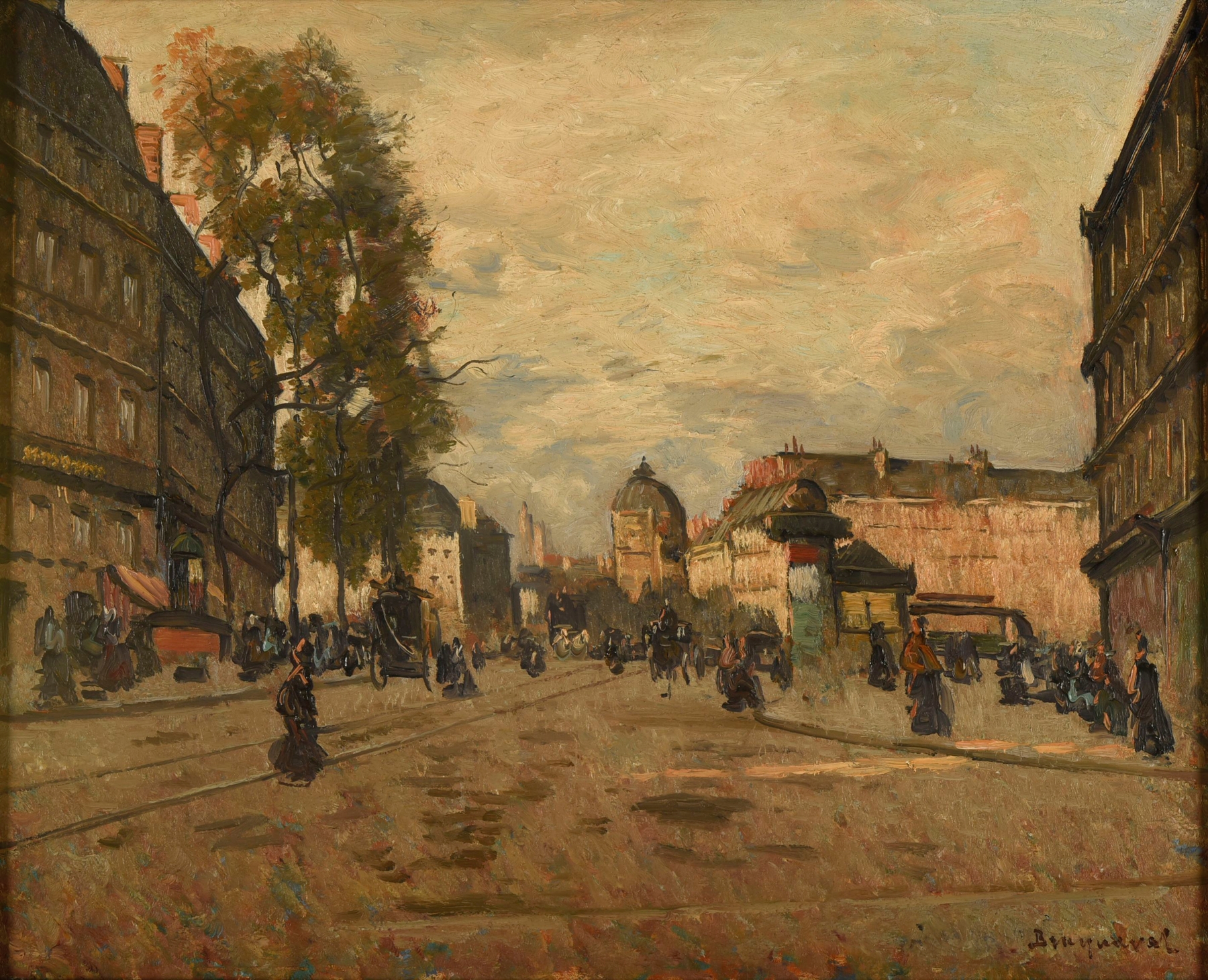
Le boulevard de Rochechouart et la rue de Clignancourt (travaux du métropolitain) — History & Analysis
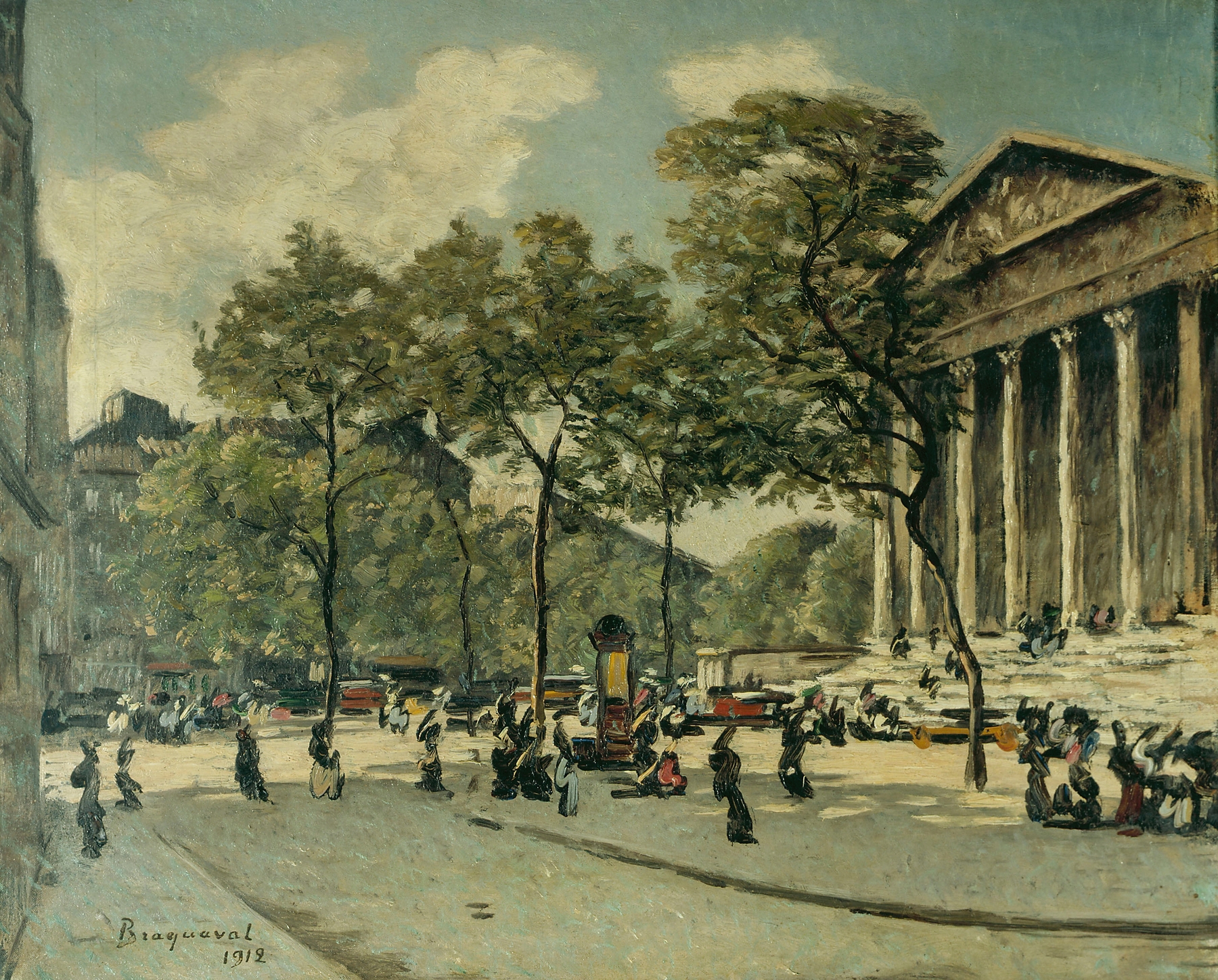
“Every silence here is a confession.” In a world where the rush of life often drowns out the divine, stillness becomes an unexpected sanctuary, inviting reflection amidst the chaos. Look to the foreground, where the cobblestones glisten under the diffused light of early morning. The subtle hues of ochre and gray meld with the soft shadows, leading your gaze to the melancholy figures who occupy the space. Their solemn postures and downturned eyes suggest a shared weight, revealing the burden of progress as the bustling cityscape looms in the background, a testament to change.
The careful interplay of light and line captures both the vibrancy of urban life and the quiet struggles that lie beneath its surface. The painting juxtaposes the ephemeral nature of human endeavor against the enduring beauty of the divine. Each figure, engulfed in their thoughts, embodies a moment suspended in time—caught between aspiration and resignation. The swirling clouds overhead hint at an unseen force, perhaps a reminder of the heavens watching over the earthly toil.
Here, the bustling metropolis is not merely a backdrop; it becomes a character that embodies both opportunity and loss, provoking contemplation of what is sacrificed in pursuit of progress. Louis Braquaval painted this scene in 1900 during a period of rapid urbanization in Paris, reflecting the city’s transformation as it embraced modernity. Working amidst the artistic fervor of the time, he captured a moment that resonates with the themes of transition and the human experience, encapsulating the complex relationship between progress and the divine within the everyday.