L’Embarquement pour Cythere — History & Analysis
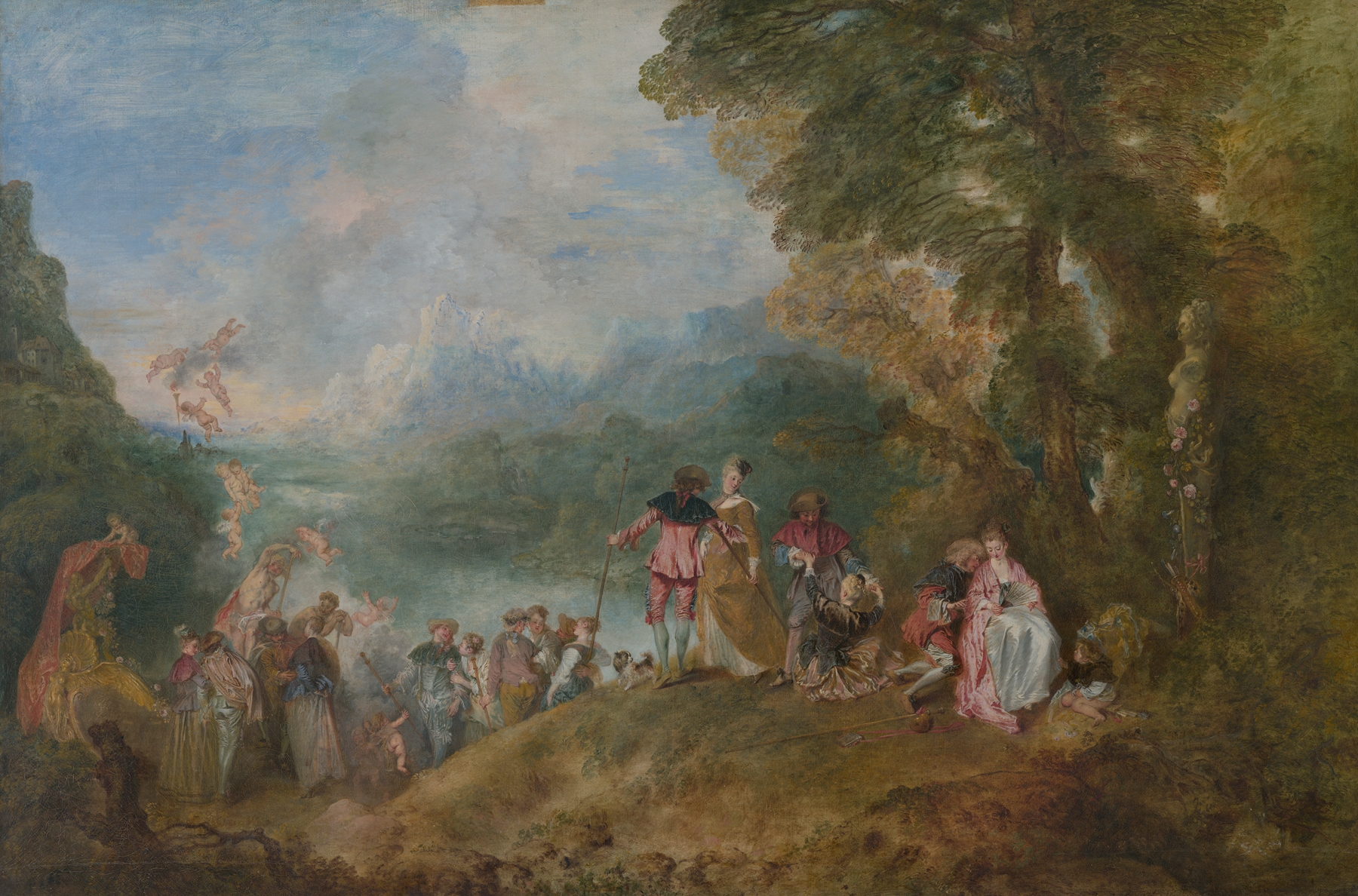
What secret hides in the quiet of the canvas? Beneath the soft allure of L’Embarquement pour Cythere, a deeper contemplation of love and mortality awaits discovery. Look to the left where the delicate figures, draped in pastel garments, are captured in a moment of hesitation, poised to embark on a journey to the mythical island of Cythere. The soft light illuminates their faces with a gentle glow, highlighting expressions that range from longing to uncertainty.
Notice how the rich, verdant landscape serves as a backdrop, lush with greenery yet tinged with an air of melancholy, suggesting that whatever paradise lies ahead, the weight of reality lingers just behind. The painting is steeped in contrasts: the promise of love against the inevitability of separation, the joyous celebration of life shadowed by the notion of loss. The couples appear blissfully enamored, yet their gestures tell of an unspoken fear—a fleeting moment that could transcend into eternity or dissolve into memory. The careful placement of the figures and the tranquil waters below evoke a sense of stillness that belies the tumult of the heart, inviting viewers to ponder the transient nature of joy.
In 1717, Watteau painted this masterpiece during a time when the Rococo style was blossoming in France, marking a shift from the grandeur of Baroque art to a focus on intimacy and emotion. Embracing this new aesthetic, he was navigating his own personal struggles with health while simultaneously redefining the narrative of art in a society poised between celebration and reflection. As he captured this ethereal scene, he entwined his vision with the cultural zeitgeist, immortalizing the fleeting moments of human connection.