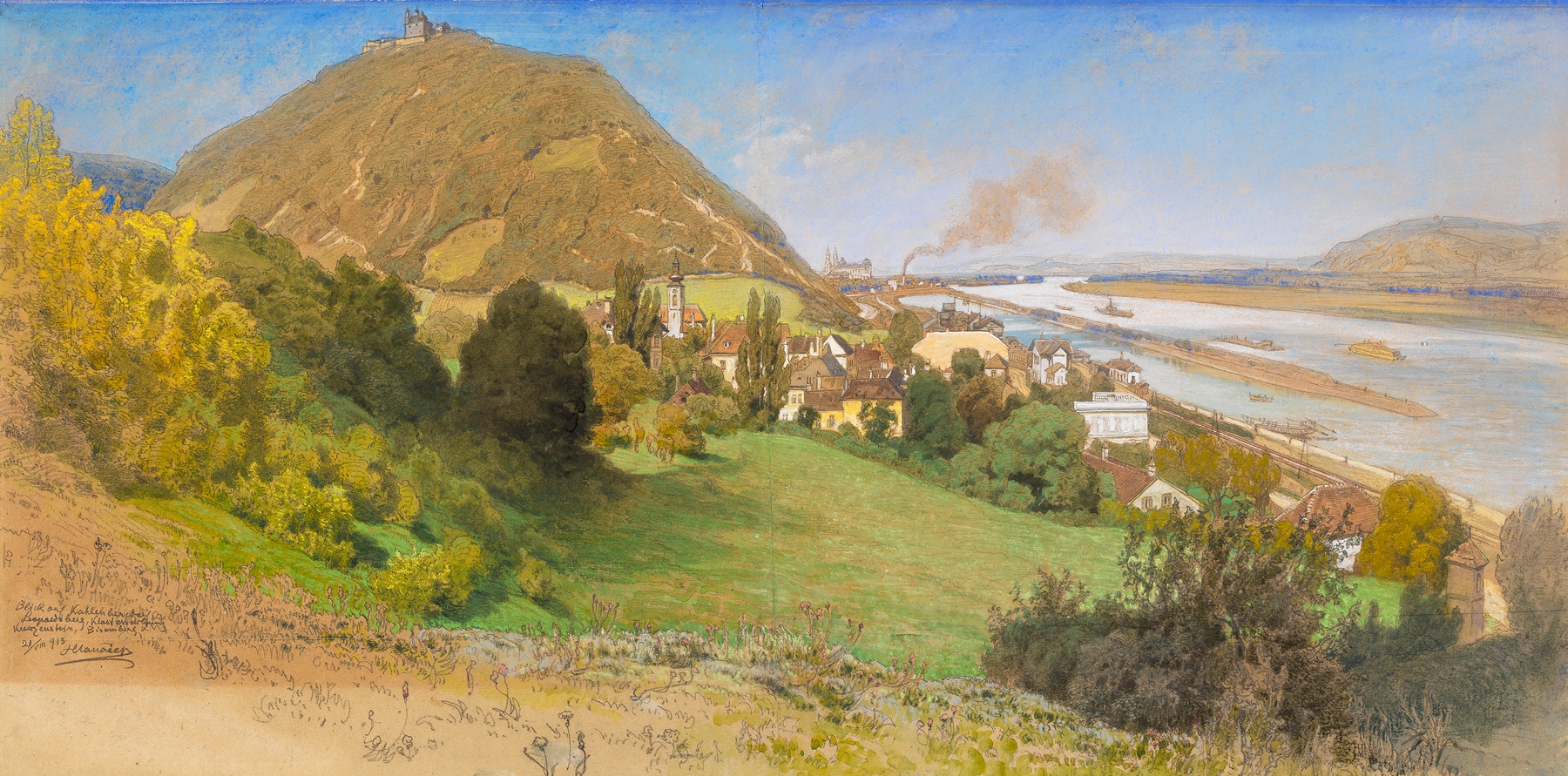
Leopoldsberg und Kahlenbergerdorf (mit Blick auf Klosterneuburg, die Donau Kreuzstein und den Bisamberg) — History & Analysis
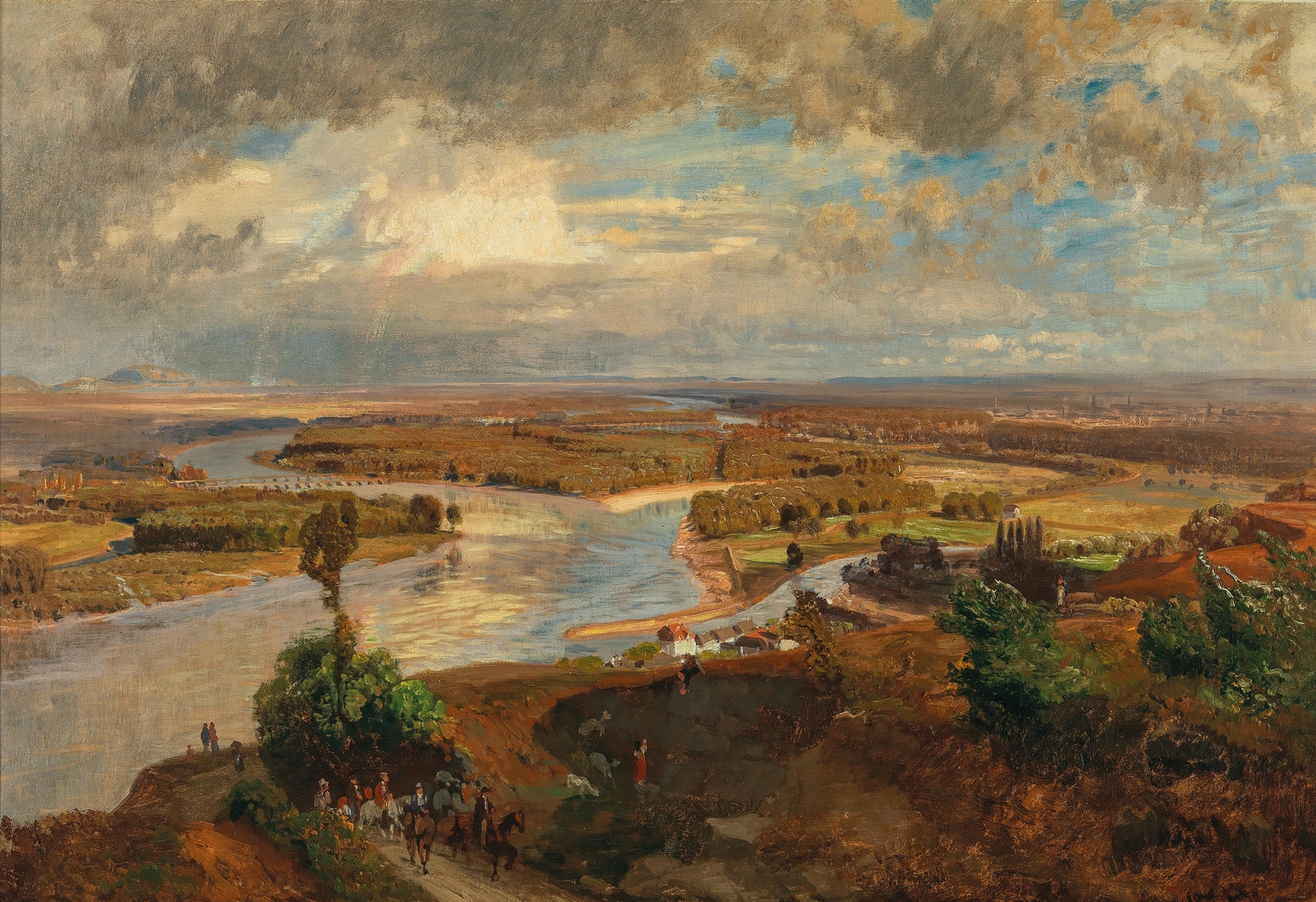
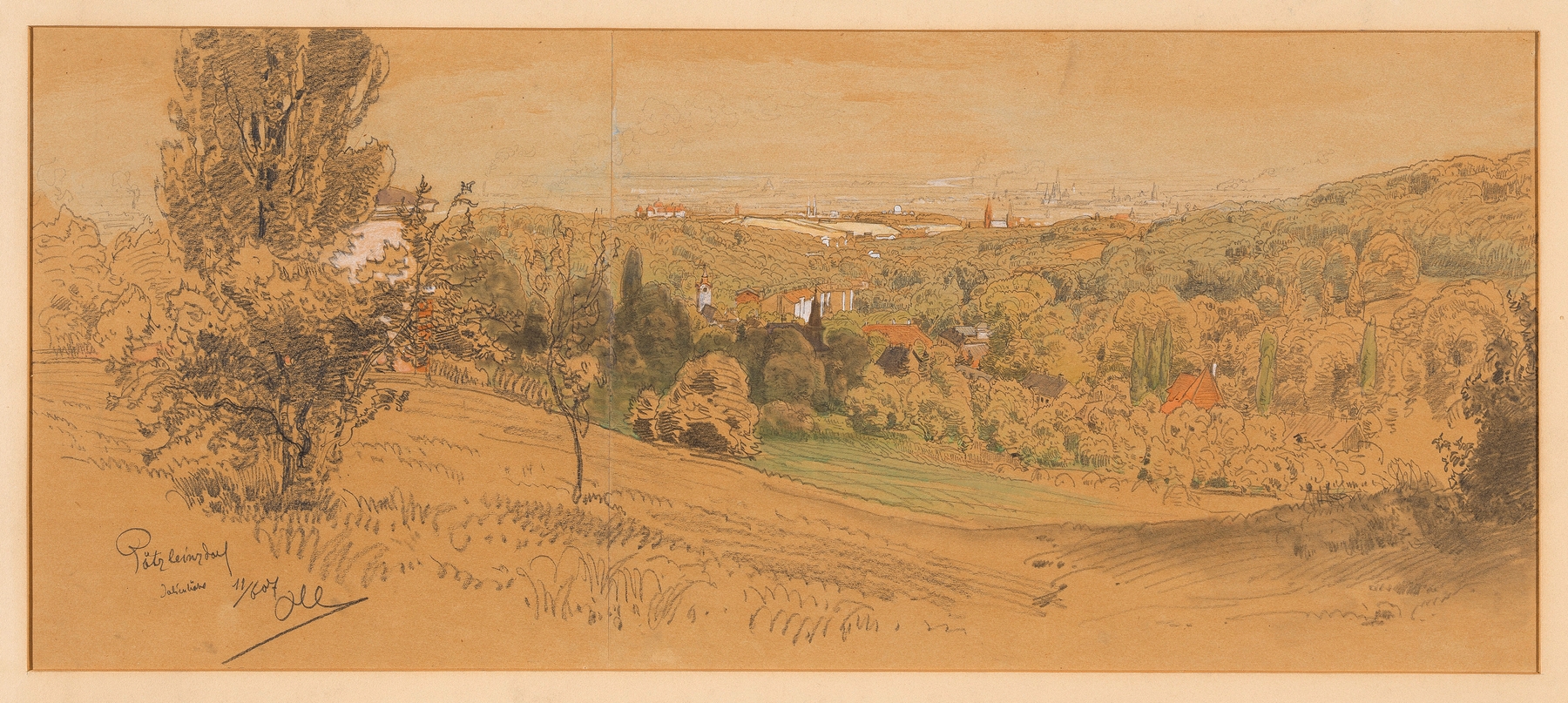
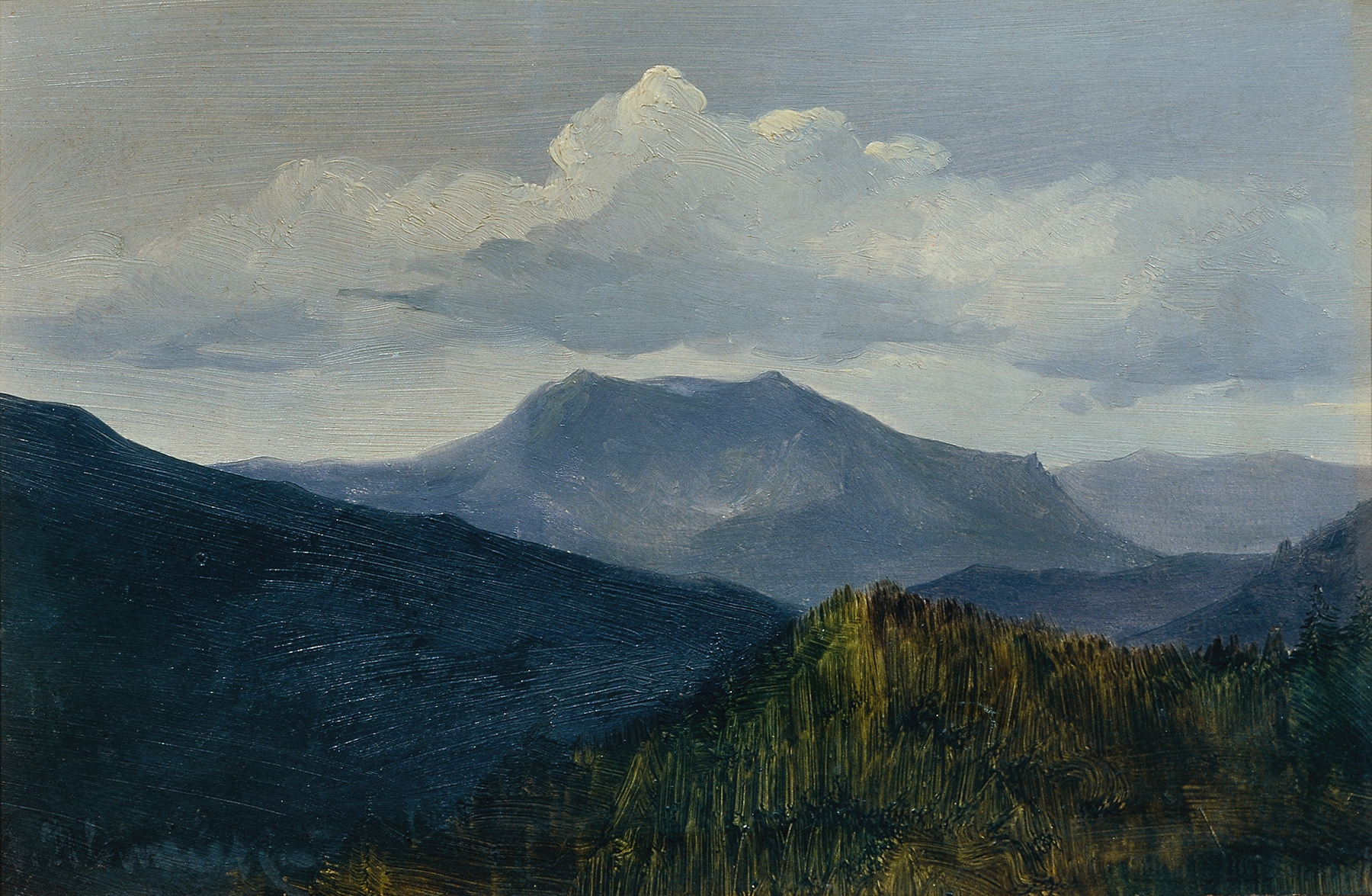
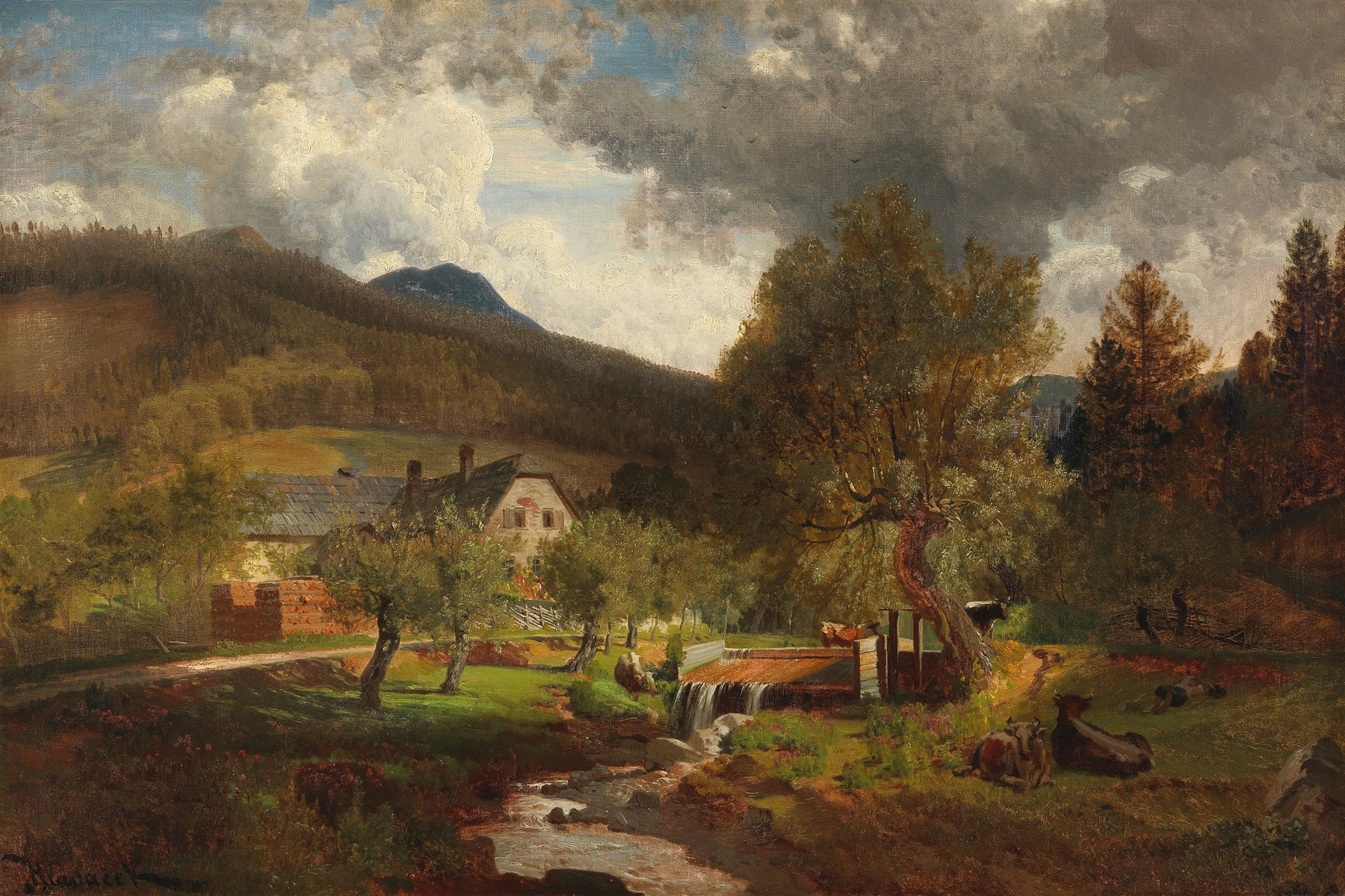
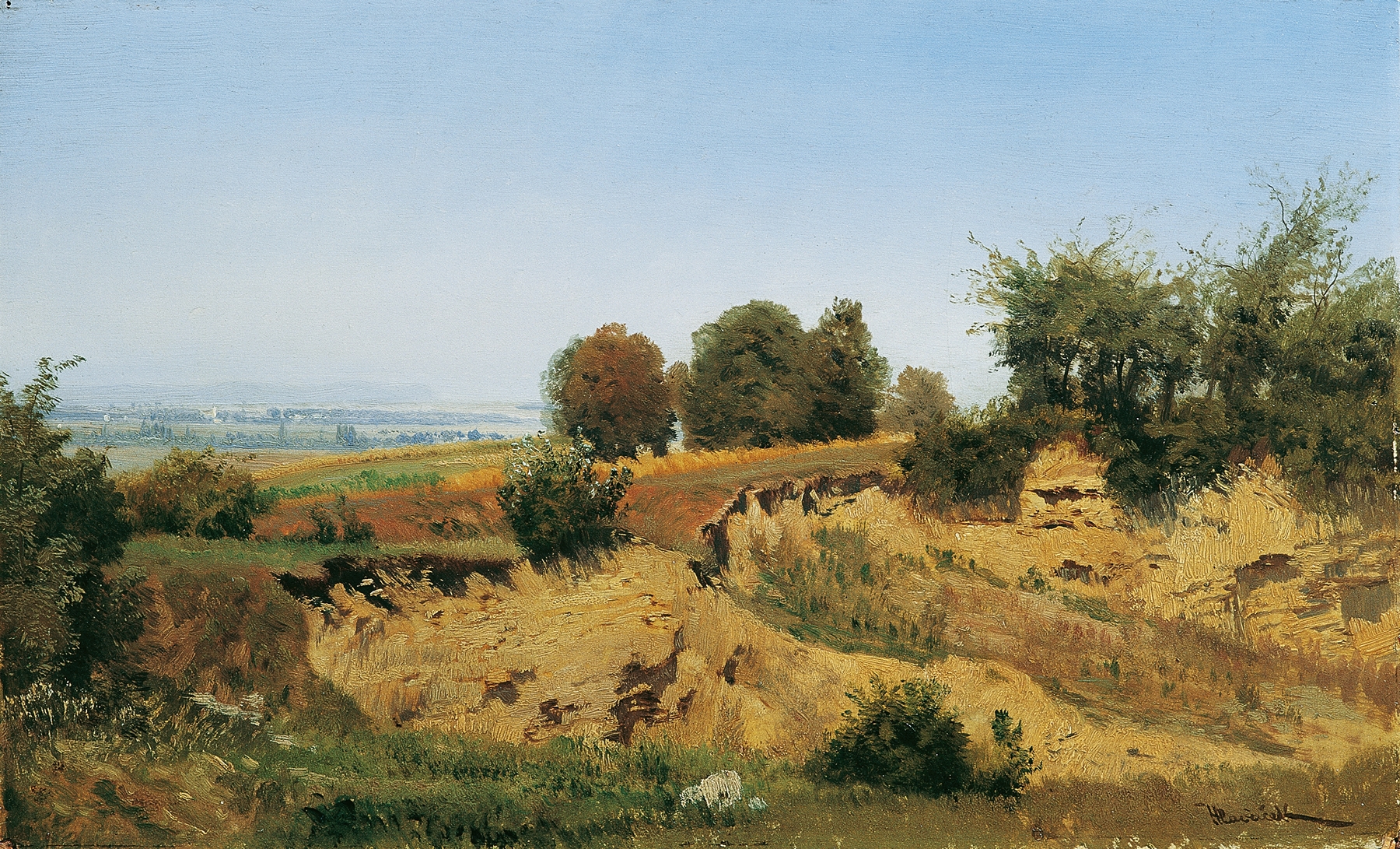
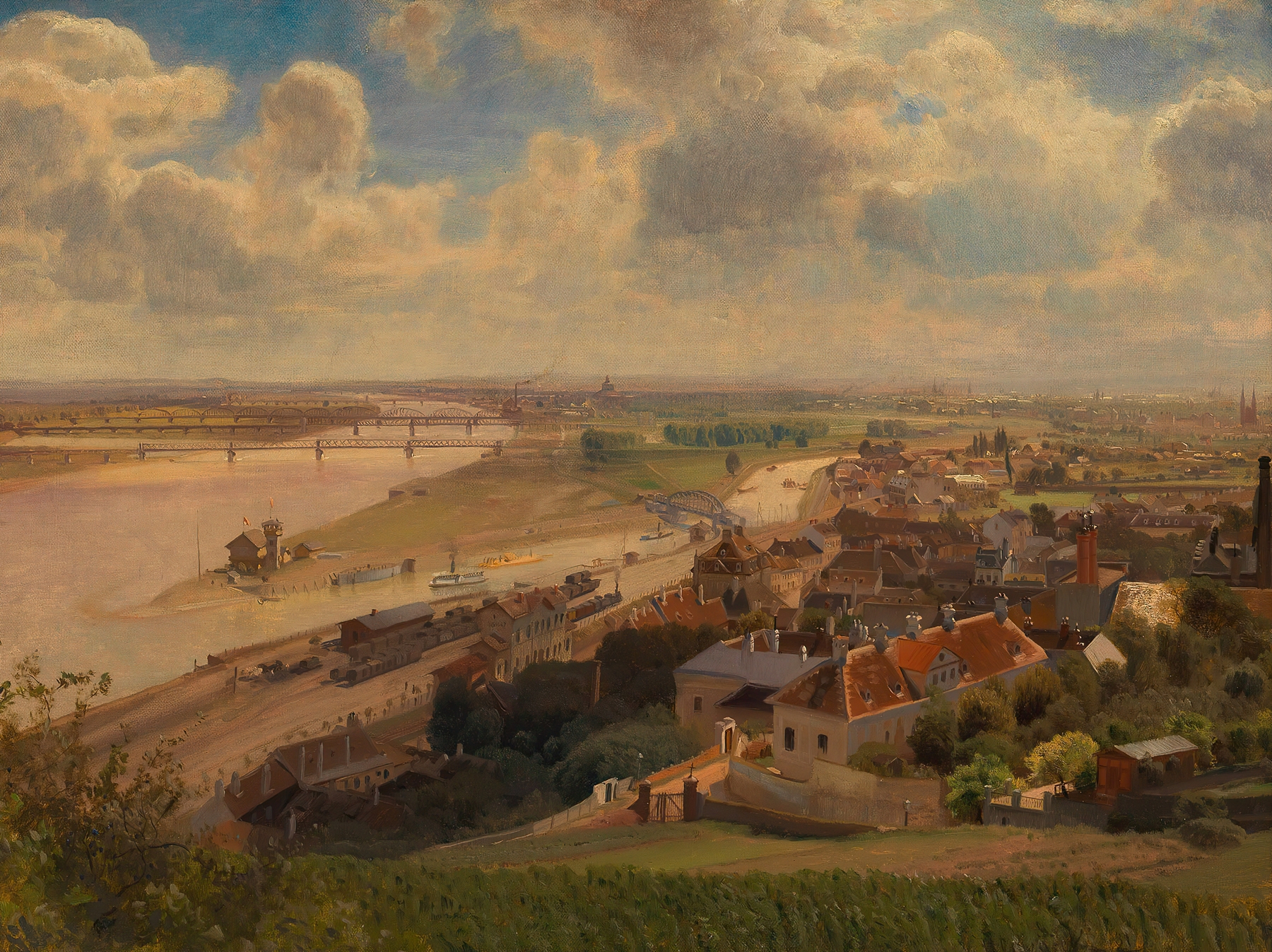
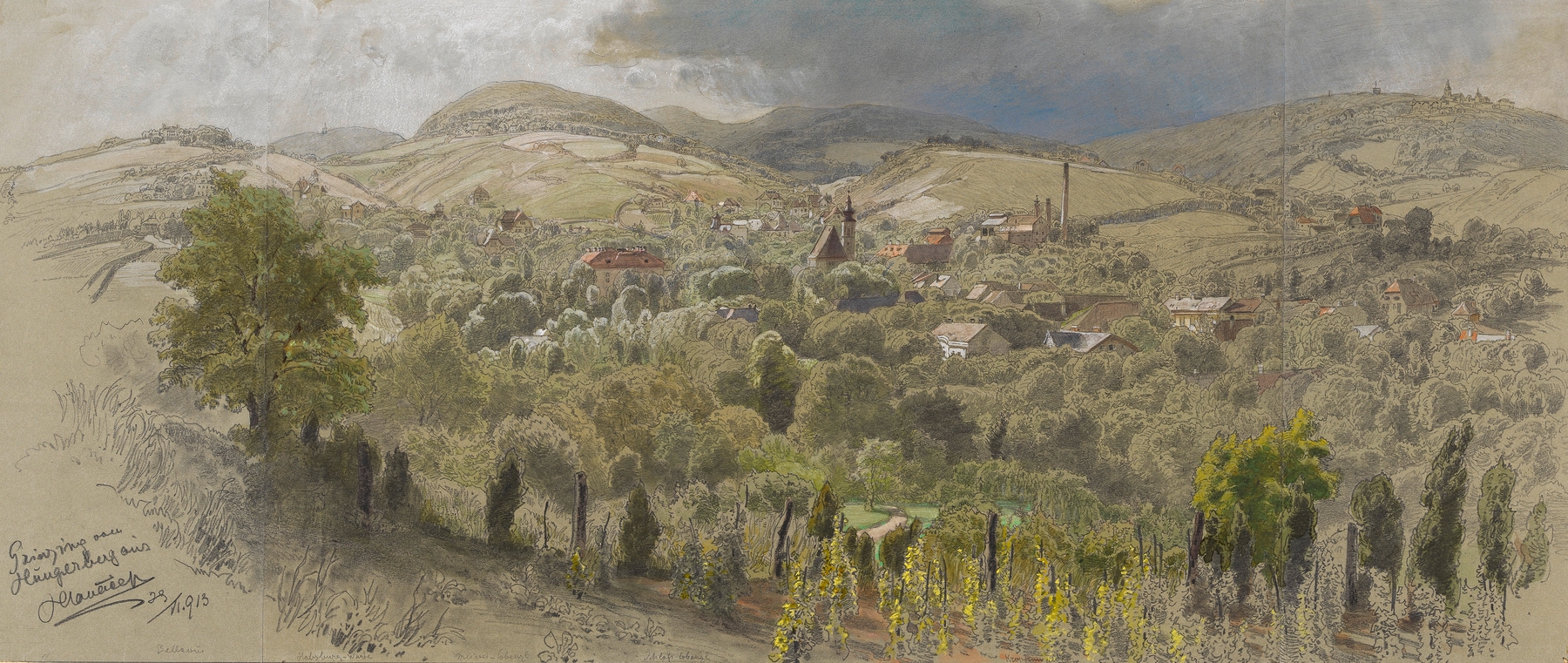
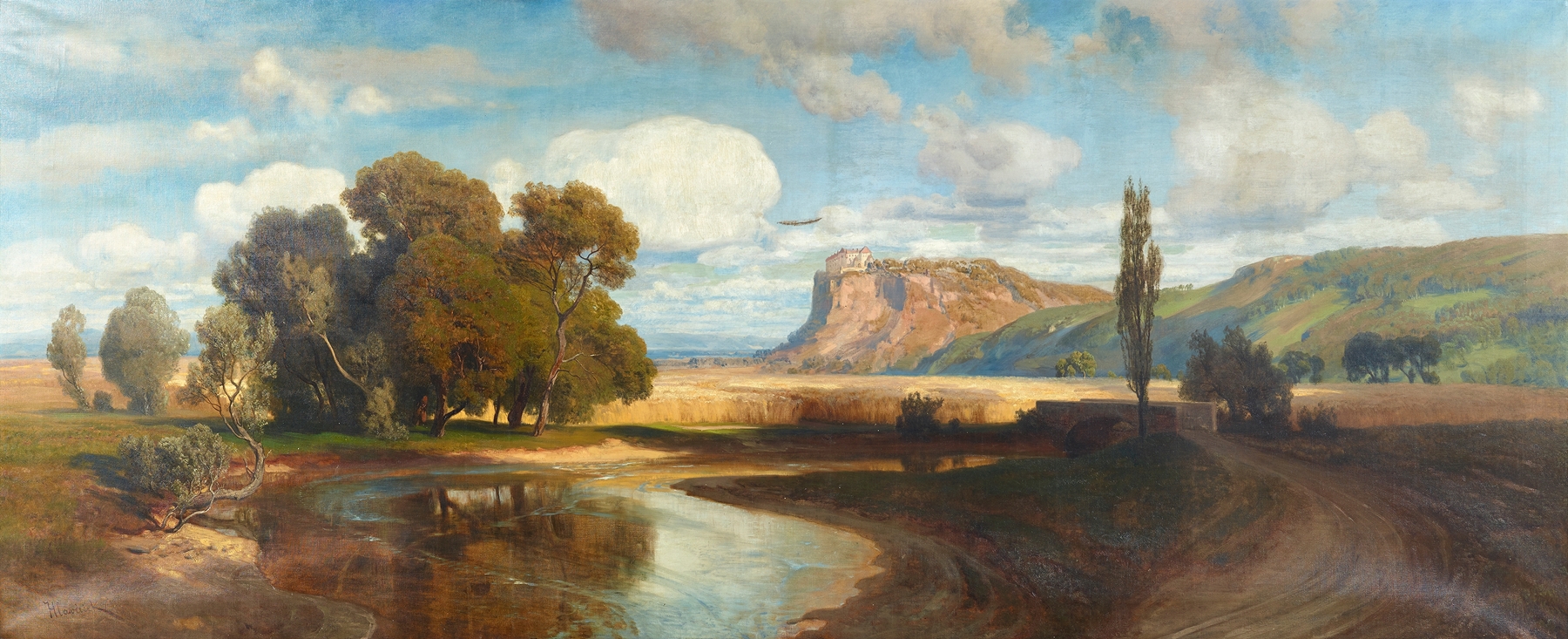
What if beauty was never meant to be finished? In *Leopoldsberg und Kahlenbergerdorf*, a fleeting moment captures the essence of decay and the passage of time, revealing a landscape that is both vibrant and melancholic. Look to the foreground where the silhouettes of trees stand sentinel against the backdrop of rolling hills. The artist employs a muted palette, allowing earth tones to blend seamlessly with soft blues and grays, creating a harmony that feels both inviting and haunting. Notice how the light gently caresses the landscape, casting long shadows that evoke a sense of nostalgia, inviting the viewer to immerse themselves in the tranquility of this serene vista. Beneath the surface lies a profound contrast: the serenity of nature collides with the inevitable decay of time. Hlavacek’s delicate brushstrokes reveal the subtle deterioration of the village structures, hinting at stories of lives long lived and landscapes forever changed. The horizon line, dotted with distant landmarks, suggests a world beyond the frame, a reminder that beauty can exist alongside a sense of loss and impermanence. In 1913, Anton Hlavacek painted this work during a period of burgeoning artistic exploration in Vienna, where the influence of modernism began to take hold. The city was a cultural epicenter, and the artist merged traditional landscape painting with emerging avant-garde approaches. This time of transition not only shaped his artistry but also reflected the shifting societal landscape, as the world stood on the brink of profound change.