Loch Long — History & Analysis
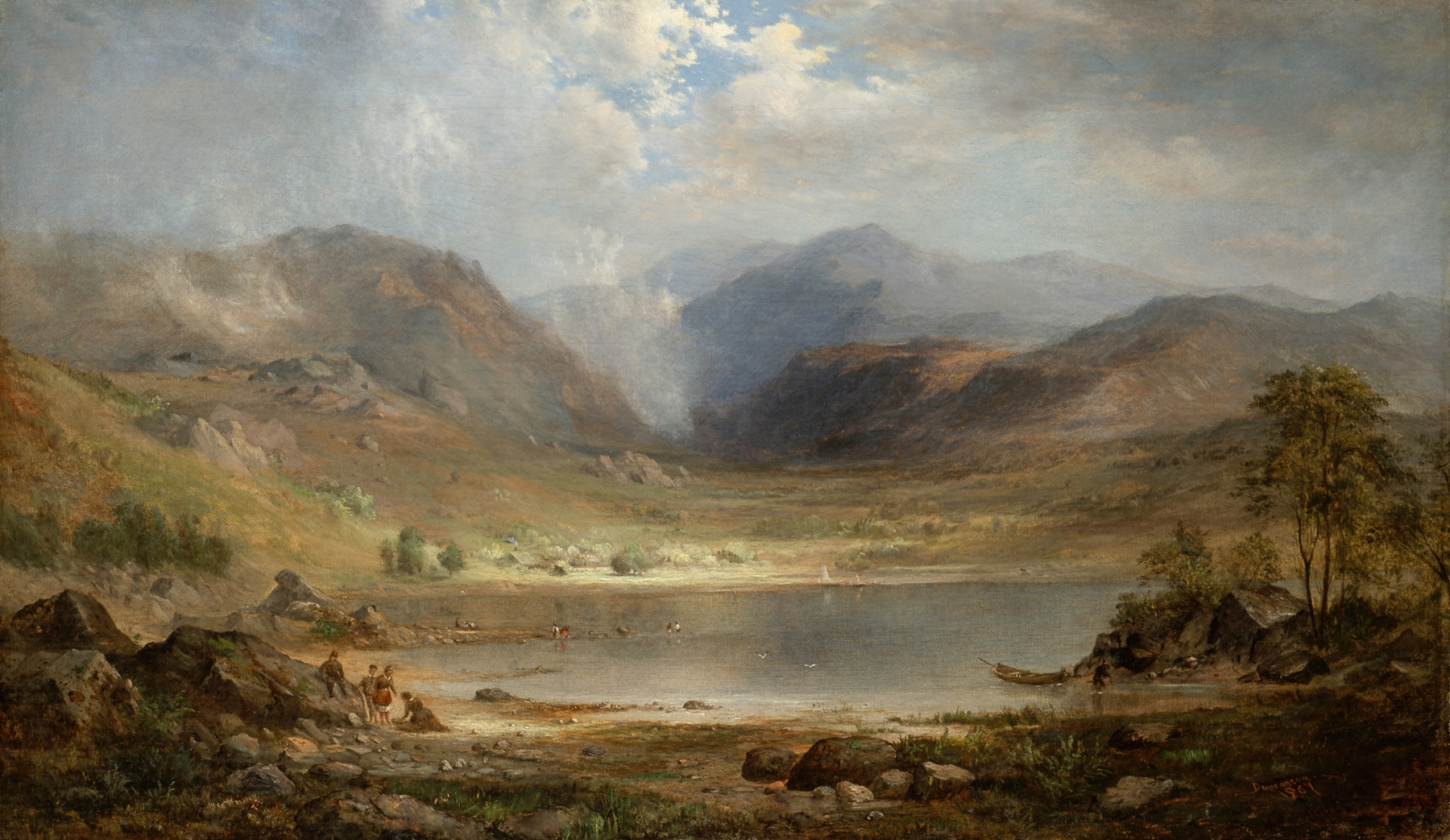
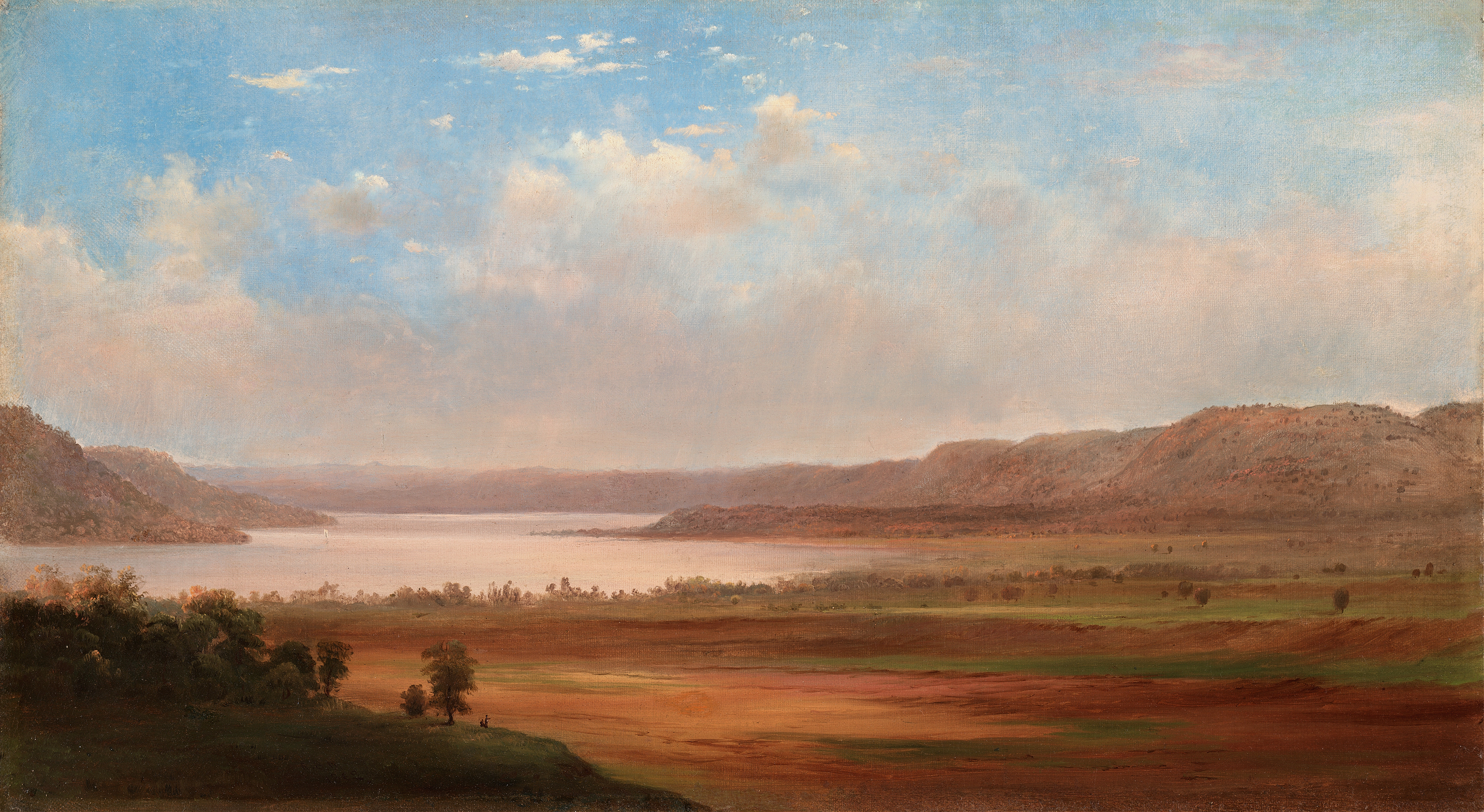
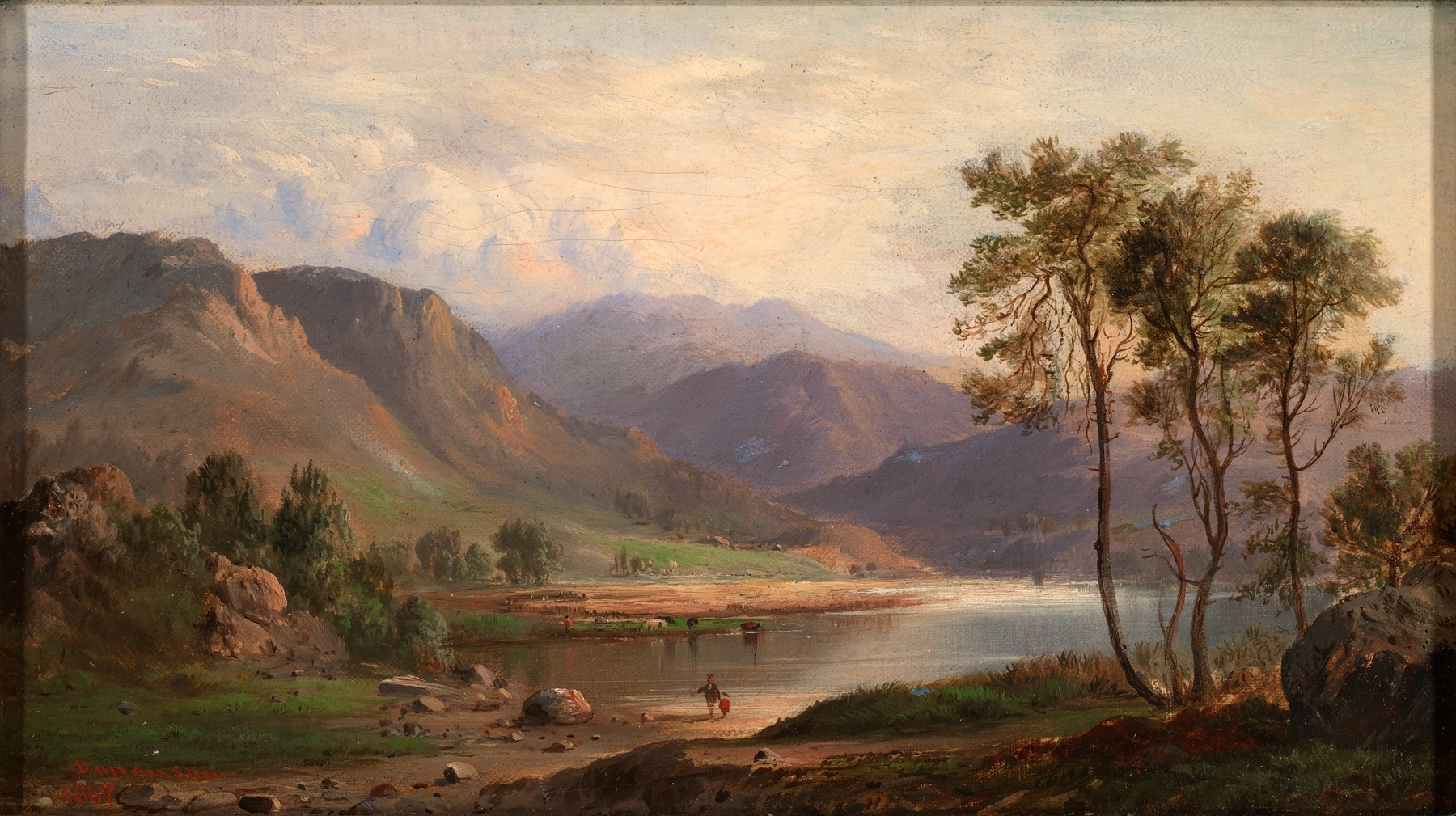
What if beauty was never meant to be finished? In Loch Long, Robert S. Duncanson invites us into a realm where nature breathes, where the landscape unfolds with a promise of awakening. Look to the center of the canvas, where a serene loch mirrors the soft, rolling hills. The gentle strokes of green and blue blend harmoniously, creating a lush tapestry that draws the eye.
Patches of sunlight break through the clouds, illuminating the water with a shimmer that feels almost ethereal. Notice the wispy clouds resting on the horizon, as they hint at a world beyond, embracing both light and shadow in a delicate balance. The painting encapsulates a moment of stillness, yet there’s an undercurrent of movement. The stillness of the loch contrasts with the energy of the foliage, creating a dialogue between tranquility and life’s constant flow.
Duncanson’s choice of color evokes a sense of longing and introspection, suggesting that while the scene appears idyllic, there is always more beneath the surface—an idea that beauty is not merely to be observed, but to be experienced and felt. In 1867, Duncanson was establishing himself as a leading landscape painter in America, a time when the nation was grappling with the aftermath of the Civil War. Living in Cincinnati, he found inspiration in the natural beauty surrounding him, channeling the spirit of the Hudson River School while infusing his work with personal and cultural significance. His commitment to depicting the sublime in nature reflects not only his artistic vision but also the broader quest for meaning in a changing world.