Muleteers beside an Italian Ruin — History & Analysis
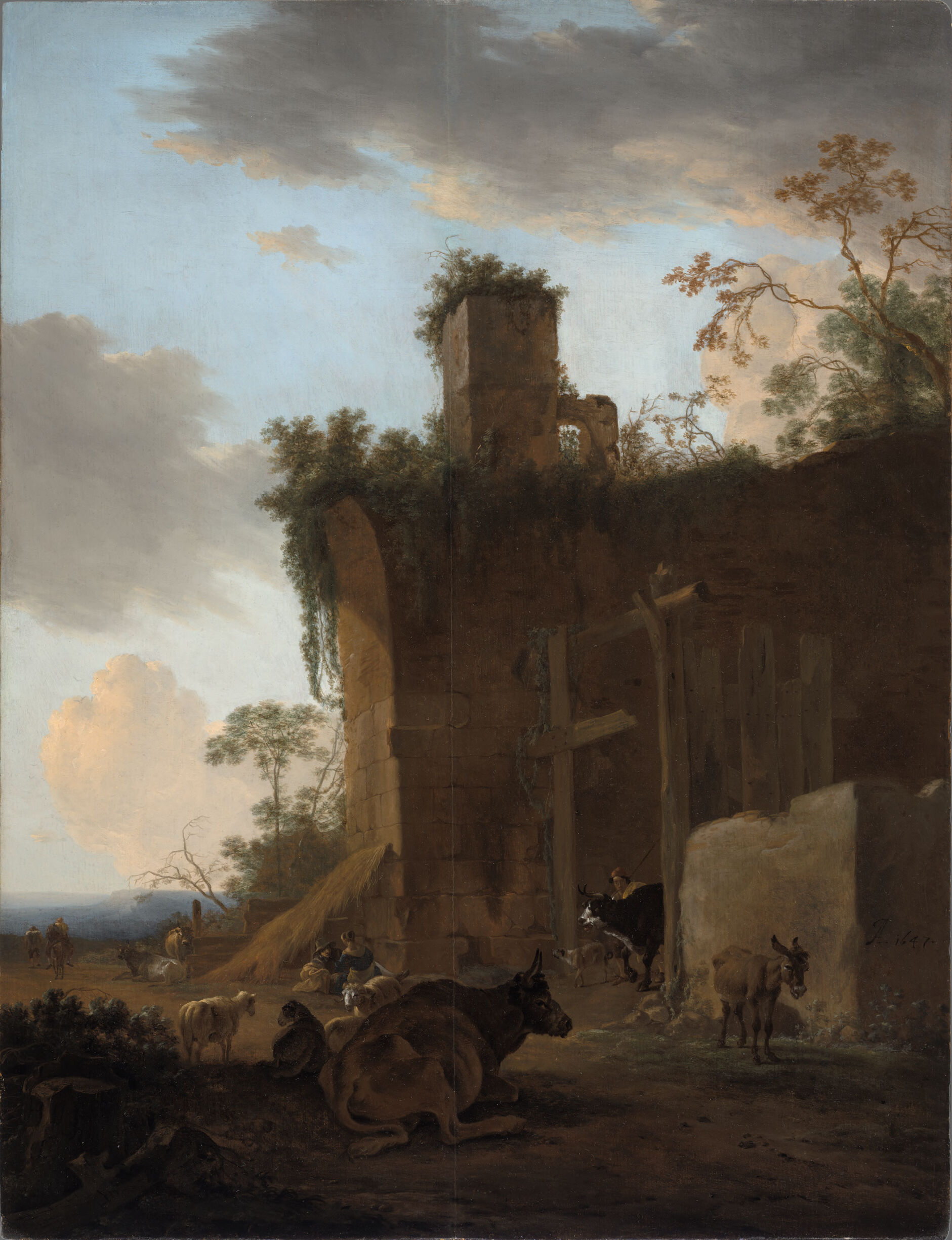
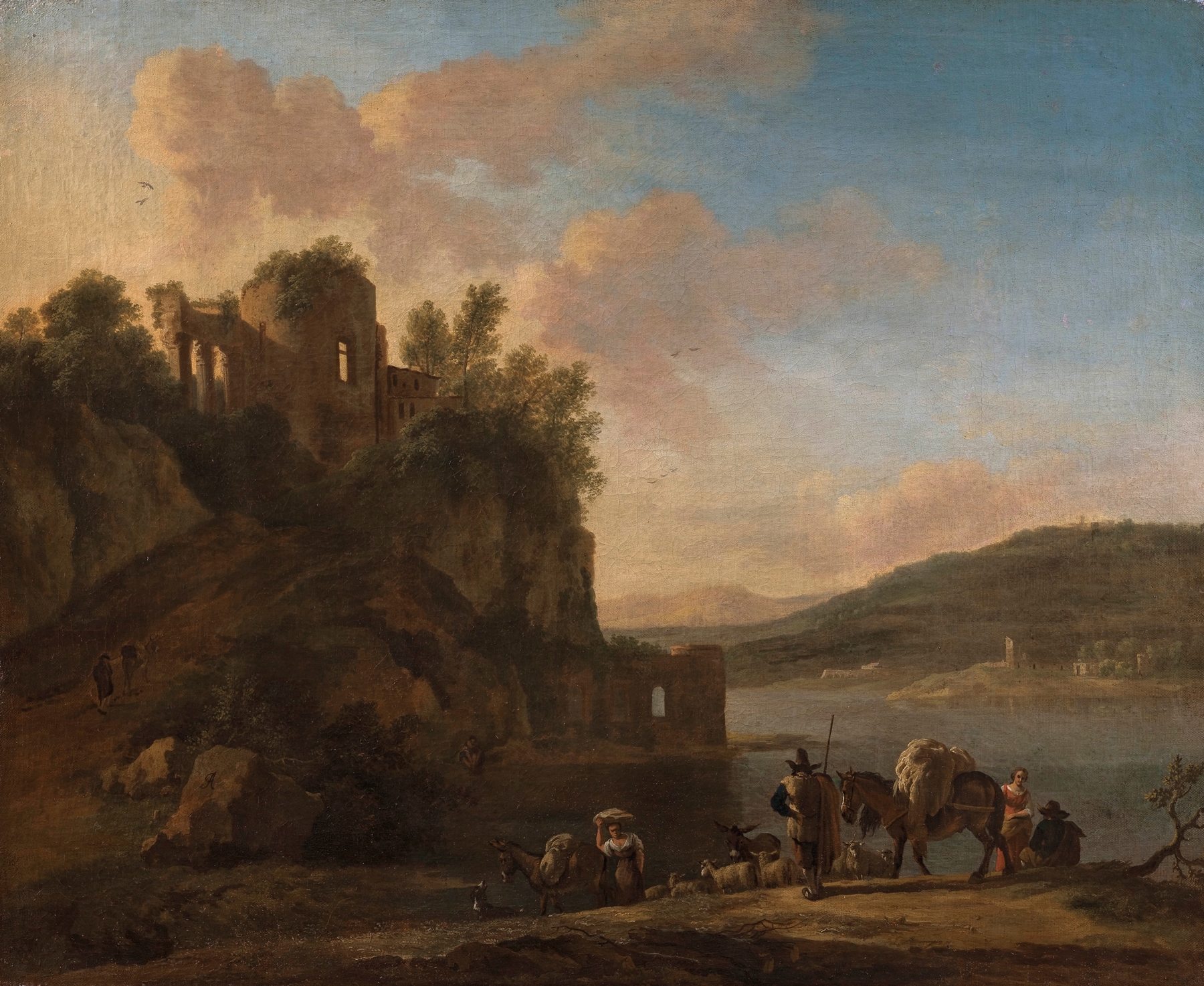
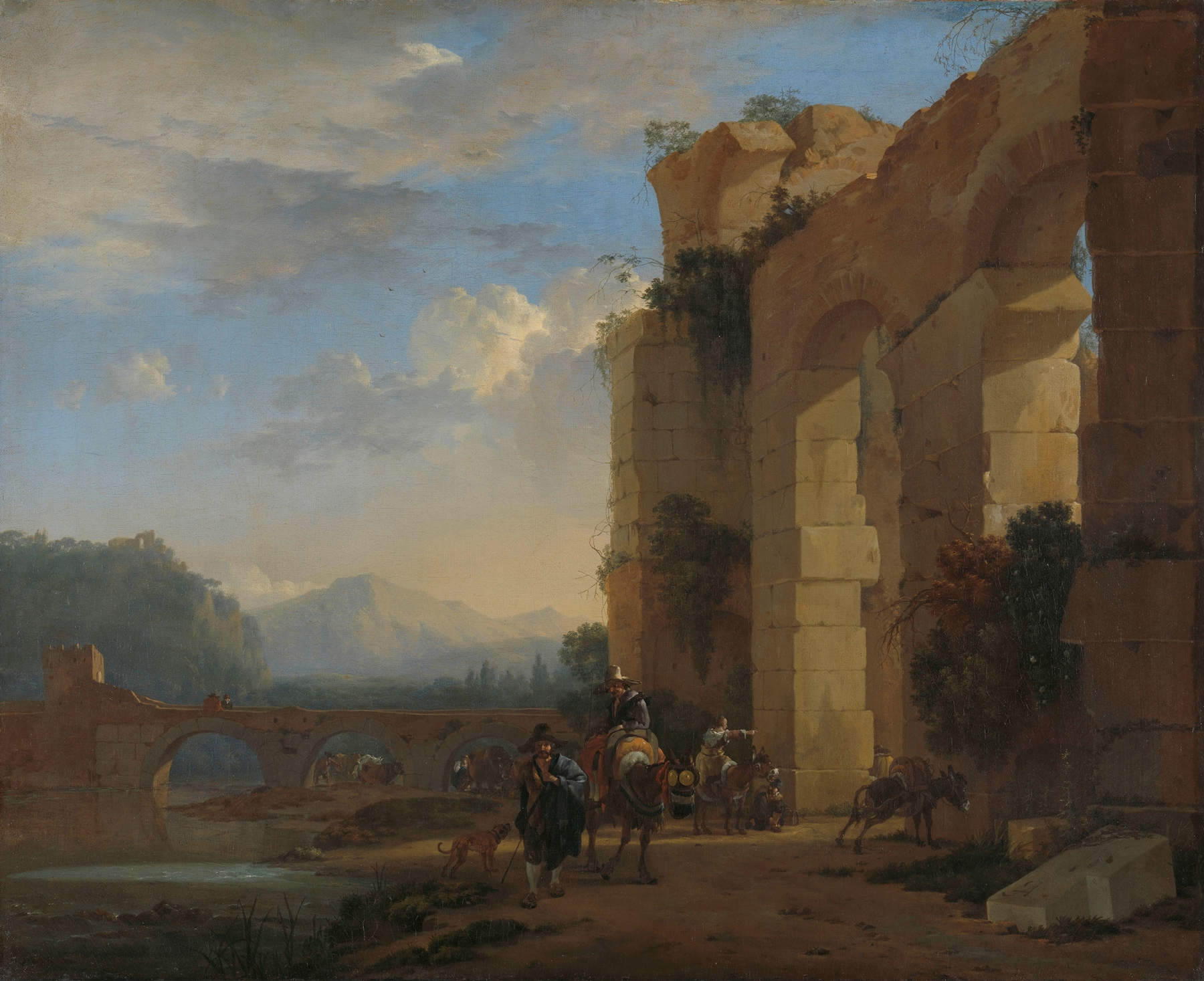
Can beauty exist without sorrow? This poignant question lingers in the air as we gaze upon the serene landscape captured in the canvas. It invites a bittersweet reflection on human experience, urging us to consider the delicate balance between joy and melancholy. Look to the left at the two muleteers, their figures grounded and sturdy amid the crumbling ruins of a once-majestic structure. The warm hues of ochre and earth tones envelop the scene, contrasting subtly with the cool blues of the sky above.
Notice how the light falls upon the weathered stones, illuminating the textures that speak of history and time's relentless passage. Each brushstroke conveys a sense of nostalgia, as if the artist is inviting us to pause and contemplate the stories that linger in the air like whispers from the past. Delve deeper into the emotional landscape of this piece, where the juxtaposition of labor and decay evokes a profound tension. The muleteers, though engaged in their work, seem suspended in a moment of reflection, embodying the weight of their surroundings.
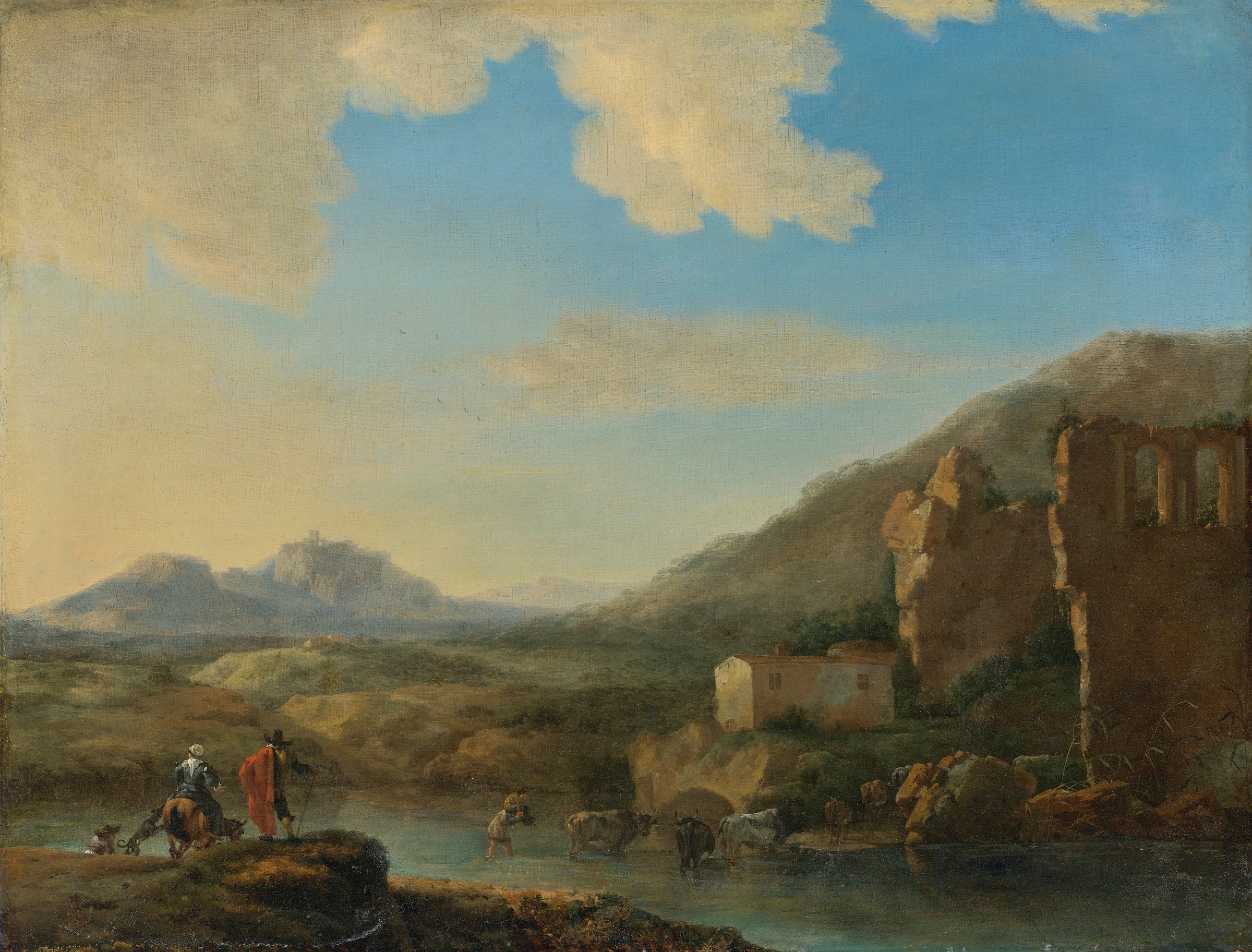
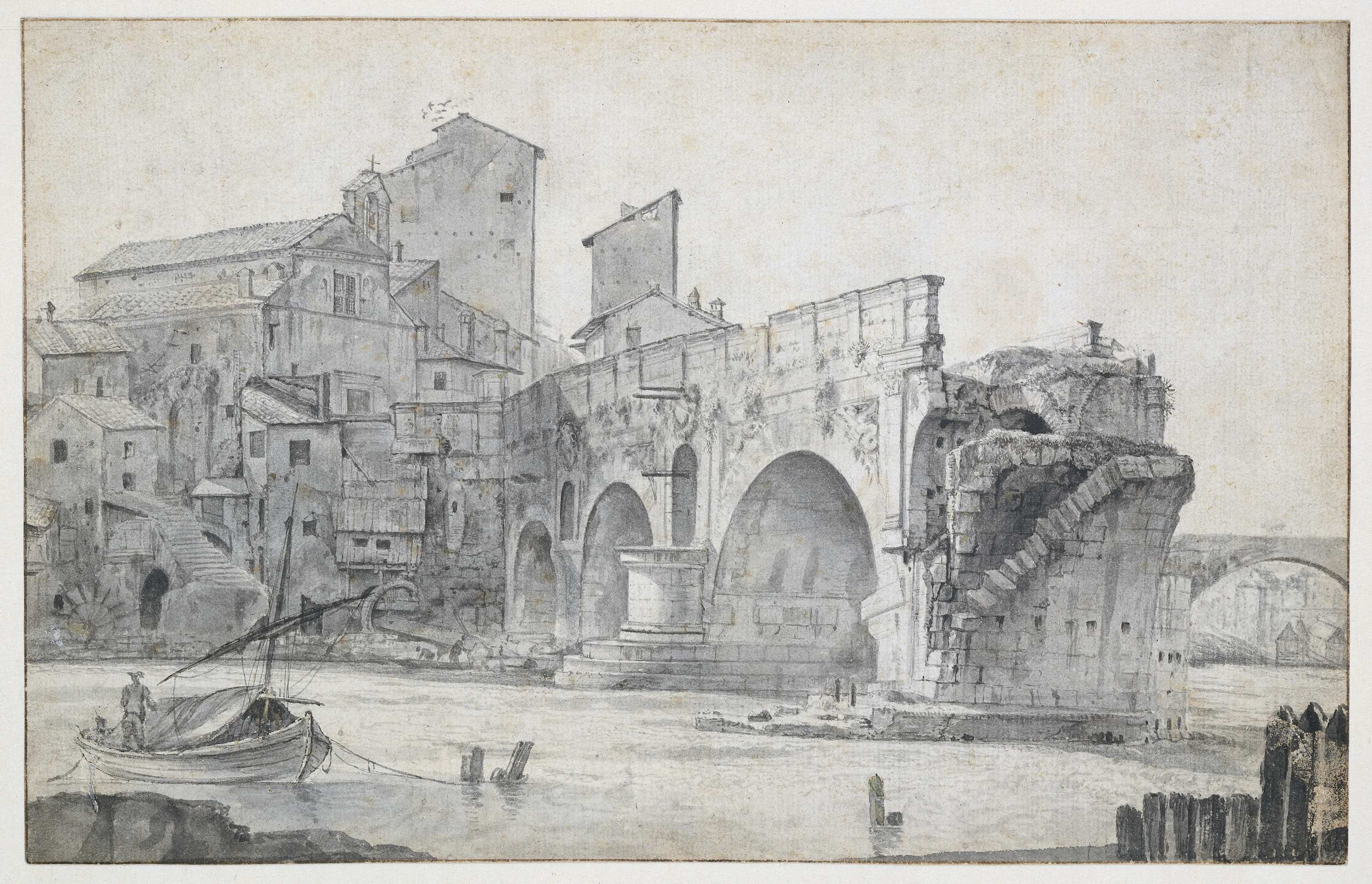
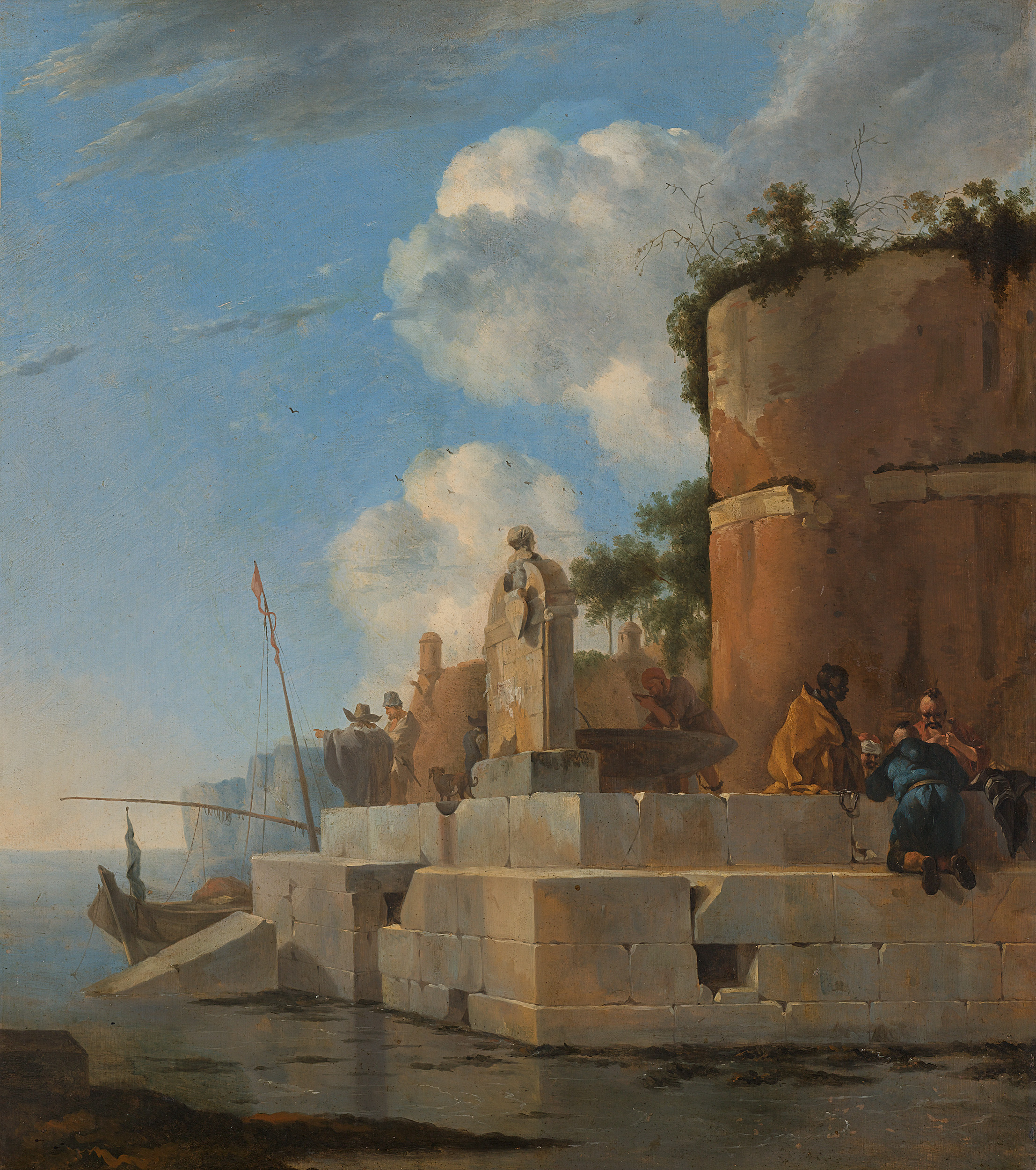
The towering ruin stands as a testament to beauty lost and time's inevitability, suggesting that the essence of life is woven through moments of labor tinged with sorrow. During the mid-17th century, while residing in Amsterdam, Jan Asselijn created this work around 1650. This period was notable for a growing interest in landscape painting, as artists began to explore the relationship between humanity and nature. Asselijn, influenced by the Italianate style, sought to combine the beauty of the natural world with the introspection of human existence, ultimately leaving a significant mark on the Dutch Golden Age.