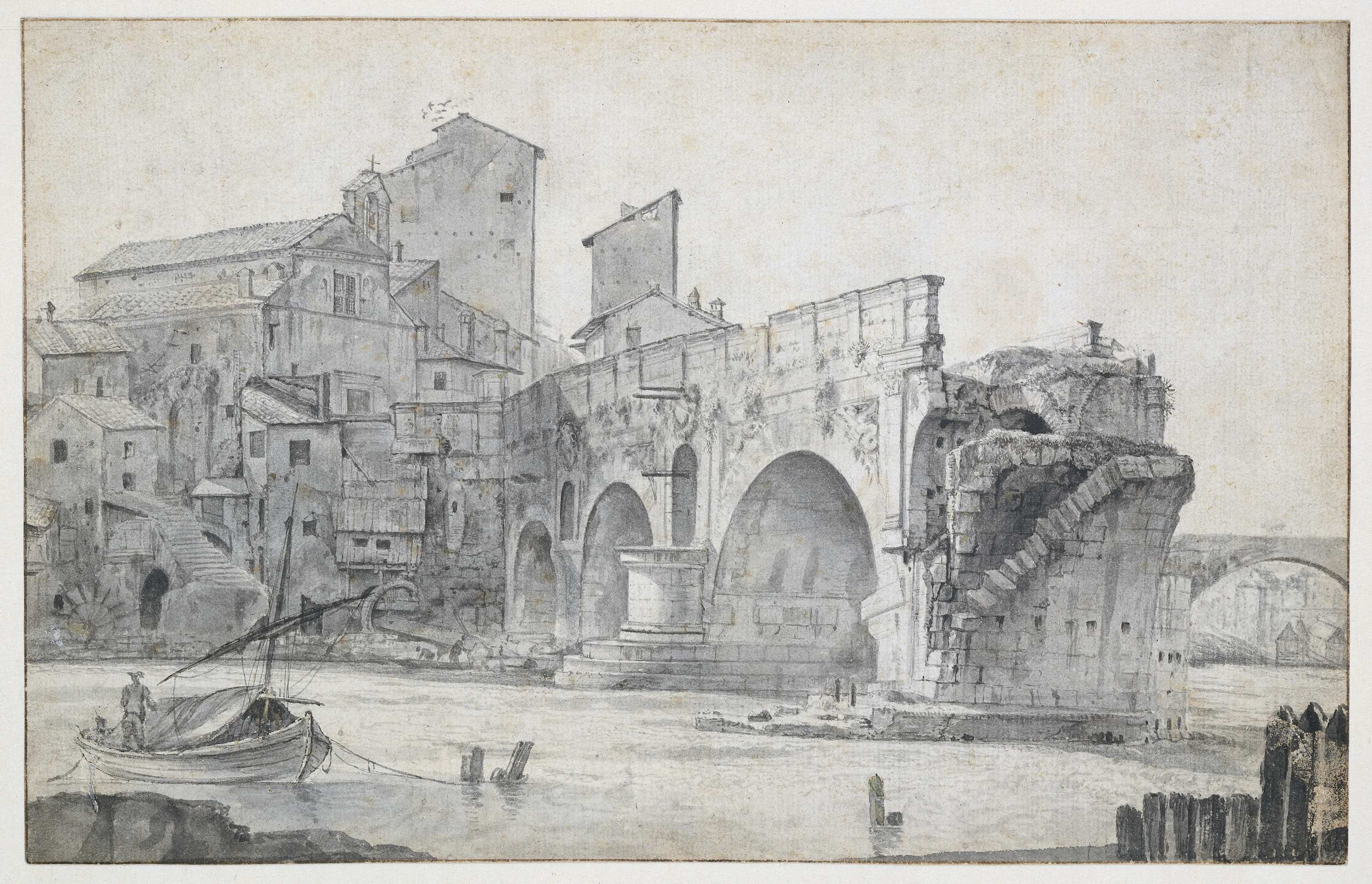
View of the Ponte Rotto in Rome, Seen from the East — History & Analysis
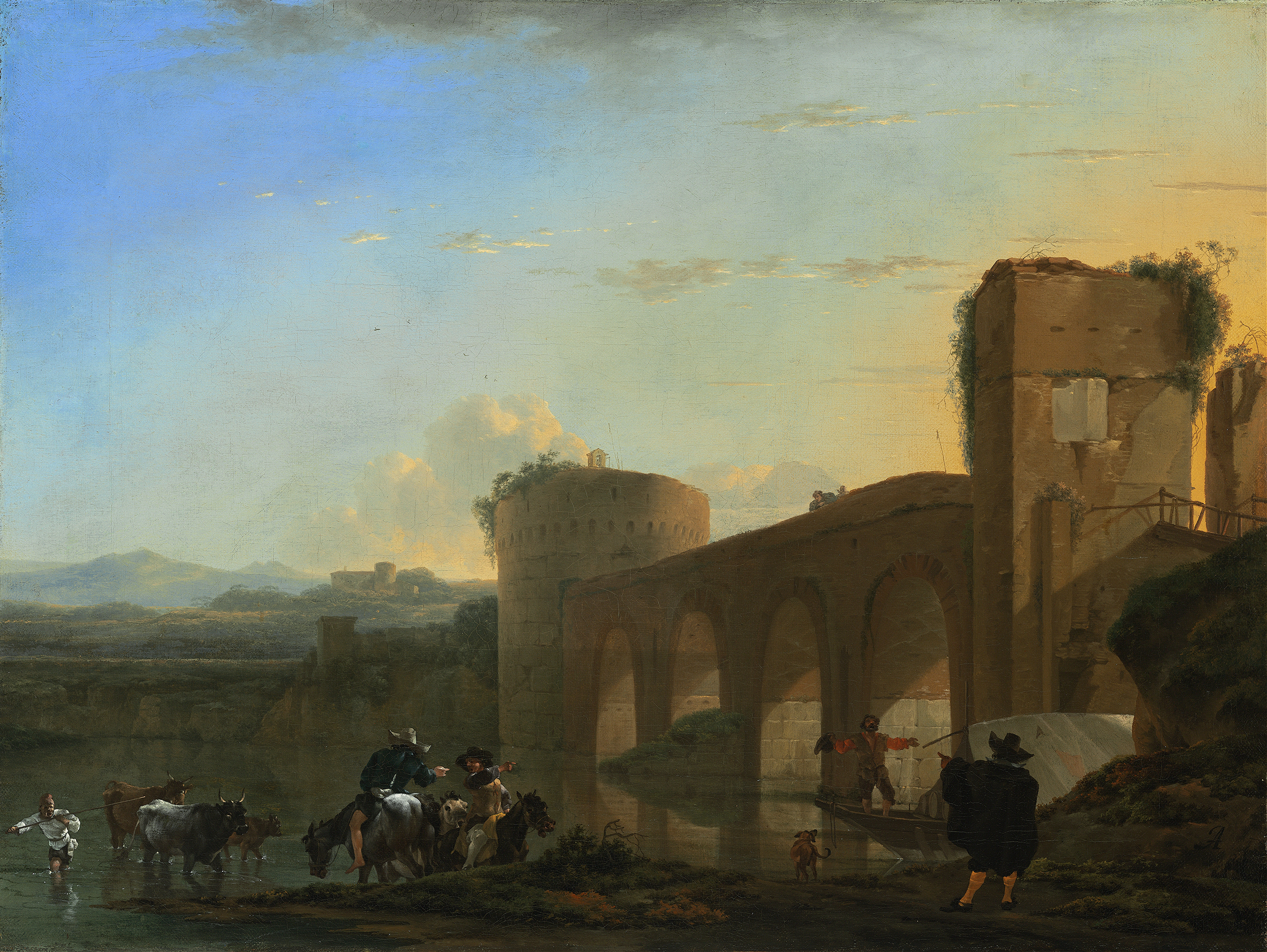
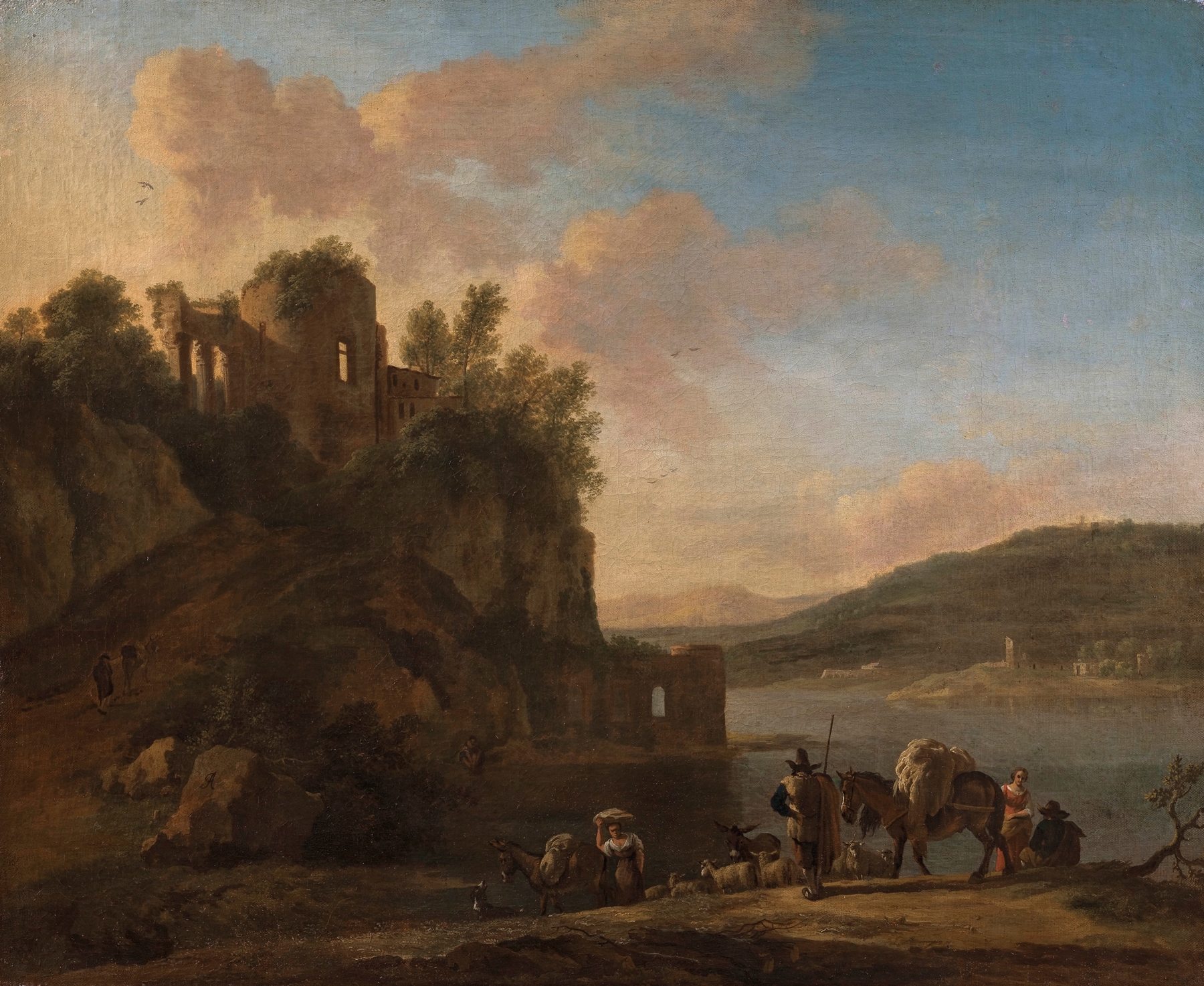
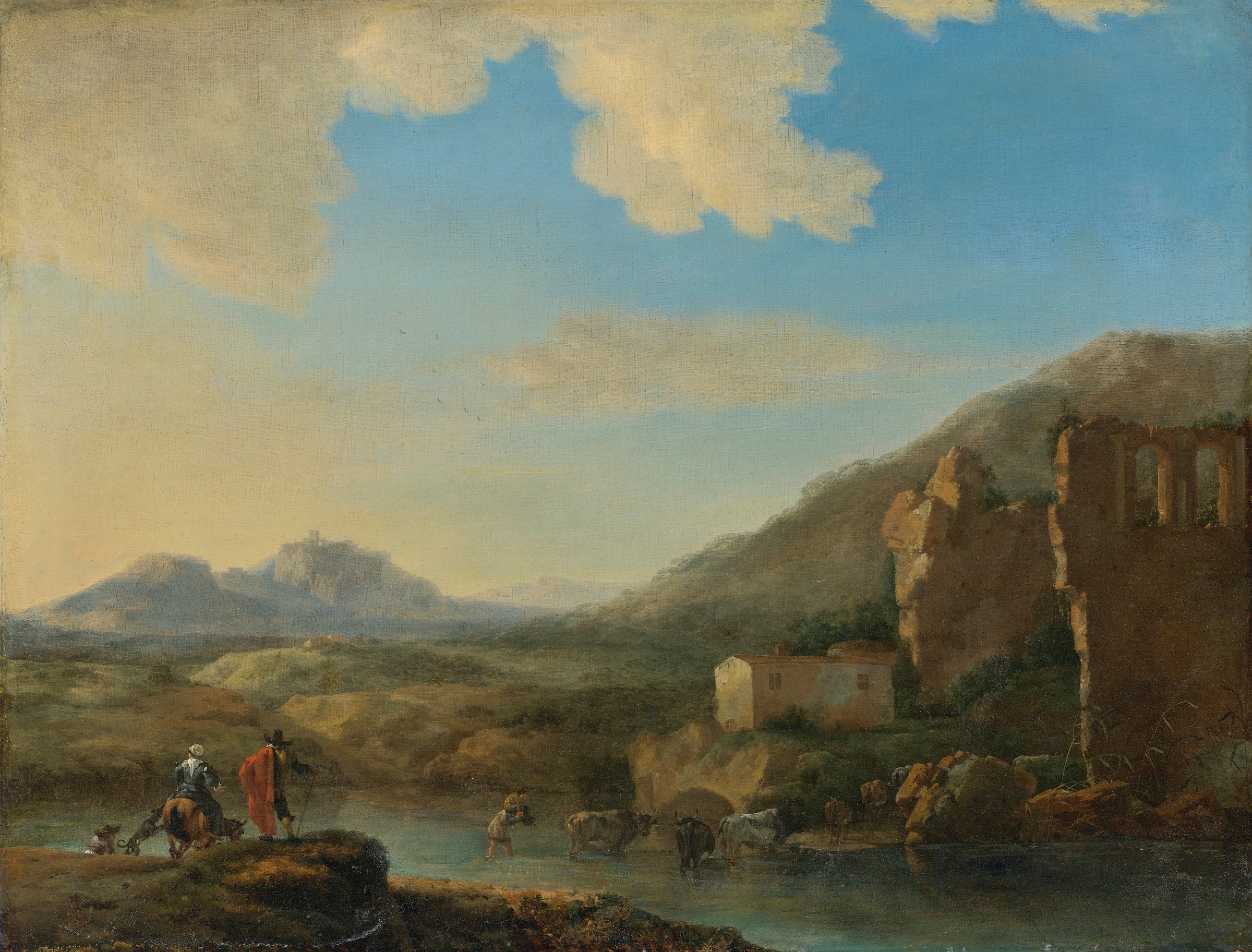
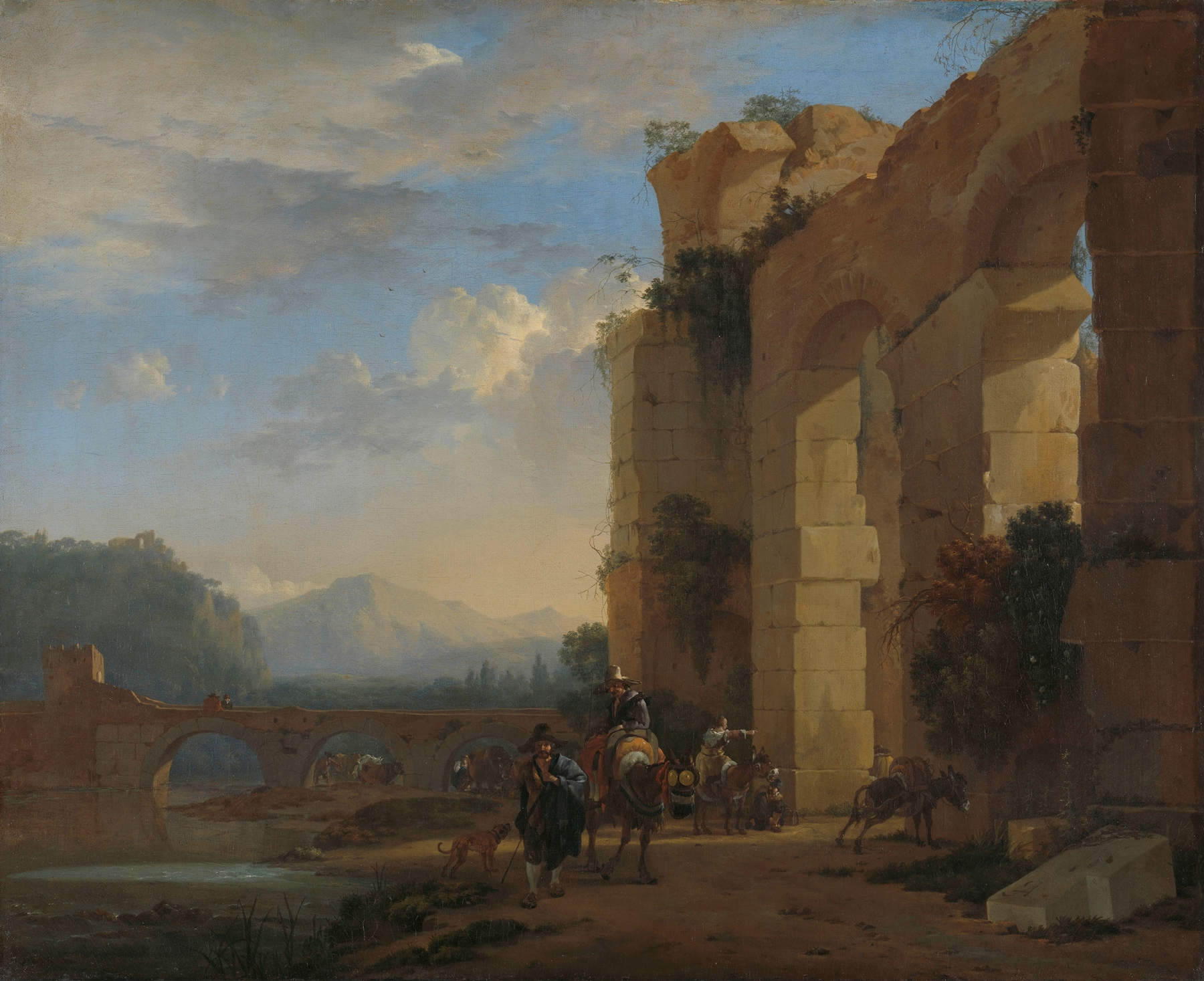
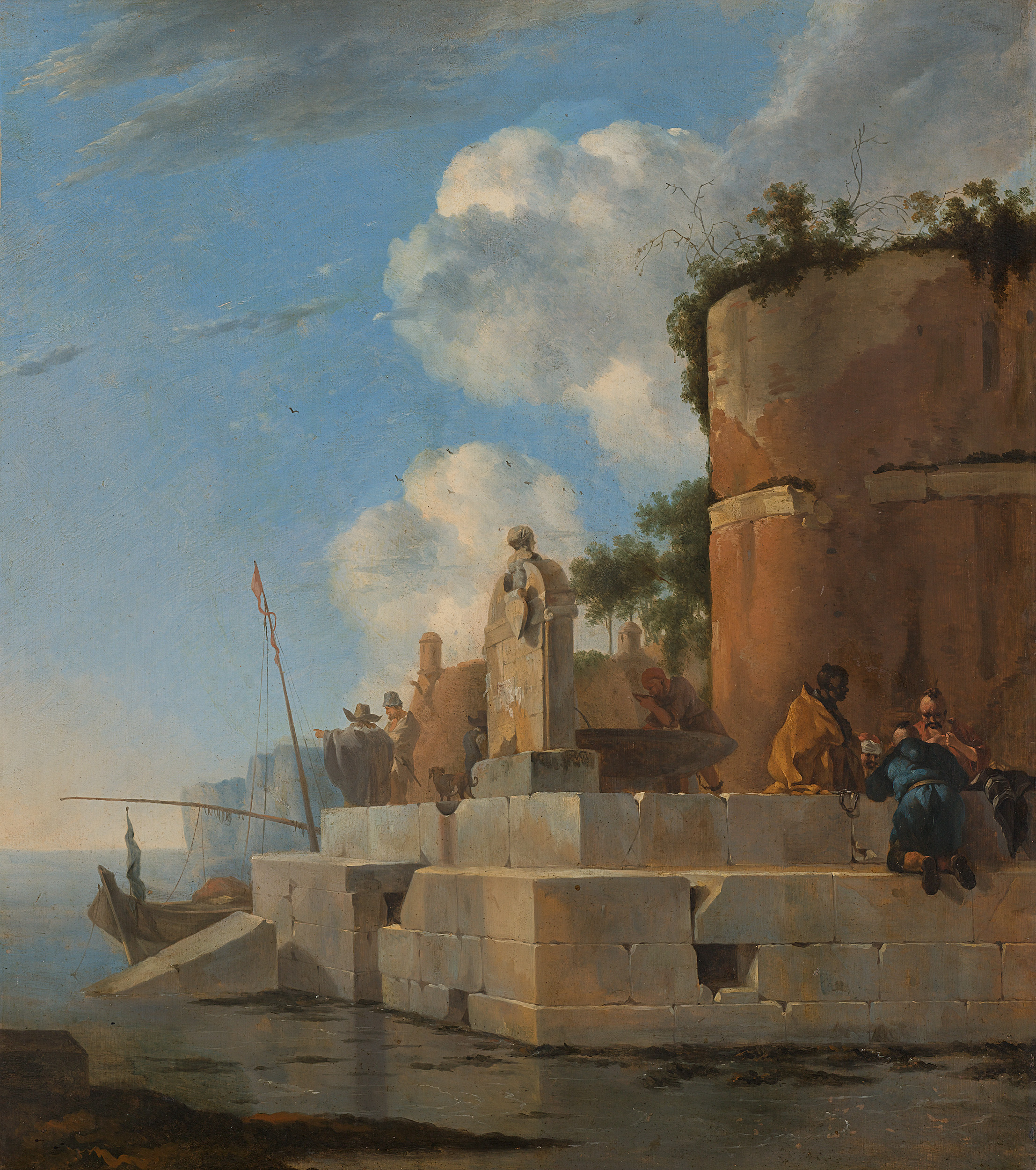
Did the painter know this moment would outlive them? In a world of shifting fortunes and fleeting joys, the balance between nature and human endeavor resonates through time. Look to the center of the canvas, where the ancient arches of the Ponte Rotto rise against a backdrop of tranquil water. Notice how the light gracefully spills from the sunlit sky, illuminating the soft ripples below, creating a dance of reflections that echoes the stone structure's strength.
The palette combines earthy tones with the vibrant hues of the sky, capturing both the solidity of the bridge and the ethereal beauty of the landscape surrounding it. As you explore further, observe the small boats drifting lazily alongside the bridge, their presence hinting at the intersection of daily life and monumental history. The contrast between the weathered stone and the serene, flowing water suggests a dialogue between permanence and transience. Each ripple in the water challenges the solidity of the bridge, while the people gathered by the shore express a sense of connection to both the past and the present.
Created in Rome between 1636 and 1644, this painting emerges from a period when Jan Asselijn was deeply engaged with capturing landscapes enriched by historical narratives. During this time, the artist was influenced by the burgeoning Baroque movement, reflecting a fascination with light, nature, and architectural forms. Amidst a changing world, View of the Ponte Rotto stands as a testament to the enduring beauty of human achievement, forever balanced against the passage of time.