Neumond über dem Riesengebirge — History & Analysis
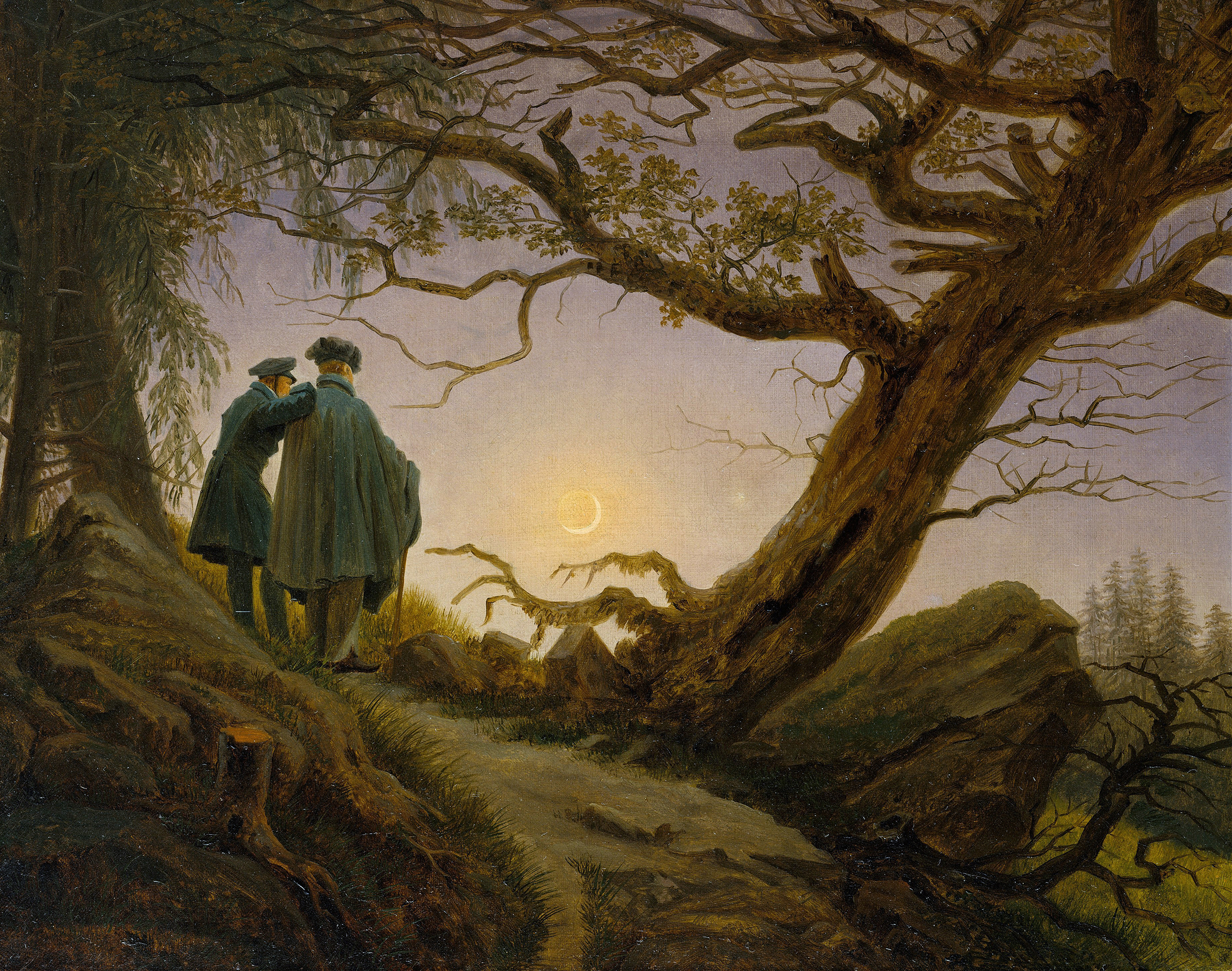
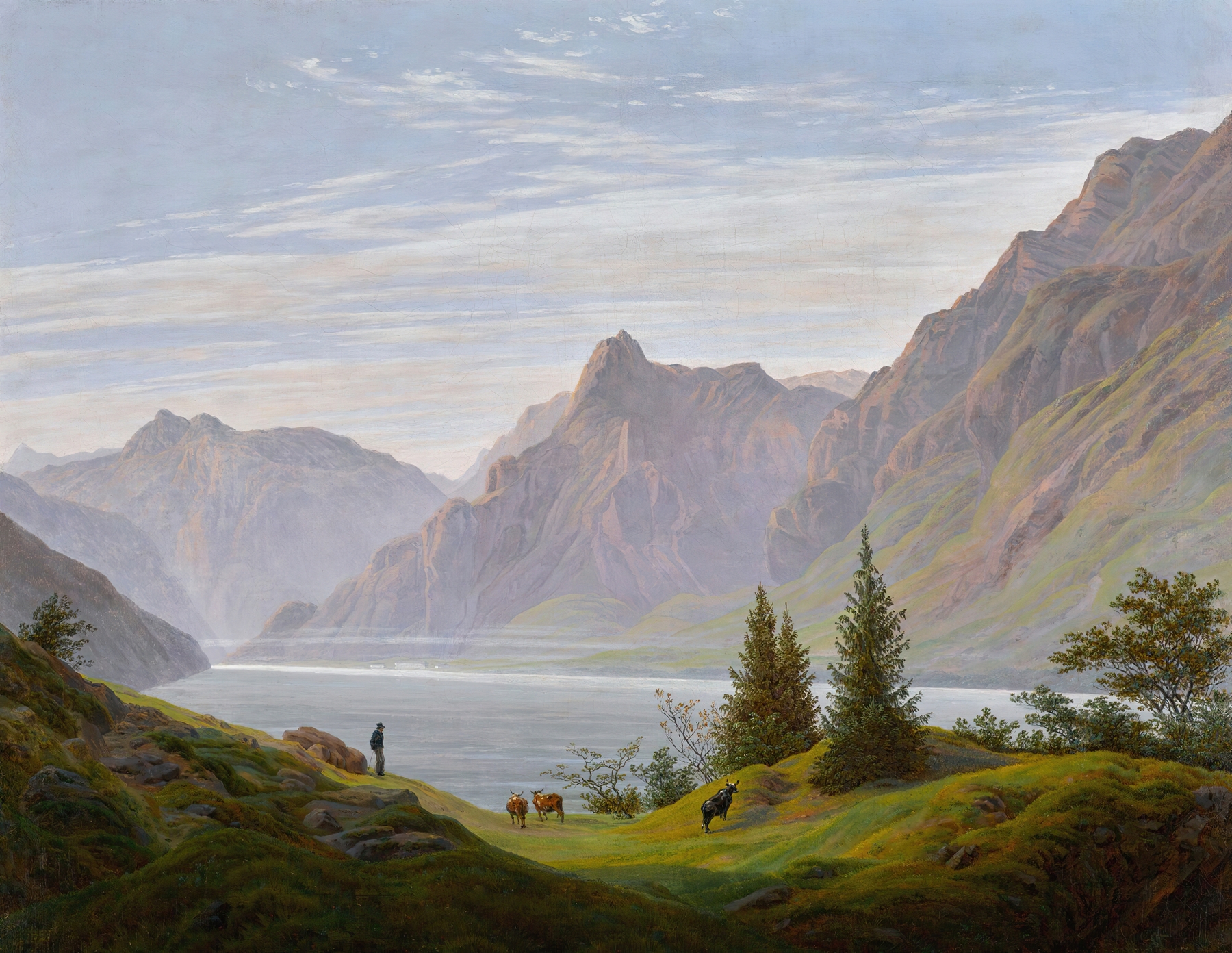
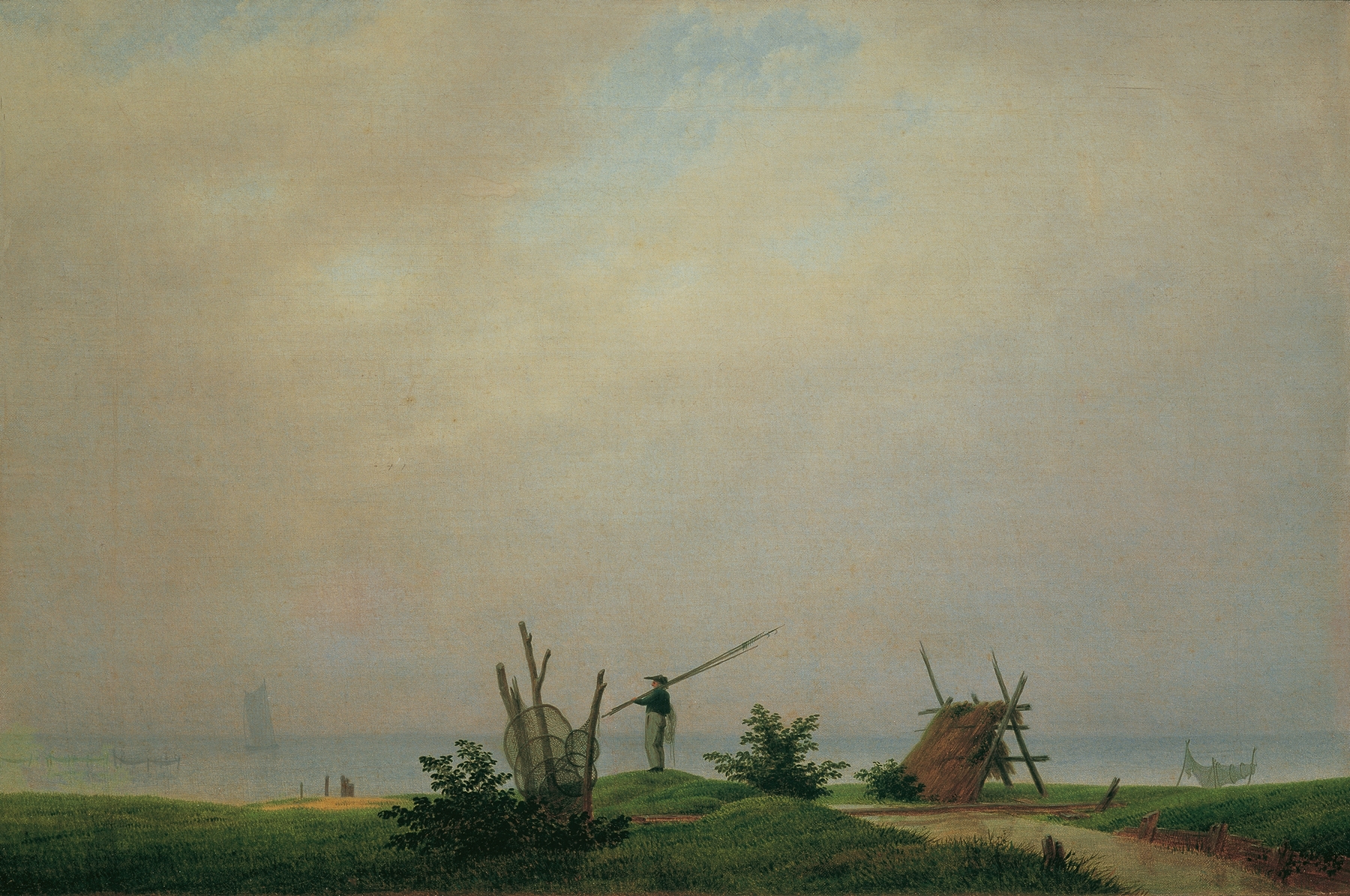
“To paint is to remember what time wants us to forget.” In the quiet expanse of Neumond über dem Riesengebirge, melancholy lingers like a soft mist over the landscape, inviting reflection and repose. The canvas beckons us to confront the transient beauty of existence, evoking a poignant sense of longing. Look to the horizon where the dark silhouette of the Riesengebirge emerges, a rugged mountain range shrouded in twilight. The muted palette of blues and grays dominates the scene, with a tender crescent moon casting a silvery glow over the ethereal landscape.
Notice how the fading light caresses the peaks, creating a delicate interplay of shadow and illumination that suggests both solitude and serenity, drawing your gaze towards the infinite sky. Beneath the serene surface lies a deep emotional resonance. The crescent moon, a symbol of new beginnings and quiet reflection, hints at the cycles of nature and life. The expansive, almost empty sky creates a sense of isolation, amplifying the profound stillness that envelops the mountains.
This juxtaposition of grandeur and desolation encapsulates the human experience — the interplay of hope and melancholy, of beauty tinged with loss. In this undefined period of his career, Caspar David Friedrich produced Neumond über dem Riesengebirge amidst a burgeoning Romantic movement that sought to explore the sublime in nature. The late 18th century and early 19th century marked a time of personal introspection for the artist, grappling with his own sense of identity and existential thought. He painted during an era where nature was revered not just for its beauty, but for its ability to mirror the depths of the human soul.