New York Street — History & Analysis
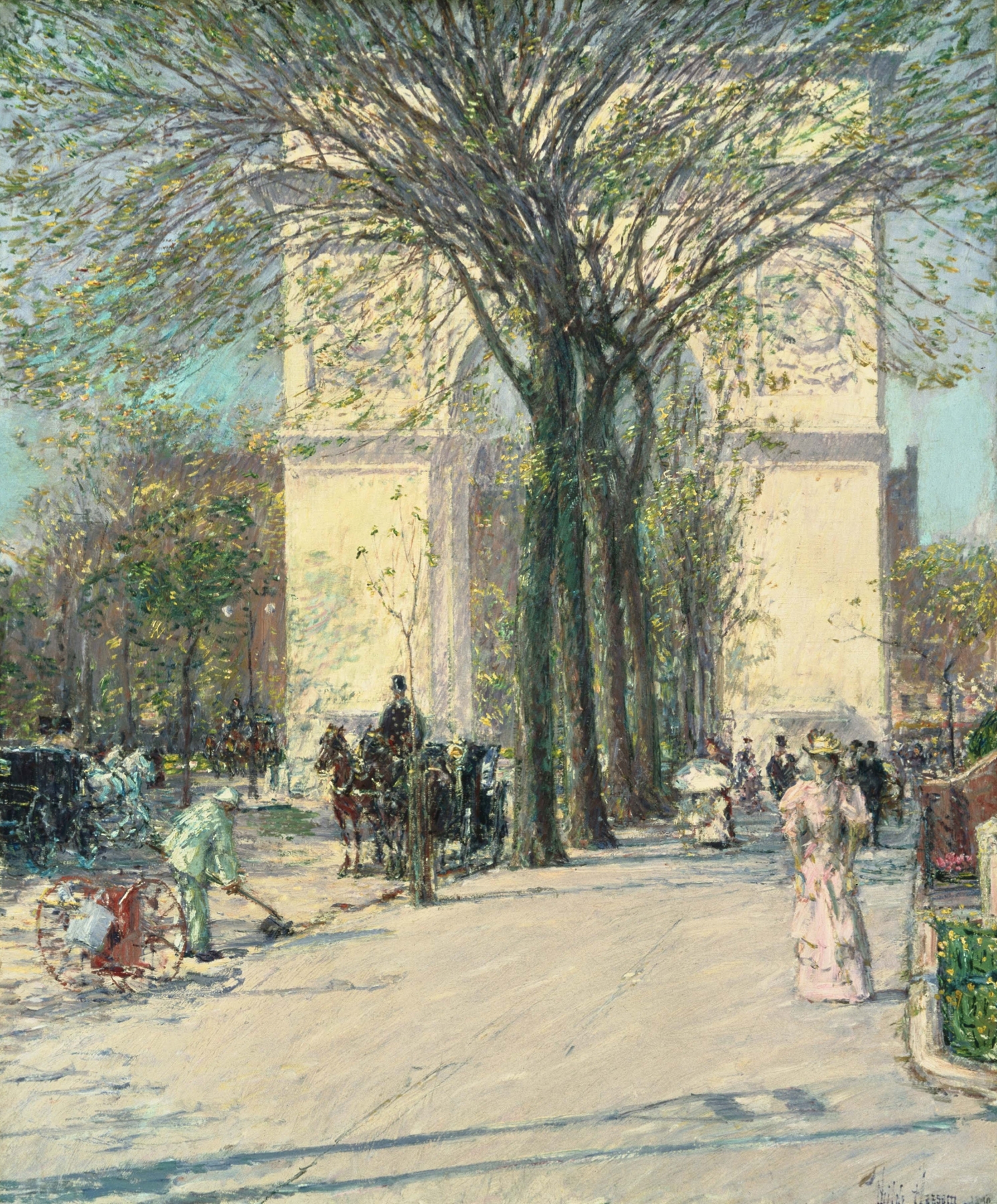
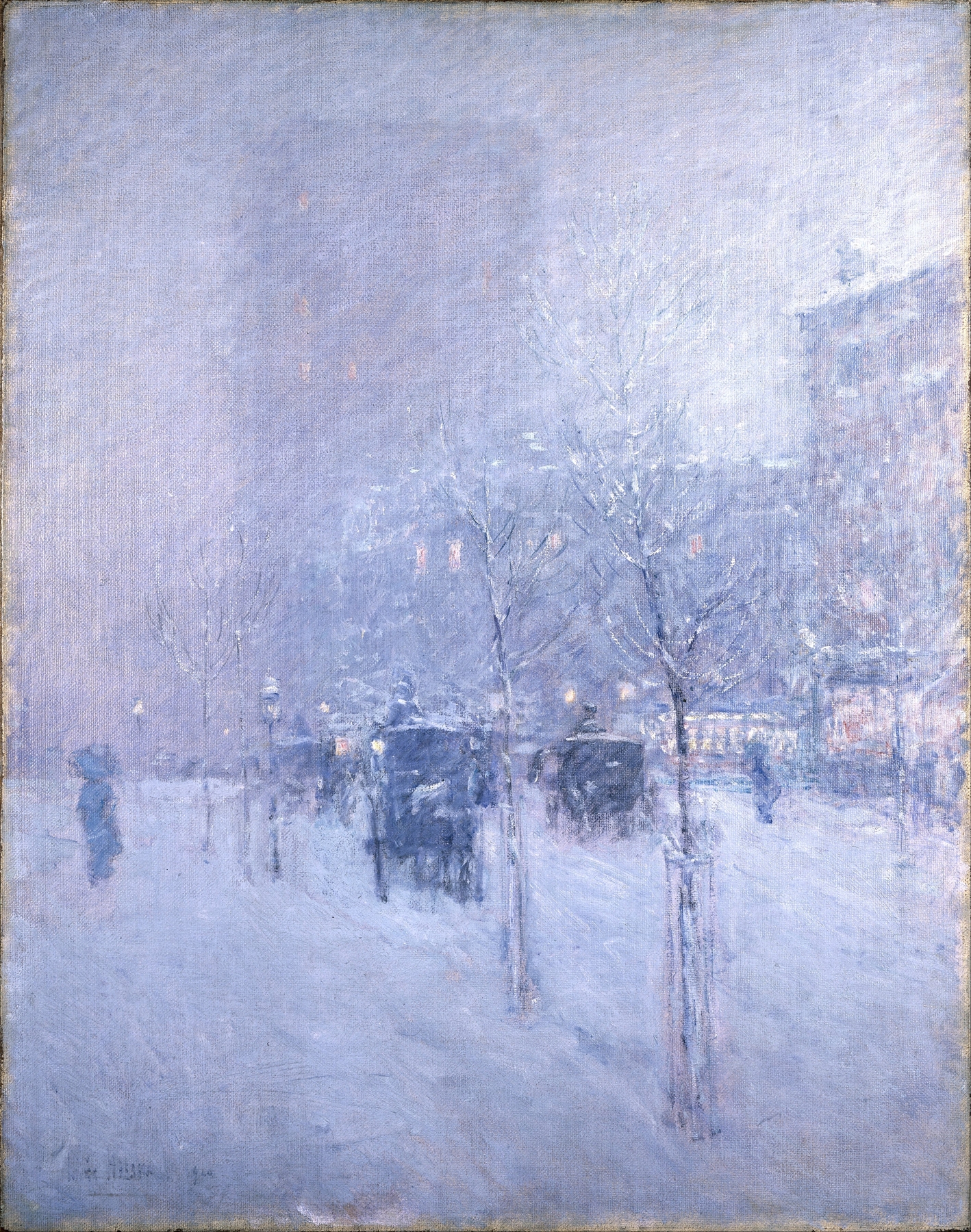
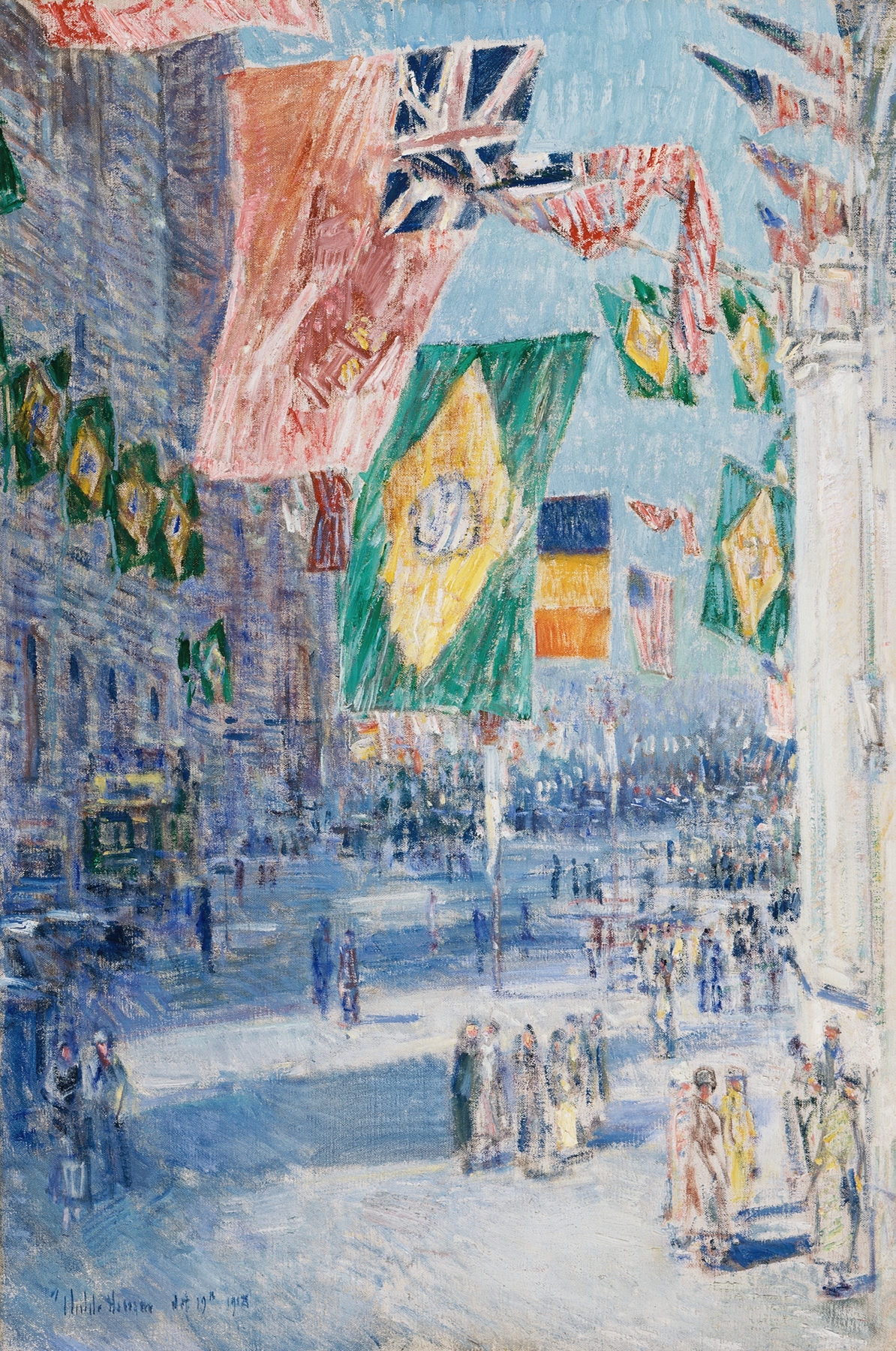
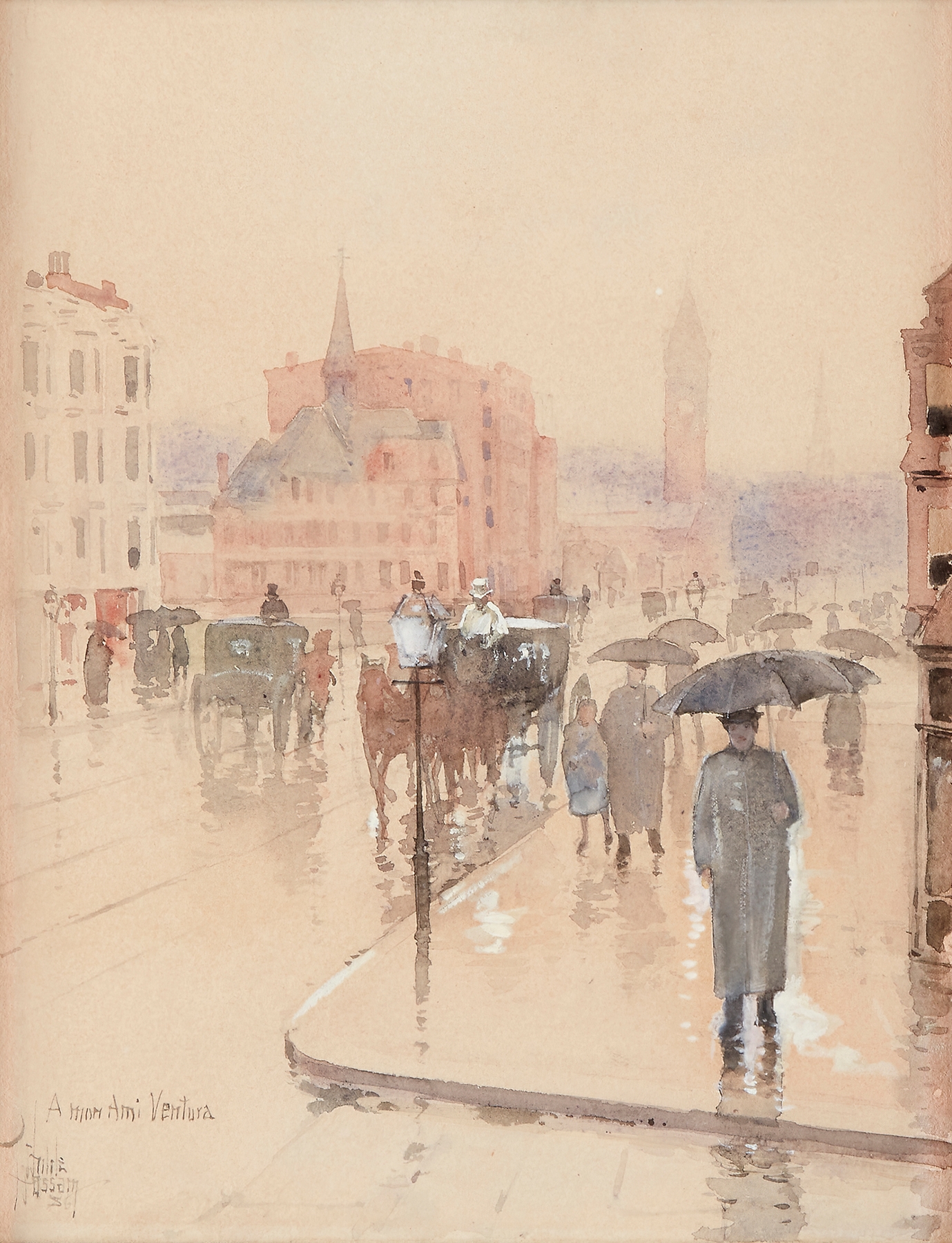
“To paint is to remember what time wants us to forget.” In the hush of a bustling moment, silence envelops the busy streets, capturing a fleeting emotion that resonates deeply with the viewer. Childe Hassam’s New York Street invites contemplation, urging us to explore the quiet amid the chaos of urban life. Look closely at the foreground, where figures move purposefully, their forms rendered with a blur that suggests motion yet hints at isolation. The muted palette of grays and browns contrasts with splashes of vibrant color from shopfronts, creating a dynamic interplay that reflects the heterogeneous nature of city life.
Notice how light filters through the buildings, casting soft shadows that anchor the scene, while the sky looms overhead, pulling our gaze upward toward the unseen heights of ambition. The painting embodies a tension between the energetic pulse of the street and the serene moments captured within it. Each figure, a solitary entity, seems caught in their own reverie, hinting at stories untold. The juxtaposition of the vibrant life of the city against the stillness of the moment speaks to the paradox of urban existence — bustling yet profoundly solitary, connected yet deeply personal.
In 1902, Hassam painted this piece during a vibrant period in American art where the Impressionist movement was gaining traction. Living in New York City among countless artists, he was influenced by the dynamic changes of the urban landscape while grappling with his own identity as a painter. This moment in his life reflects not only a personal journey but also the broader evolution of modern art, as cityscapes began to redefine the possibilities of expression.