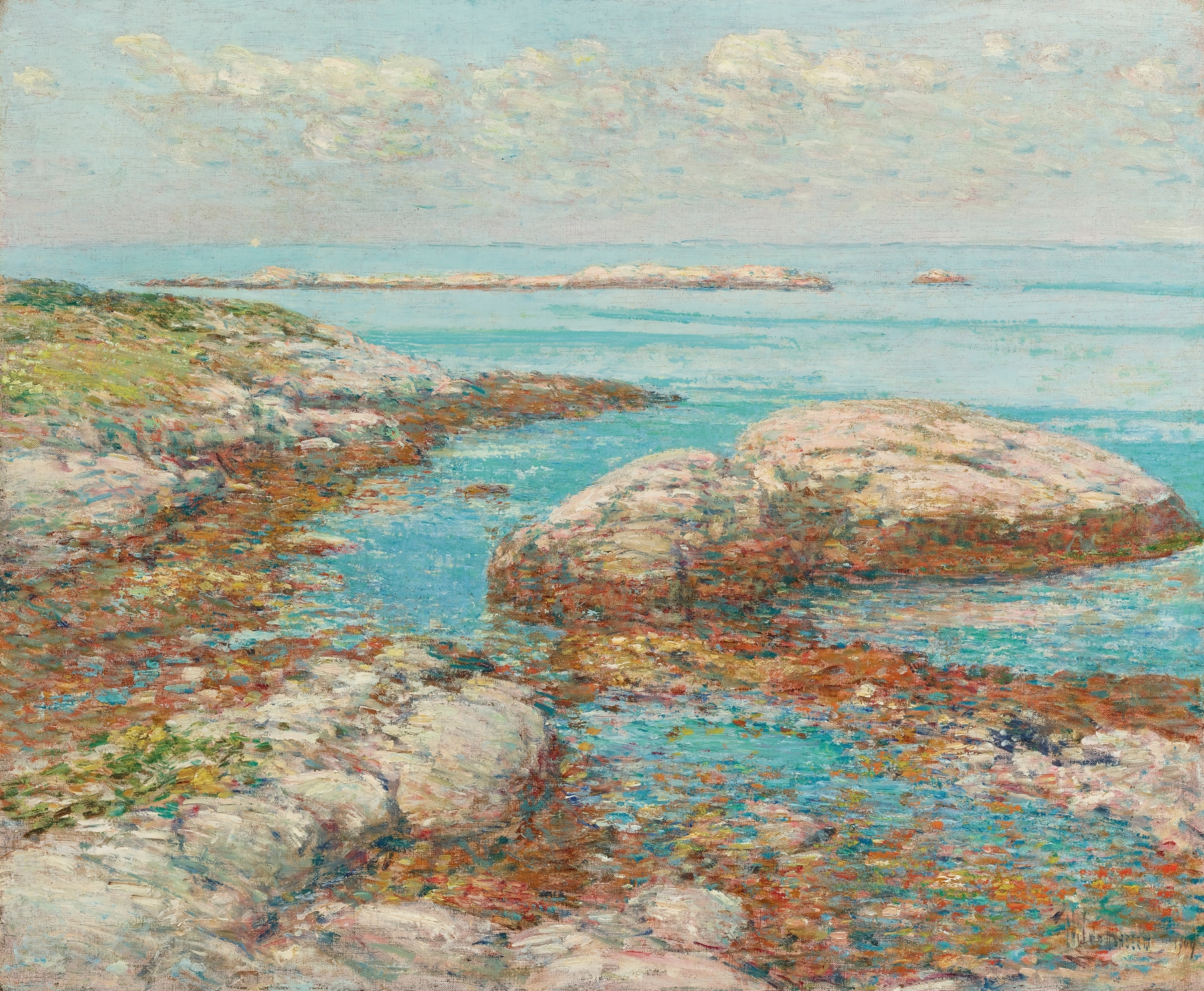
Rocks At Appledore, Morning — History & Analysis
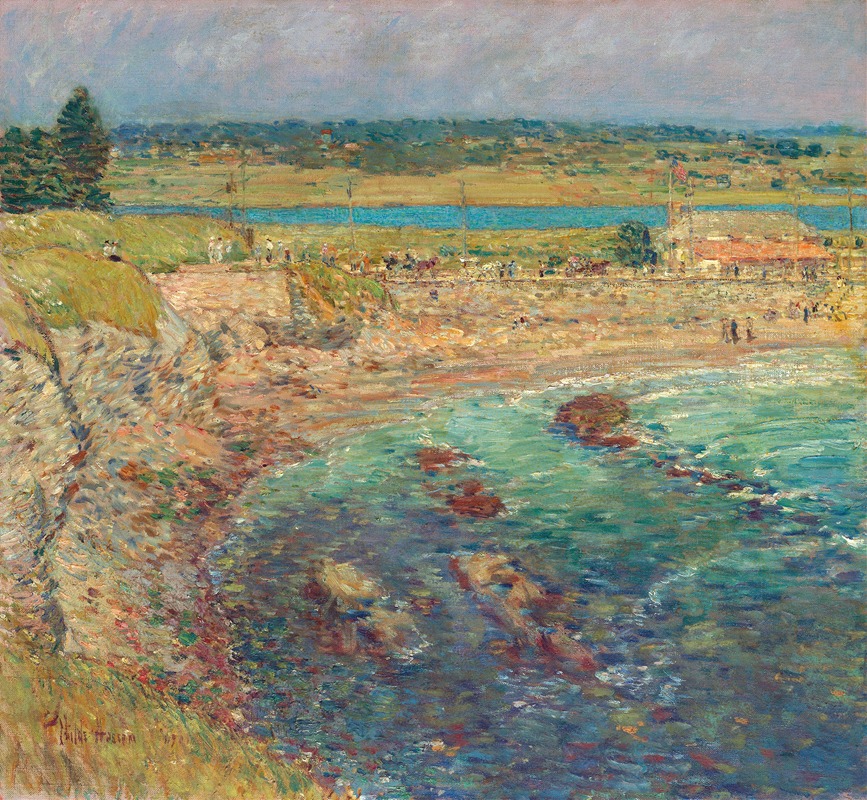
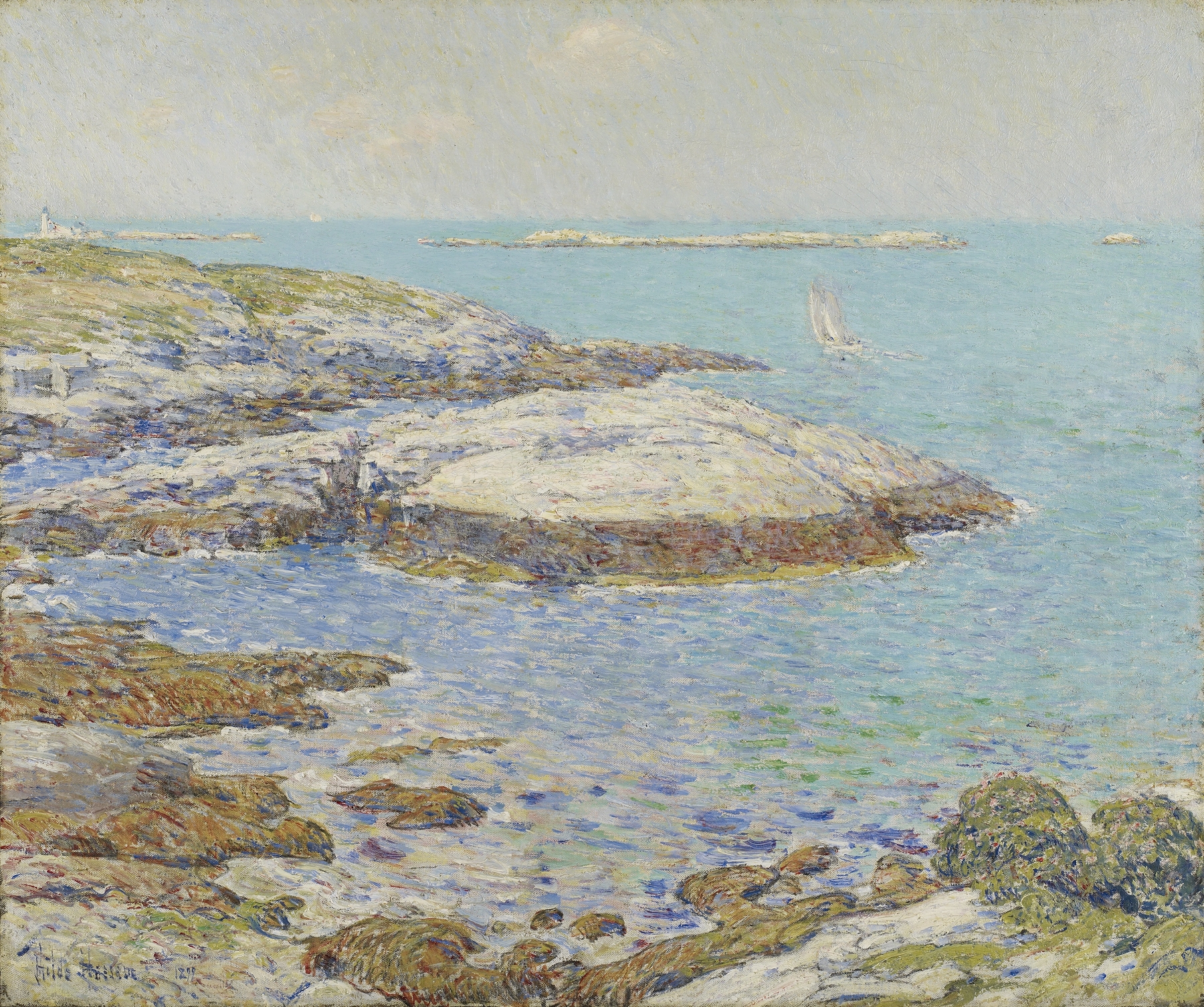
“Art reveals the soul when the world turns away.” In Rocks At Appledore, Morning, the legacy of a moment captures the essence of nature's tender yet powerful dialogue with time, echoing a beauty that extends beyond the canvas. Look to the foreground, where the jagged rocks emerge boldly from the crystalline water, their surfaces kissed by a gentle light. The palette is a symphony of soft blues and warm creams, enveloping the scene in a serene embrace while the brushstrokes dance with an impressionistic rhythm. Notice how the light glimmers on the water's surface, creating a pathway that leads the eye into the depths of the painting, inviting deeper contemplation of the shoreline's quiet strength.
Delving deeper, ponder the contrasts at play: the ruggedness of the rocks stands resilient against the fluidity of the waves, symbolizing the clash between permanence and transience. Each stroke, layered and deliberate, speaks of the artist’s reverence for nature's interplay, while echoes of morning's soft light evoke feelings of renewal. This juxtaposition invites the viewer to reflect on their own place within the continuum of life and the legacies left behind.
In 1909, when this work was created, Childe Hassam was firmly established in the American Impressionist movement, painting in a time marked by rapid industrial change and a burgeoning appreciation for the natural world. He found inspiration along the coast of Maine, where the beauty of the landscape resonated with his artistic exploration of light and color. His legacy continues as a testament to the emotional depth and vitality that art can offer in an ever-evolving world.