Beach at Newport — History & Analysis
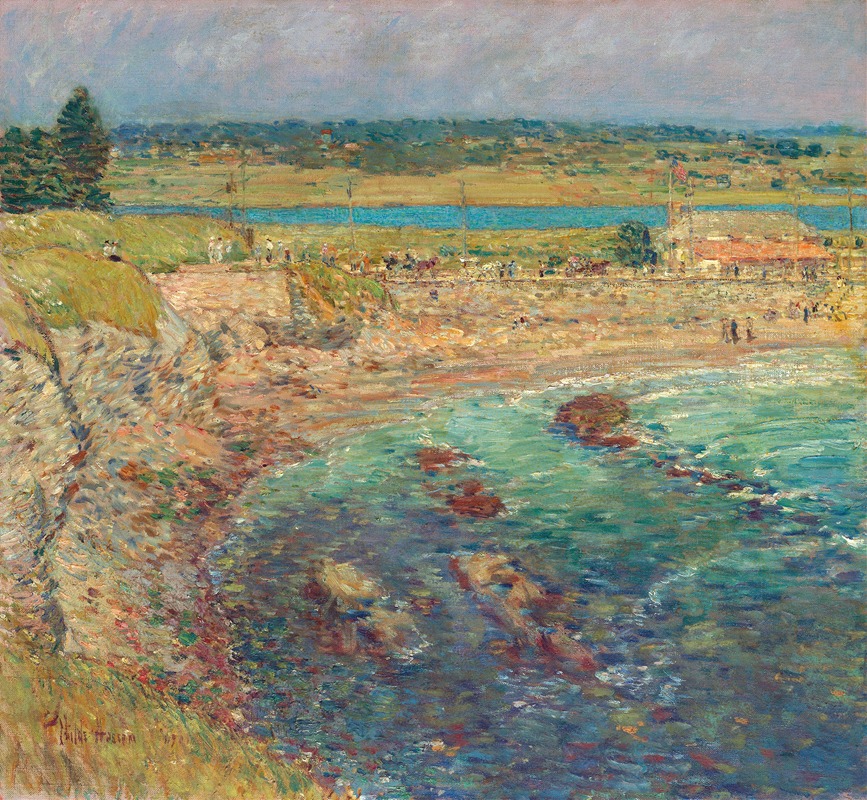
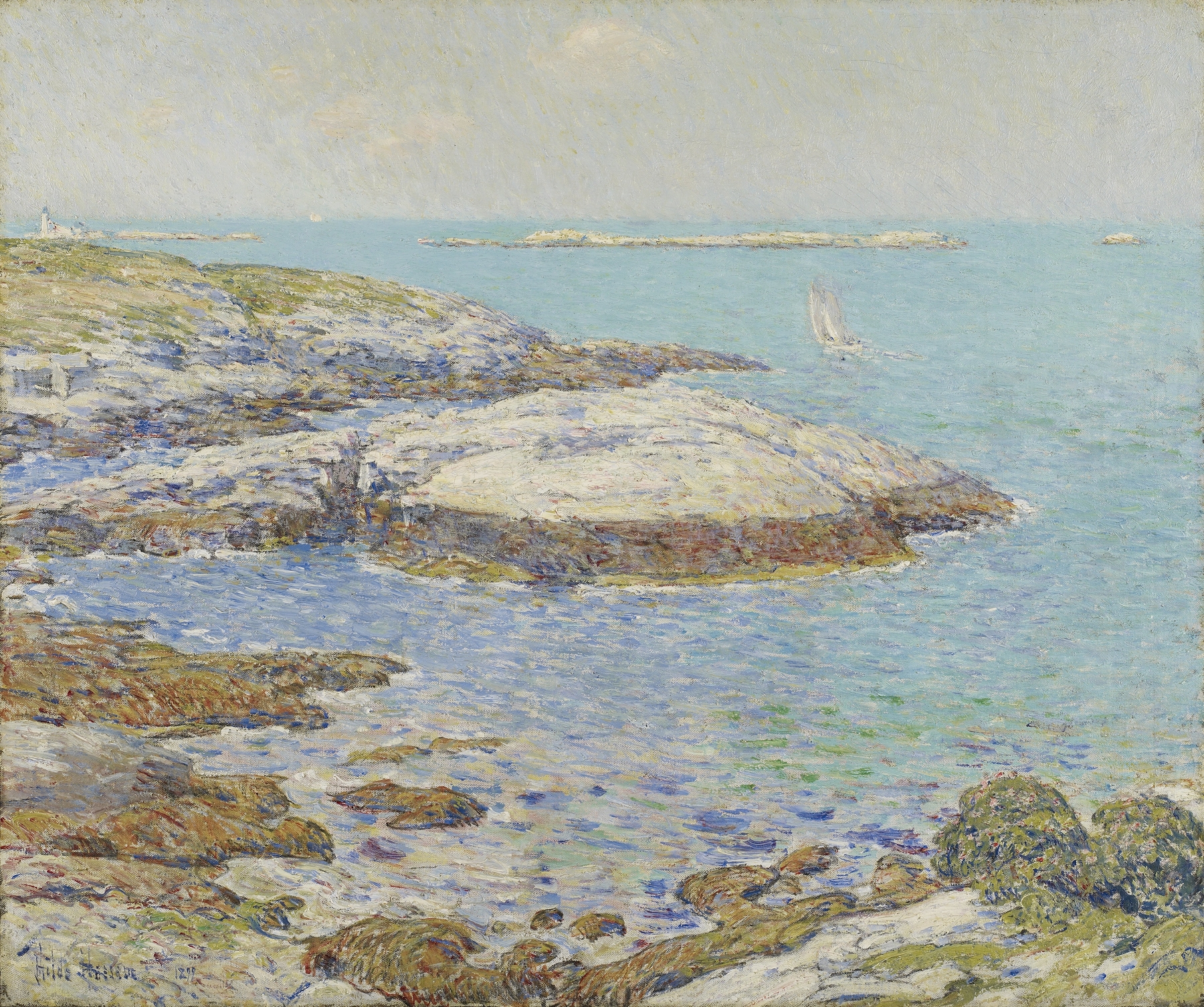
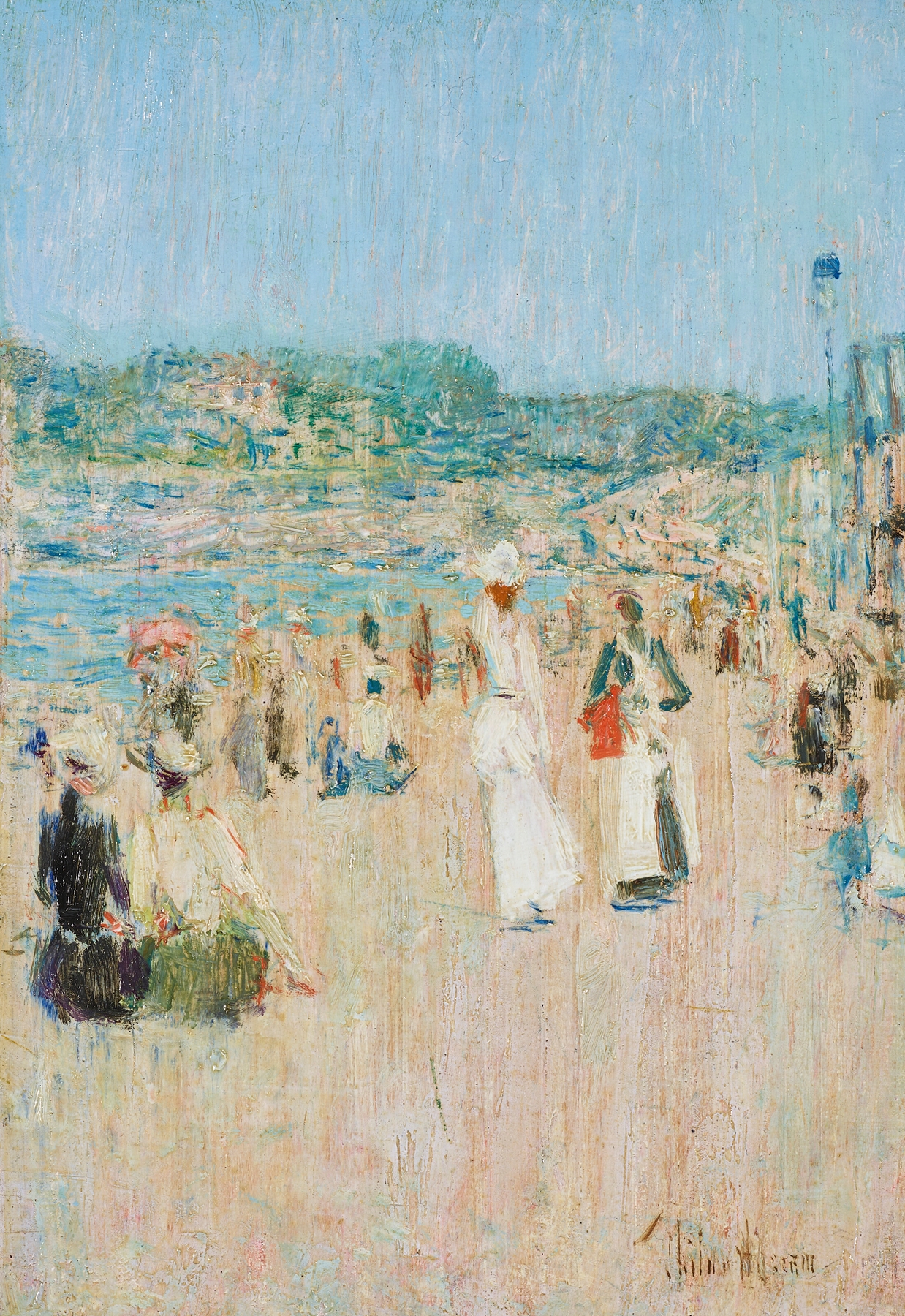
“Every silence here is a confession.” The chaos of life often finds its refuge in moments of stillness, especially by the sea. Look to the foreground, where hazy figures dot the sandy shore, their forms indistinct yet suggestive of joyful abandon. The waves, painted in fluid strokes of blue and white, rush forward, creating a rhythmic dance that draws the eye toward the horizon. Notice how the warm light, spilling across the canvas, highlights patches of golden sand, contrasting vibrantly with the cool shadows cast by nearby umbrellas.
It’s a scene alive with movement, yet the brushwork evokes a sense of fleeting tranquility amidst the bustling shoreline. Delve deeper into the composition, and the juxtaposition of chaos and calm becomes evident. The splashes of color suggest the frenetic energy of beachgoers, yet their blurred edges hint at the impermanence of each moment. This duality reflects the tensions of early 20th-century life—a world on the brink of modernity, where the simplicity of a day at the beach belies the complexities simmering beneath.
Each figure, each wave, expresses a story of its own, contributing to a grand narrative of societal change and the human desire for peace. Childe Hassam painted this work in 1901 during a period marked by significant artistic evolution in the United States. As a key figure in the American Impressionist movement, he sought to capture fleeting moments of beauty in everyday life. At this time, he was increasingly exploring the vibrancy of coastal landscapes, while the art world buzzed with new ideas and forms that challenged traditional perceptions.