Northern Sea in the Moonlight — History & Analysis
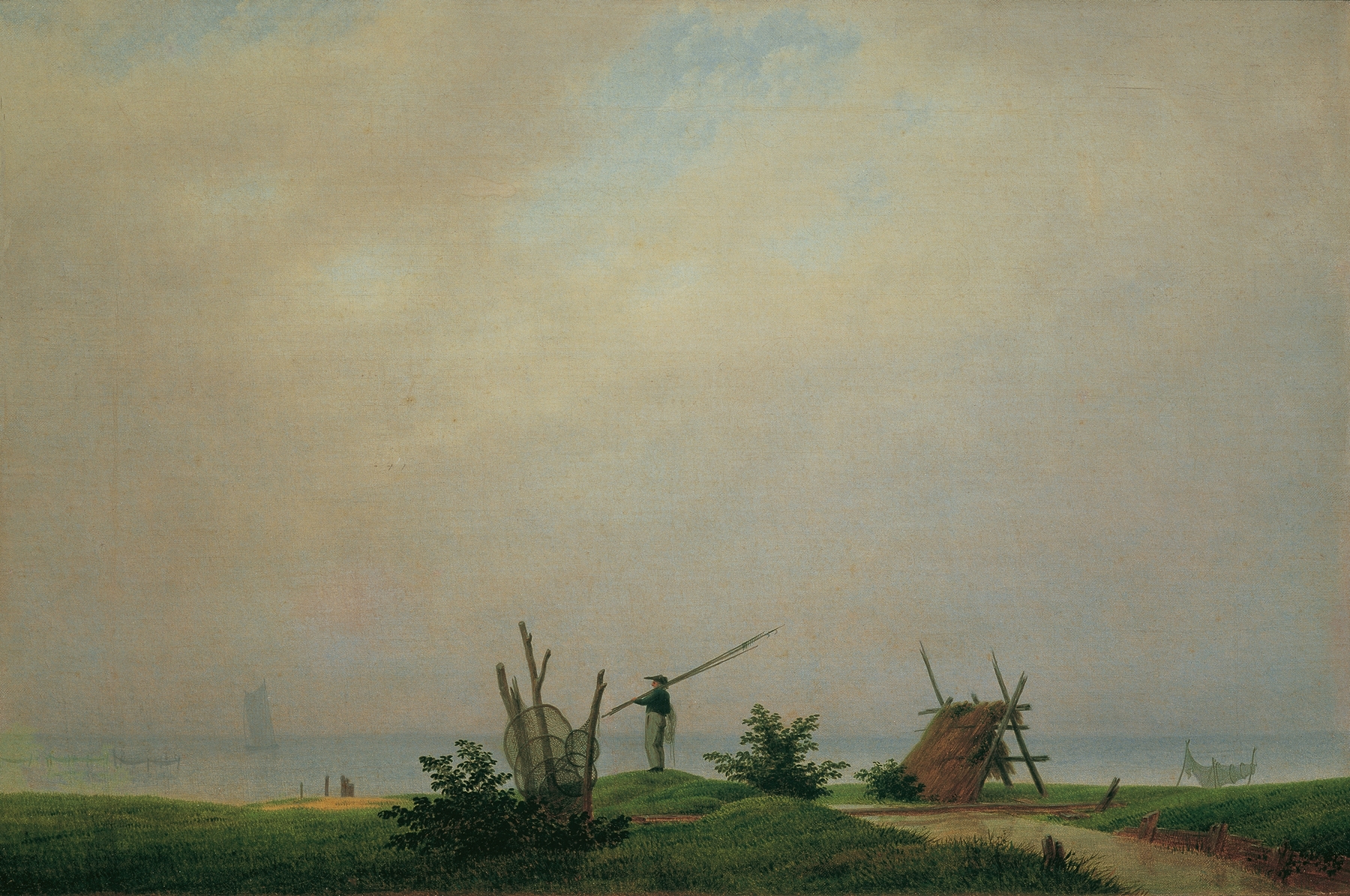
Could beauty survive in a century of chaos? This timeless question resonates through the quiet depths of Friedrich's work, echoing a profound longing that stirs the soul. Focus first on the luminous moon casting a silvery glow over the dark waters, creating a path of light that seems to beckon the viewer. Notice how the sky, painted with soft blues and grays, dances with clouds, hinting at both tranquility and turmoil.
The stillness of the sea contrasts beautifully with the rugged, abstract forms of distant cliffs, encapsulating the tension between nature's sublime beauty and the chaos of human existence. In the foreground, the solitary figure gazes out toward the horizon, embodying a sense of introspection and yearning. This figure is enveloped in an aura of loneliness, yet there’s a sense of hope in their posture, as if they are seeking solace in the vastness of the night.
The juxtaposition of the serene moonlight against the tumultuous waves suggests a struggle between inner peace and external unrest, inviting viewers to ponder their own search for meaning amid uncertainty. Created between 1823 and 1824, this piece emerged during a time when Friedrich was grappling with personal loss and the shifting tides of Romanticism in art. Painted in Germany, he was influenced by a growing fascination with nature and the human psyche, capturing the melancholic spirit of the age while subtly affirming the enduring power of beauty in a world often overshadowed by despair.