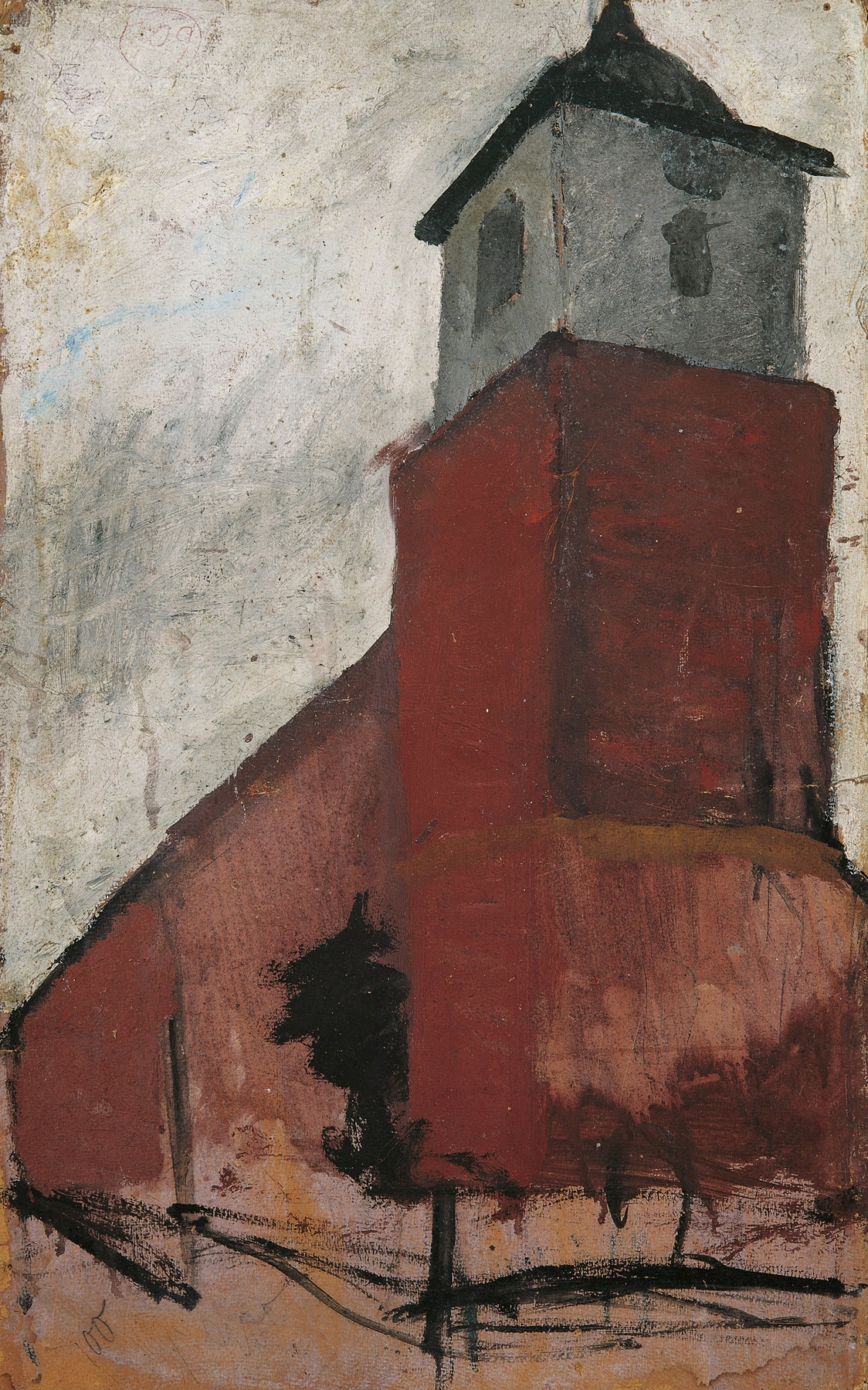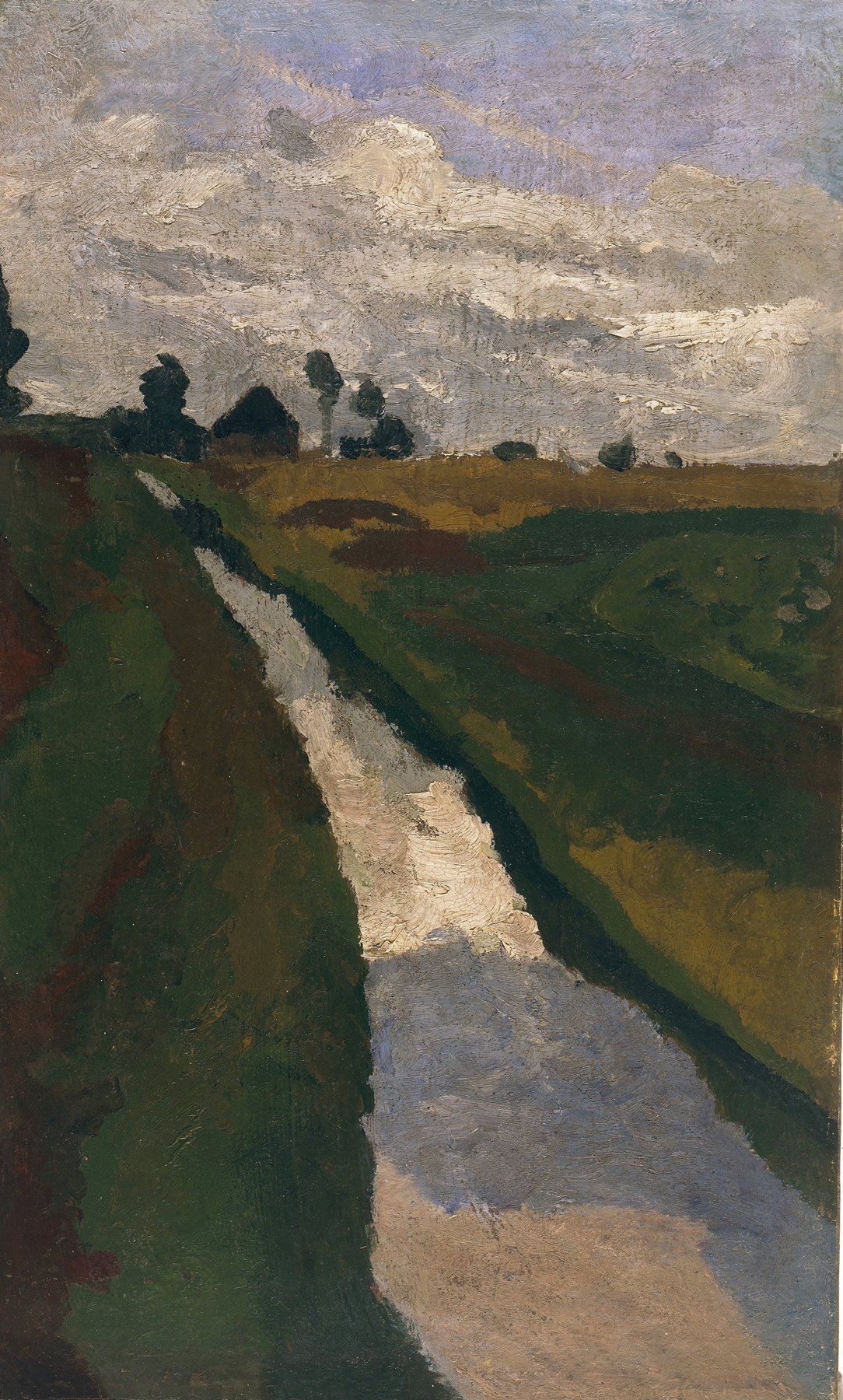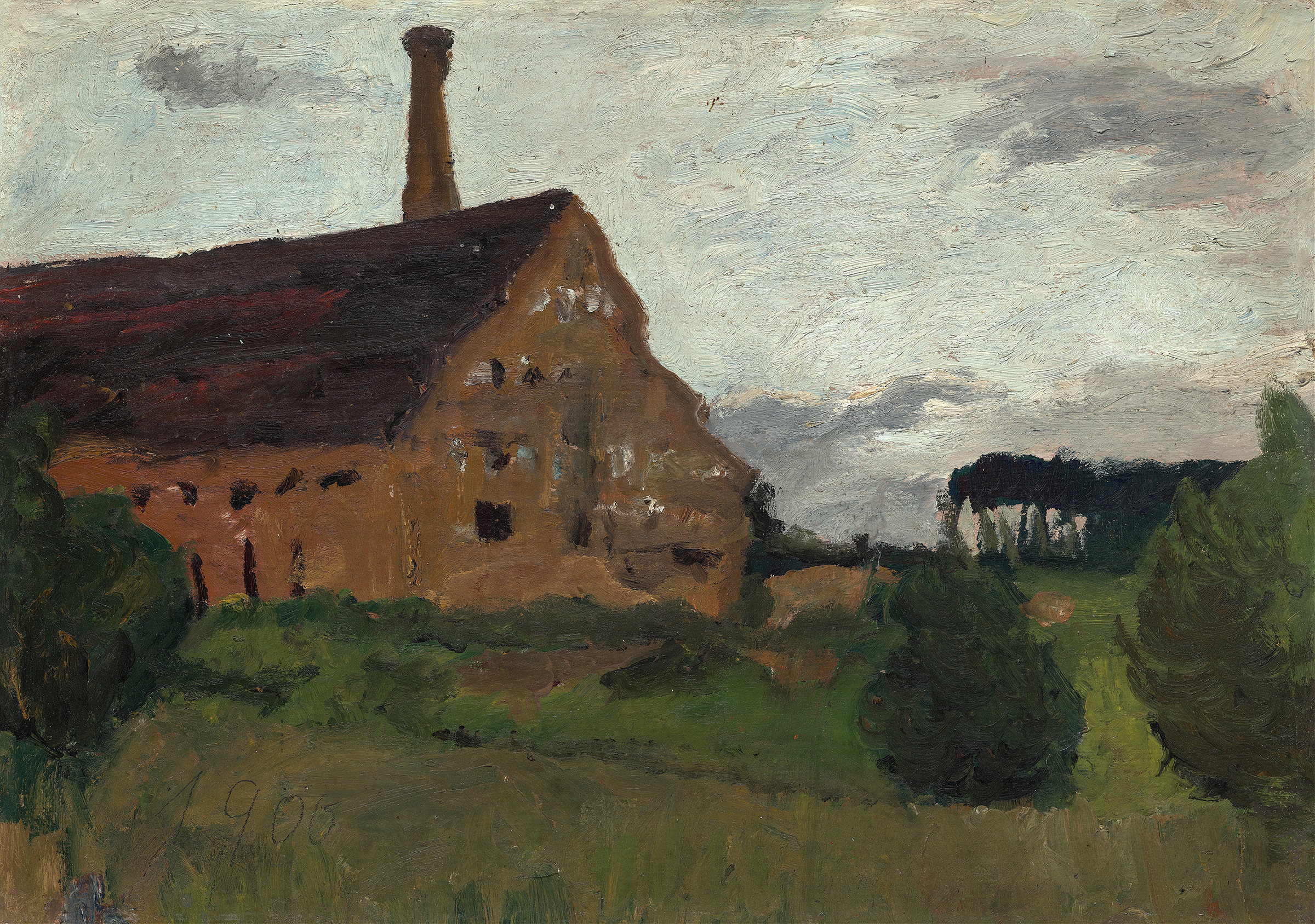
Did the painter know this moment would outlive them? In the quiet depths of the canvas, a factory stands — a monument to rebirth amidst the echoes of industry, a testament to human endeavor. Look to the center of the composition, where the sturdy brick structure looms, its facade bathed in a muted palette of browns and ochres. The slanted roof is kissed by soft, diffuse light, creating a juxtaposition with the starkness of the surrounding landscape. Notice how the artist's brushstrokes convey the texture of the bricks, lending a tactile quality that invites you to reach out and touch history. The absence of figures enhances the loneliness of the scene, allowing the artist to breathe life into the inanimate. In the stillness of the moment, there are whispers of resilience and transformation. The factory, though silent, resonates with the promise of progress, standing against a backdrop that hints at both decay and renewal. The muted colors evoke a somber mood, yet there's a sense of vitality — a suggestion that from this industrial heart, new beginnings will emerge. This duality reflects the contrasts in the artist's own journey, as she sought to portray both the beauty and the harsh realities of the world around her. In 1900, Modersohn-Becker painted *Old Factory* during her time in Germany, a period marked by significant social and artistic upheaval. She was exploring the boundaries of expressionism while grappling with her own identity and role as a female artist in a male-dominated field. The industrial landscape she depicted was not just a backdrop but a crucial reflection of the changing times, as Europe was on the cusp of modernity — a world ready for rebirth.