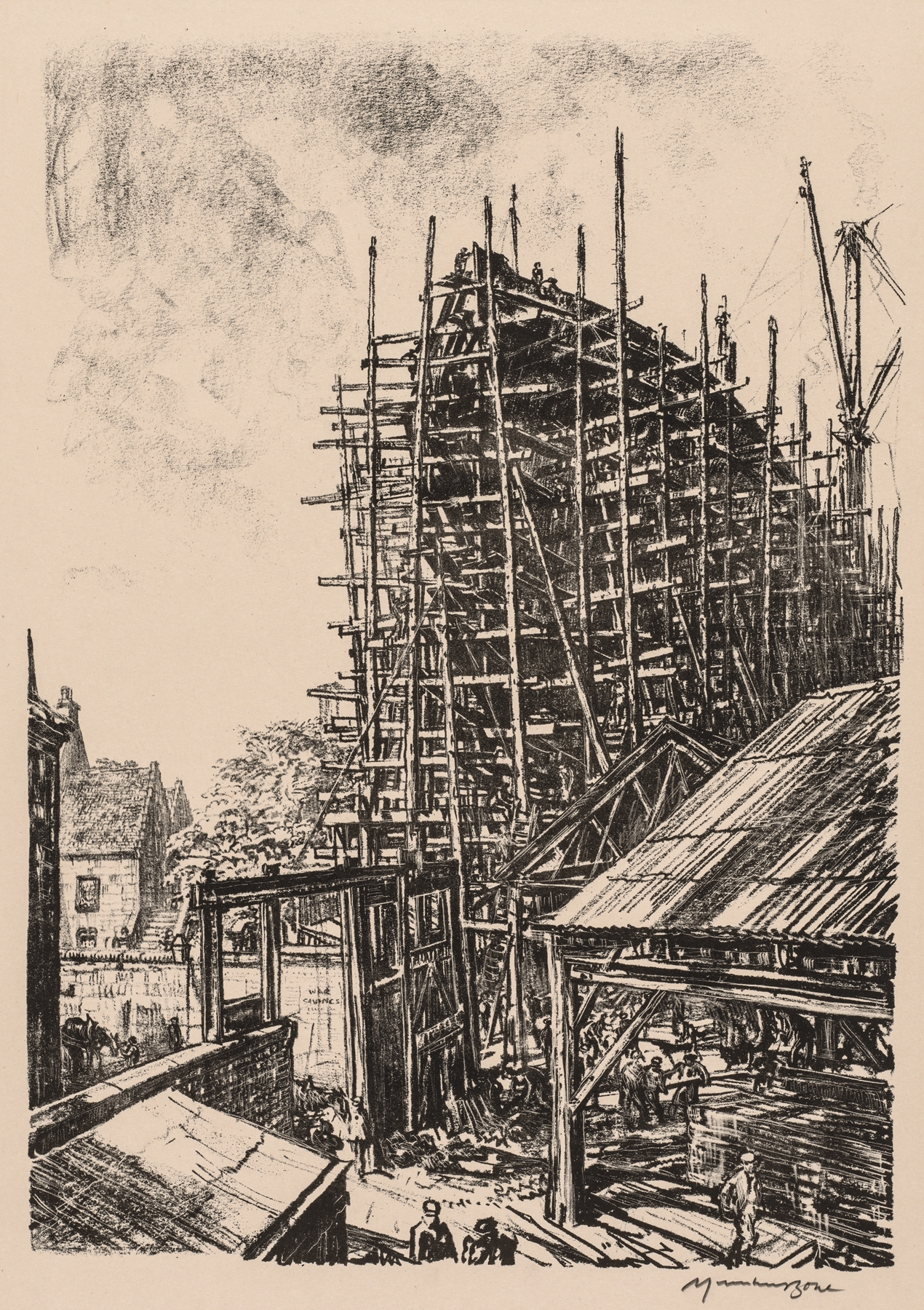
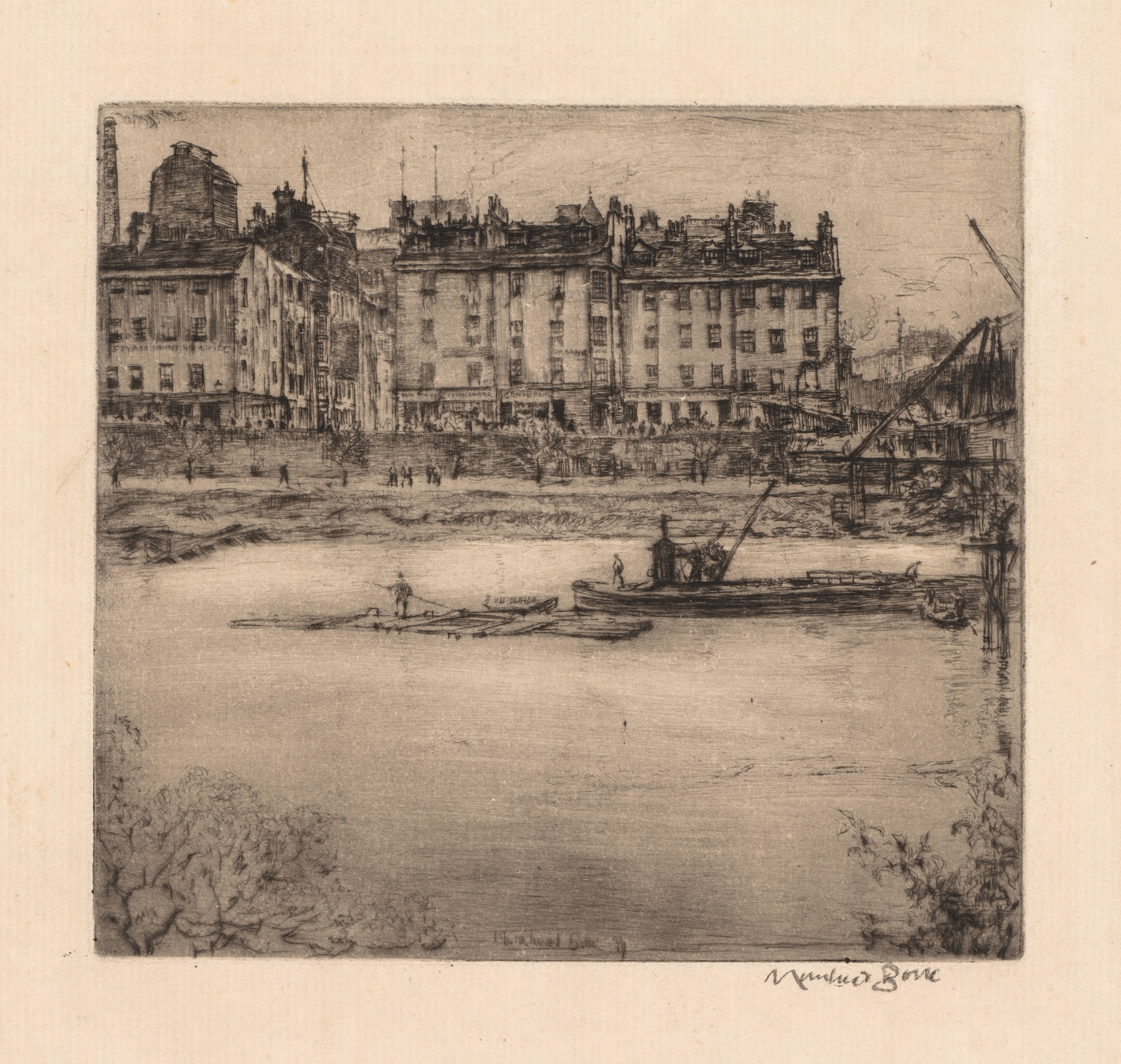
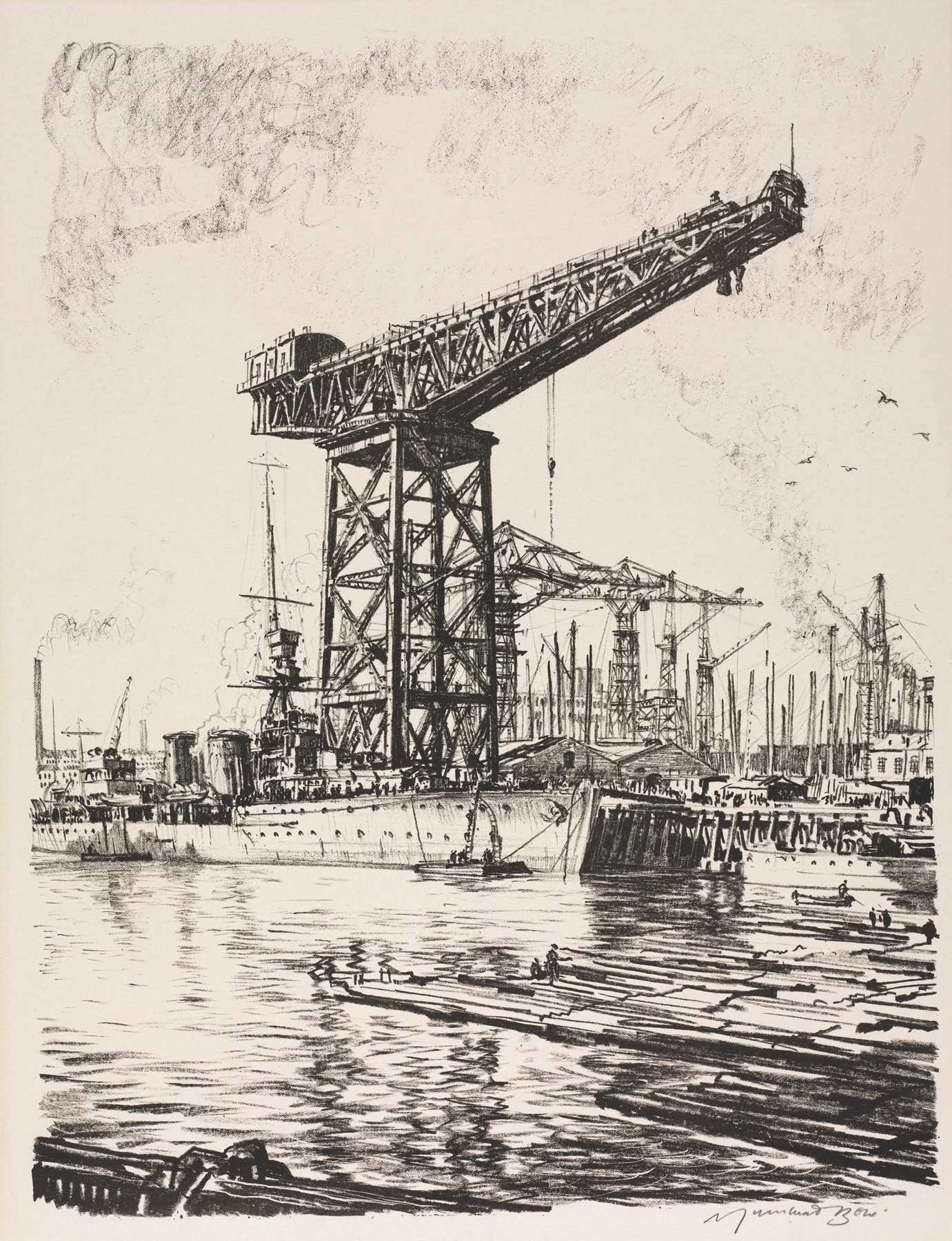
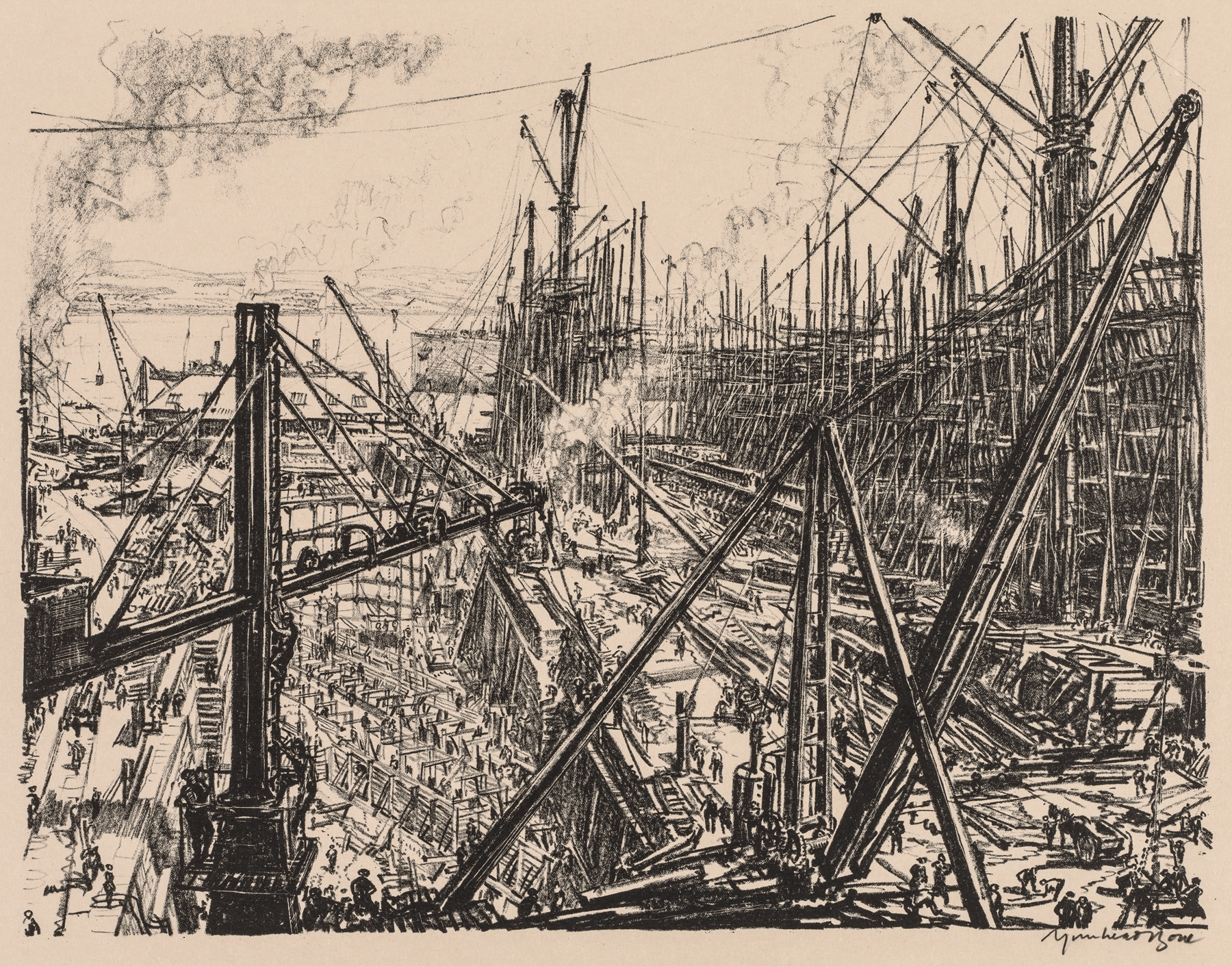
On the Clyde, 1917-1918; Building a Cross Channel Train Ferry — History & Analysis
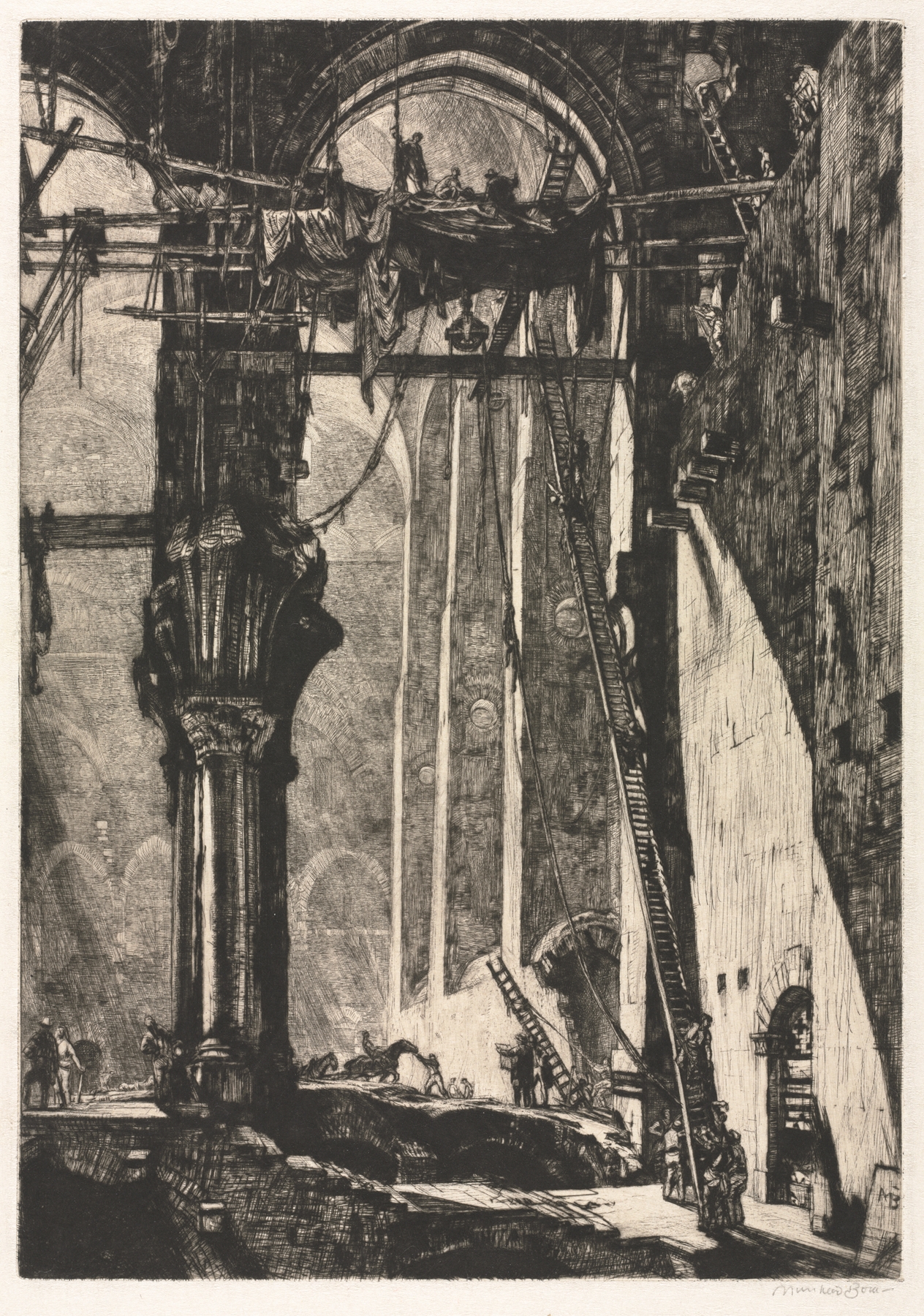
“Under the brush, chaos becomes grace.” In the world of art, this transformation resonates powerfully with the tumultuous energy of change and innovation. Look closely at the swirling lines and bold strokes that form the chaotic scene in On the Clyde, 1917-1918; Building a Cross Channel Train Ferry. The artist captures the frenetic activity of workers and machinery, directing your gaze first towards the robust figures laboring under a tumultuous sky. Notice how the dark, brooding clouds contrast sharply with the bright flashes of labor, each gesture emphasizing a moment in the flow of construction that echoes both urgency and determination.
Amidst the apparent disorder, there is a profound harmony. The juxtaposition of the rough, jagged structures against the fluidity of the workers’ movements invites reflection on industrial progress in a time of uncertainty. The tension between light and shadow reveals not just the physical toil but the emotional weight of wartime labor—each stroke echoing the sacrifice and hope of those involved in crafting something monumental from chaos.
During this period of 1917-1918, the artist found himself in the midst of World War I's turmoil, yet he chose to focus on the resilience of the human spirit through industry. Working in Britain, Bone's perspectives were grounded in the realities of a nation adapting to war. This artwork speaks to the evolution of society, as it contemplates not just a ferry but the promise of connection amid the chaos—an image of progress forged through uncertainty.