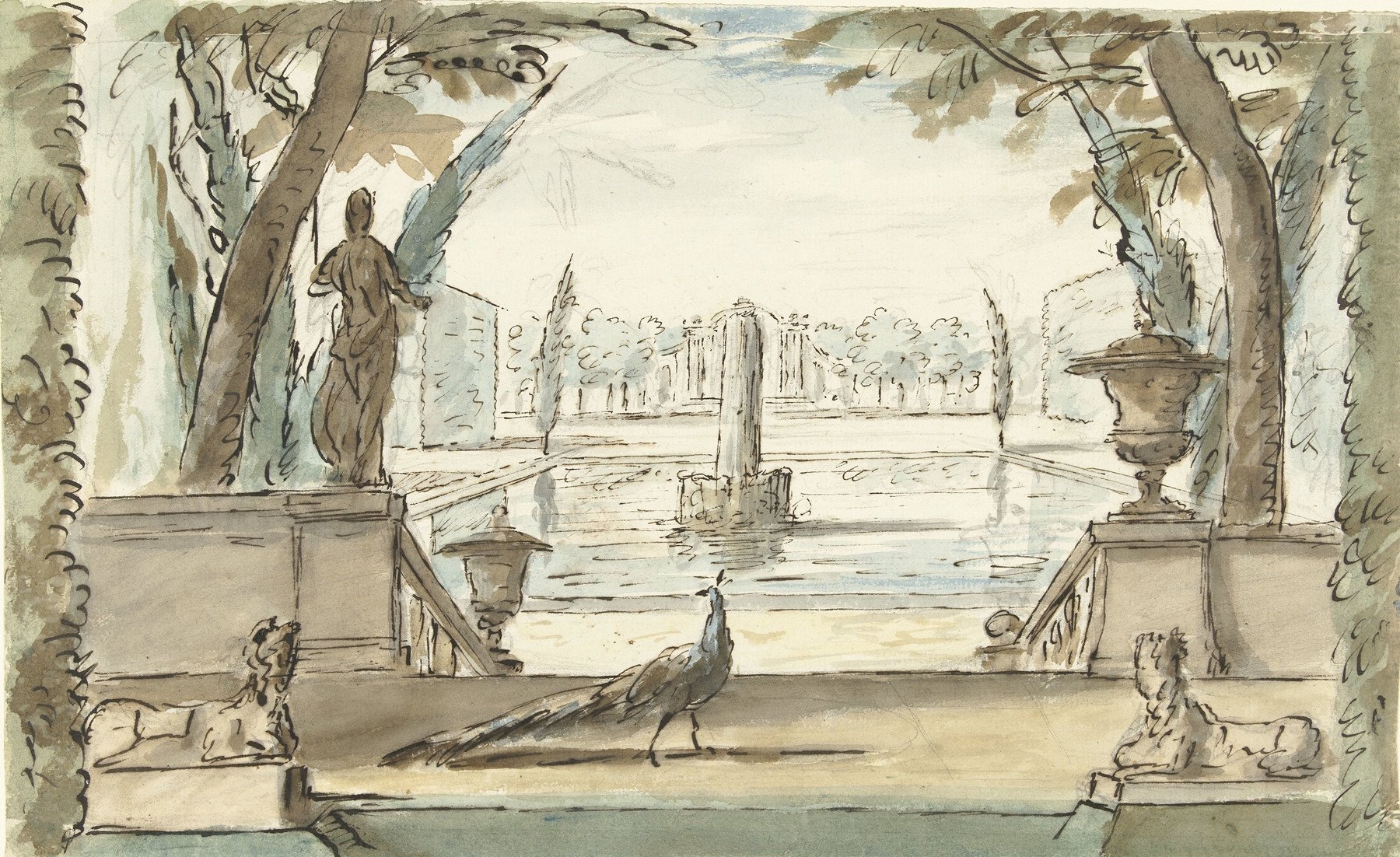
Ontwerp voor een kamerbeschildering met stenen bogen met een fontein en zicht op een tuin — History & Analysis
When did color learn to lie? In the delicate interplay of hues and shapes, the truth of movement reveals itself in a silent dance. Look to the left where soft, ethereal shades of blue drift gracefully across the canvas, forming the serene backdrop for the architectural elements. Notice how the artist employs fluid lines to suggest the gentle curve of the arches, while the fountain at the center is poetically rendered, its water appearing almost to shimmer under an imagined sun.
Each stone seems to breathe, inviting the viewer to step into this dreamlike chamber and share in its elegance. Yet, amid the harmony lies a tension— the juxtaposition of the structured arches and the wild growth of the garden beyond. The careful design suggests human intention, while the lush foliage speaks of nature’s untamed beauty. This duality resonates deeply; the viewer is drawn to the contrast between the confines of the built space and the allure of the outside world, whispering secrets of freedom and restraint.
Created between 1677 and 1755, this work emerged during a period of Baroque exuberance in the Netherlands, where artists like the creator of this piece engaged with themes of architecture and landscape to reflect societal aspirations. At this time, the world of art was undergoing profound transformation, with an increased interest in decorative arts and a shift toward integrating nature into everyday life. The artist, residing in Nijmegen, was part of a vibrant community that celebrated both the grand and the intimate in design, making this piece a testament to the era's artistic evolution.