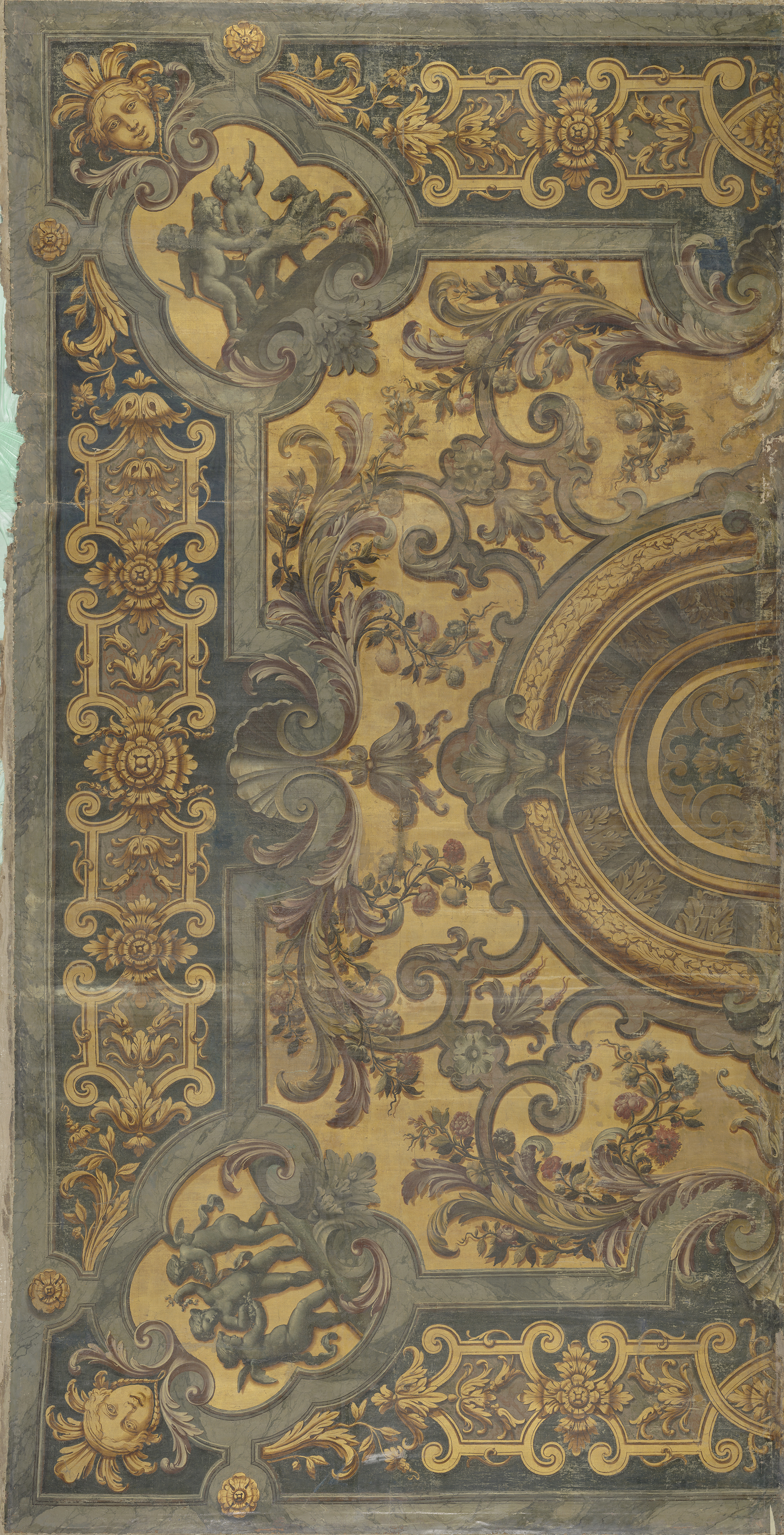
Ornamentale plafondschildering met in de hoeken voorstellingen van putti — History & Analysis
“Every silence here is a confession.” In the stillness of the grand ceiling painted by an unseen hand, layers of ornamentation unfold their secrets, inviting the viewer into a realm of awe and reverence. Look to the intricate details of the floral motifs that dance across the expanse. The vibrant blues and greens interplay with golden highlights, drawing your gaze effortlessly to the corners where cherubic figures, the putti, frolic in joyous abandon. Each brushstroke reveals a deliberate choice, a blend of technique and color that creates a harmonious yet dynamic composition, as if the ceiling itself breathes life into the space below.
Yet, there is a tension between the exuberance of the playful putti and the somber gravity of the setting. The contrasting innocence of their expressions juxtaposes the weight of the ornate architecture that frames them. This duality invites reflection; in their lightness, they also carry the burden of untold stories, an echo of the human experience tucked into the corners of opulence. Here, amidst the grandeur, is a subtle reminder of fragility entwined with joy.
Created during the early 18th century, this ceiling painting emerged in a vibrant period of Dutch artistry, where decoration and allegory flourished. Elias van Nijmegen, working within the context of Baroque tendencies, sought to elevate domestic spaces with his craftsmanship. The era was marked by a rich interplay between art and architecture, reflecting societal values through intricate designs that still resonate with viewers today.