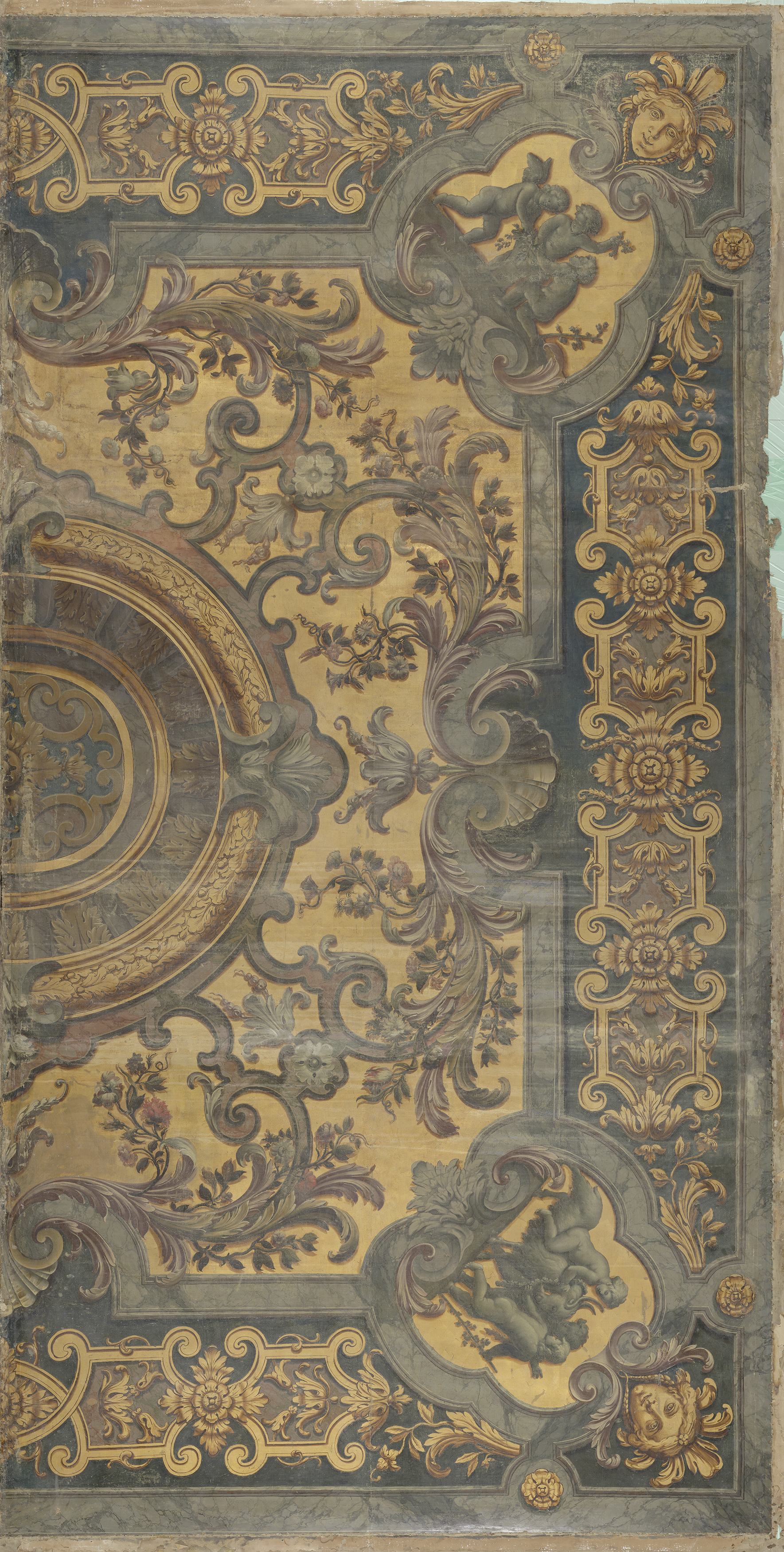
Ornamentale plafondschildering met in de hoeken voorstellingen van putti — History & Analysis
Is this a mirror — or a memory? In the ornate expanse of the ceiling painting by Elias van Nijmegen, reflections of faith and cherubic figures intertwine, inviting the viewer to ponder the divine and the ephemeral. The vibrant colors and intricate details serve as a bridge between the earthly and the ethereal, transforming a mundane ceiling into a tapestry of spiritual resonance. Look to the center where the brilliant gold and white swirl around figures of putti, their playful forms bursting with energy.
Notice how the light dances across their cherubic faces, illuminating their expressions with an almost palpable warmth. The delicate brushwork creates a sense of motion, as if the tiny angels are caught in a moment of joyous celebration, surrounded by lush foliage and celestial motifs that spill into the corners of the frame, beckoning the eye to explore every inch of this heavenly panorama. Beneath the surface, tensions arise from the contrast between the joyous innocence of the putti and the grandeur of their surroundings. This juxtaposition suggests a dialogue between the sacred and the secular, challenging the viewer to consider the nature of faith and its manifestations.
The lavish ornamentation implies a desire for transcendence, while the playful figures remind us of the joy inherent in belief, merging the divine with the human experience. Created between 1695 and 1755, this work emerged during a period marked by the flourishing of decorative arts in the Netherlands. Van Nijmegen, influenced by the Baroque style, sought to enhance the spiritual atmosphere of architecture through his mastery in ceiling paintings. This era was characterized by a growing emphasis on both religious and secular themes, as artists strived to capture the complexities of faith in a rapidly changing world.