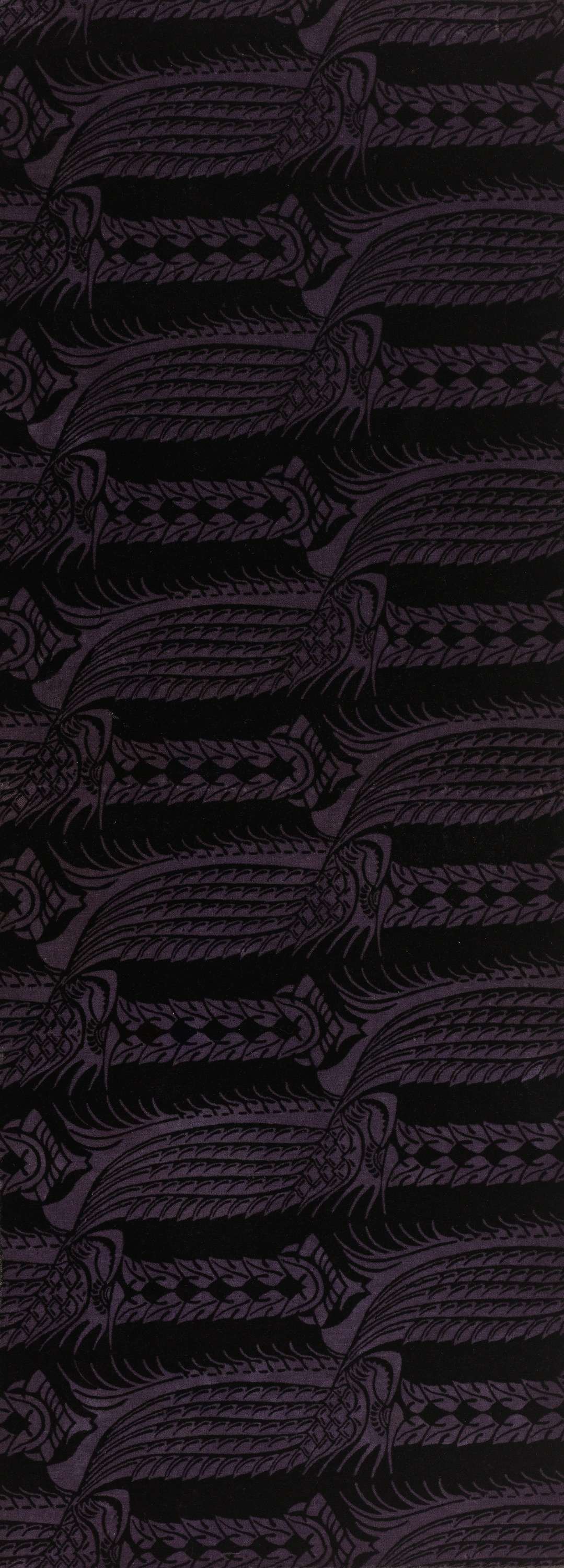
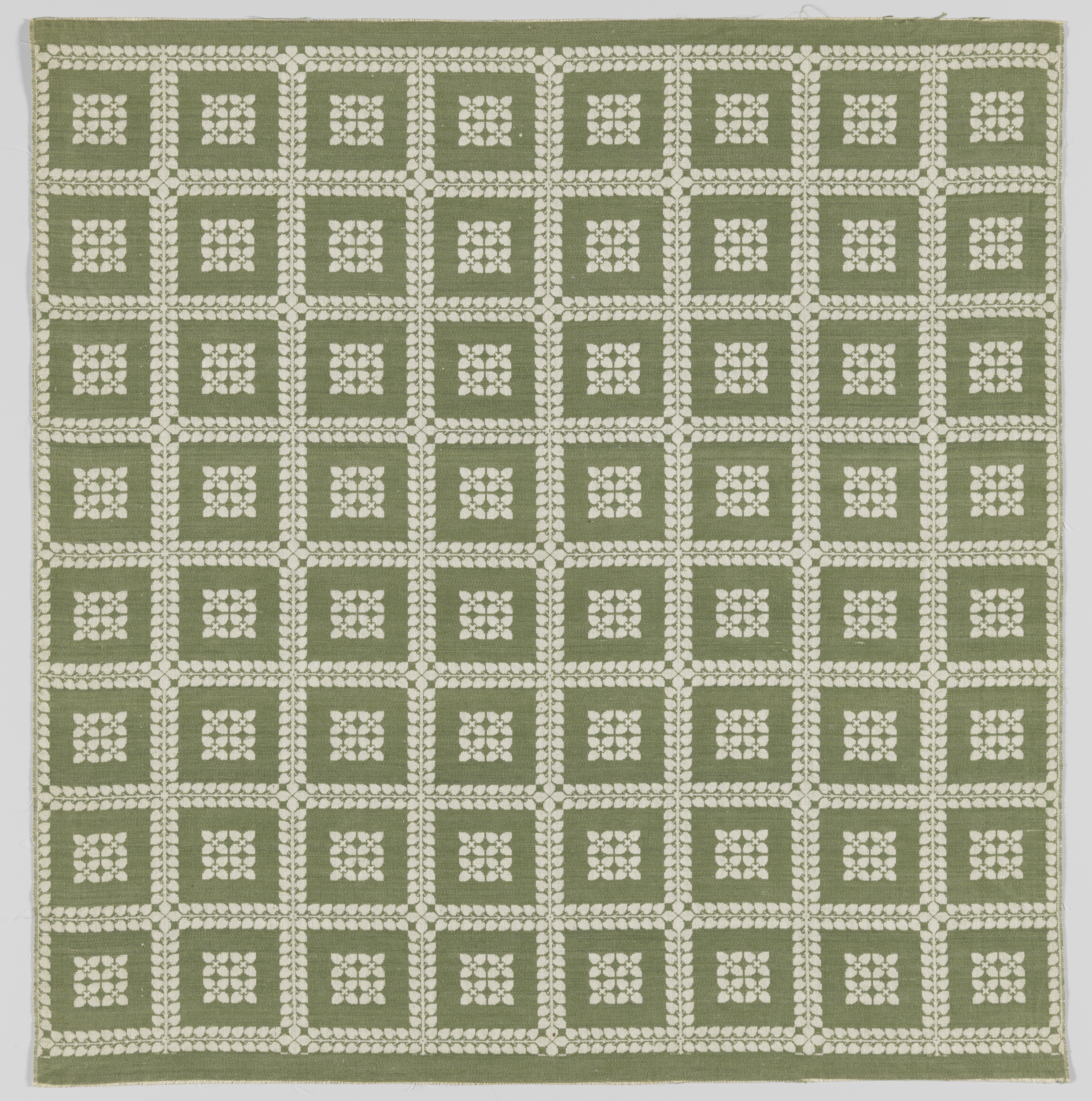
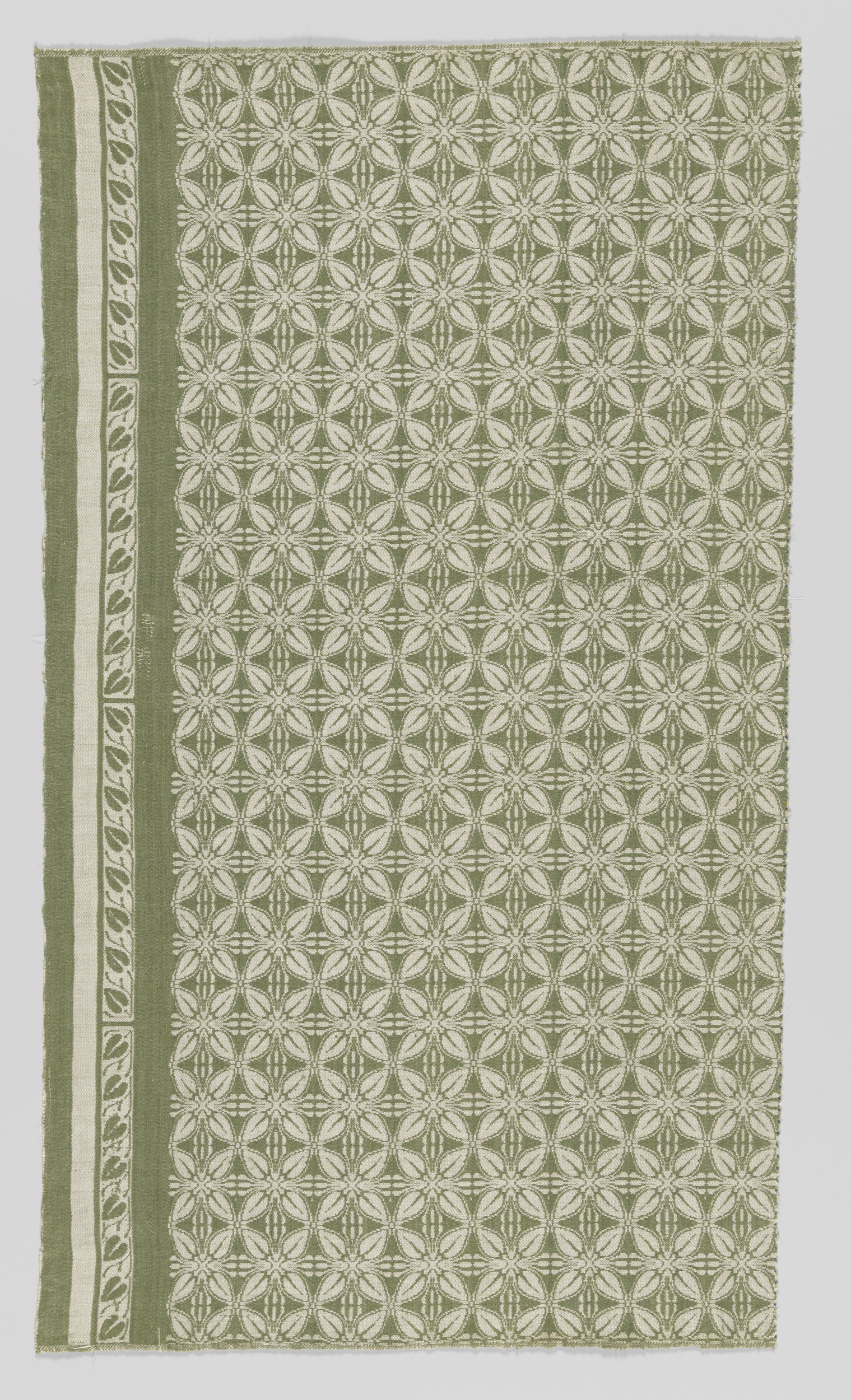
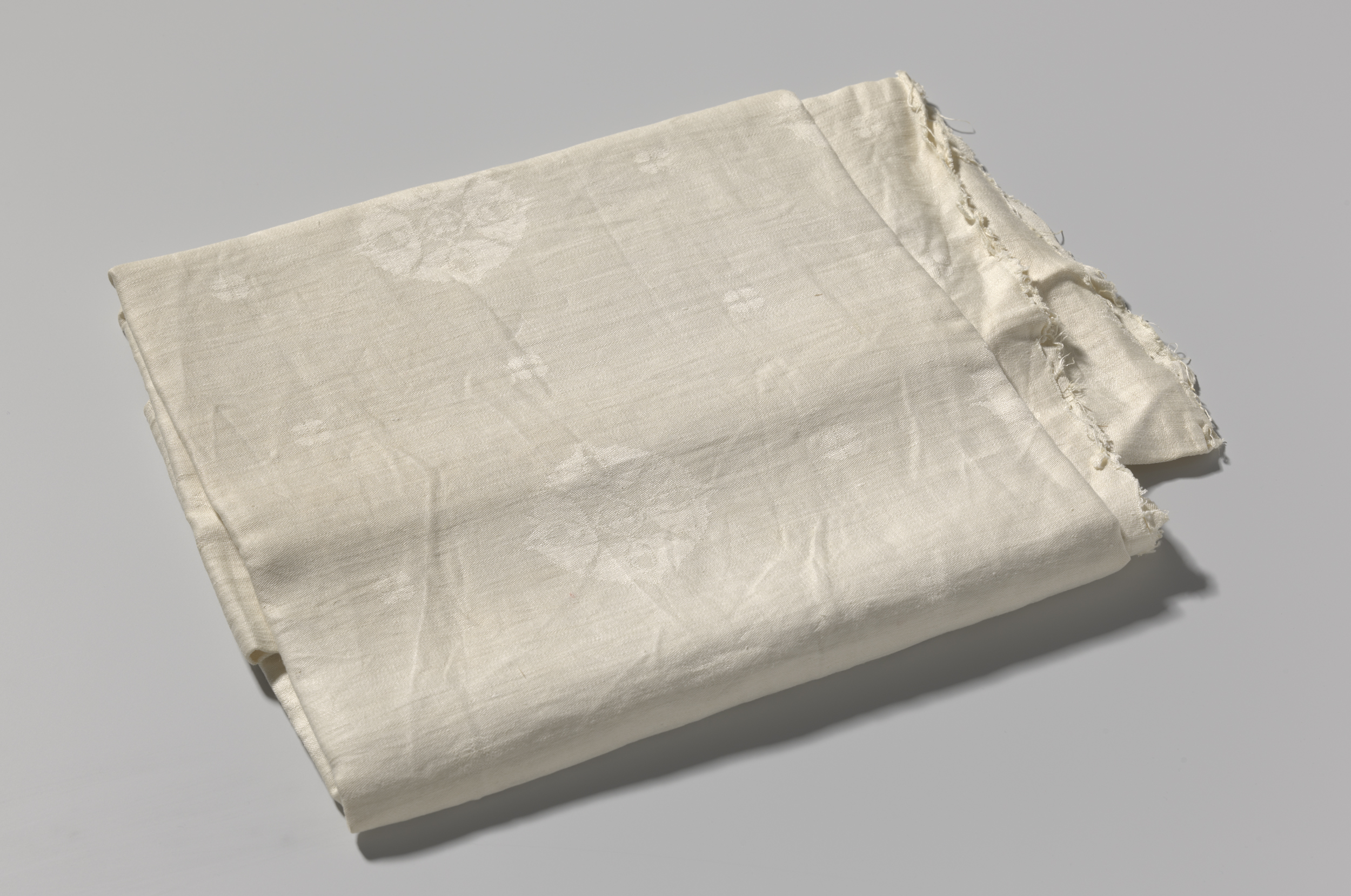
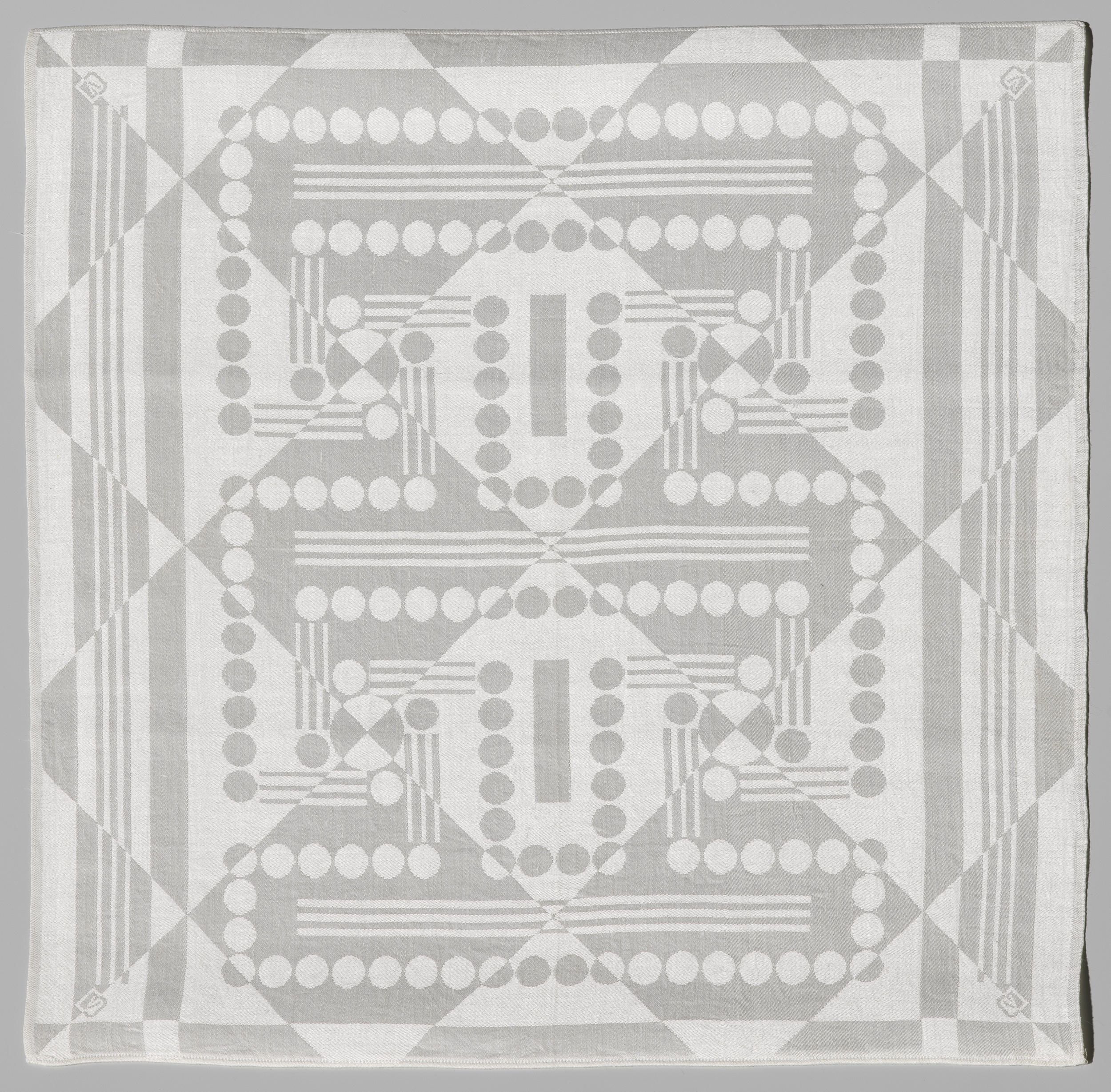
Patroontekening voor een damasten servet met dessin "Haantjes". — History & Analysis
Could beauty survive in a century of chaos? This question hangs in the air like a delicate whisper, inviting contemplation on the transience of artistry amid tumultuous times. Focus on the intricate patterns dancing across the surface, where vibrant hues of red and gold intertwine gracefully. Notice how the meticulous detailing of the "Haantjes" motif captures a fleeting moment of nature, with each rooster seemingly alive, their forms swirling in a tapestry of texture.
The fluidity of the design is grounded by the soft cream background that provides a gentle contrast, allowing the colors to shine with a vivacity that mimics life itself. As you absorb the piece, consider the emotional tension between the fragility of the depicted beauty and the stark reality of the time it was created. The roosters, symbols of vigilance, stand against a backdrop of impending change, representing a longing for stability in a world on the brink. The ornate design hints at both celebration and vulnerability, reflecting an underlying sense of displacement that resonates deeply.
In the early 1900s, the artist was navigating a rapidly evolving art scene in the Netherlands, characterized by a blend of traditional craftsmanship and emerging modernist ideals. Painted around 1906, this work emerged during a period of personal exploration for the artist, as he sought to carve a niche that connected the beauty of the past with the uncertainties of the future. Amid the chaos of societal shifts, Lebeau’s intricate design speaks to the enduring human desire for beauty and connection, timeless in its fragility.