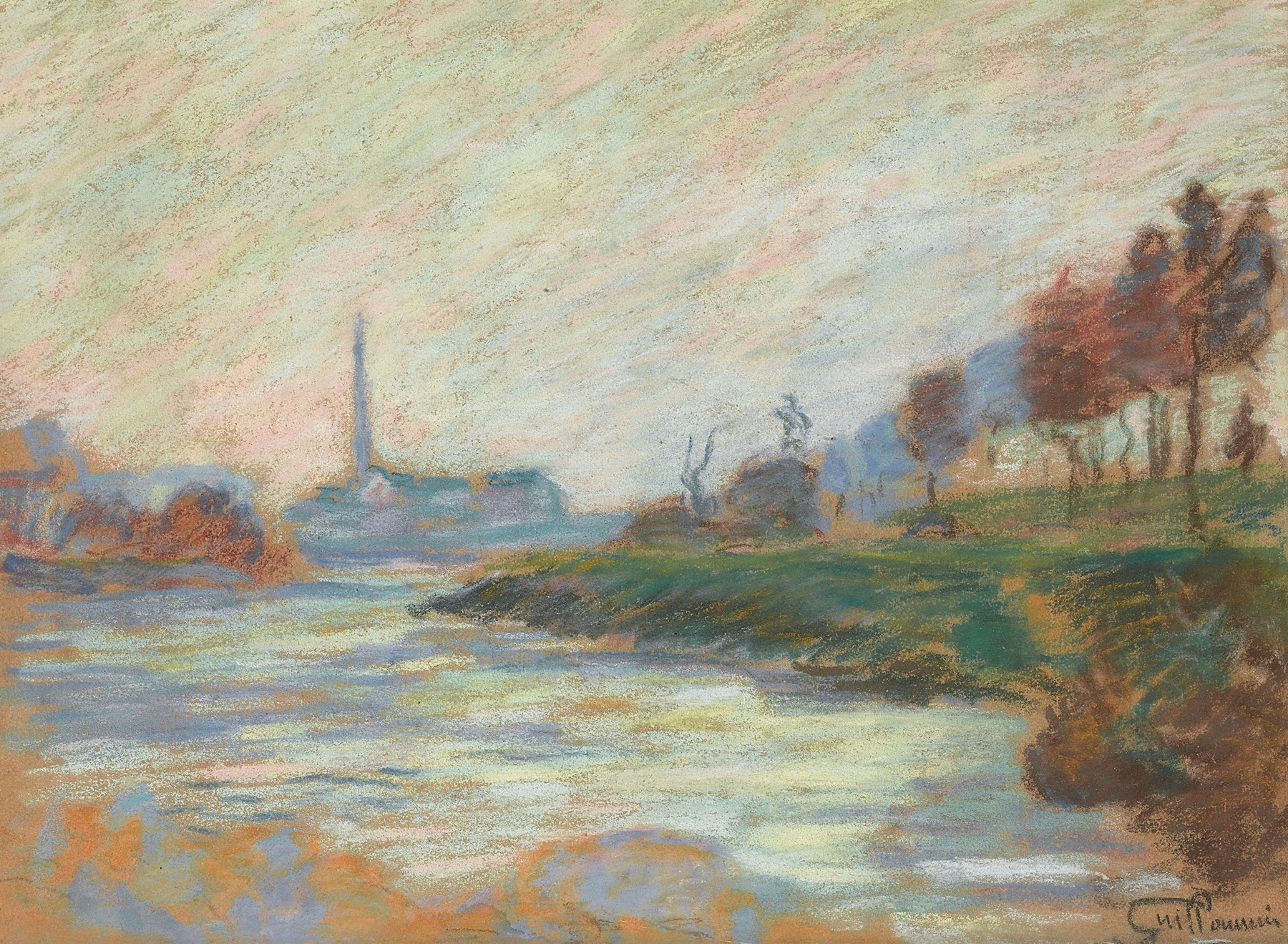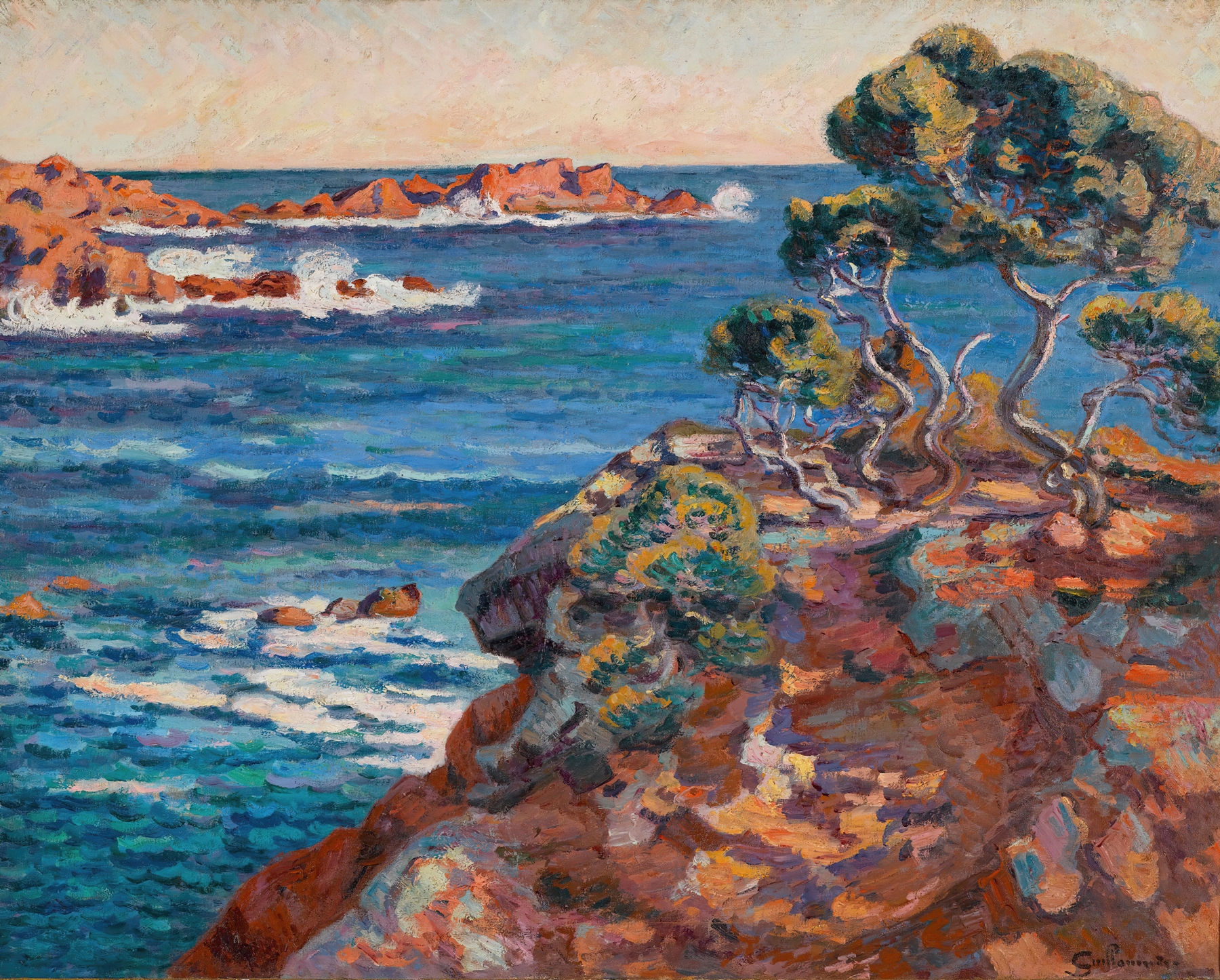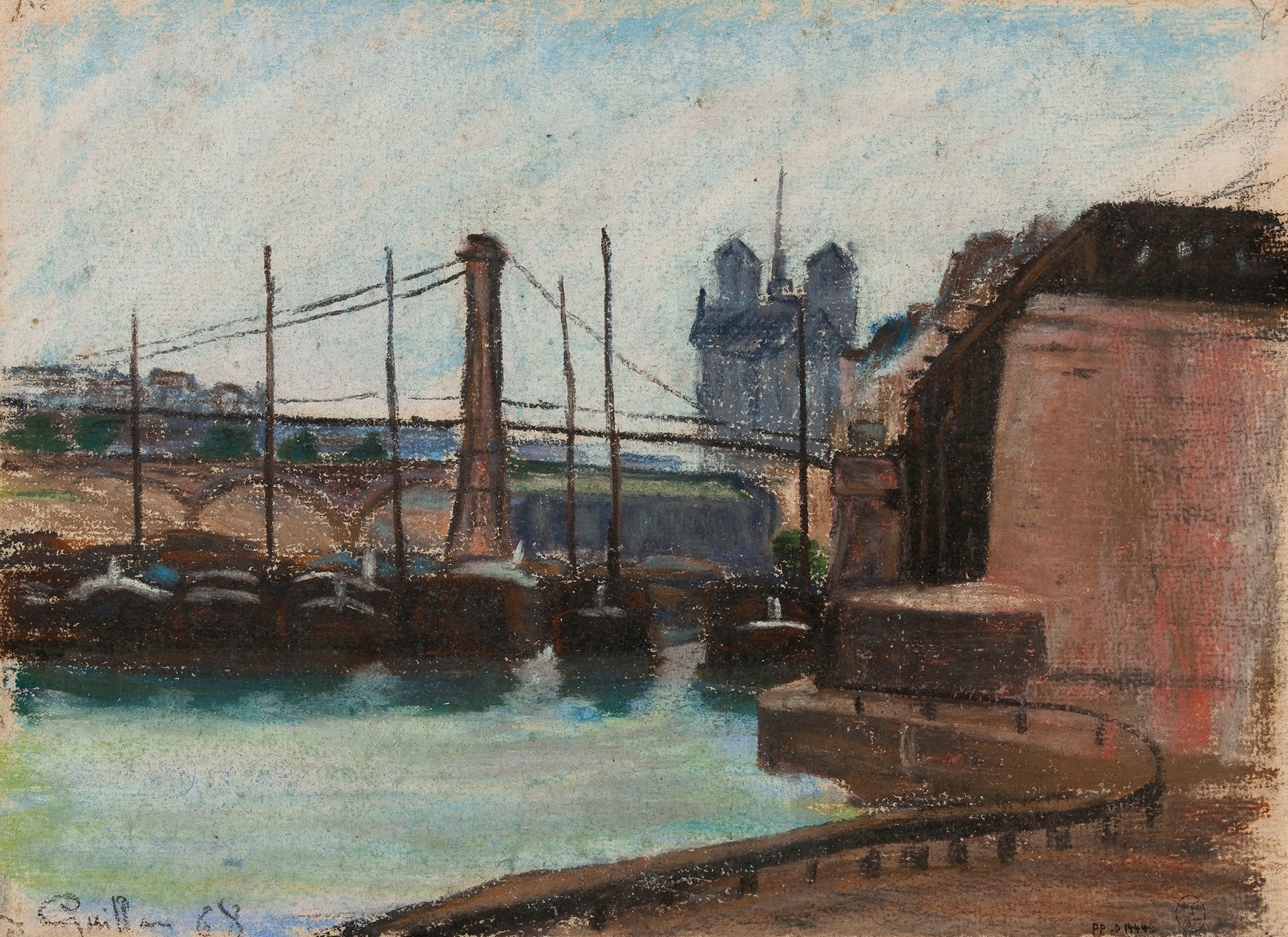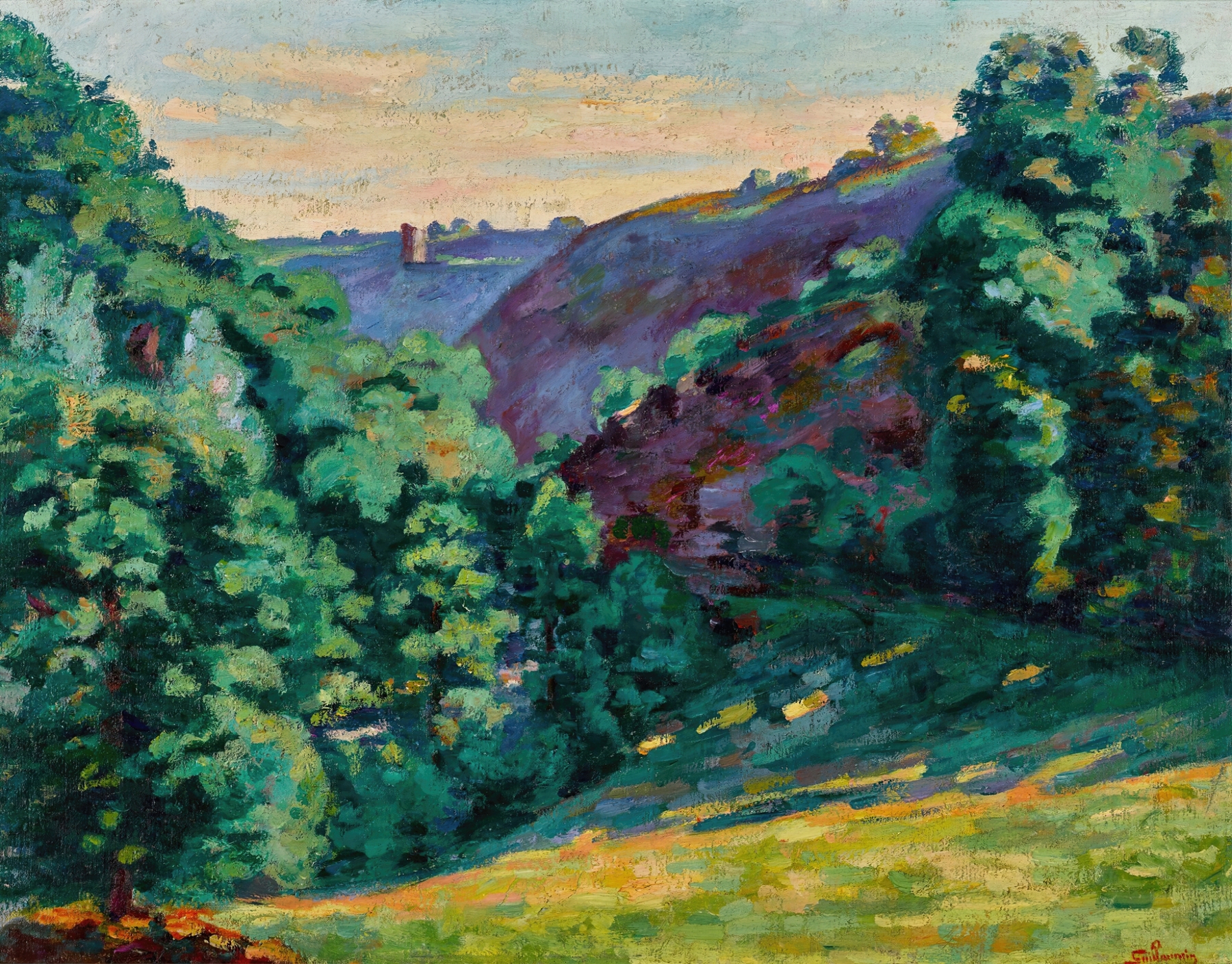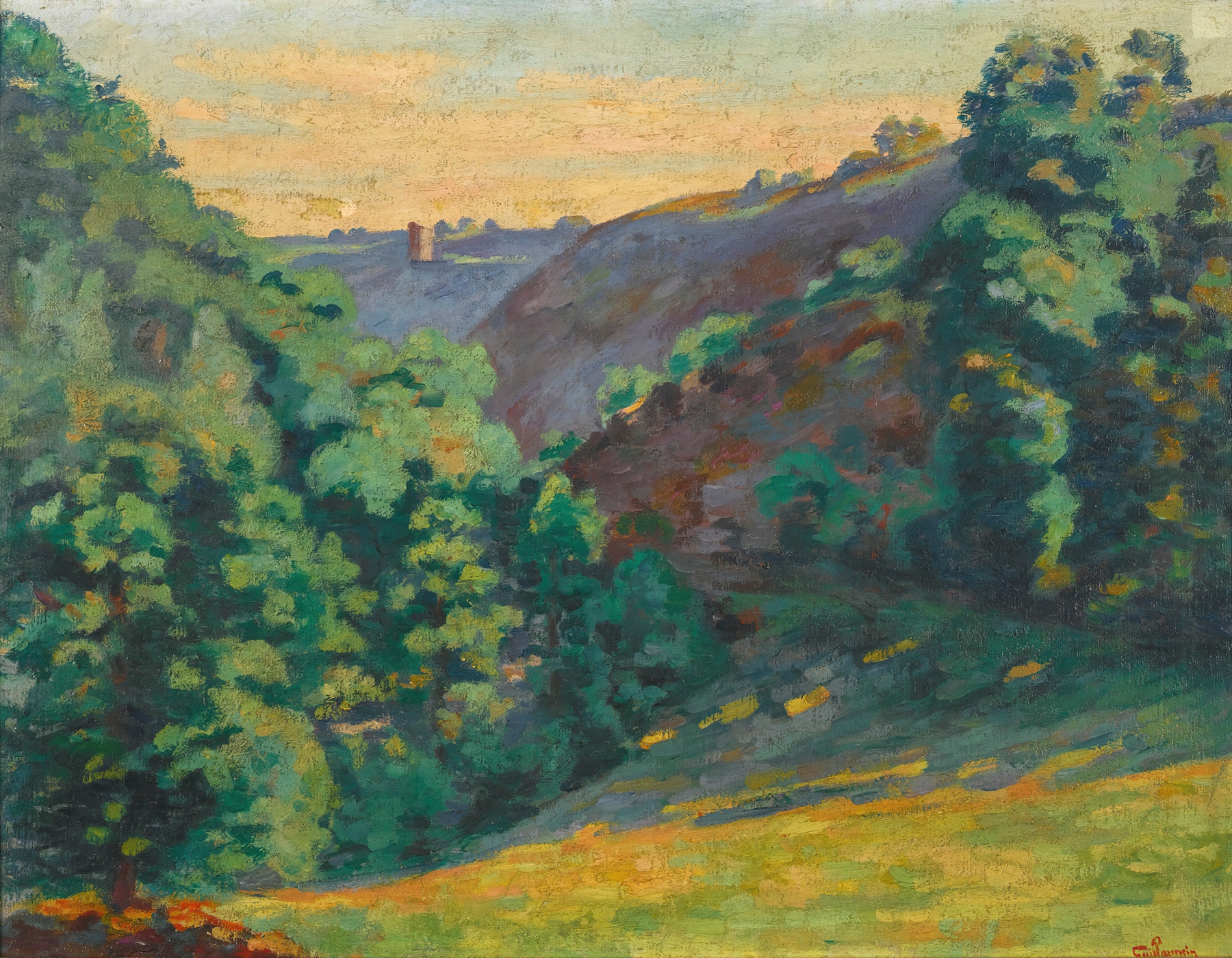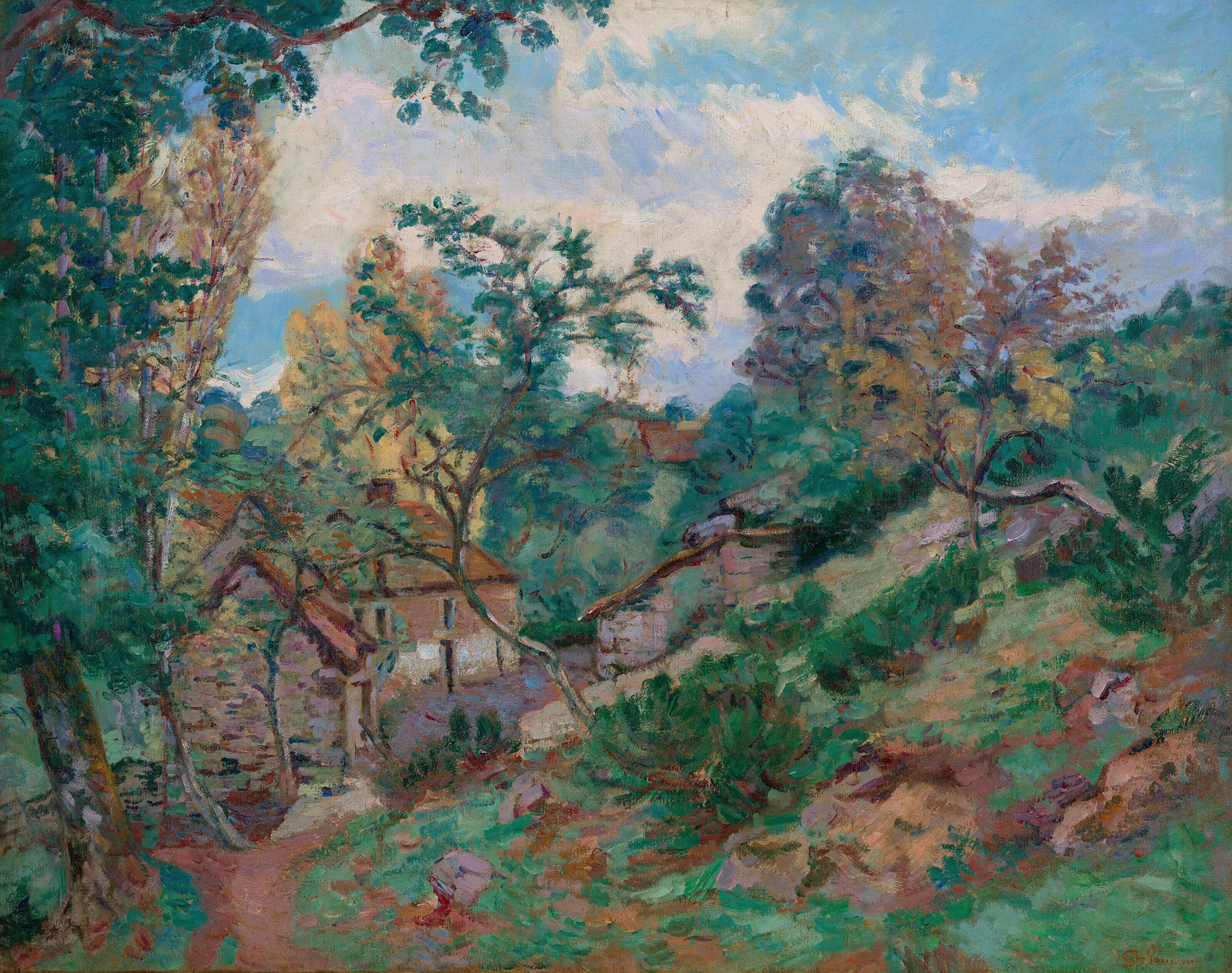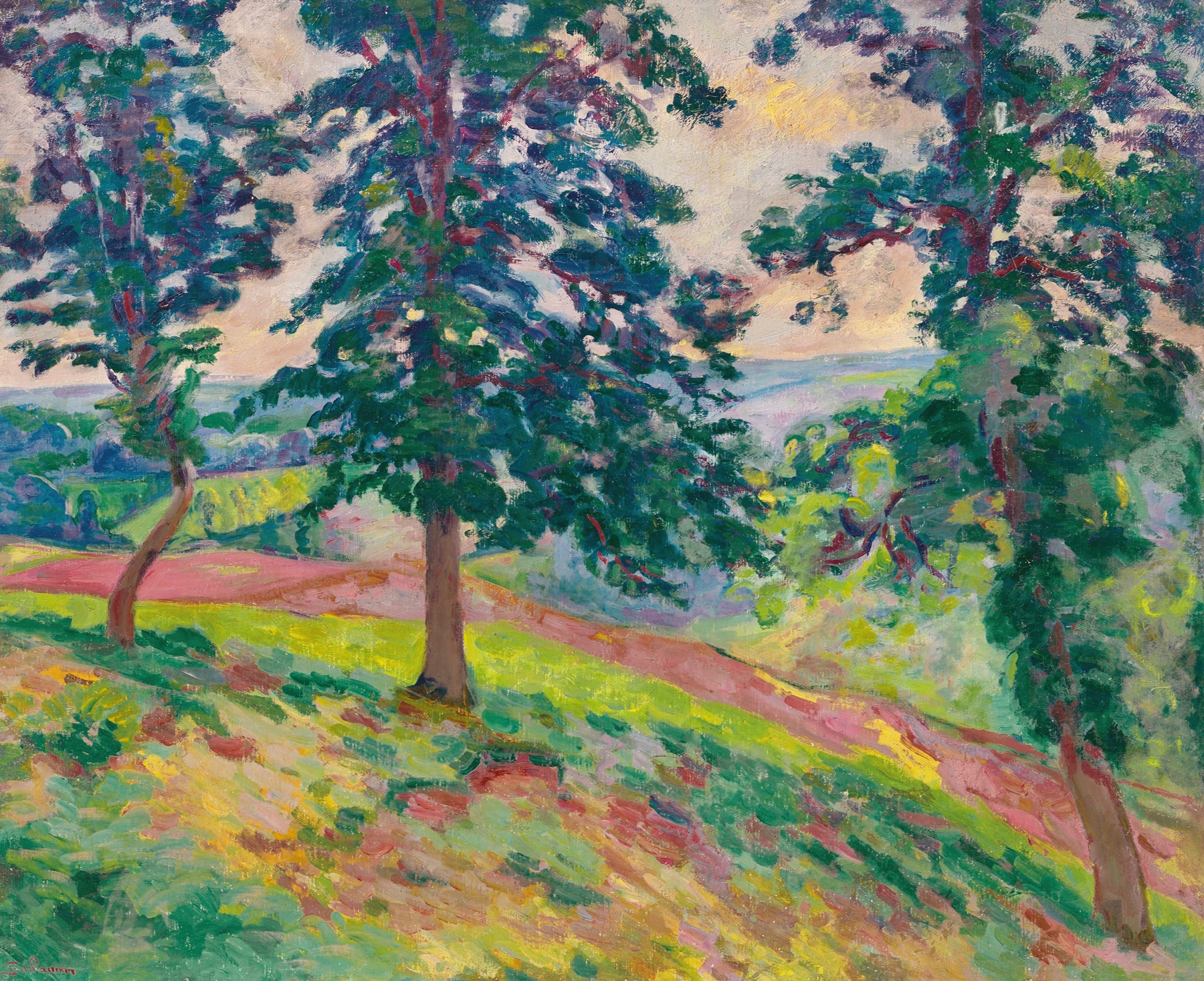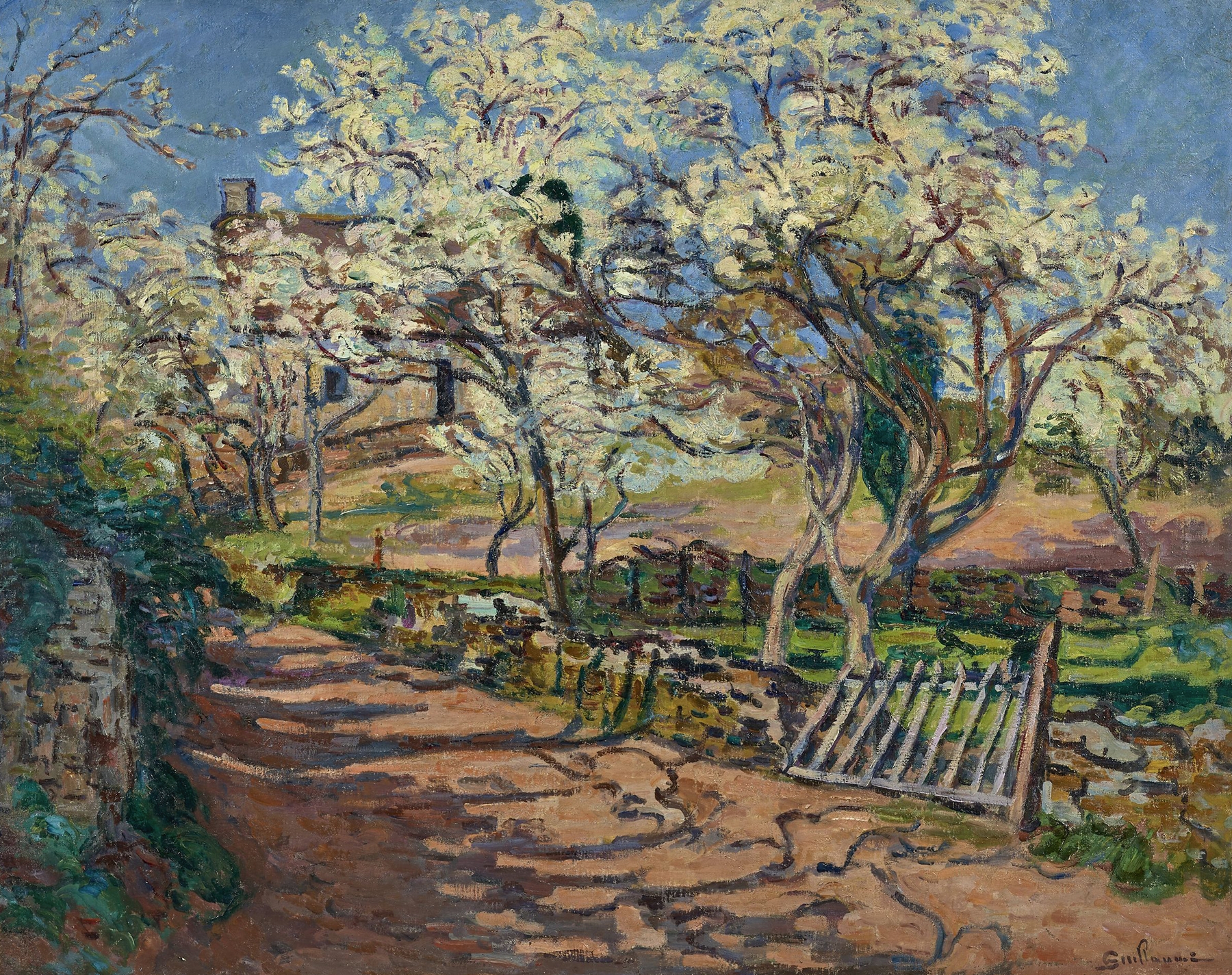
“Under the brush, chaos becomes grace.” In *Paysage de Printemps*, the tumultuous energy of spring is encapsulated in vibrant strokes that seem to dance across the canvas, inviting contemplation of nature’s raw beauty. Focus first on the foreground where splashes of green and yellow collide, creating an immediacy that grounds the viewer in the scene. The energetic brushwork draws the eye along winding paths, leading to fields filled with wildflowers. The sweeping sky above, a tapestry of blues and whites, hints at the fleeting nature of the season, while the luminous quality of the colors suggest warmth and vitality, embodying the essence of renewal. Amidst the apparent chaos, a profound harmony emerges. Look closely at the interplay between light and shadow, where dappled sunlight filters through the trees, creating a rhythmic pulse that contrasts with the wildness of the landscape. The painting evokes a sense of transient beauty, hinting at the fleeting moments of spring. This emotional tension between chaos and serenity speaks to the artist's understanding of nature’s cycles, portraying both the turbulence and the tranquility inherent in change. Created in 1891, this work reflects Armand Guillaumin’s deep connection to Impressionism, a movement that sought to capture the momentary effects of light and color. At this time, Guillaumin was living in Paris, where he was surrounded by fellow artists who were exploring new ways of seeing. The 1890s were a pivotal point for the Impressionists, as they began to solidify their influence on the future of modern art, showcasing the beauty found in the chaos of everyday life.