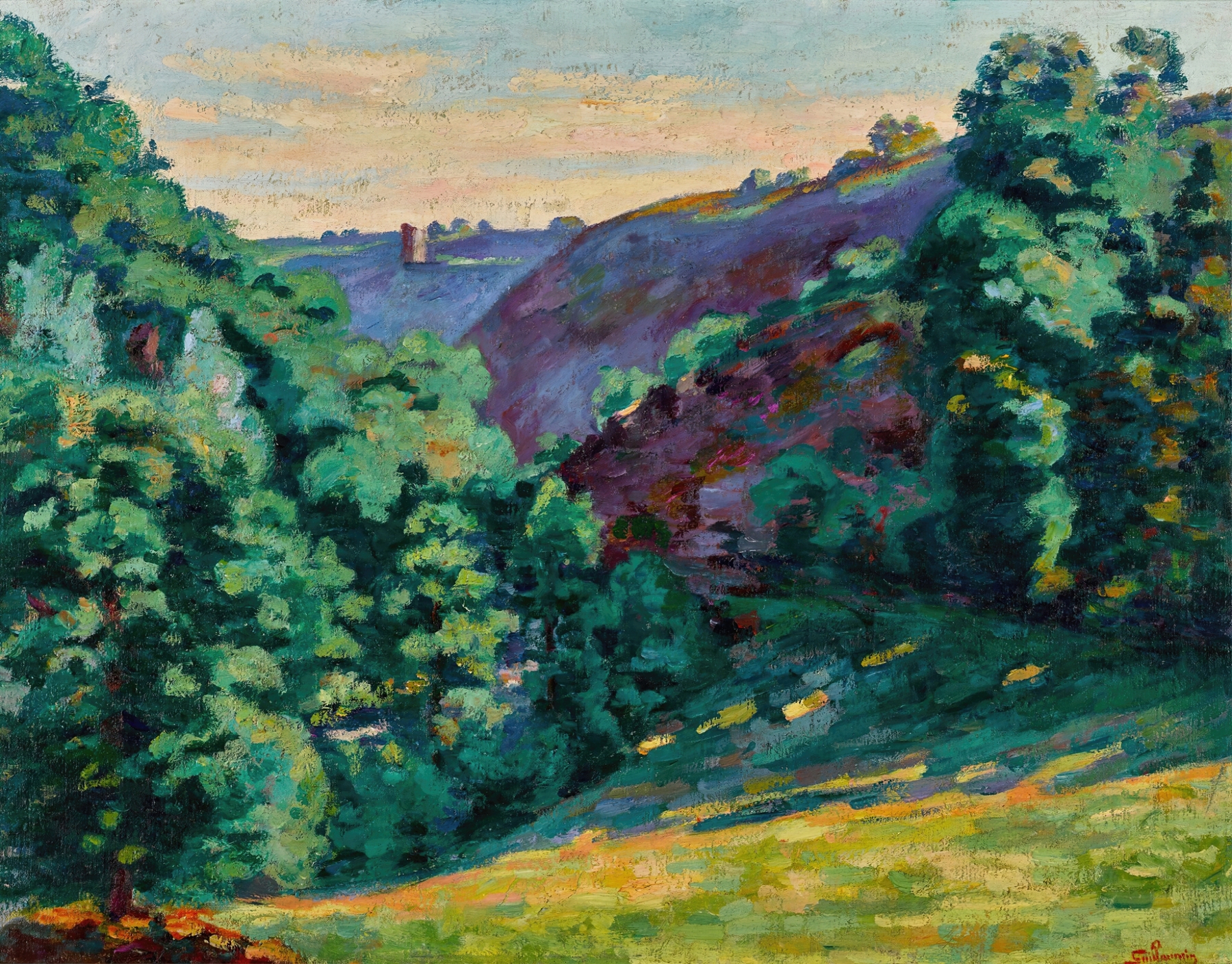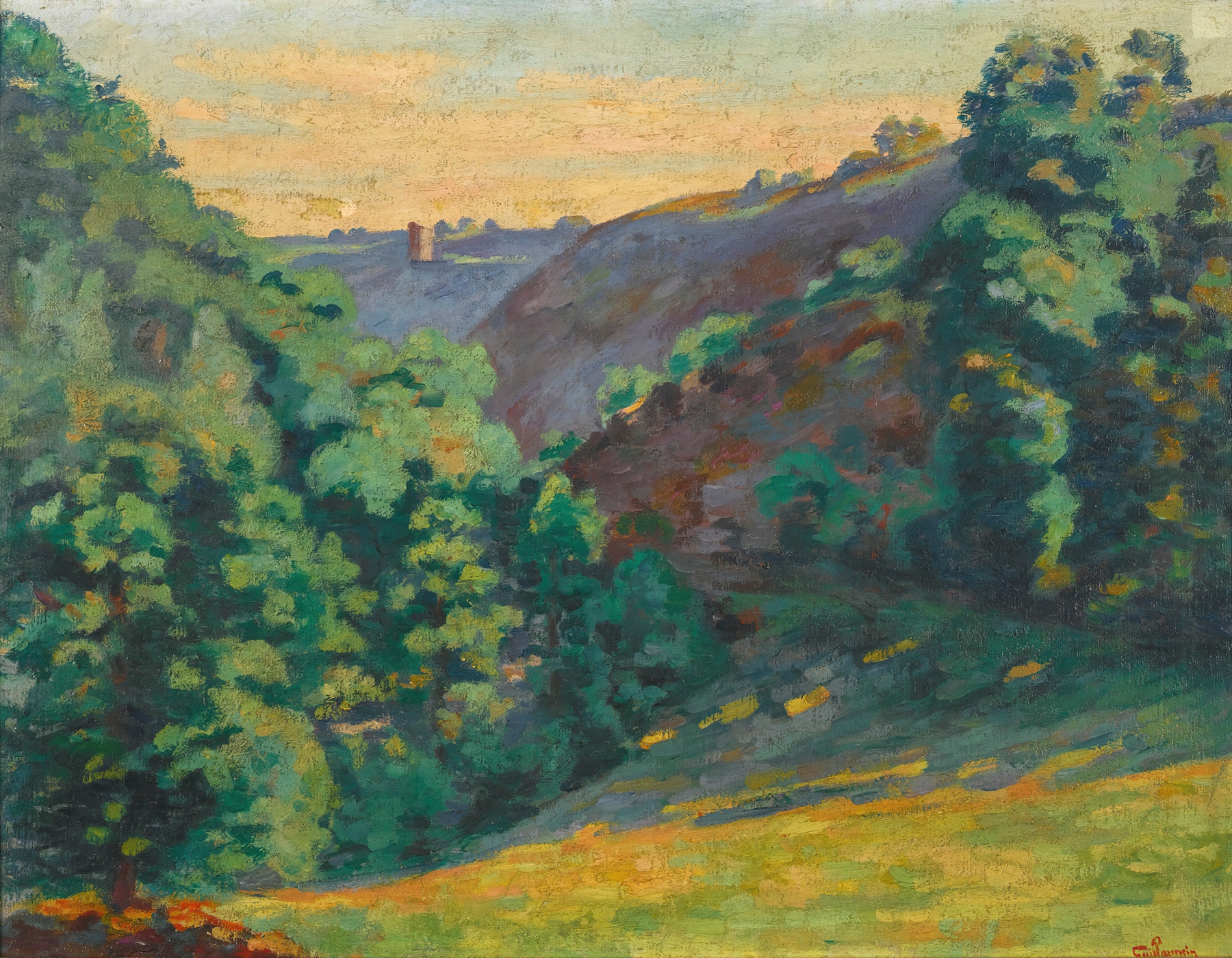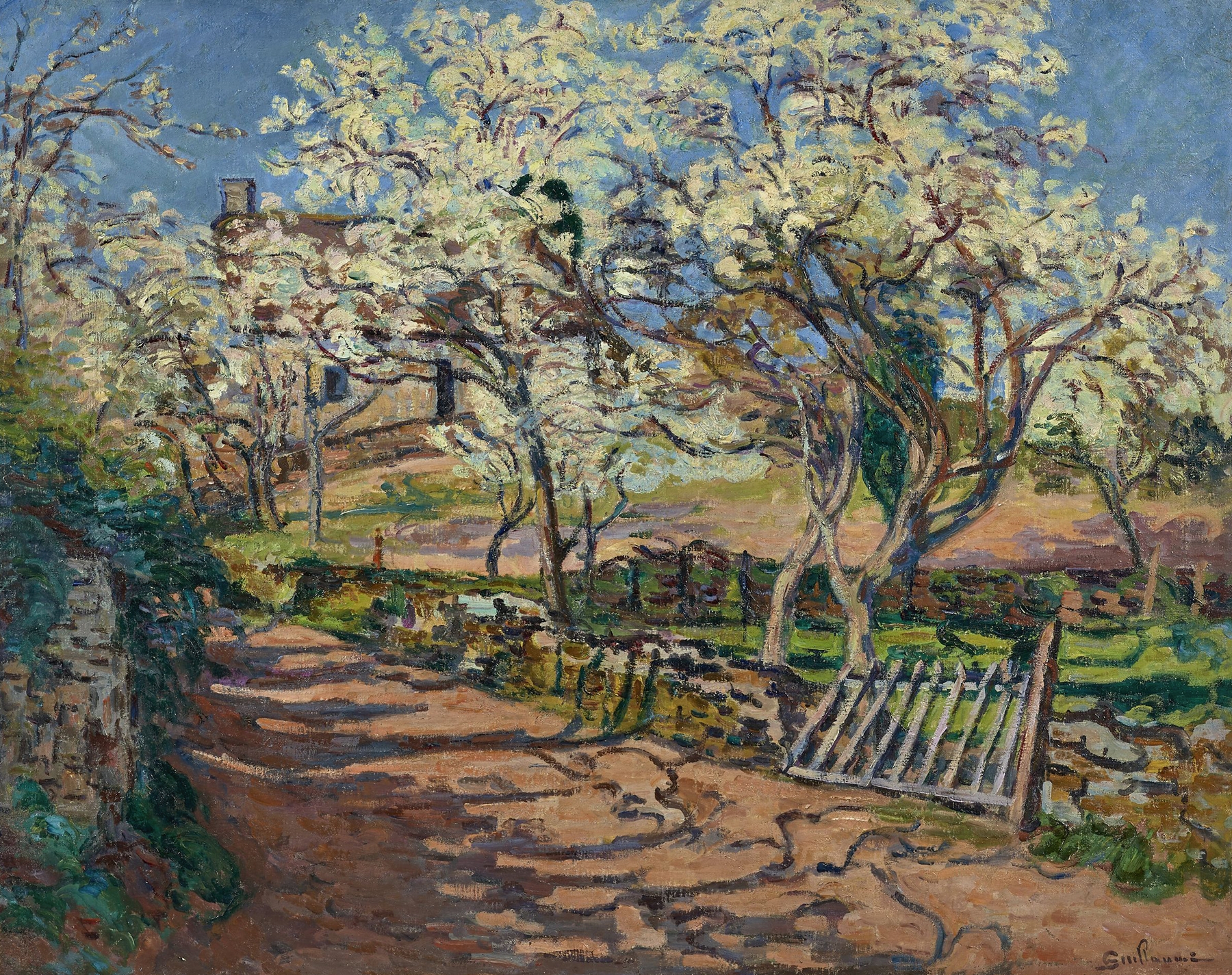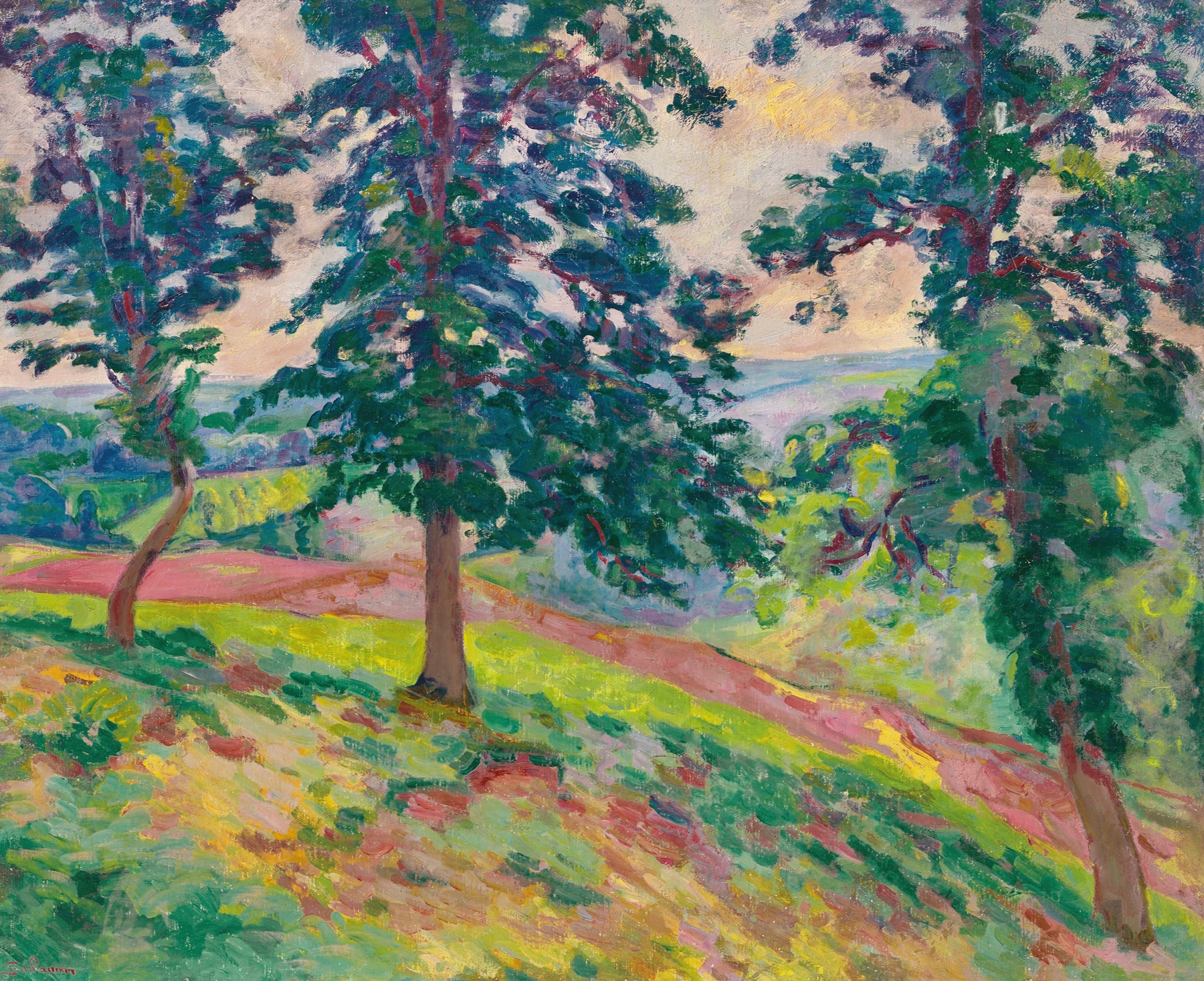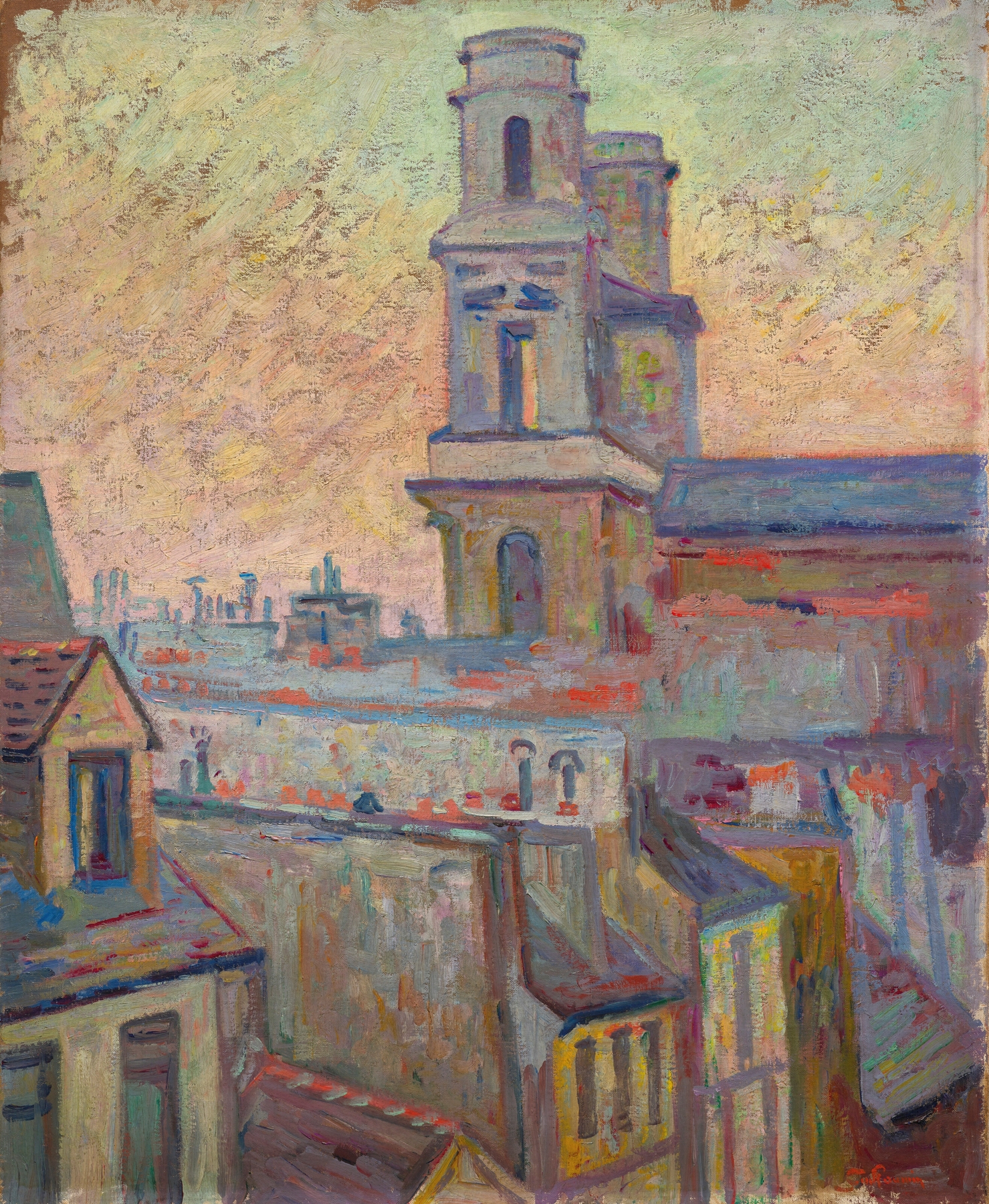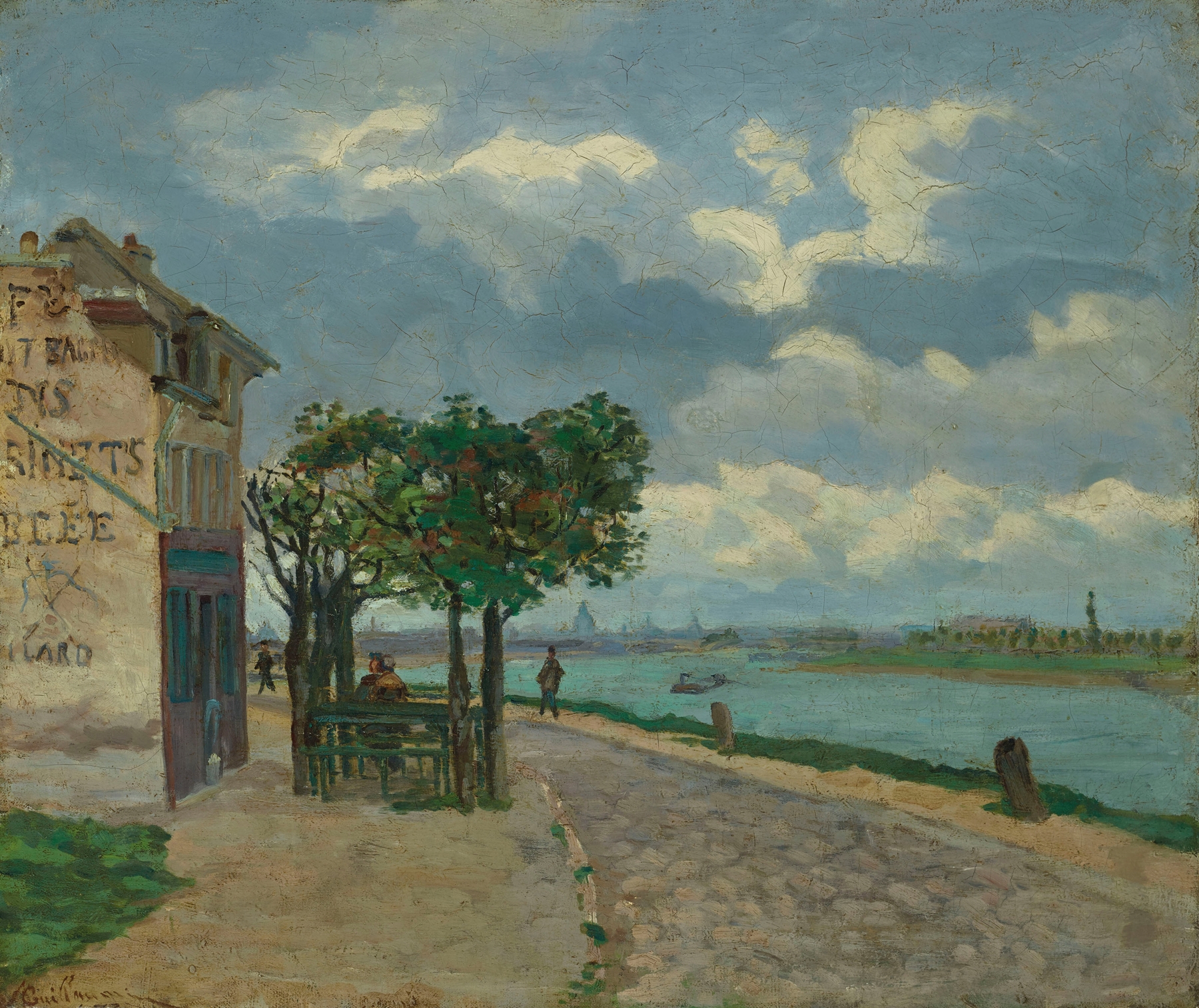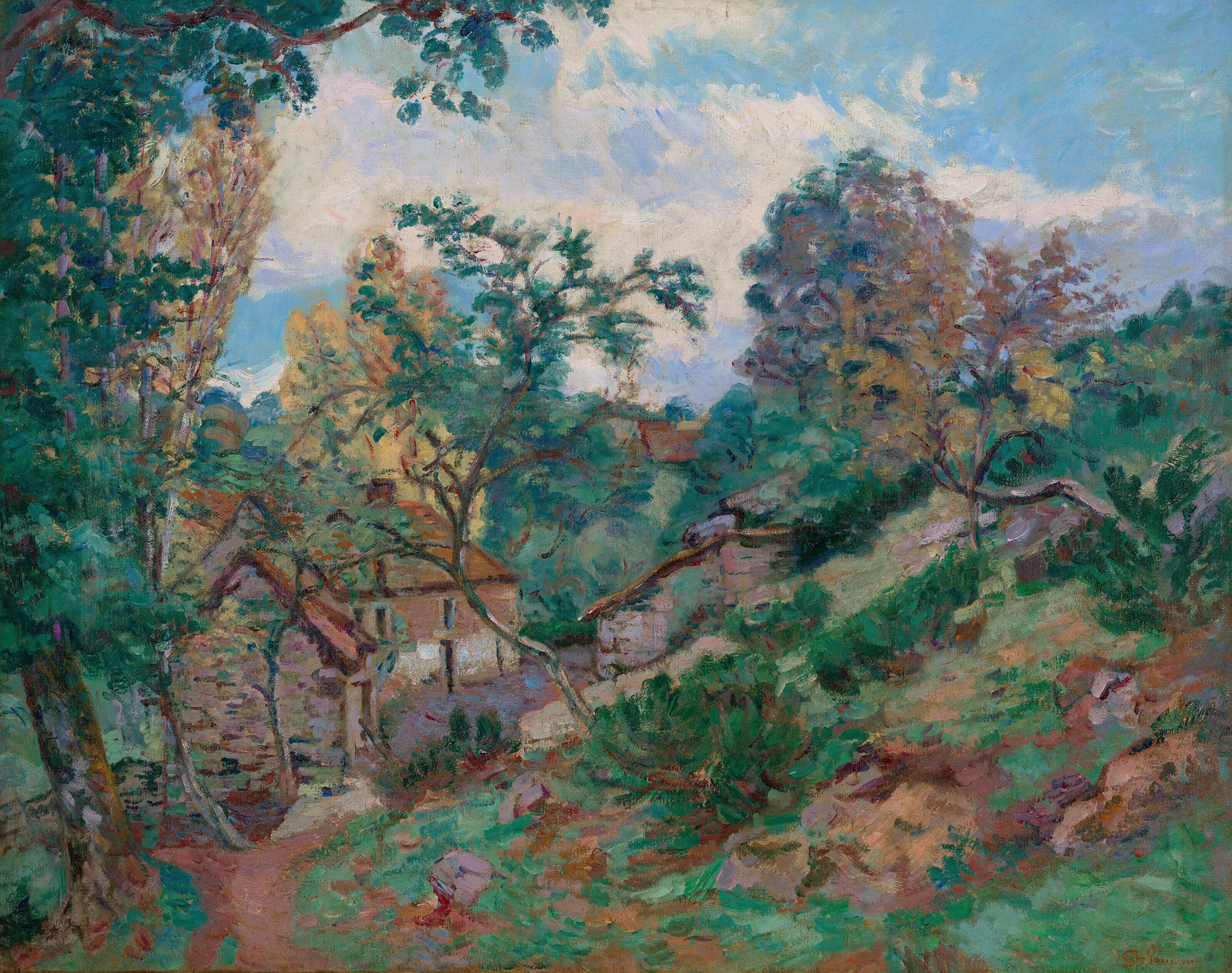
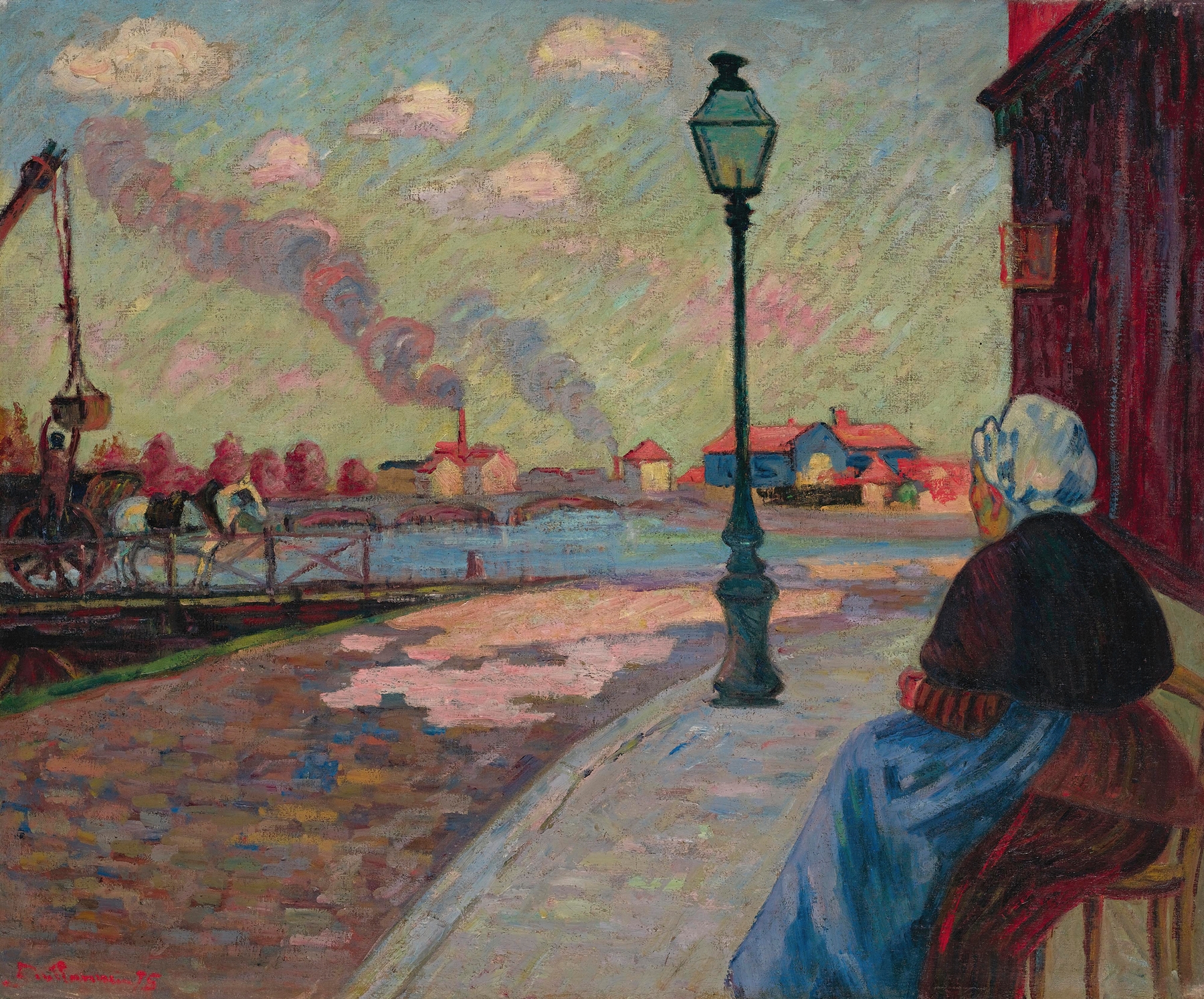
“To paint is to remember what time wants us to forget.” In *Paysage*, destiny unfolds through a landscape that speaks to the quiet resilience of nature and our fleeting existence within it. Look to the left at the vibrant strokes of emerald green, where the trees sway gently under the weight of time. Notice how the sunlight filters through the leaves, casting dappled patterns on the ground, inviting the viewer into a moment caught between stillness and movement. The sky, brushed with soft blues and hints of lavender, creates a serene backdrop that contrasts the vivid earth below. Guillaumin's technique, marked by his bold use of color and light, immerses us in a world that feels both alive and poised in a delicate balance. The interplay of light and shadow reveals more than just a scene; it mirrors the tension between permanence and transience. The lush foliage hints at natural abundance, yet the looming clouds suggest an inevitability, a reminder that every moment is fleeting. This duality resonates with the human experience, reflecting our desire to grasp and hold onto what life presents, even as it slips through our fingers. Here, the trees stand as silent witnesses to the passage of time, embodying both beauty and the certainty of change. Armand Guillaumin painted *Paysage* between 1885 and 1890 during a period of personal and artistic transformation. Living in France during the rise of Impressionism, he was a pivotal figure among his contemporaries, exploring the effects of light in nature with renewed vigor. As the art world shifted, Guillaumin's work began to gain recognition, marking a significant chapter in his life as he asserted his voice amidst the evolving landscape of modern art.