Pommiers en fleurs en Normandie — History & Analysis
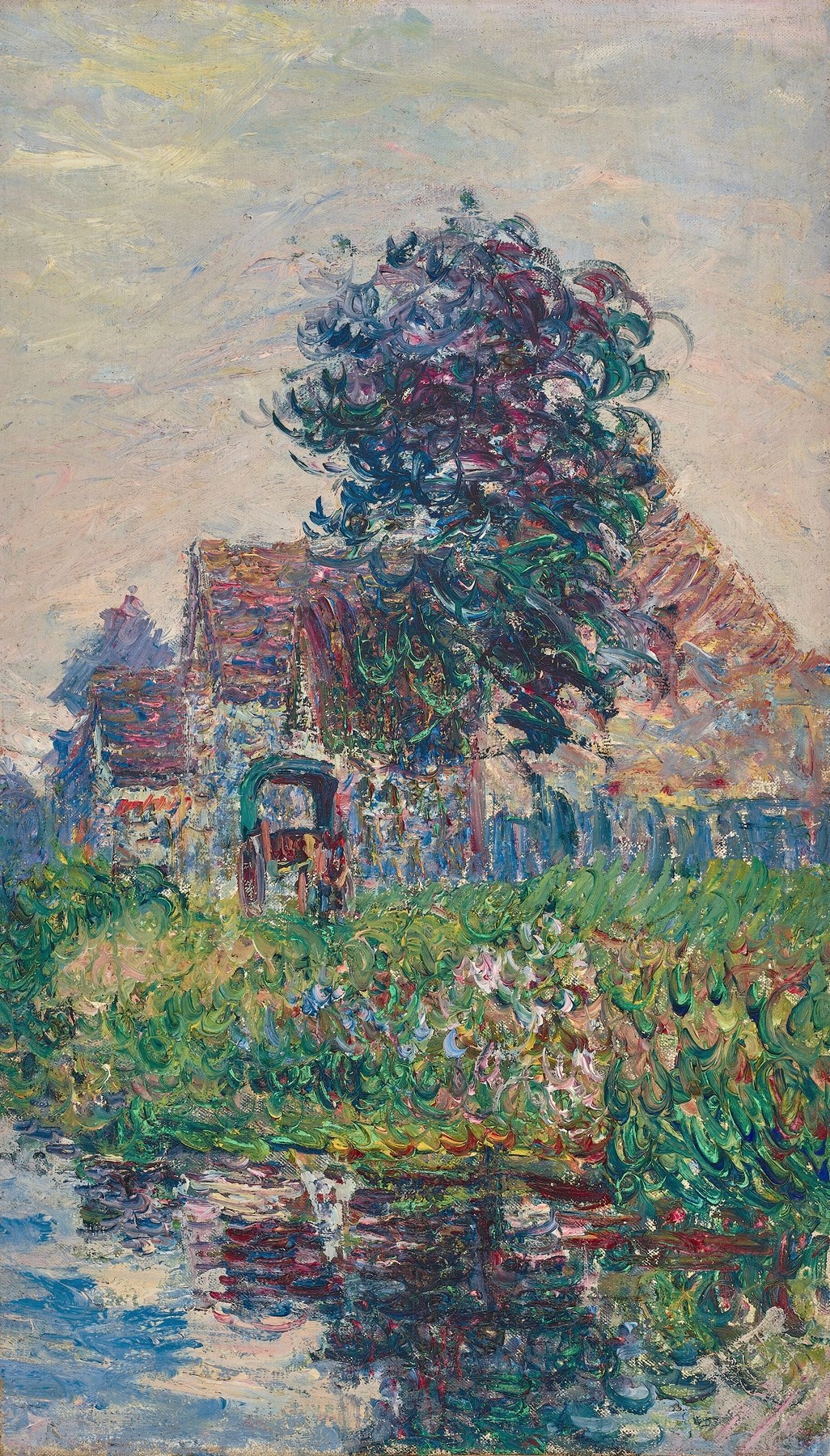
Did the painter know this moment would outlive them? Captured in the delicate blooms of spring, a fleeting beauty emerges, layered with the melancholy of time’s passage. Look to the foreground where clusters of pale pink and white blossoms dance upon the branches, each petal a whisper of transience. The soft brushwork imbues the canvas with a sense of gentle movement, as if the wind might carry the fragrance of the flowers beyond the frame.
Notice how the light filters through the foliage, casting dappled shadows that create a subtle interplay between light and dark, inviting contemplation on nature’s cycles of renewal and loss. Beneath the surface of this idyllic scene lies an undercurrent of nostalgia. The vibrant blossoms symbolize both the joy of rebirth and the inevitable decay that follows, a duality reminiscent of life itself. The muted greens of the surrounding leaves echo a sense of quietude, representing the passage of time and the weight of memories intertwined with beauty.
In 1903, Gustave Loiseau painted this work in France, during a period when the post-Impressionist landscape was evolving. Embracing a personal style, he sought to express the emotional resonance of nature, reflecting the artistic shifts of the time as artists turned toward more subjective interpretations of their environments. This piece emerges from a moment when the world was awakening to the possibilities of color and form, embodying a poignant remembrance of nature’s ephemeral gifts.