Rocher la Teignouse, Cap Fréhel — History & Analysis
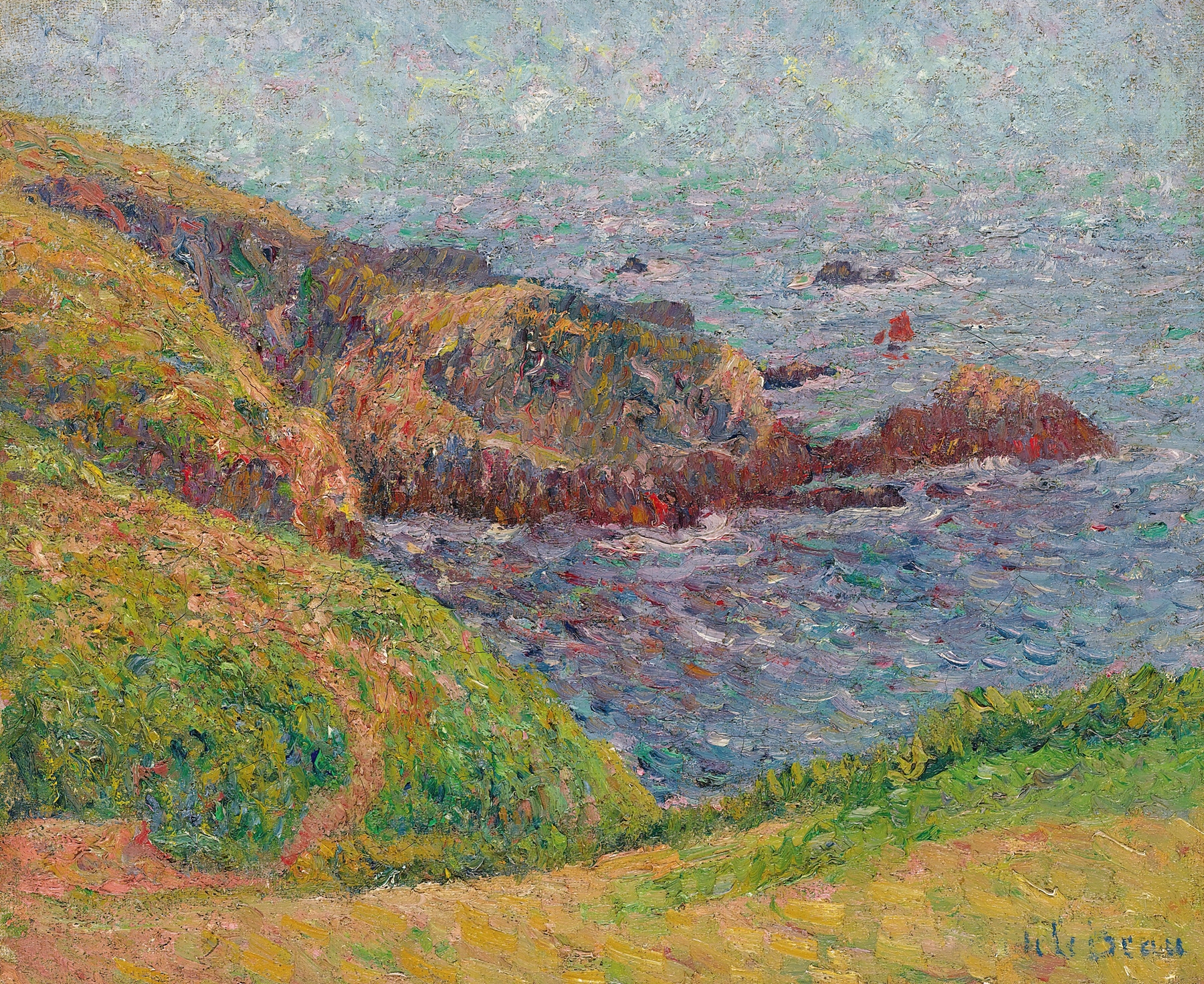
“Between color and silence, truth hides.” In Rocher la Teignouse, Cap Fréhel, the canvas whispers of innocence, inviting the viewer to delve into a tranquil coastal landscape where nature reigns supreme. Here, we uncover a moment untouched by the chaos of modern existence, a serene embrace of the wild and the sublime. Look to the left at the jagged cliffs, where the sun’s warm glow bathes the rocky outcrops in a soft gold. The vibrant greens of wild grasses blend with the azure sea, while delicate strokes of white capture the frothy waves below, creating a sense of movement and vitality.
Notice how the sky, adorned with a palette of soft blues and pale oranges, seamlessly transitions into the horizon, evoking a peaceful stillness that envelops the scene. The contrast between the rugged cliffs and the gentle sea conveys an emotional tension, a struggle between permanence and fleeting beauty. The artist captures not just a landscape but a moment of innocence, a reminder of nature's undisturbed essence. Each brushstroke reveals a dialogue between light and shadow, evoking a contemplative space for introspection where the viewer can grapple with their own connection to the natural world.
In 1906, Gustave Loiseau was immersed in the Post-Impressionist movement in France, exploring the interplay of color and light. During this period, he sought to capture the true spirit of the landscape, reflecting both his artistic exploration and the broader transition within the art world. Living in a time of rapid change, he found solace in the enduring beauty of nature, seeking to preserve moments that might otherwise slip into oblivion.