Ramsau near Berchtesgaden — History & Analysis
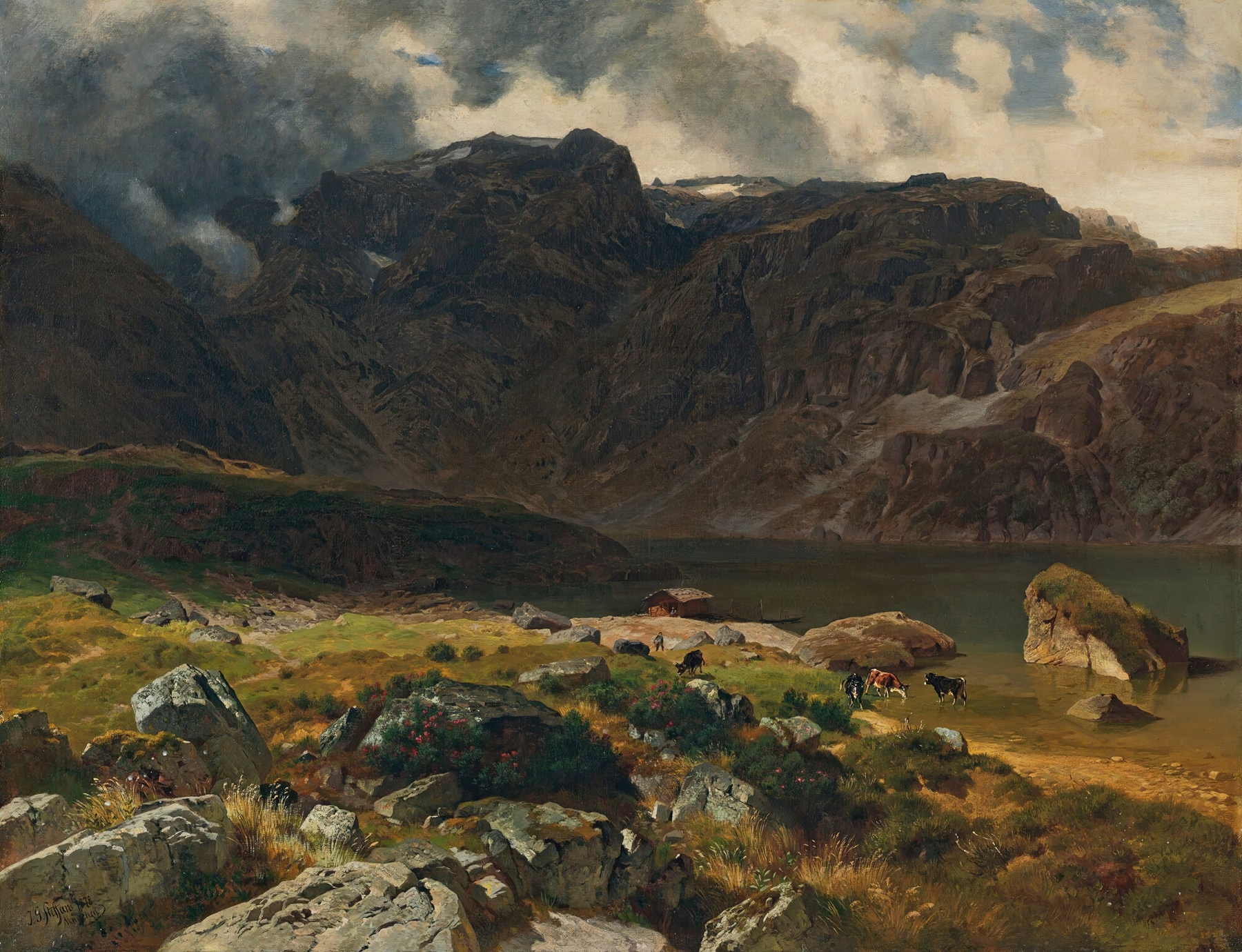
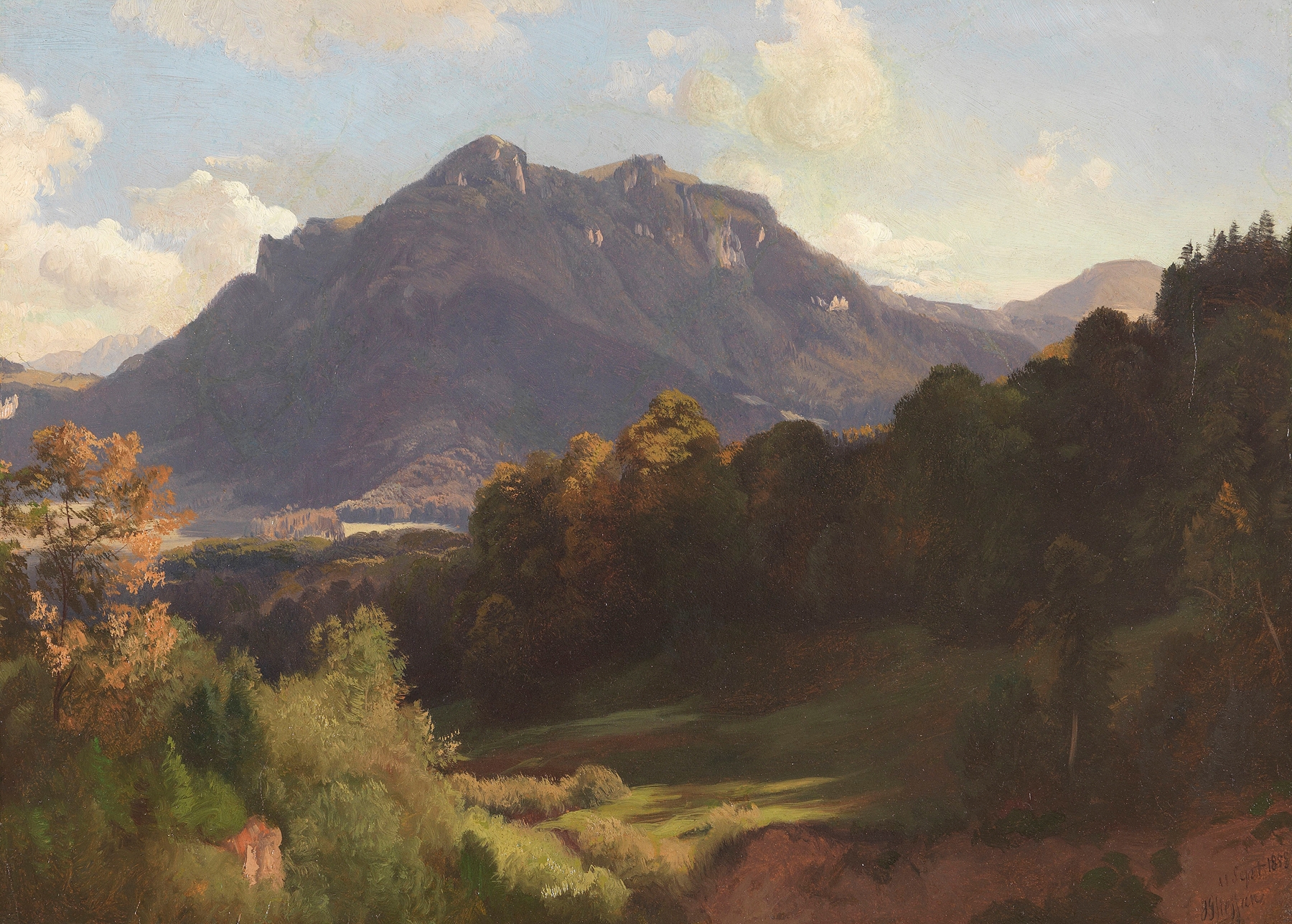
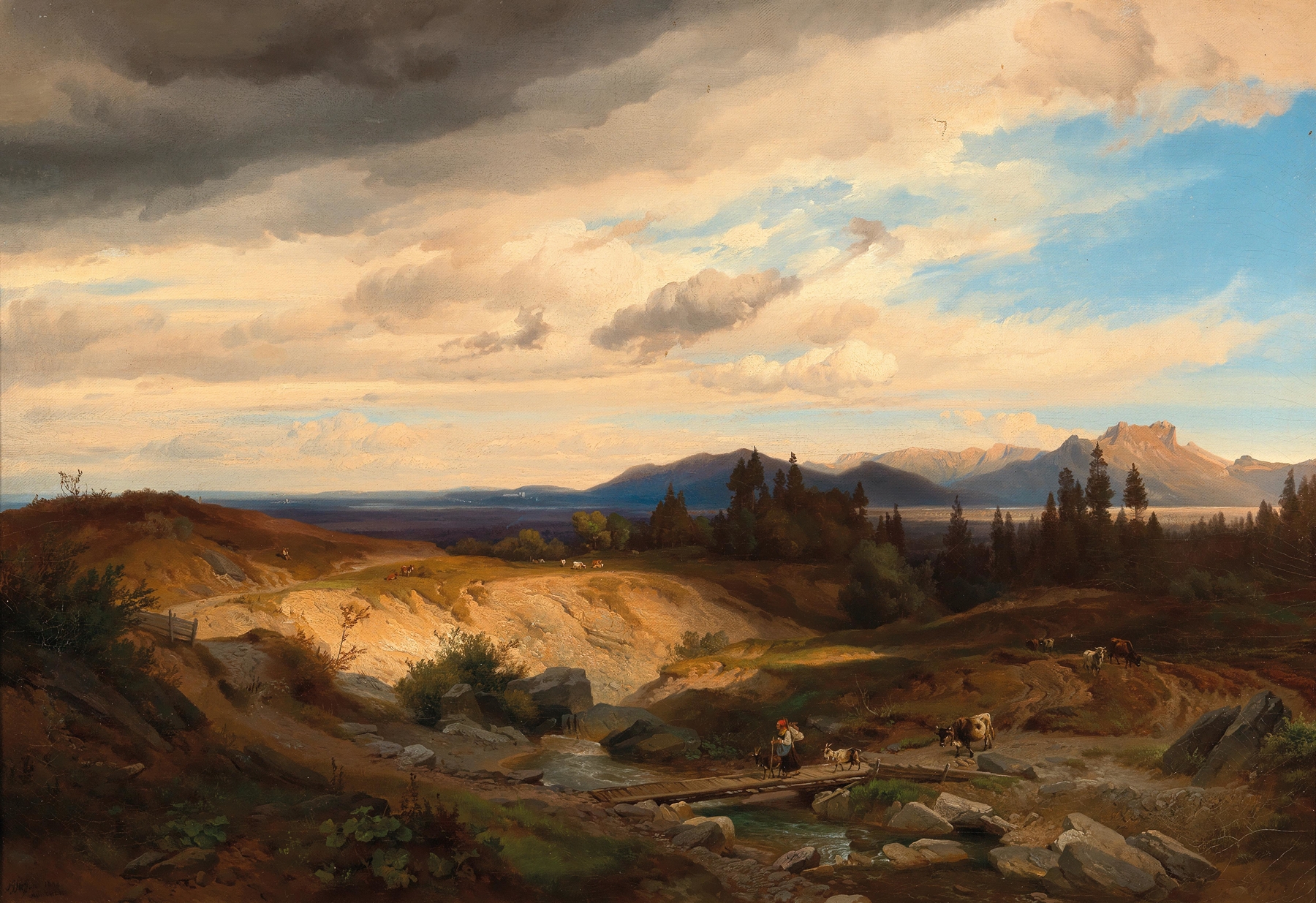
“To paint is to remember what time wants us to forget.” In a world that rushes by, art becomes a bridge to preserve fleeting moments. Within this serene landscape lies the essence of mortality, an invitation to pause and reflect on the beauty that is often overshadowed by the urgency of life. Look to the foreground to discover a peaceful village nestled amidst the rolling hills, where the gentle curves of the landscape guide your gaze toward the distant peaks. Notice how the painter’s brushstrokes bring the foliage to life, each leaf an intricate detail that sings with vibrancy.
The subtle interplay of light and shadow imbues the scene with a soft glow, highlighting the quaint houses that seem to belong to a quieter time, inviting a deeper connection. As you delve deeper, observe the contrasts that emerge: the vibrant colors of the vegetation juxtaposed against the cool blues of the mountains, suggesting a harmony between life and the permanence of nature. The small, winding river reflects the sky’s hues, symbolizing the passage of time and the inevitable changes it brings. Here, the delicate balance between the ephemeral and the eternal unfolds, echoing the human experience in its beauty and fragility.
In 1879, while living in Munich, Johann Gottfried Steffan captured this tranquil scene during a period of artistic transformation in Germany. The country was embracing Romanticism, emphasizing a profound connection to nature. Steffan, inspired by his surroundings, sought to convey both the charm of rural life and the deeper truths of existence, immortalizing a moment that resonates with the essence of what it means to be human amidst a dynamic world.