Bavaria, a Goat Shepherdess in a Vast Mountain Landscape with a View of the Heuberg near Brannenburg — History & Analysis
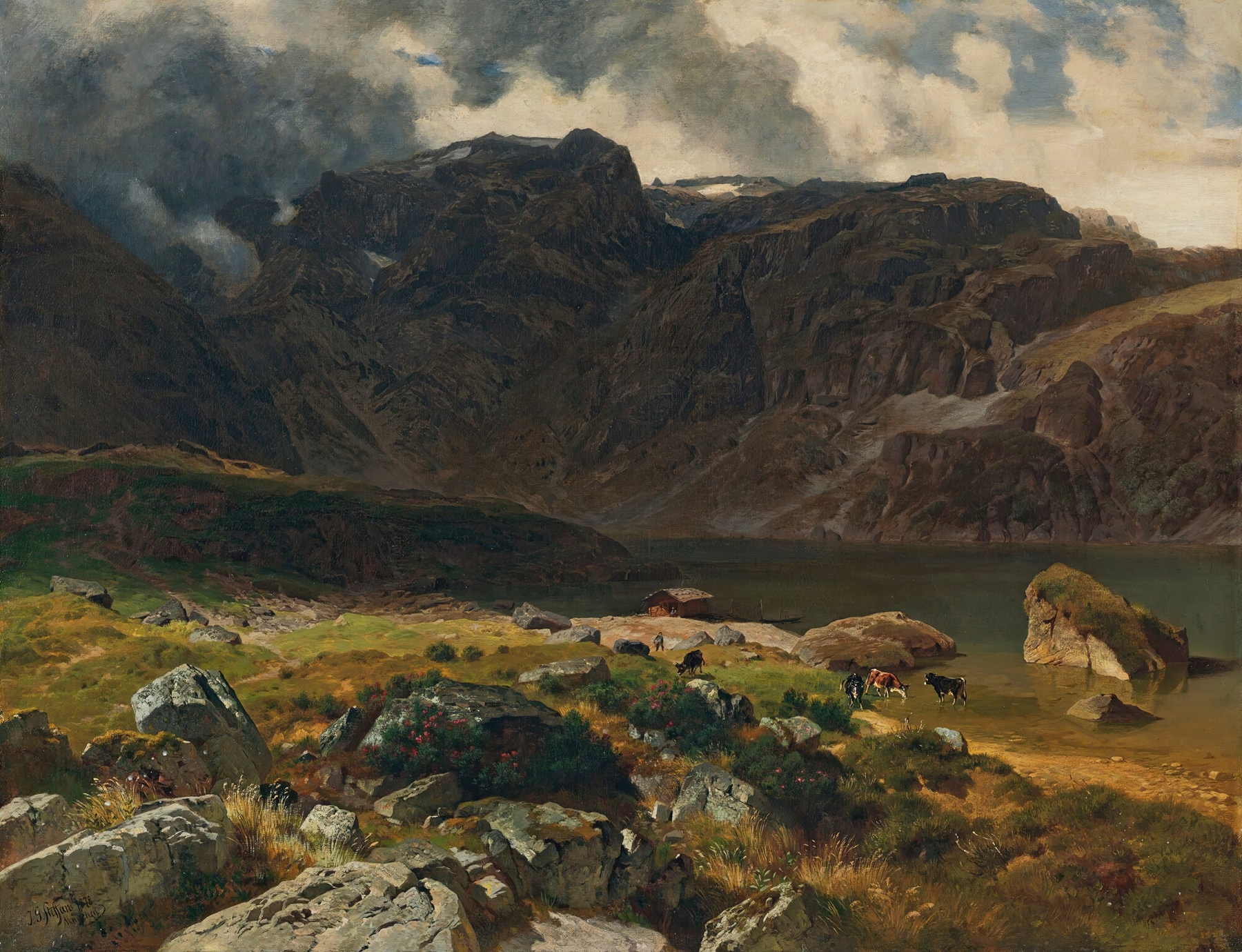
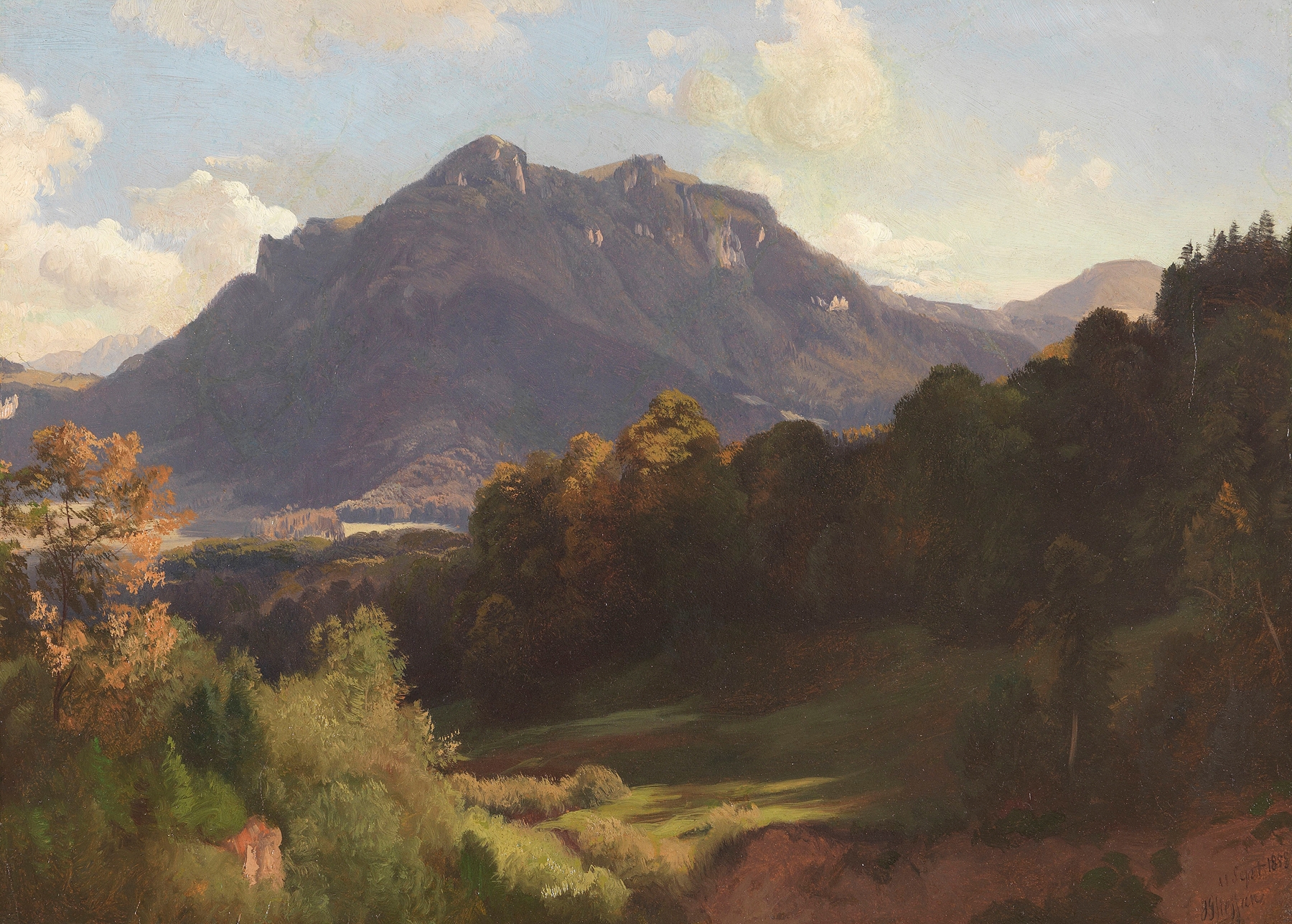
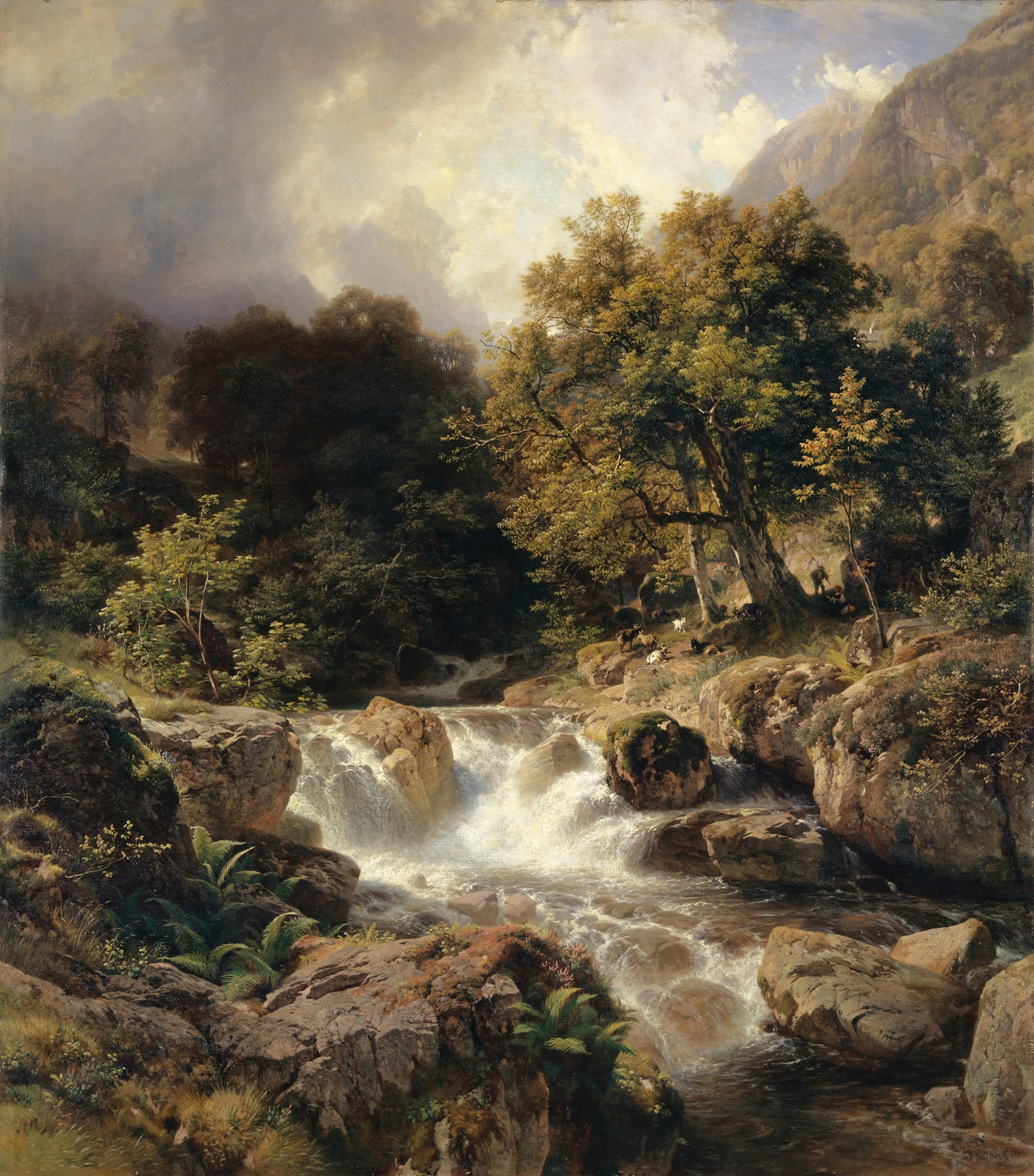
What if beauty was never meant to be finished? In the serene embrace of nature, the essence of faith intertwines with the untamed landscape, whispering secrets of tranquility and resilience. Focus on the gentle figure of the goat shepherdess standing at the foreground, her presence grounding the sweeping majesty of the mountains behind her. Notice how Steffan captures the play of light across her woolen garments, creating a soft halo effect that contrasts with the rugged forms of the Heuberg range.
The verdant greens and earthy browns of the landscape contrast harmoniously with the pale blues of the expansive sky, drawing the eye upwards towards the promise of distant peaks. Delve deeper into the painting and observe the subtle tension between the shepherdess and the vastness of her surroundings. Her posture—both confident and contemplative—evokes a deep connection to the land, suggesting an enduring faith in the sustenance it provides. The goats, scattered around her, symbolize the simplicity of rural life and the profound relationship between humanity and nature.
This scene speaks to the quiet resilience found in the ordinary, hinting that beauty lies in the acceptance of impermanence. Created in 1848, the artwork emerged during a time of significant change in Europe, marked by political upheaval and a yearning for a return to nature. Johann Gottfried Steffan painted this piece while grappling with the Romantic ideals of his time, seeking solace in the landscape of Bavaria. His work reflects both personal and collective experiences, capturing a moment that resonates with a longing for harmony amidst the chaos of the world.