Heuberg im Inntal im herbstlichen Sonnenlicht — History & Analysis
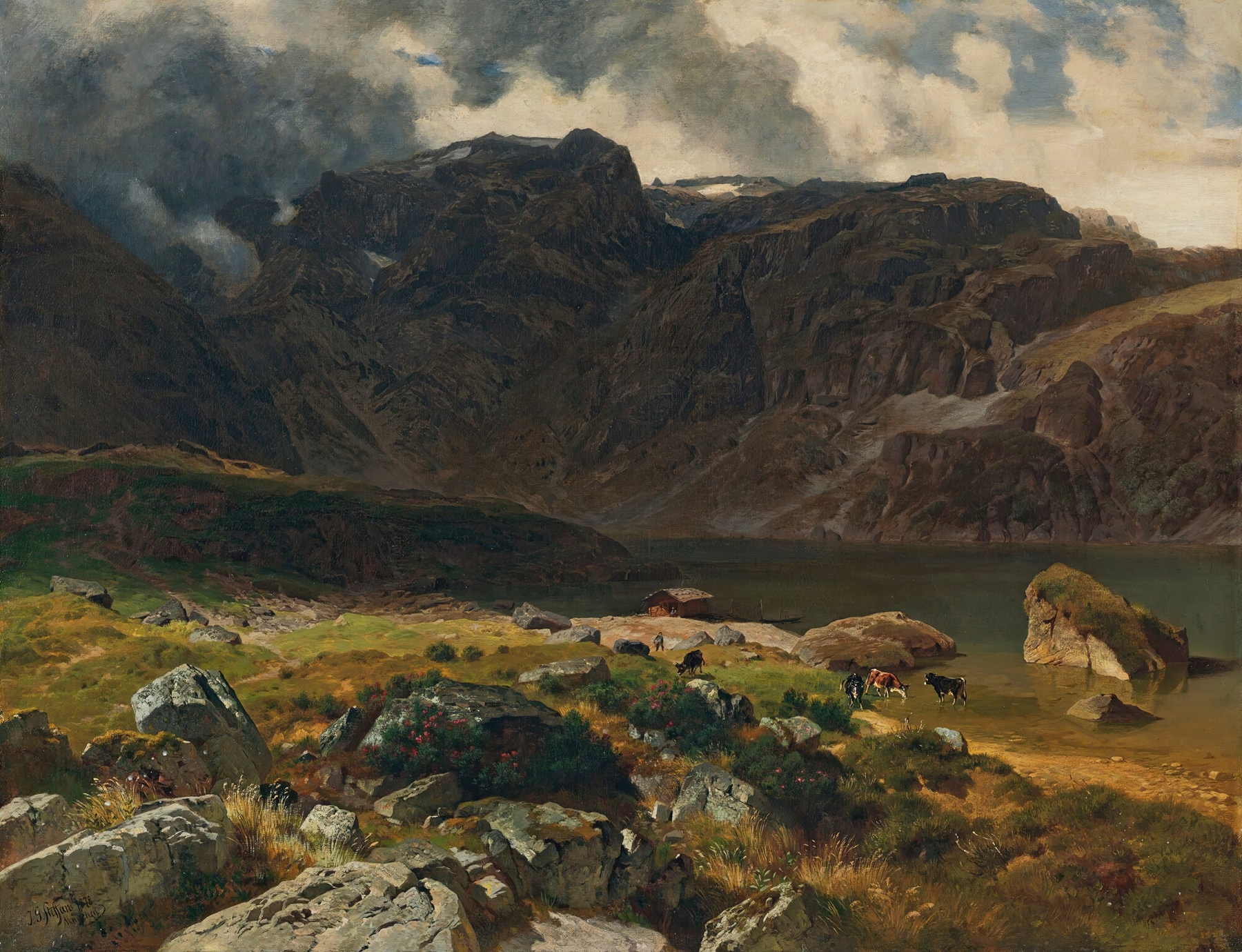
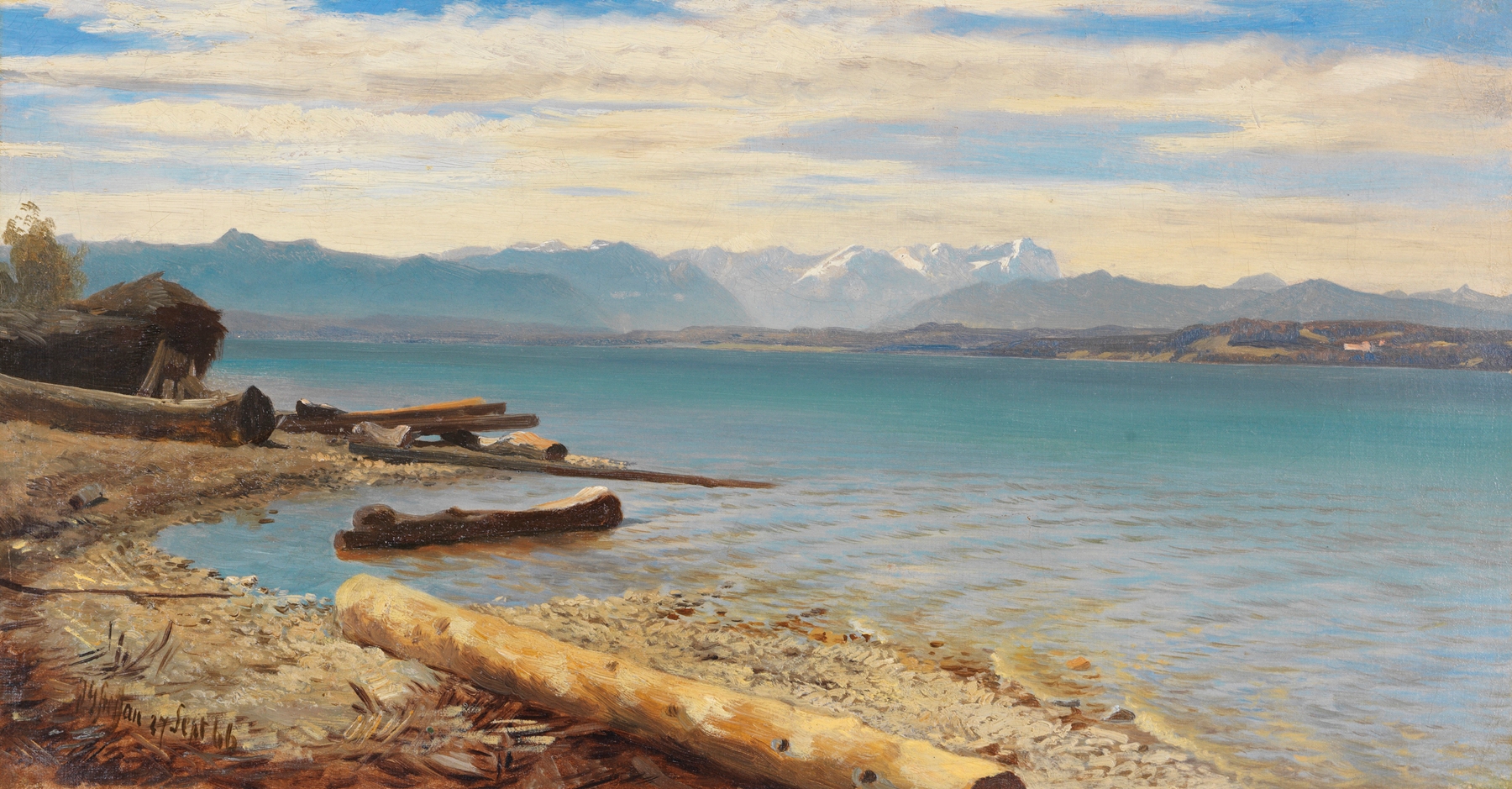
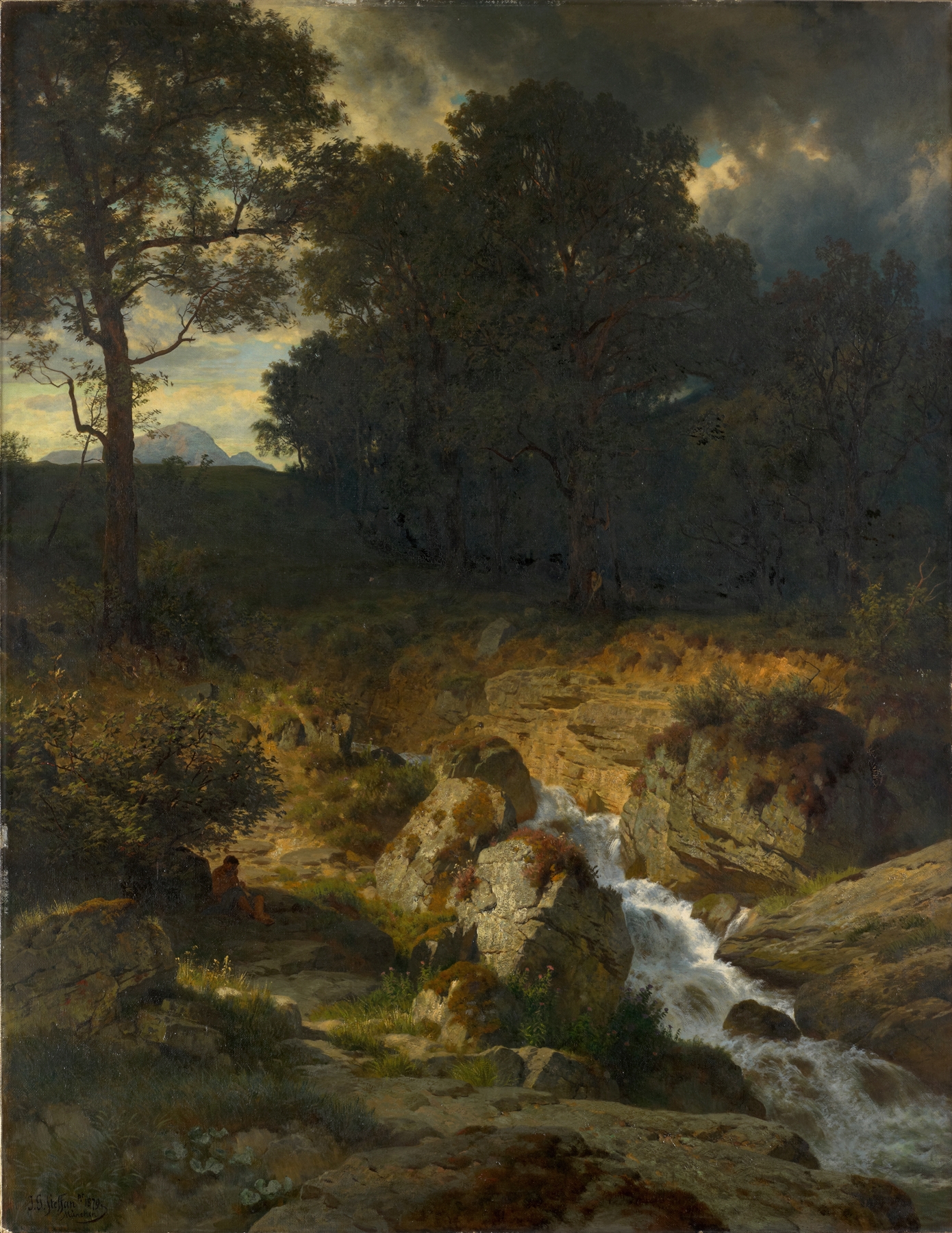
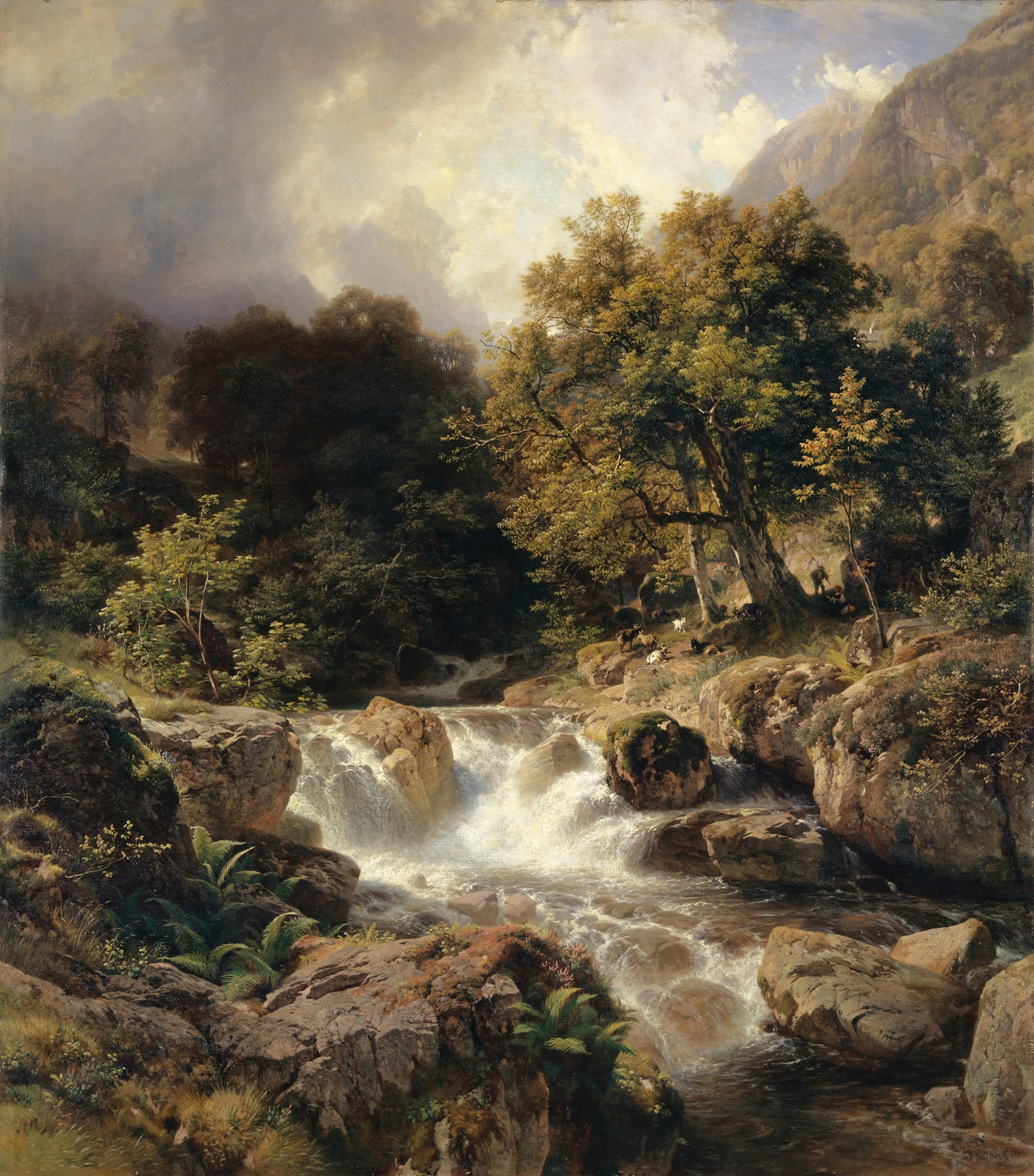
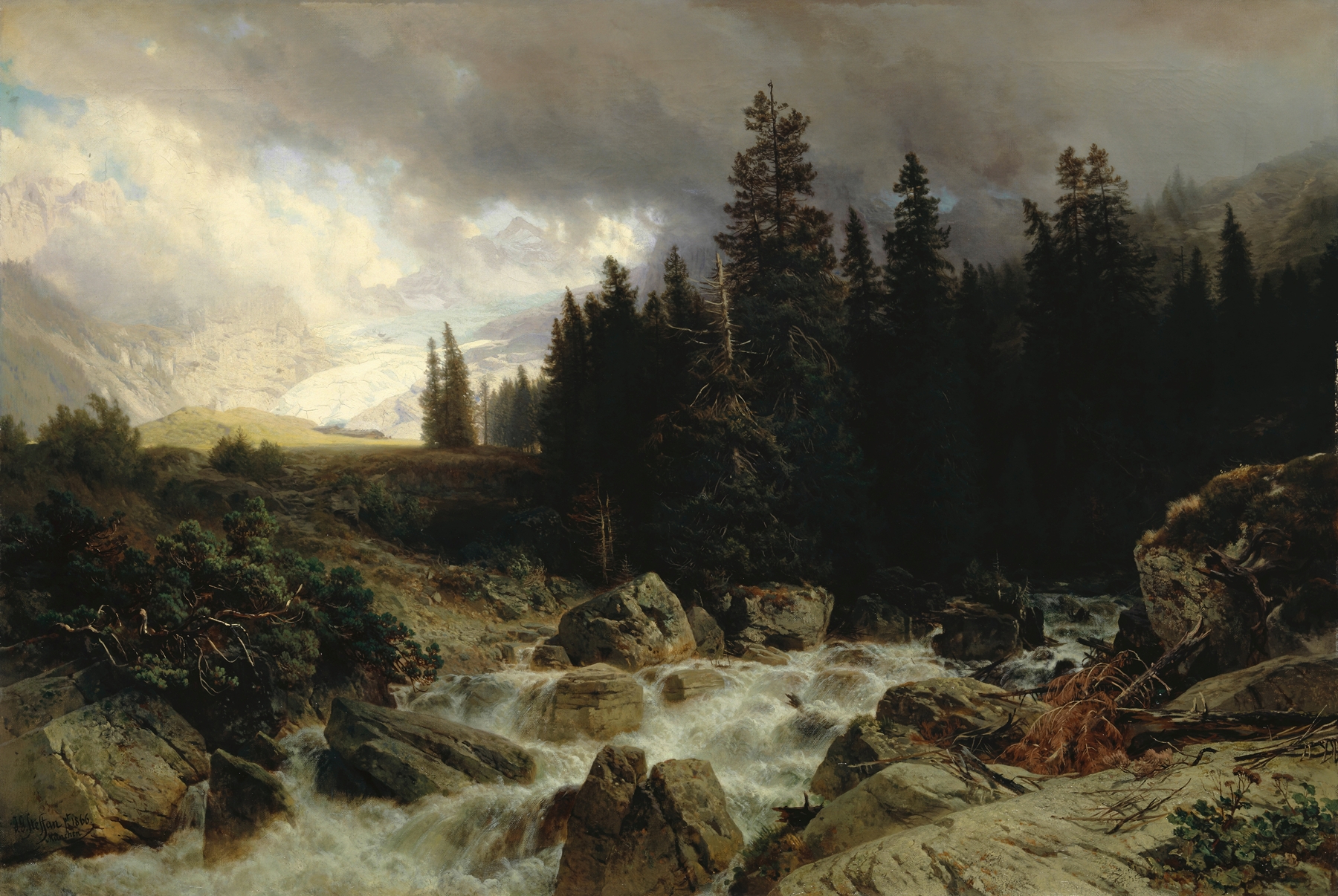
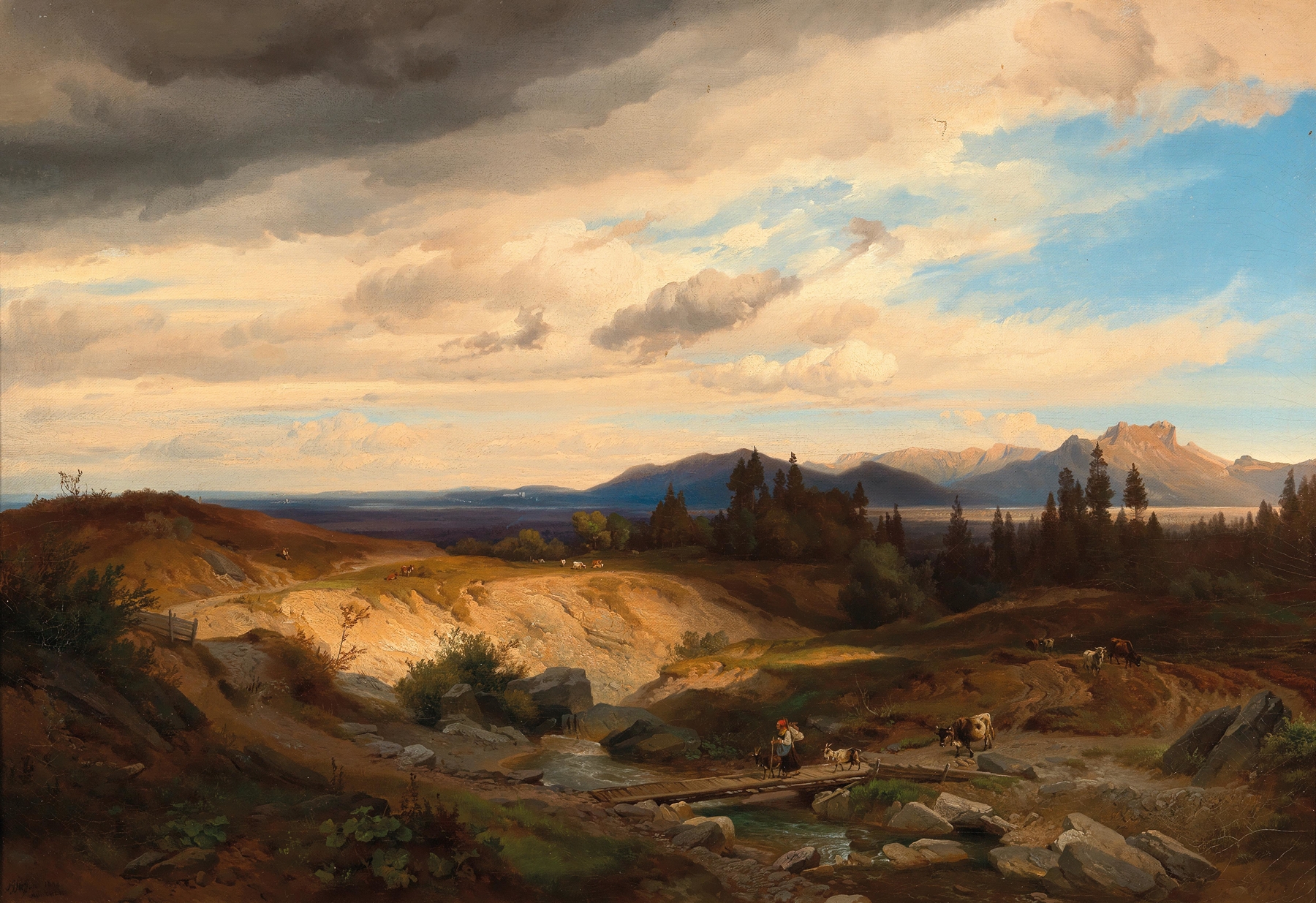
Can beauty exist without sorrow? In Heuberg im Inntal im herbstlichen Sonnenlicht, the viewer is invited to ponder this profound question as they immerse themselves in the breathtaking autumn landscape. Look to the foreground where a tapestry of golden grasses dances gently in the light breeze. The warm autumn hues, rich ochres and burnt siennas, are contrasted sharply by the deep blue of the sky, creating a dialogue between warmth and coolness. The viewer's gaze is drawn upward, where the distant mountains stand majesty cloaked in soft, golden sunlight, imparting a sense of ethereal tranquility.
Each brushstroke reflects the artist's meticulous attention to detail, capturing the fleeting quality of nature's beauty. Deeper still, one may recognize an underlying tension in the juxtaposition of the serene landscape against the inevitability of change. The vibrant autumn colors hint at the approach of winter, representing both the beauty of transience and the sorrow of loss. The light, though warm and inviting, casts long shadows that suggest a whisper of melancholy, evoking a mood that resonates within the soul.
This intricate layering of emotions compels the viewer to reflect on the duality of existence; beauty is often intertwined with impermanence. In 1858, Johann Gottfried Steffan painted this piece during a time of great change in the art world, as Romanticism waned and Realism began to rise. Living in Germany, he was influenced by the landscapes of the Austrian Alps, which not only inspired his art but also reflected personal struggles with loss and longing. This painting captures a moment of tranquility amid his life's complexities, allowing viewers a glimpse into both the beauty and sorrow that define the human experience.