
River Landscape with a View of Naarden — History & Facts
A broad river flows across the foreground, reflecting the sky and the forms of trees and boats along its banks. On the left, a large, leaning tree with dense, textured foliage dominates the riverbank, its branches rendered with quick, stippled strokes that suggest the movement of wind through the leaves. Beneath the tree, a low, grassy bank is dotted with shrubs and a small structure, its roof just visible among the greenery.
A flat ferry boat crosses the river near the center, crowded with cattle and several figures who tend to the animals or steer the vessel. The cattle’s brown and white coats are painted in soft, blended tones, while the figures wear dark clothing that contrasts with the lighter hues of the water and sky. Beyond the ferry, the town of Naarden appears on the far bank, marked by a prominent church with a tall spire rising above the rooftops.
To the right, a large sailing vessel glides downstream, its pale sail catching the light and casting a faint shadow on the water. Smaller boats dot the river, some with groups of figures, while cows graze along the opposite shore, their reflections shimmering in the rippling surface. The sky occupies much of the composition, filled with sweeping bands of cloud in shades of blue, grey, and white, painted with broad, horizontal strokes that suggest the approach of rain.
Sunlight filters through the clouds, illuminating the church and parts of the landscape with a soft, diffused glow. The overall palette is restrained, dominated by cool blues and greens, with touches of warm brown and pink visible where the preparatory ground shows through the thinly applied paint. Salomon van Ruysdael completed River Landscape with a View of Naarden in 1642, depicting the Dutch town of Naarden from across the water. The painting’s atmospheric effects result from Ruysdael’s use of a reduced color range and a variety of brush techniques, including striated strokes for the water and quickly stippled touches for the foliage, as described by the Art Institute of Chicago.
The museum notes that these methods evoke the breezy weather and shifting light typical of the Netherlands, capturing a moment when rain seems imminent. The work was once owned by Mary Hooper Warner of Boston and later passed to her son Roger Sherman Warner, Jr., before being acquired by the Brod Gallery in London by 1980 and sold to Nuveen in Chicago in 1986.
Sources: Art Institute of Chicago, record 2016.434 · Wikidata Q58030055
More Artworks by Salomon van Ruysdael

River Landscape with Ferry
Salomon van Ruysdael
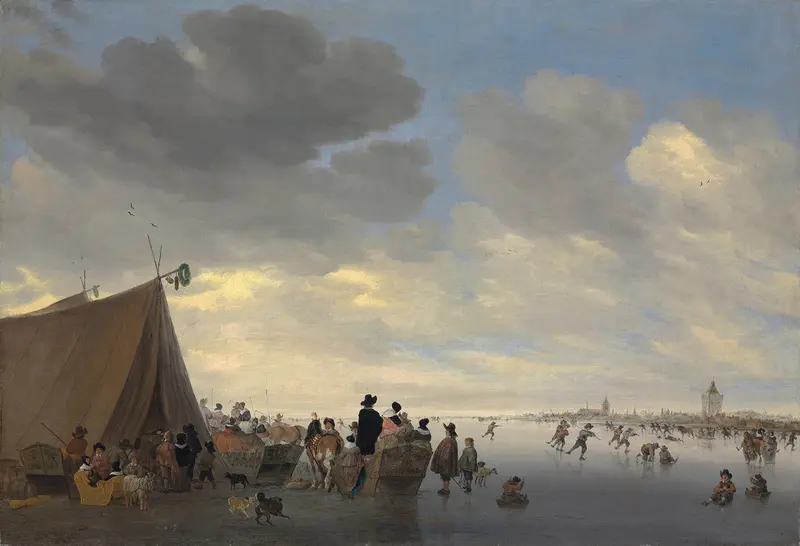
Skaters on the frozen river Lek, the town of Vianen beyond
Salomon van Ruysdael
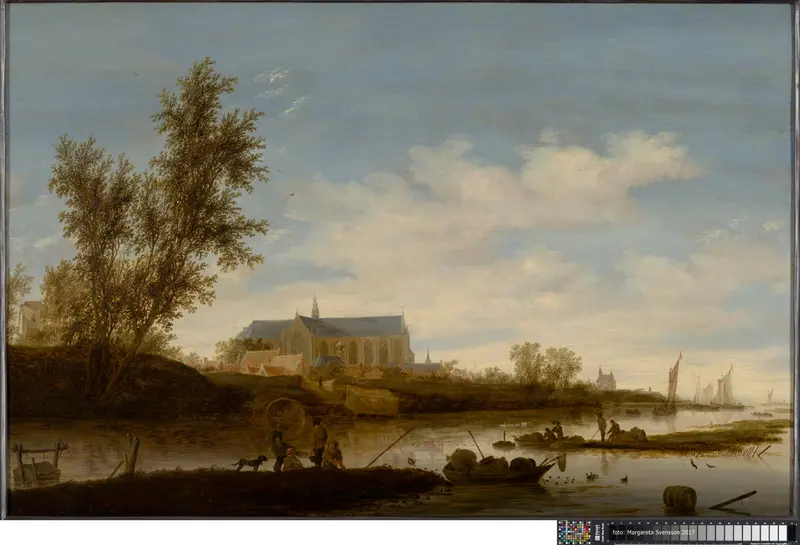
River landscape with fishermen in the foreground, the Laurenskerk in Alkmaar beyond
Salomon van Ruysdael
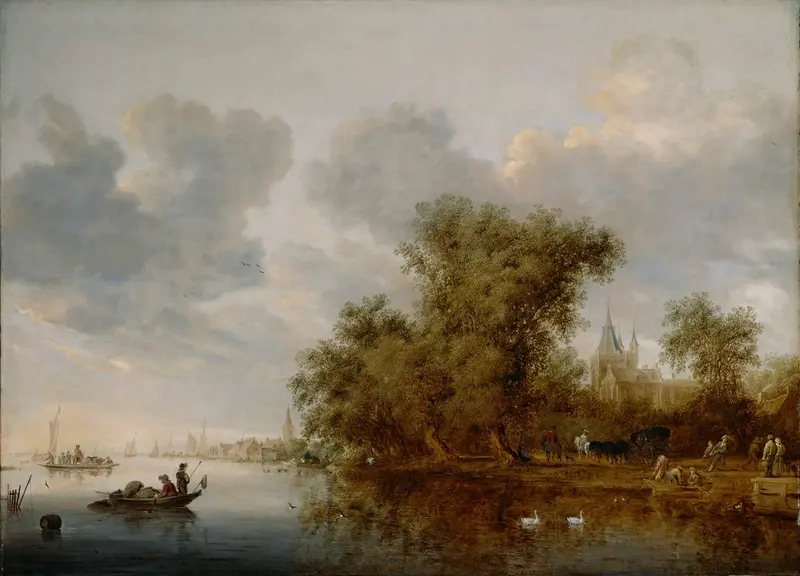
River Landscape
Salomon van Ruysdael

River Landscape with a View of Naarden
Salomon van Ruysdael
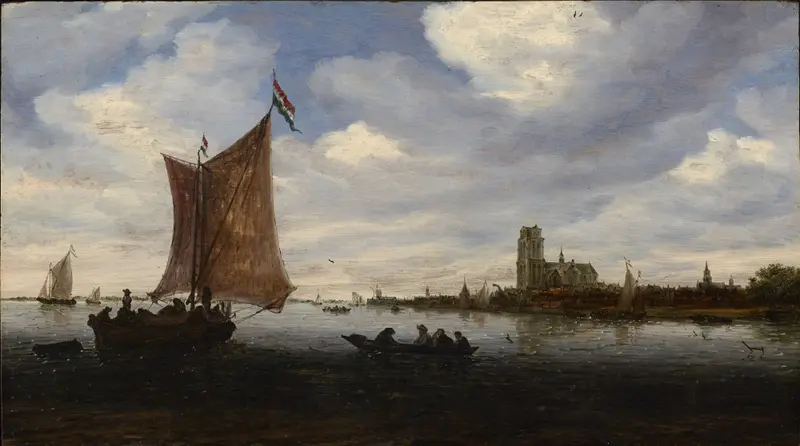
View of Dordrecht
Salomon van Ruysdael
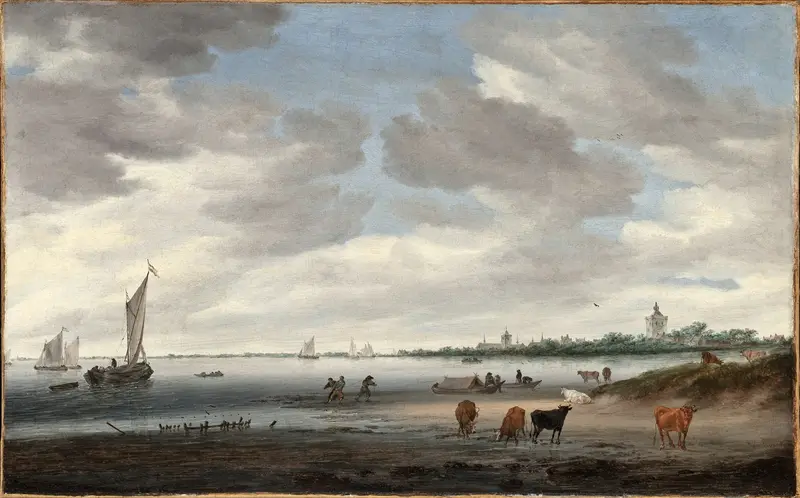
View of the River Lek and the Town of Vianen
Salomon van Ruysdael
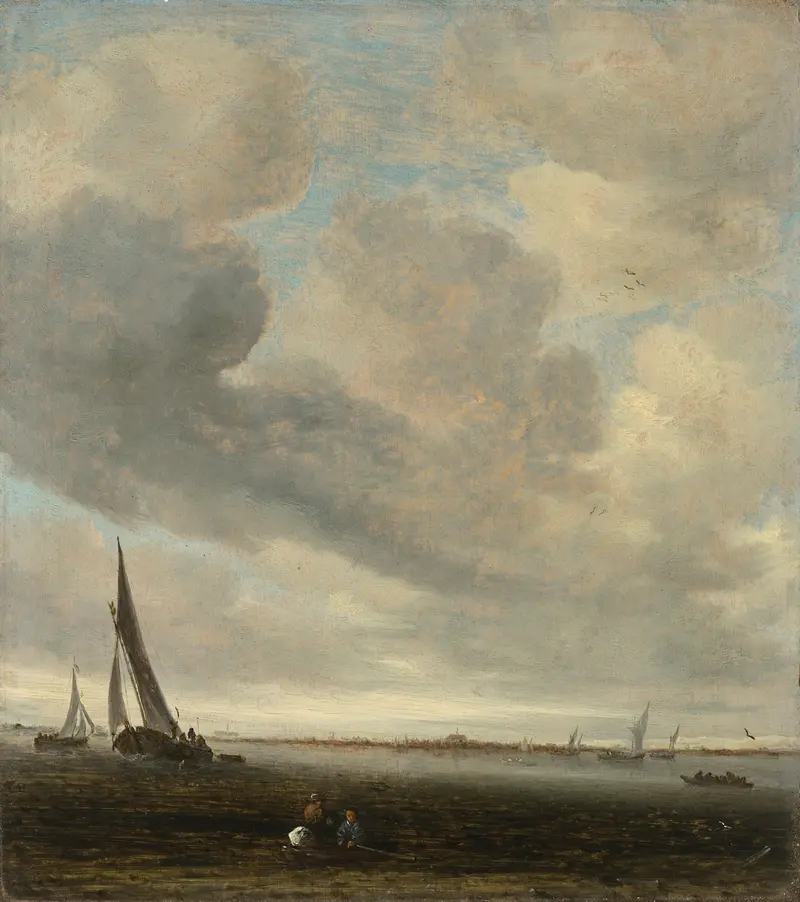
An estuary scene with a distant view of Haarlem
Salomon van Ruysdael
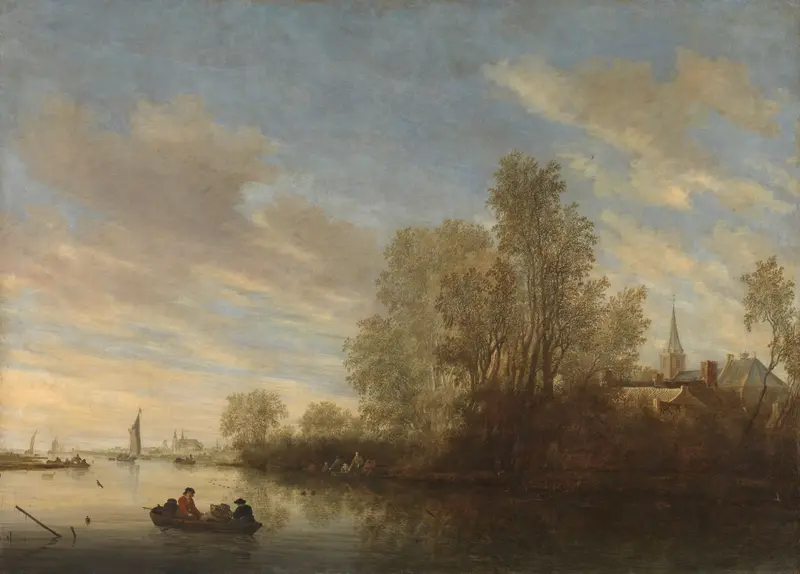
River View near Deventer
Salomon van Ruysdael
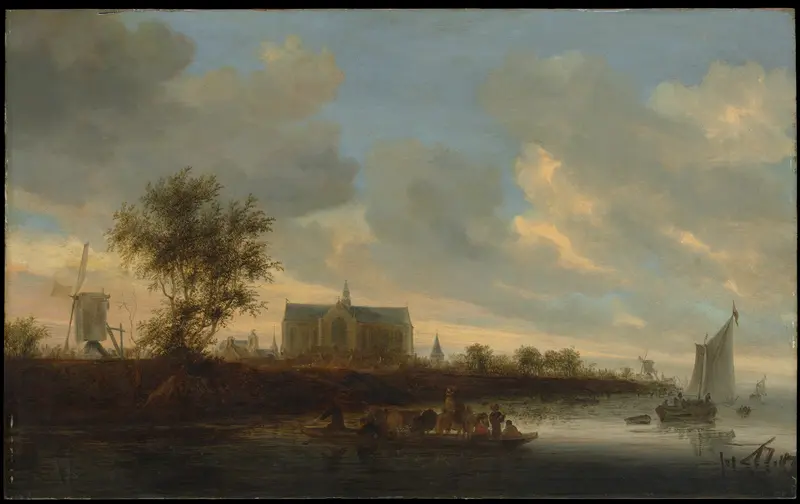
View of the Town of Alkmaar
Salomon van Ruysdael
More Landscape Art

Starry Night
Vincent van Gogh

View of Delft
Johannes Vermeer

Water Lilies
Claude Monet

The Grand Canal, Venice, looking north-west from the Ca' Corner to the Ca' Contarini degli Scrigni, with the campanile of Santa Maria della Carità
Canaletto

Windsor Castle
Canaletto

The Grand Canal looking North-East from the Palazzo Dolfin-Manin to the Rialto Bridge
Canaletto