Schrader – The Aletsch Glacier and Marjelen Lake — History & Analysis
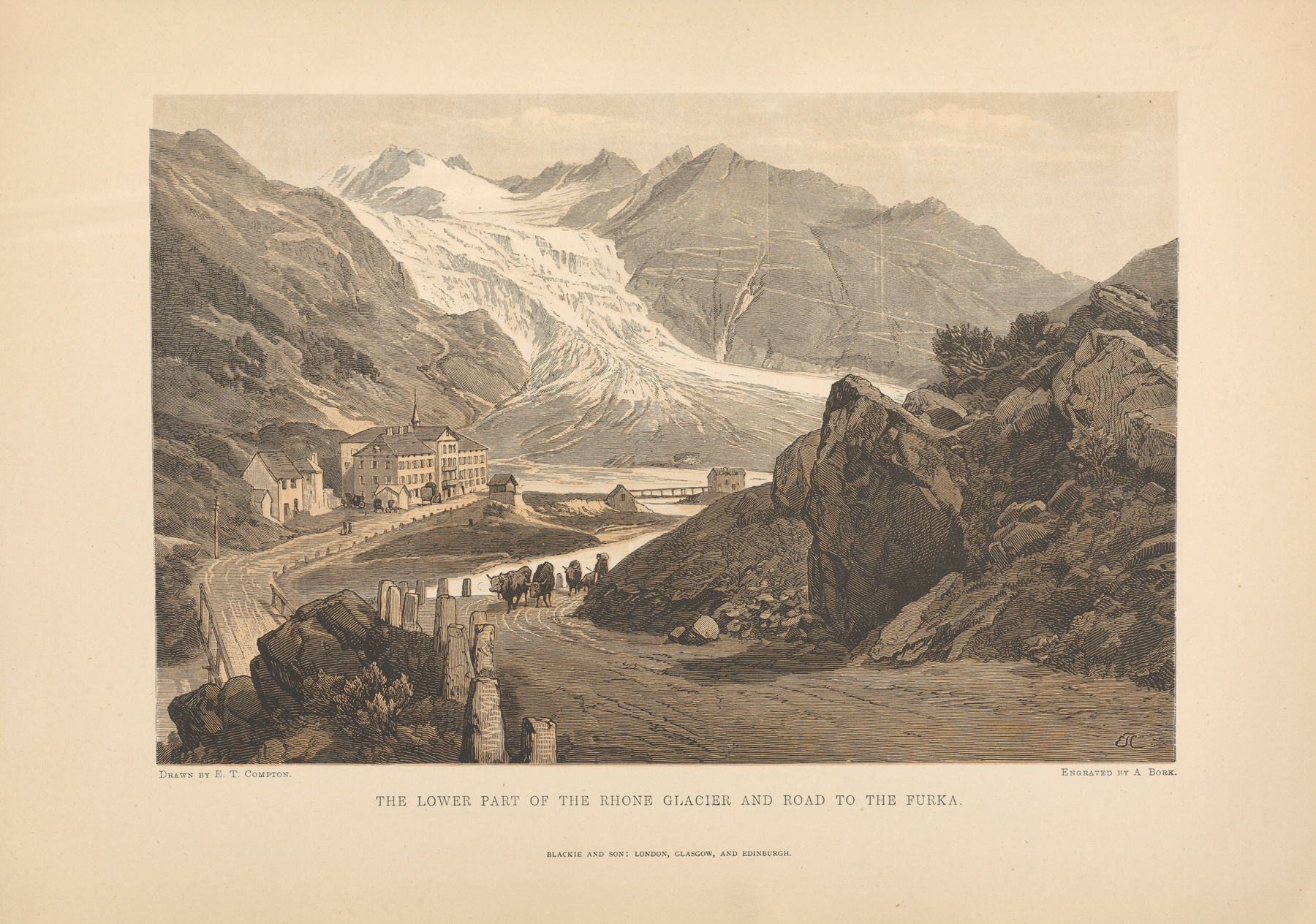
“Every brushstroke is a heartbeat remembered.” In the shimmering expanse of the Aletsch Glacier, nature's transformation unfolds before our eyes, a landscape where time and beauty converge. Look toward the center, where the glacier’s icy blue hue contrasts starkly with the deep emerald of Marjelen Lake. The artist's delicate brushwork renders the interplay between light and shadow, creating an almost tangible texture that invites the viewer to feel the chill of the ice and the warmth of the sun. Notice how the soft, swirling clouds above cradle the majestic peaks, as if holding the fleeting moment of this sublime scene in suspension.
Yet, beneath this serene surface lies a narrative of change and resilience. The glacier, vital and ancient, symbolizes the slow march of time, while the vibrant waters of the lake remind us of life's ephemeral beauty. The juxtaposition of the solid, unyielding ice against the fluidity of the lake evokes a sense of tension, reflecting nature’s duality—an eternal dance between permanence and transformation. These elements resonate deeply, inviting contemplation on the fragility of our environment.
Created in 1881, this work emerged during a time of significant shifts in both the artist’s life and the world of art. Theodor Gsell Fels, influenced by the Romantic movement, explored themes of nature's grandeur, often in the Swiss Alps. As industrialization began to alter landscapes, his approach captured the sublime beauty of untouched wilderness, urging viewers to appreciate both the majesty and vulnerability of our natural world.