Skip i Bjørvika — History & Analysis
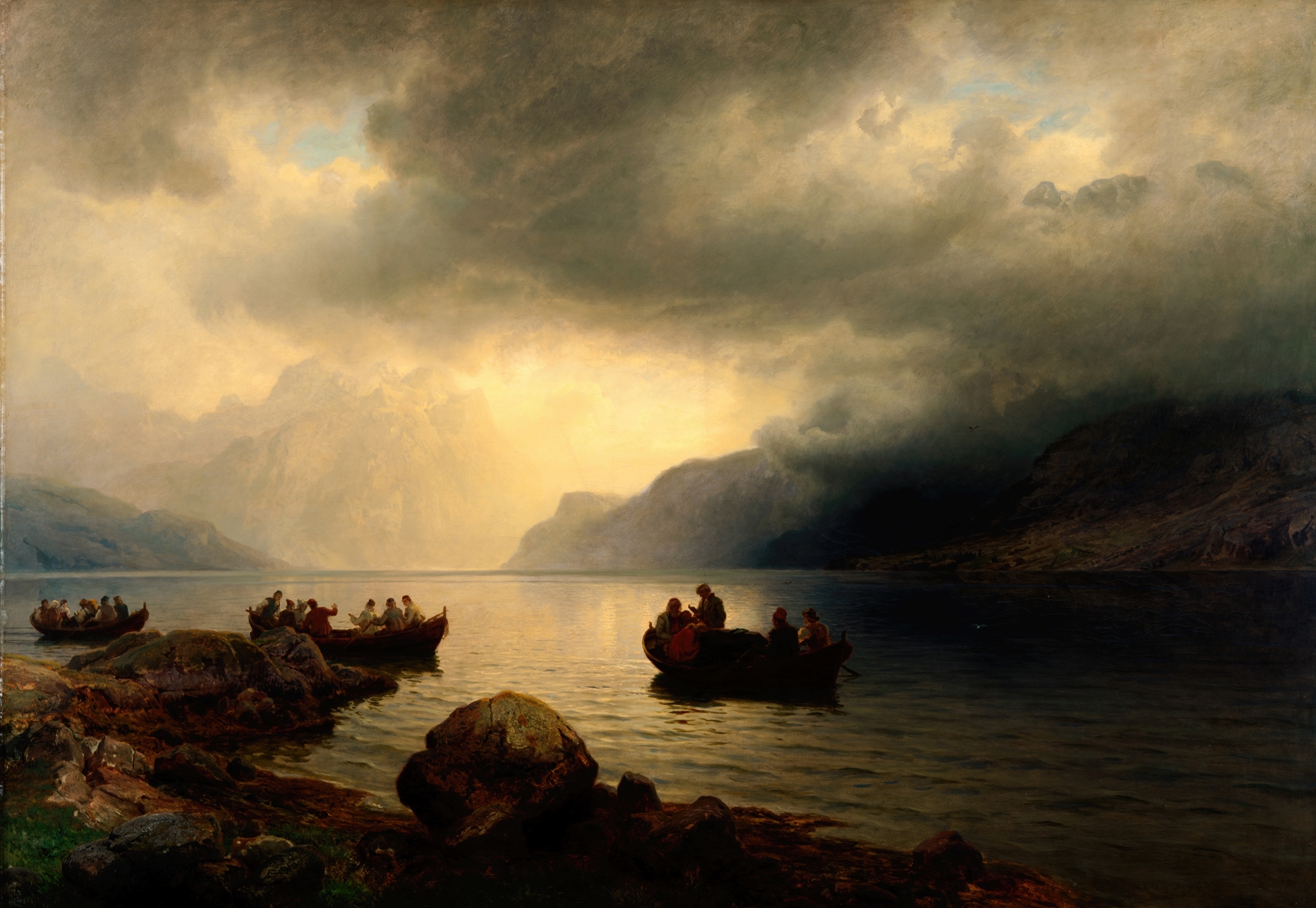
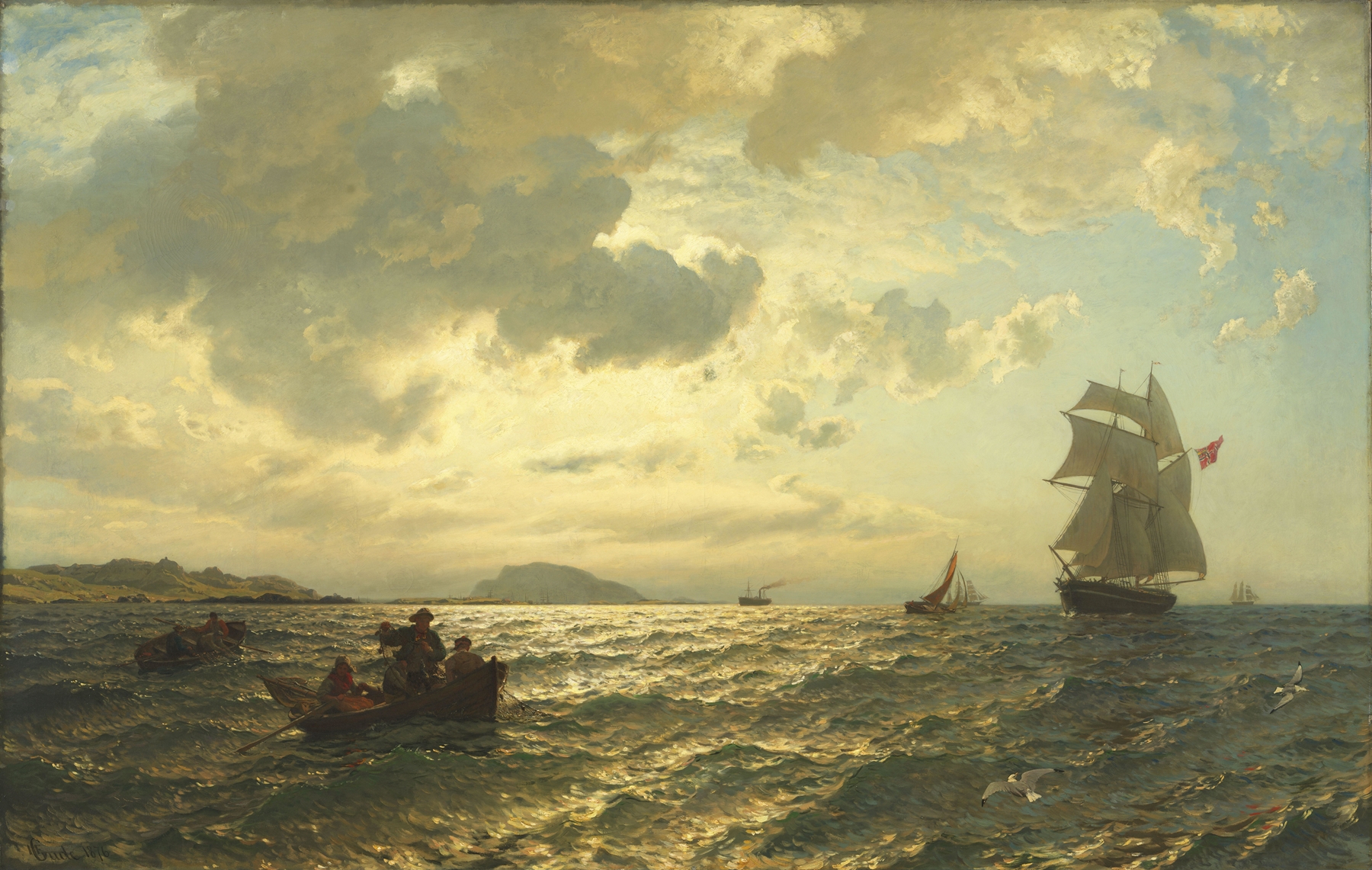
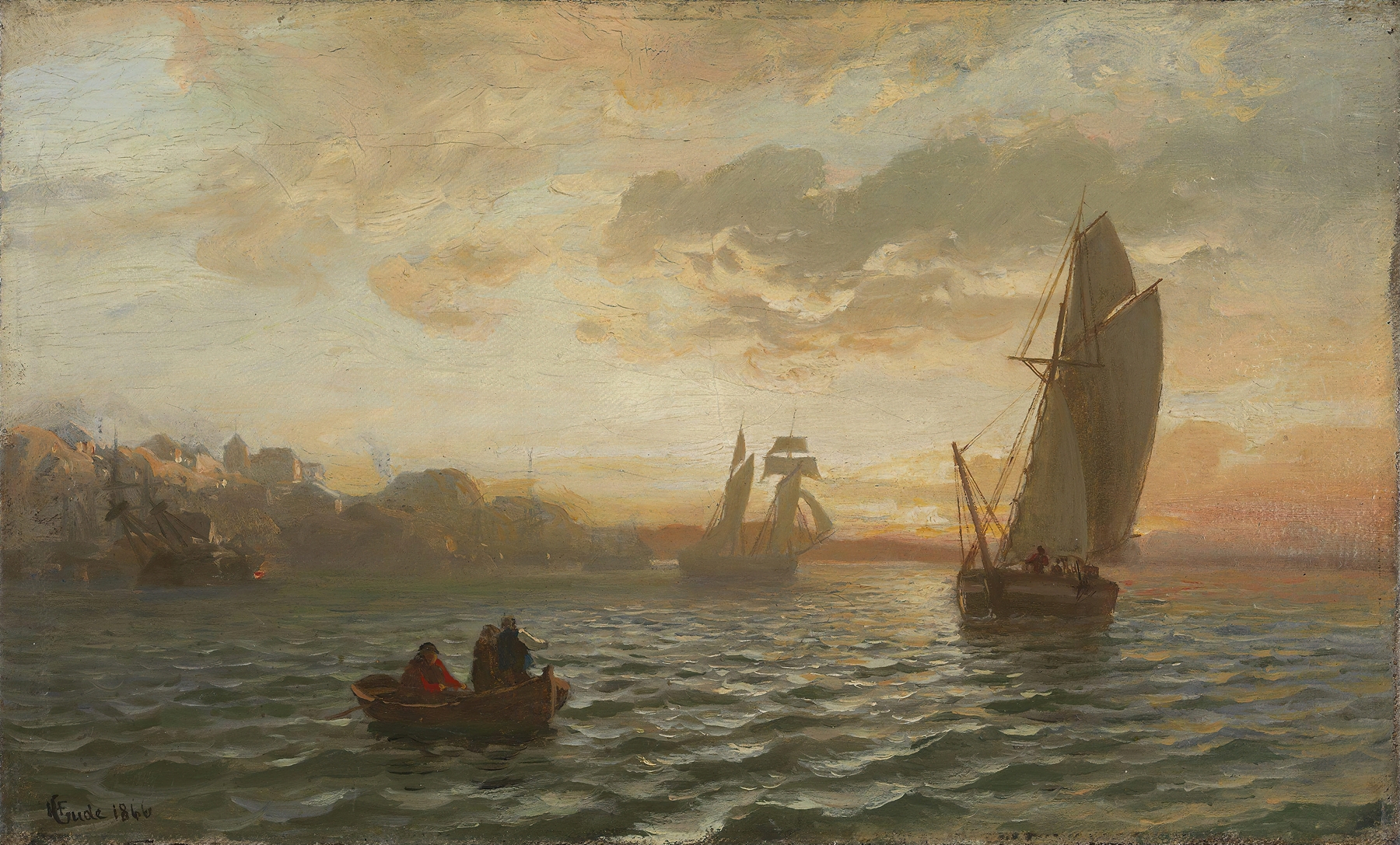
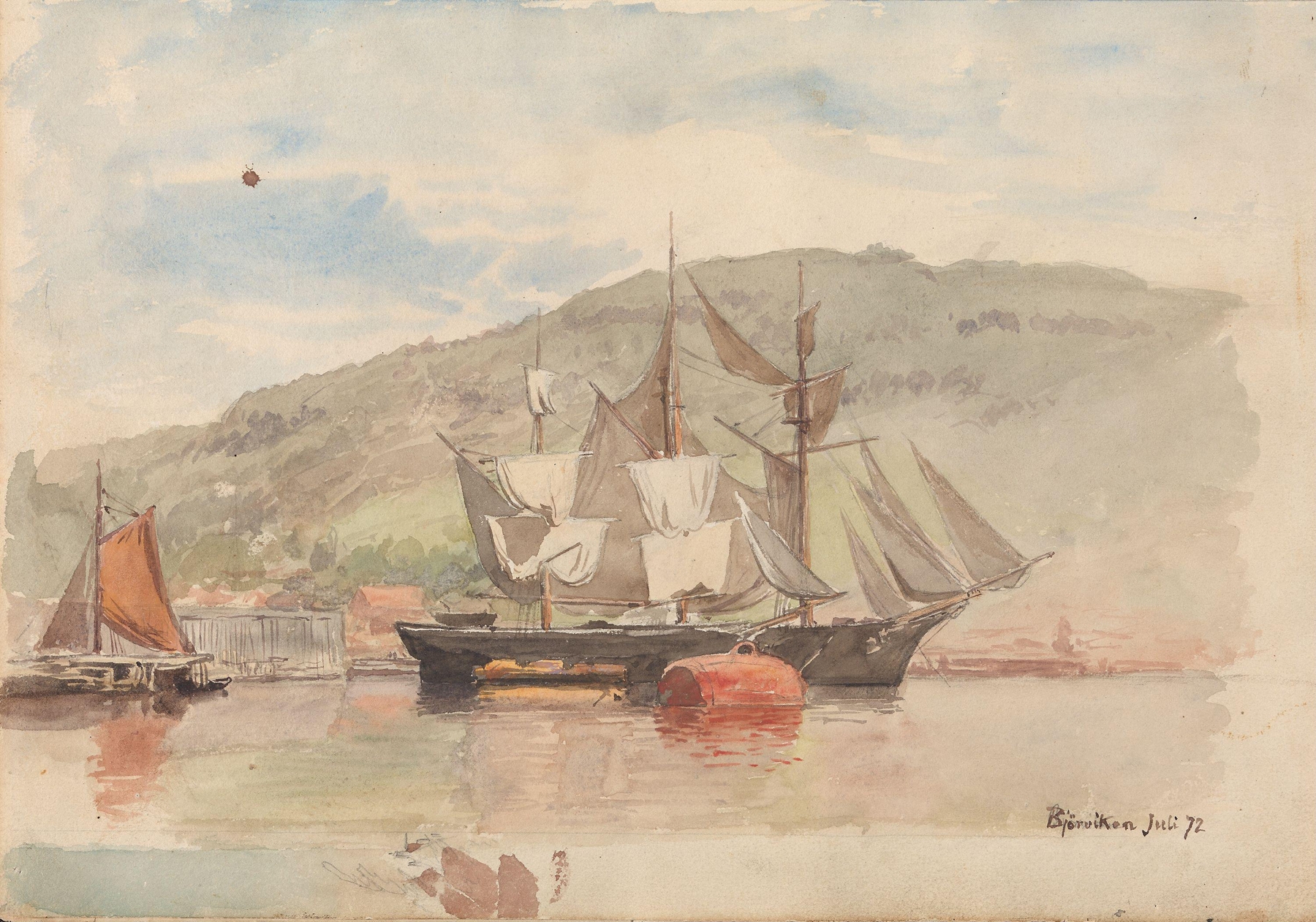
Did the painter know this moment would outlive them? As time drifts like a gentle current, Skip i Bjørvika captures a fleeting illusion of life and movement that continues to resonate with viewers today. Look to the lower left corner of the canvas where a small boat glides through the serene waters, its white sails stark against the deep blues of the fjord. Notice how the light dances across the surface, creating shimmering reflections that breathe life into the scene.
The composition is expertly balanced, with the distant hills framing the vessel, drawing the viewer's eye into the depth of the landscape. Gude’s adept use of color — the cool natural tones contrasted with the vibrant sky — evokes both tranquility and a subtle sense of urgency. As you examine the painting further, consider the interplay between nature and human activity. The boat, a symbol of exploration and adventure, contrasts with the stillness of the surrounding waters, representing the transient nature of life itself.
The crispness of the scene hints at a moment that is both personal and universal; it captures not just a landscape, but an inner journey of contemplation amid the beauty of the Norwegian coast. Painted in 1872, this work finds Hans Gude at a pivotal point in his career. Living in Dresden and influenced by the Romantic movement, he sought to portray the sublime and the majesty of nature. During this period, Norway was becoming increasingly recognized for its striking landscapes, allowing Gude to solidify his role as a leading figure in Norwegian art, bridging the gap between realism and the ethereal allure of the natural world.