Sphinx Alley, temple of Amun-Re. From the journey to Egypt — History & Analysis
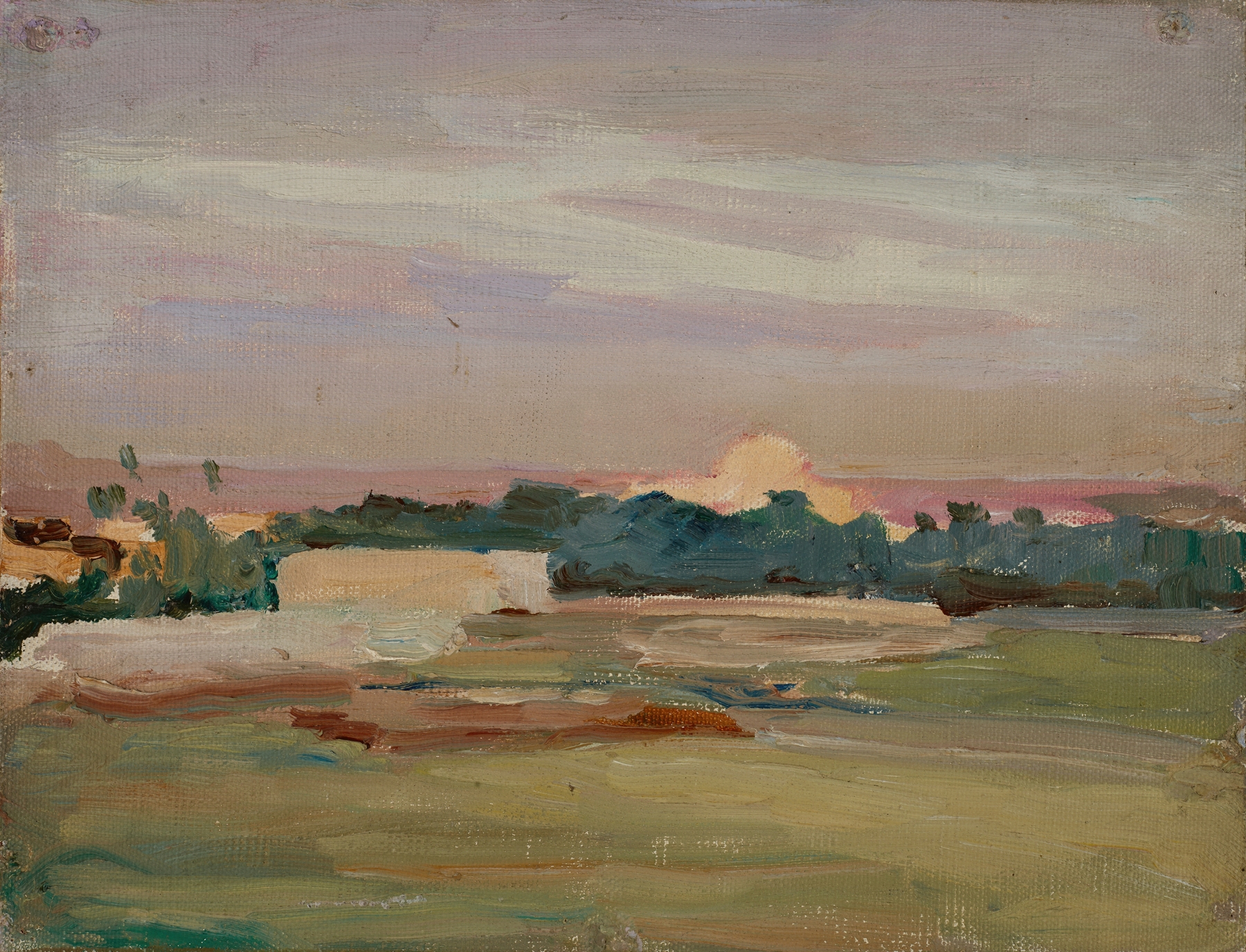
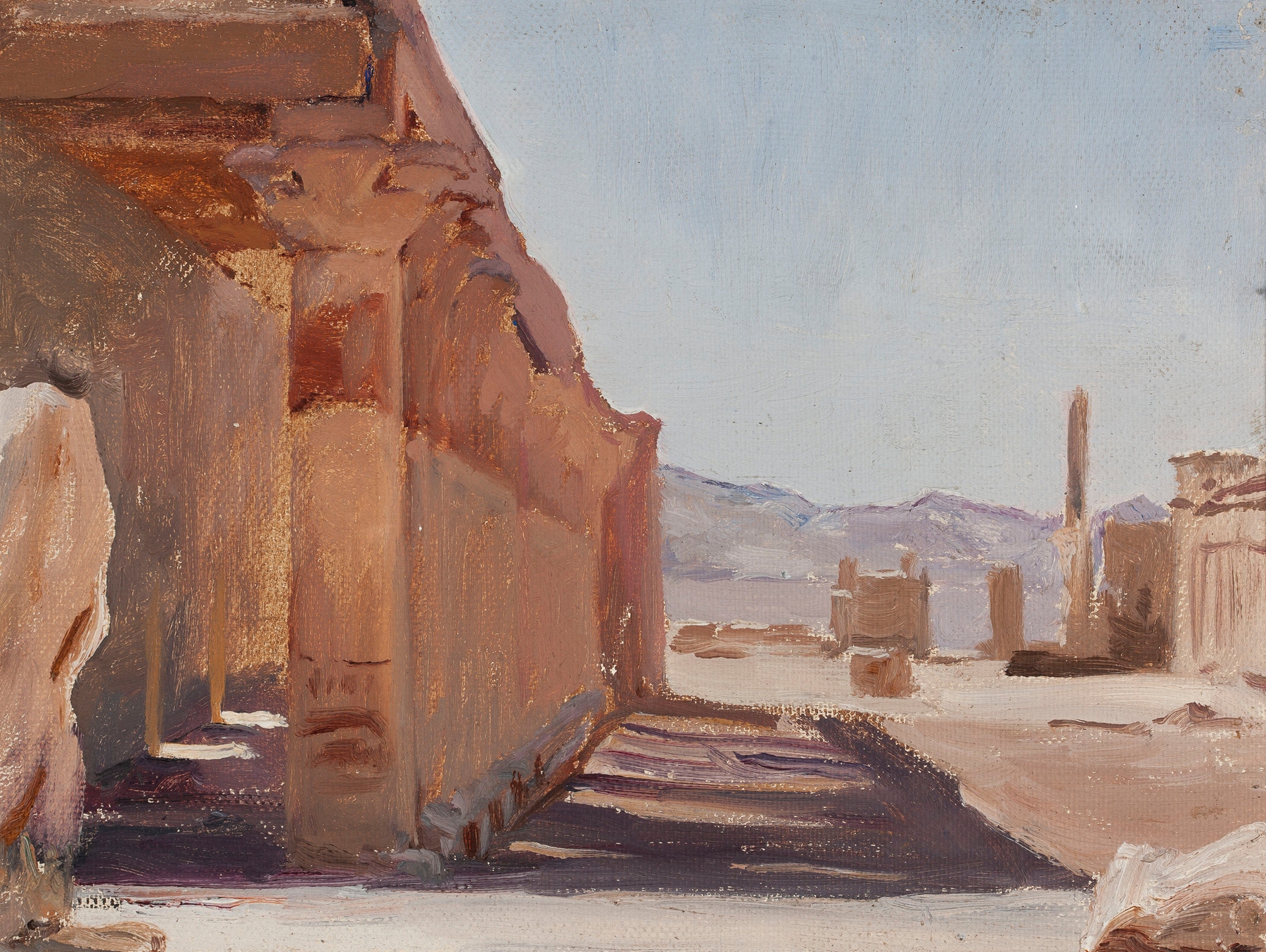
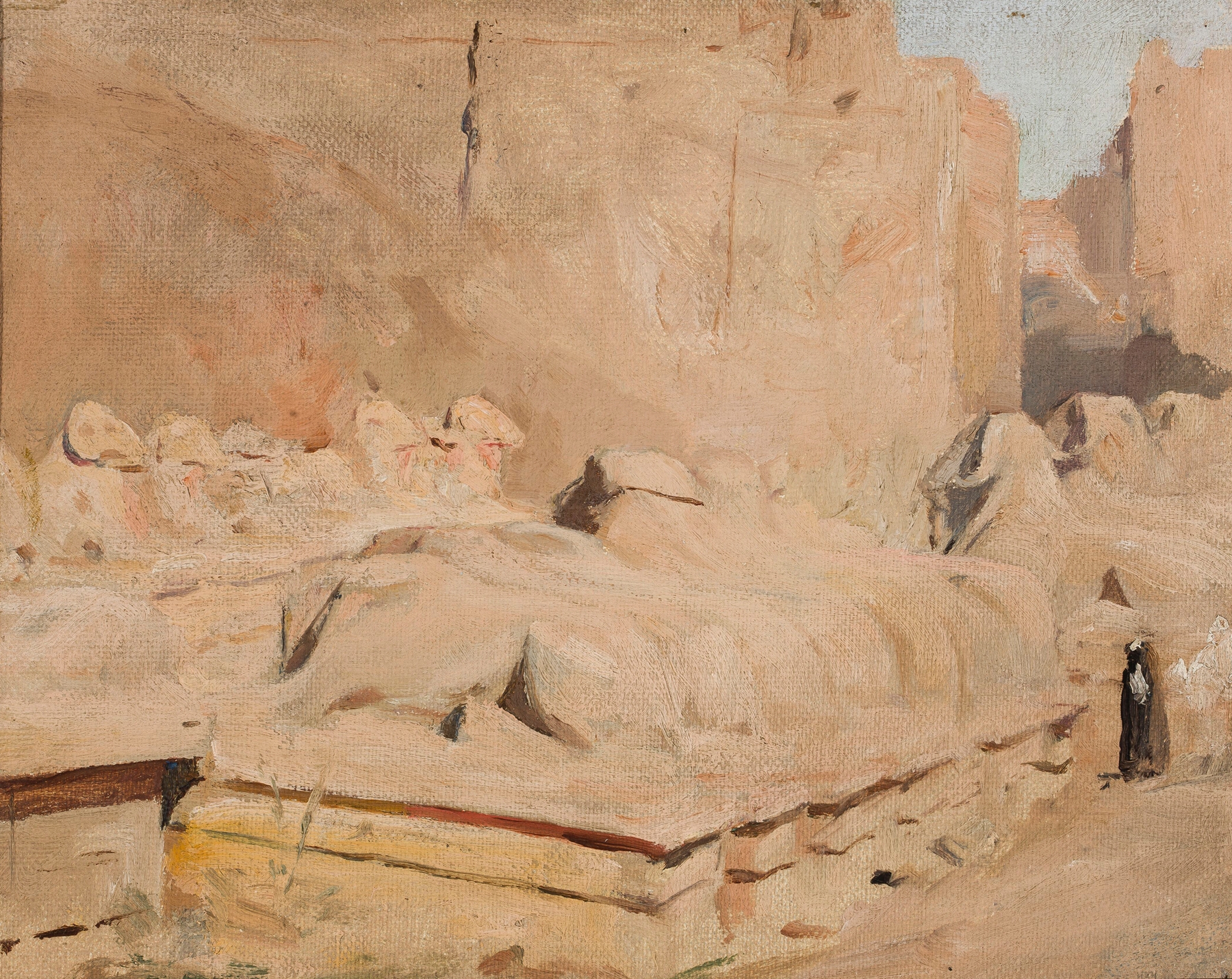
Could a single brushstroke hold eternity? In *Sphinx Alley, temple of Amun-Re*, the artist invites us deep into a world where history breathes and whispers secrets shrouded in time and fear. Look to the foreground where ancient stone blocks loom, their surfaces etched with the marks of countless years. The warm ochres and muted browns interlace with hints of azure, creating a vivid contrast that draws the eye across the vast expanse of the scene. Notice how the towering sphinxes stand guard, their solemn gazes fixed on the horizon, while shadows stretch dramatically, giving an illusion of depth and a sense of foreboding that permeates the atmosphere. Beneath the grandeur lies a palpable tension, a silent conversation between the monumental past and the ephemeral nature of human existence. The empty space surrounding the structures speaks volumes; it suggests isolation, evoking a collective fear of time's passage and the ultimate erasure of memory. Each detail, from the crumbling hieroglyphics to the intricate carvings, reflects the weight of history, imbuing the viewer with both wonder and unease. In 1903, Jan Ciągliński created this piece during a period of burgeoning interest in Egyptology, spurred by archaeological discoveries and colonial expeditions. Living in Paris, he was influenced by the surreal transitions in European art, yet he sought to immerse himself in the rich legacy of ancient Egypt, capturing not just the beauty, but the underlying fear of loss that shadows civilizations long forgotten.