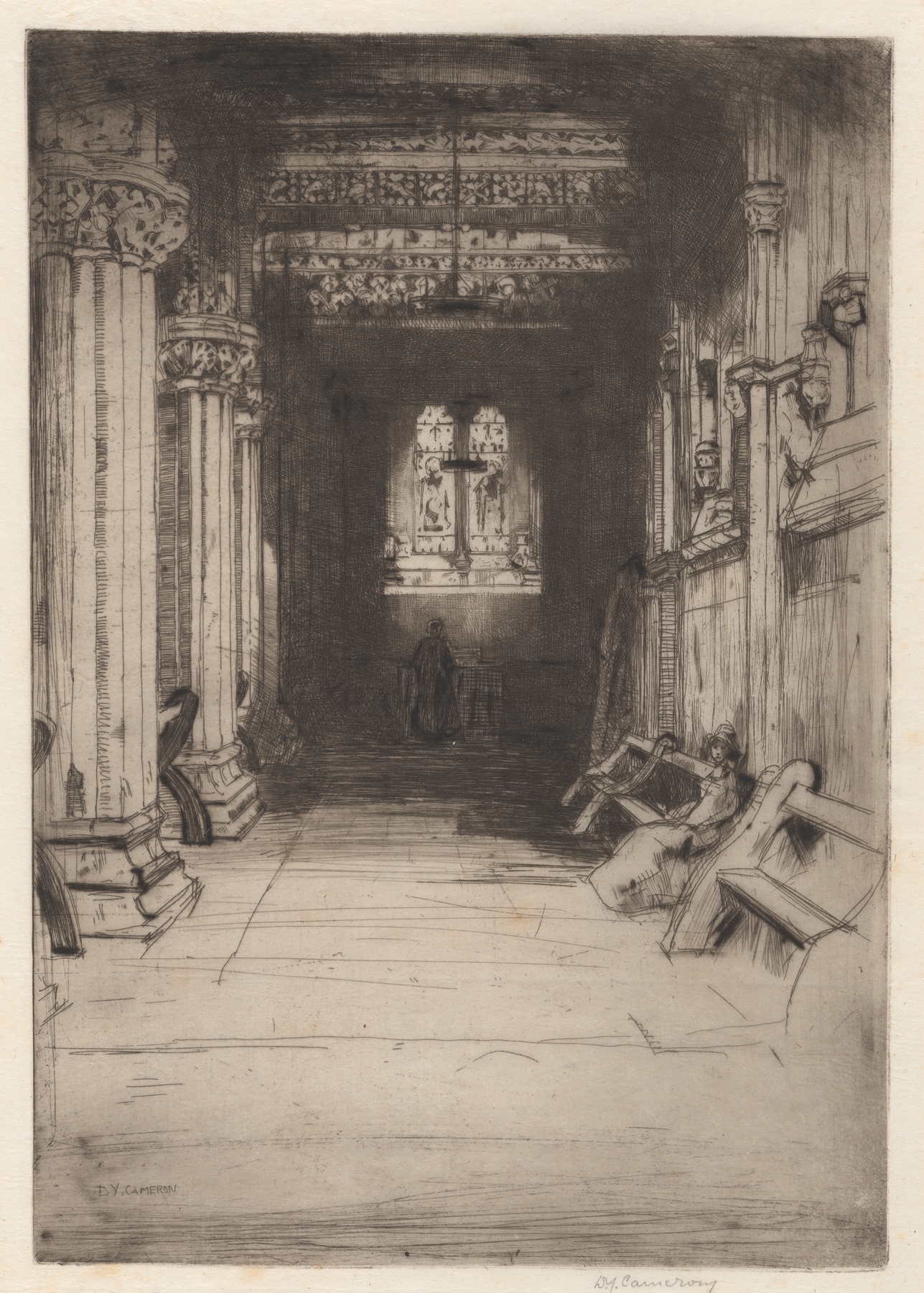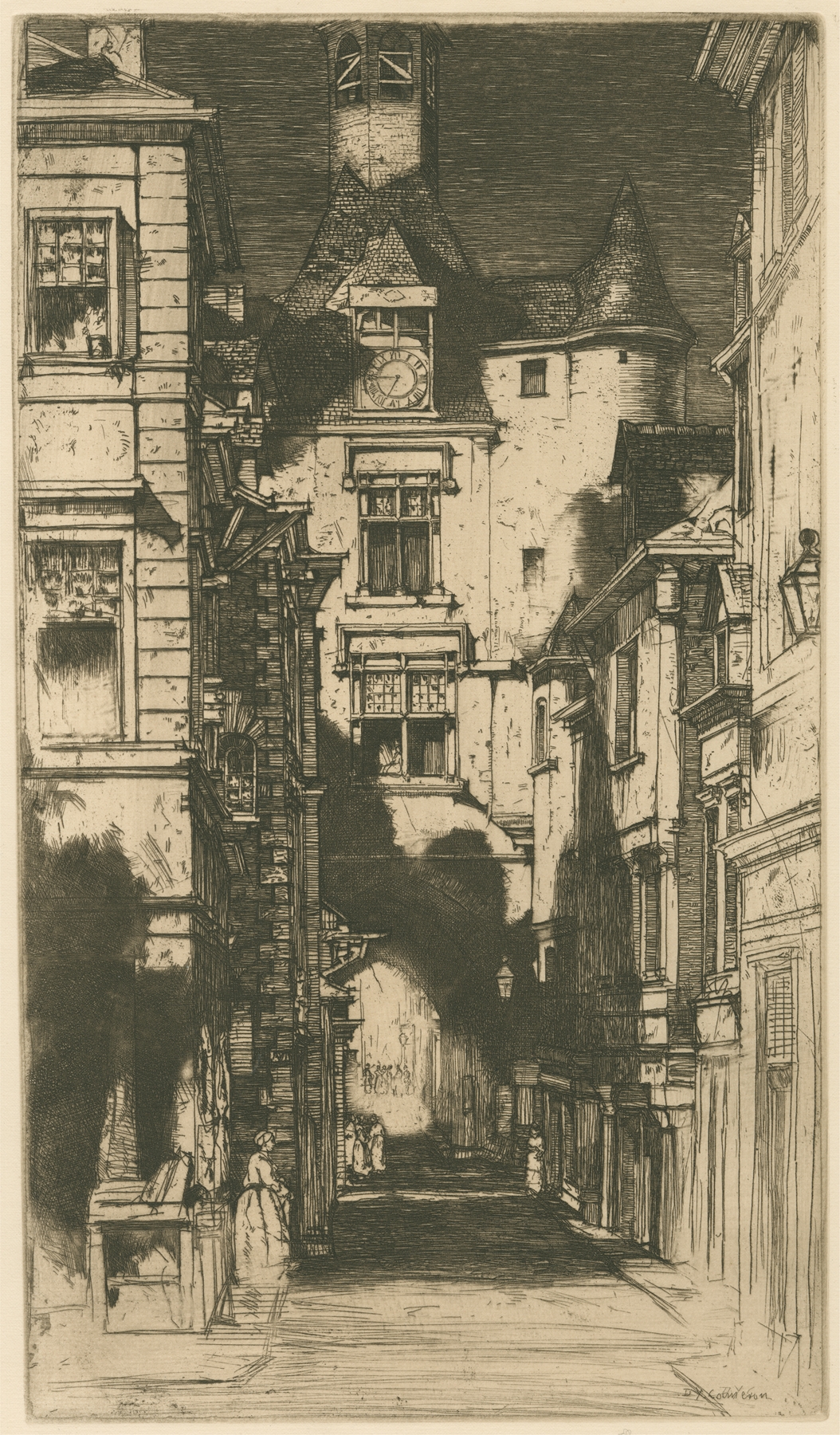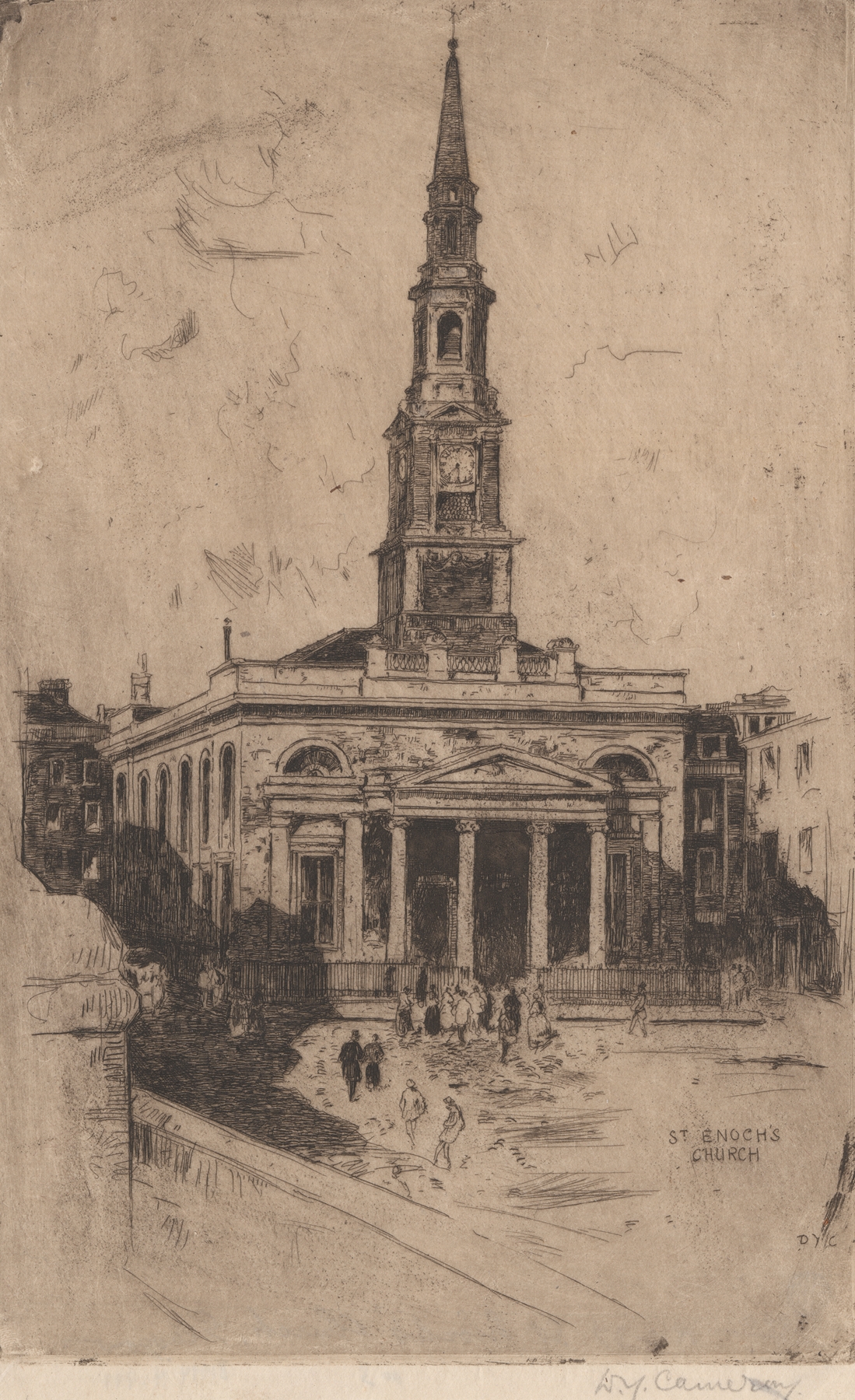
“Every silence here is a confession.” The stillness of a church bears witness to the echoes of revolutions, both societal and personal. It invites reflection on the lives that once thrived within its walls and the dreams that remain unspoken. Look to the center of the canvas, where the grand spire reaches upward, drawing the eye into the serene yet imposing architecture of St. Enoch’s Church. The interplay of light and shadow dances on the stone facade, revealing intricate carvings and the soft curve of the arches that cradle the heavens. Notice the muted palette, which speaks to a bygone era, evoking a sense of solemnity and reverence as the soft blues and grays dominate, punctuated by the warm glow of light filtering through the stained glass. In the intricate details, we observe the tension between the divine and the earthly. The church stands not only as a monument of faith but also as a vessel of community and change. Each stone seems to hold the weight of untold stories—of seekers and skeptics alike—reflecting a society at a crossroads. The heavy presence of the structure contrasts with the fleeting nature of time, hinting at the struggles for social reform and the burgeoning industrial revolution that transformed Glasgow during this period. In 1895, the artist painted this work during a time of artistic transformation in Scotland, amid the rise of the Glasgow School and the influence of Impressionism. Young Cameron was deeply engaged with the urban landscape, capturing the essence of a city in flux while paying homage to its architectural heritage. His vision not only commemorated a landmark but also encapsulated the spirit of an era ripe for revolution, both in art and in society.