Stage Design – A Sepulchral Vault — History & Analysis
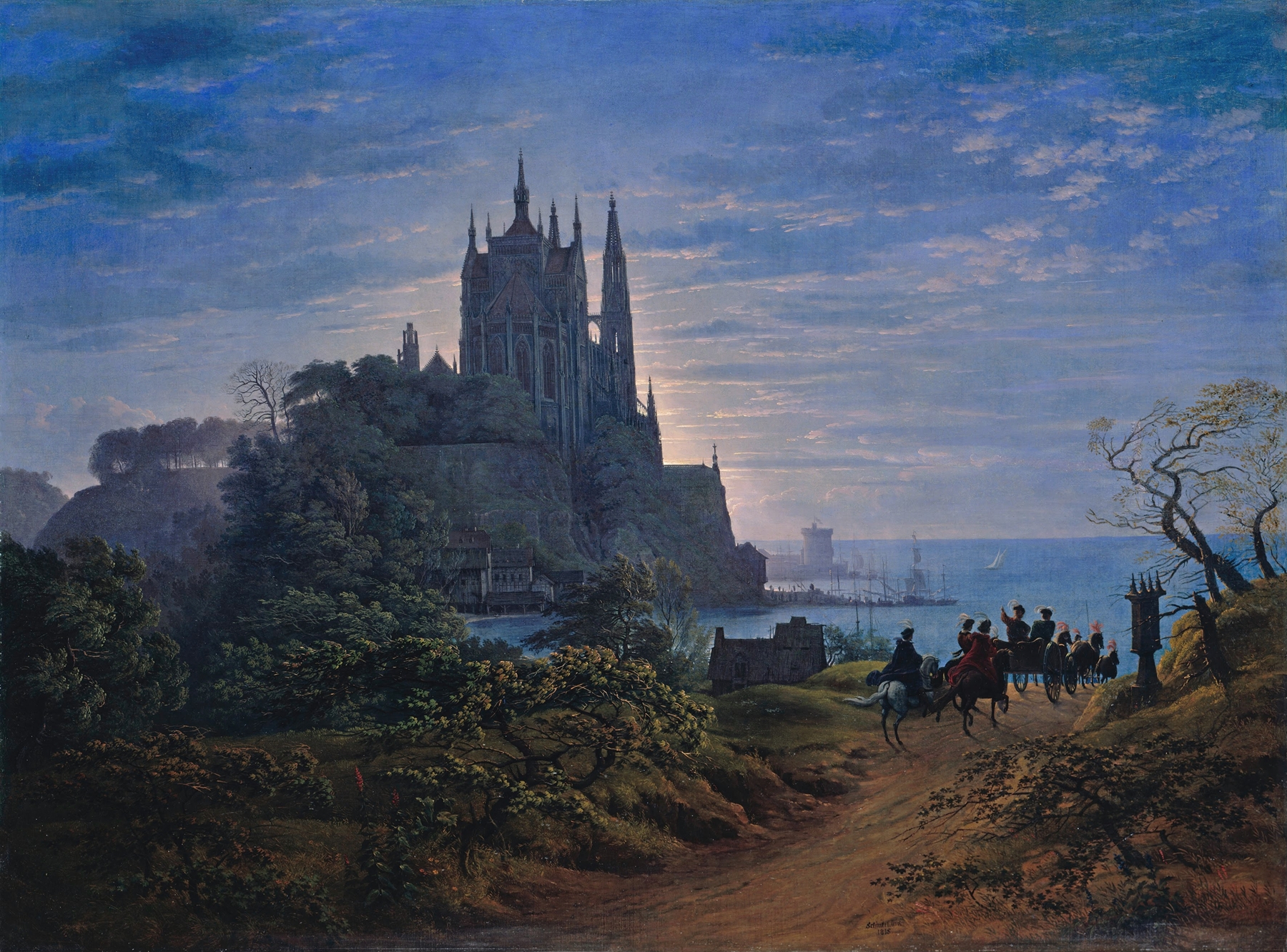
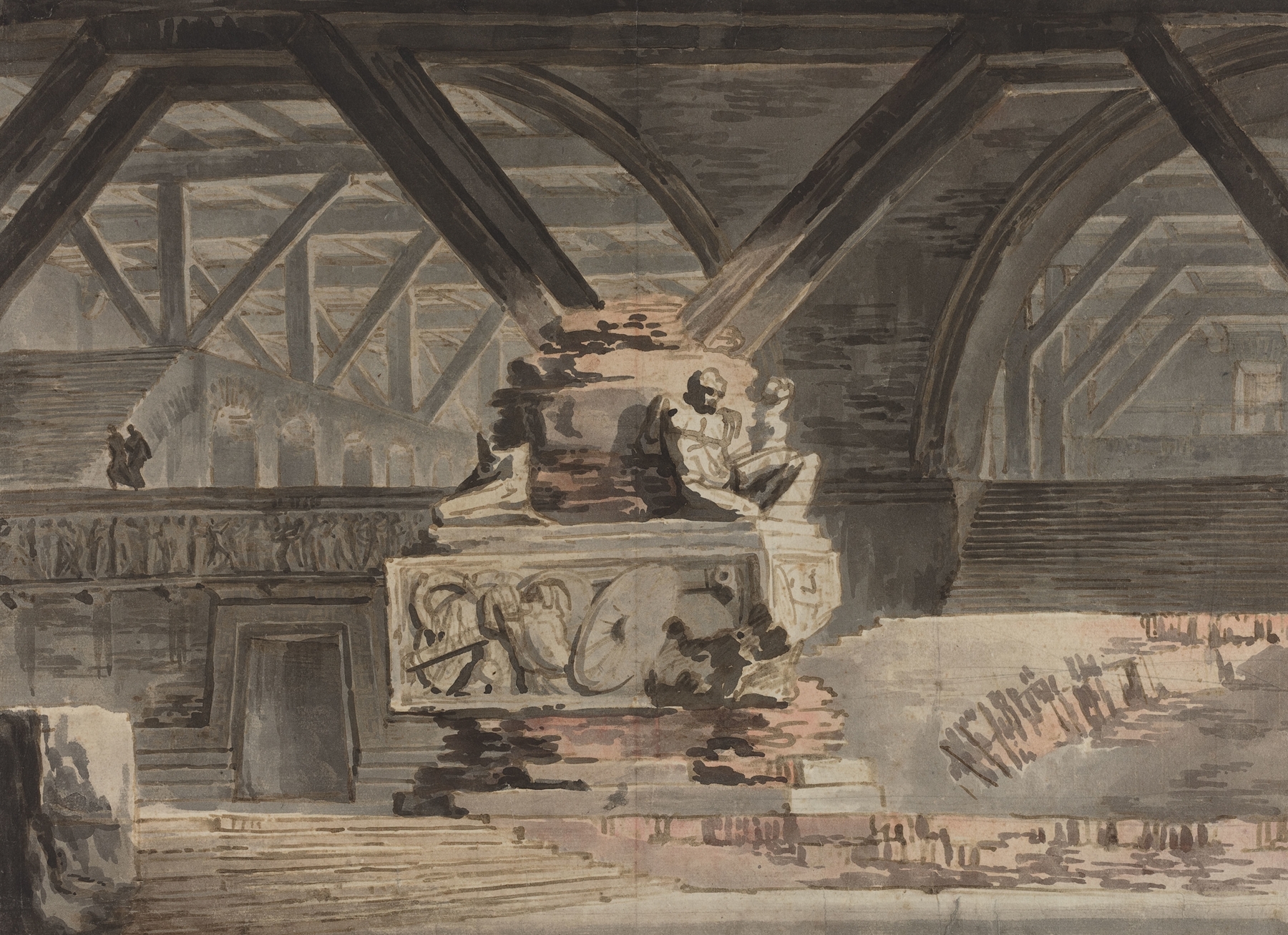
Can beauty exist without sorrow? In the haunting depths of Stage Design – A Sepulchral Vault, Karl Friedrich Schinkel invites us to explore the poignant relationship between grandeur and decay. Look closely at the intricacies of the vault's architecture, where meticulously rendered stonework meets the shadowy embrace of a dimly lit space. Notice how the light trickles through the openings, casting an ethereal glow that highlights the delicate gargoyles perched above. The subdued color palette, filled with muted greys and deep blues, evokes a sense of solemnity, drawing attention to the contrast between the opulence of the design and the inevitable passage of time.
The composition whispers tales of both beauty and mortality, serving as a reminder of what once was. As you delve deeper into the folds of this work, consider the juxtaposition of life and death. The sepulchral nature of the design evokes a solemn reverence for the past, hinting at the lives that have come and gone beneath the archways. The ornate details, while striking, are also laden with an air of melancholic remembrance, suggesting that beauty often carries the weight of loss.
Schinkel's choice to immortalize such a space prompts us to confront our own transient existence, urging us to find meaning in the decay that surrounds us. Created around 1820, this piece emerged during a time when Schinkel was deeply engaged in the neoclassical and romantic movements within art and architecture in Germany. The artistic landscape was evolving, marked by a growing fascination with themes of nature and the sublime. Schinkel's work reflected both personal and societal shifts, as he navigated the tension between the idealized past and the realities of an industrializing world.