Stürmische Überfahrt — History & Analysis
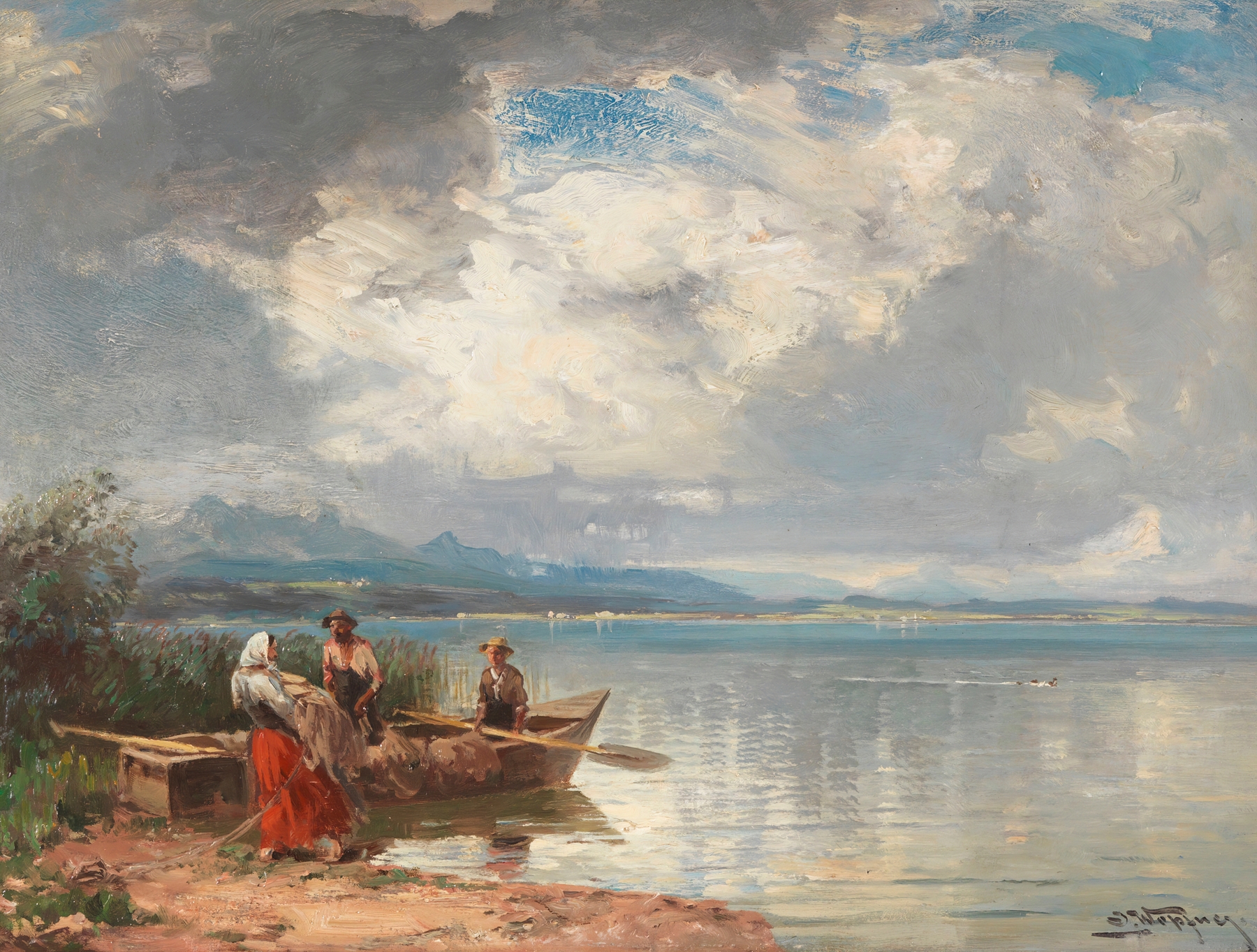
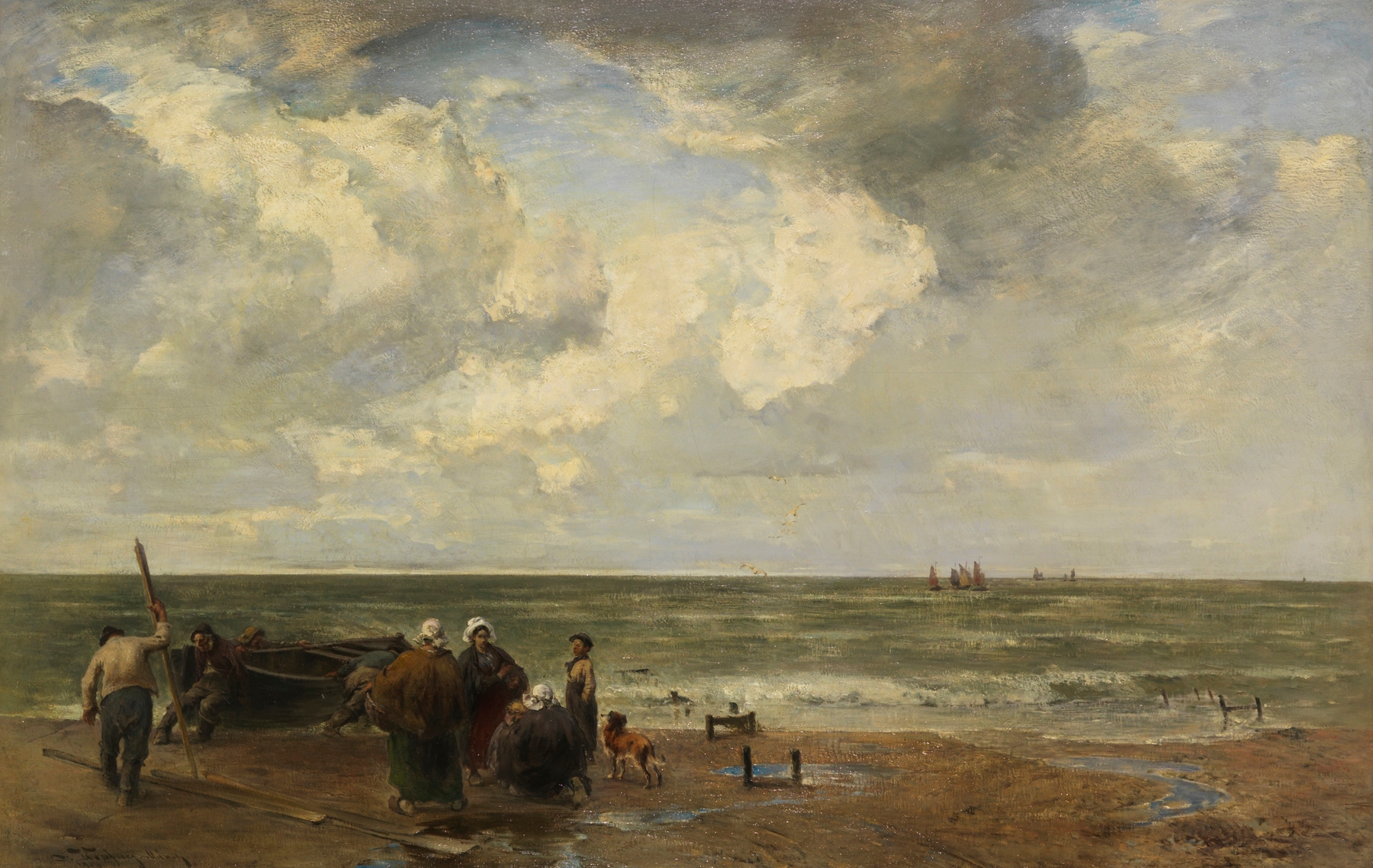
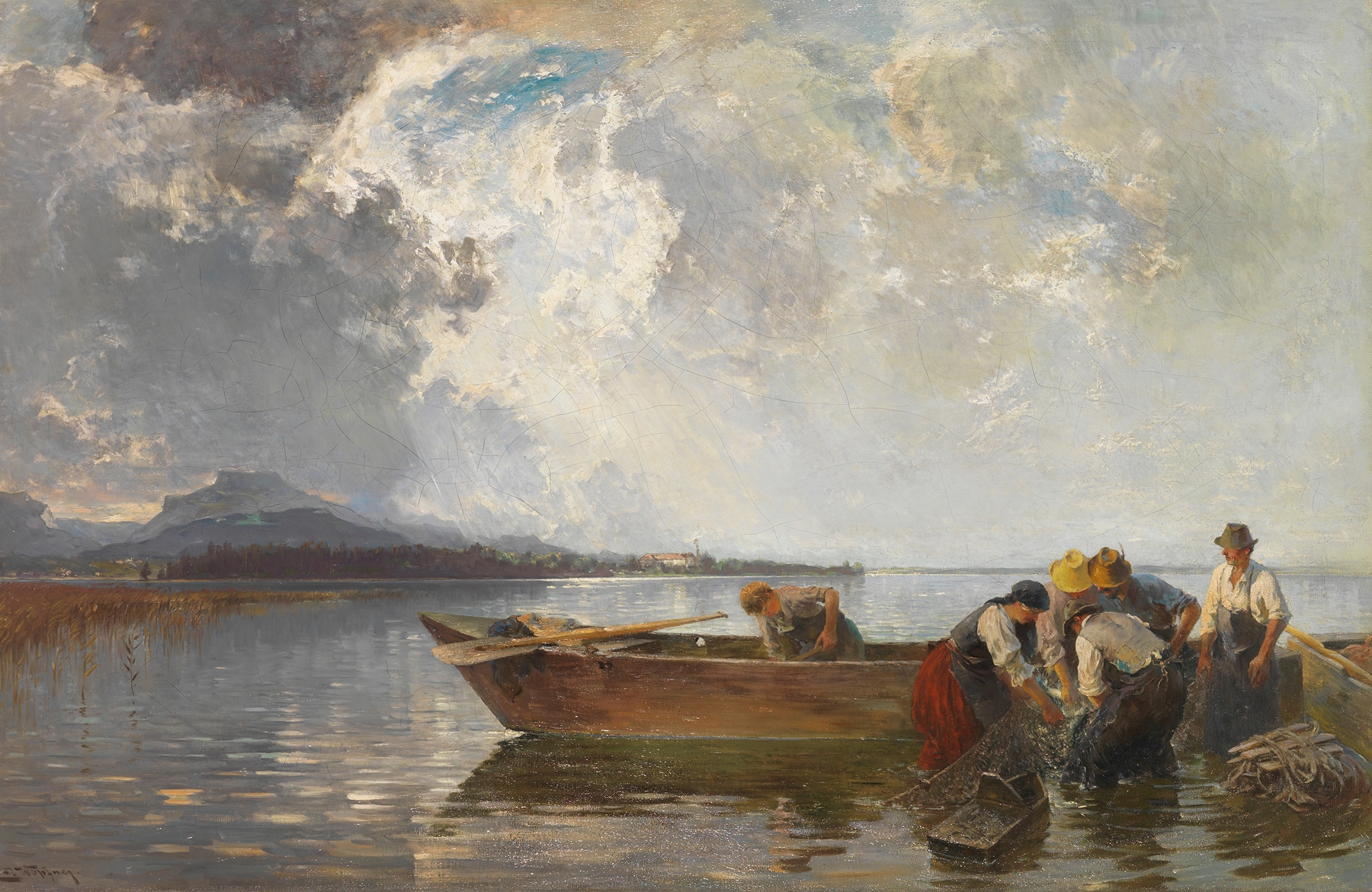
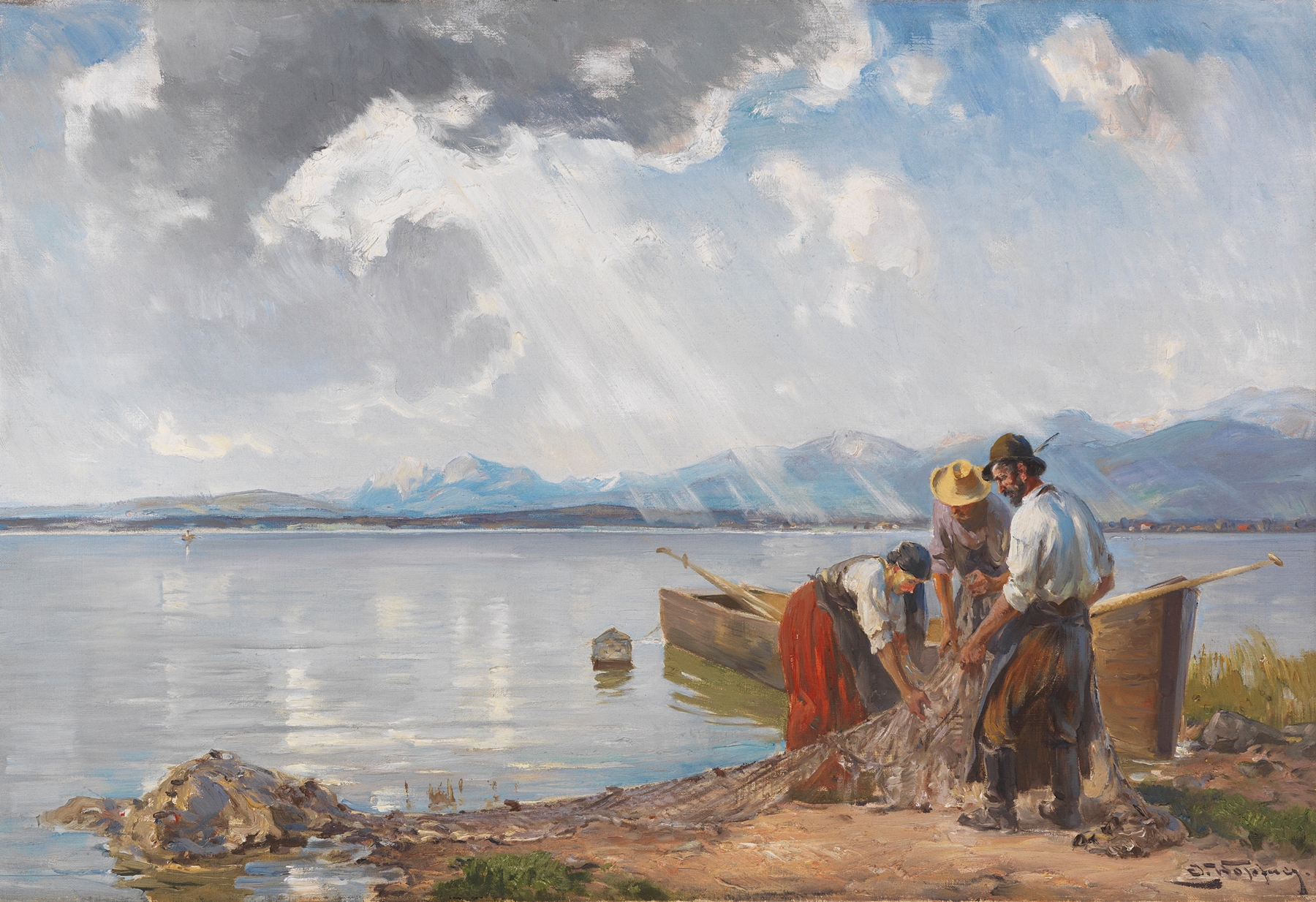
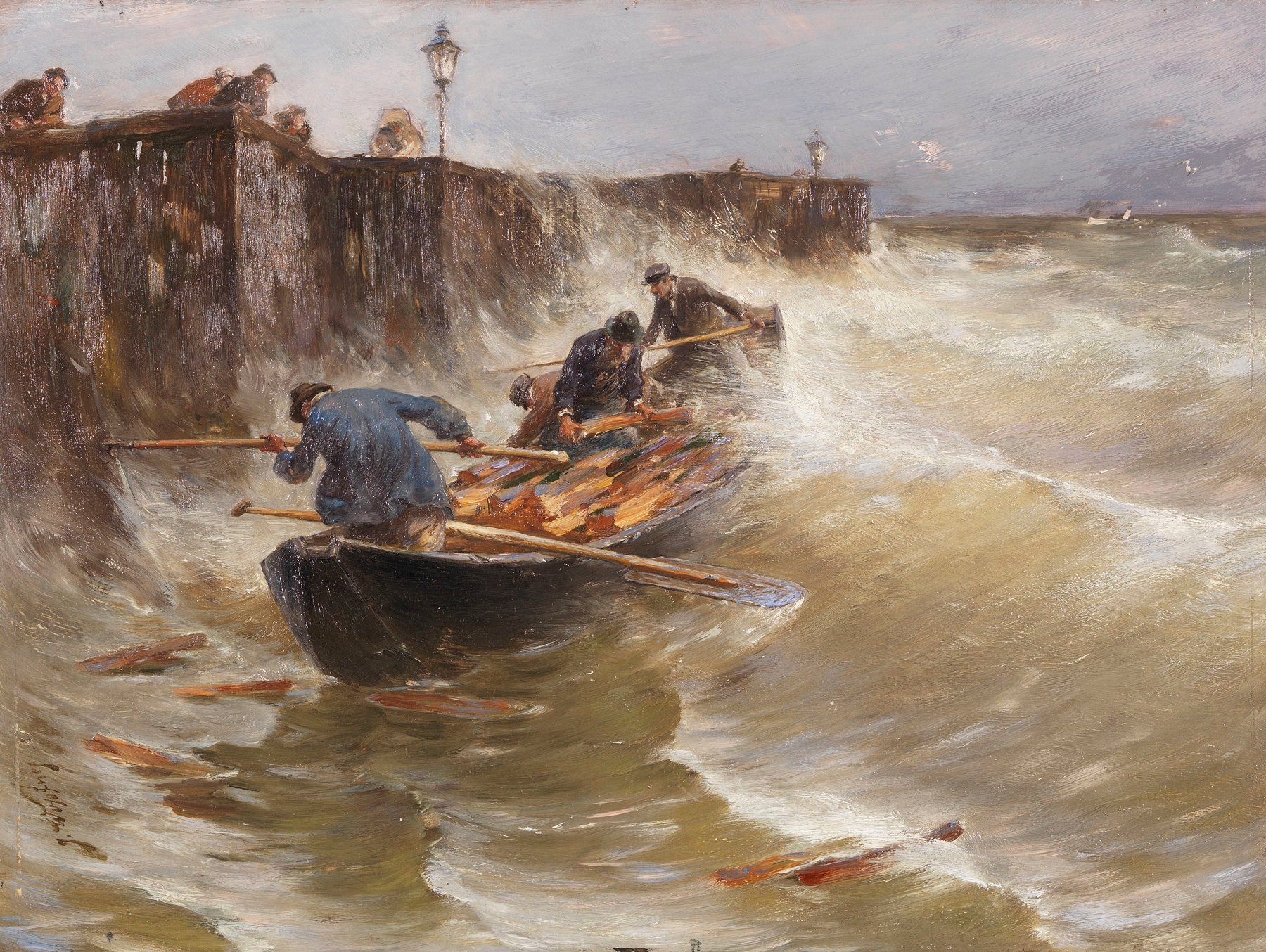
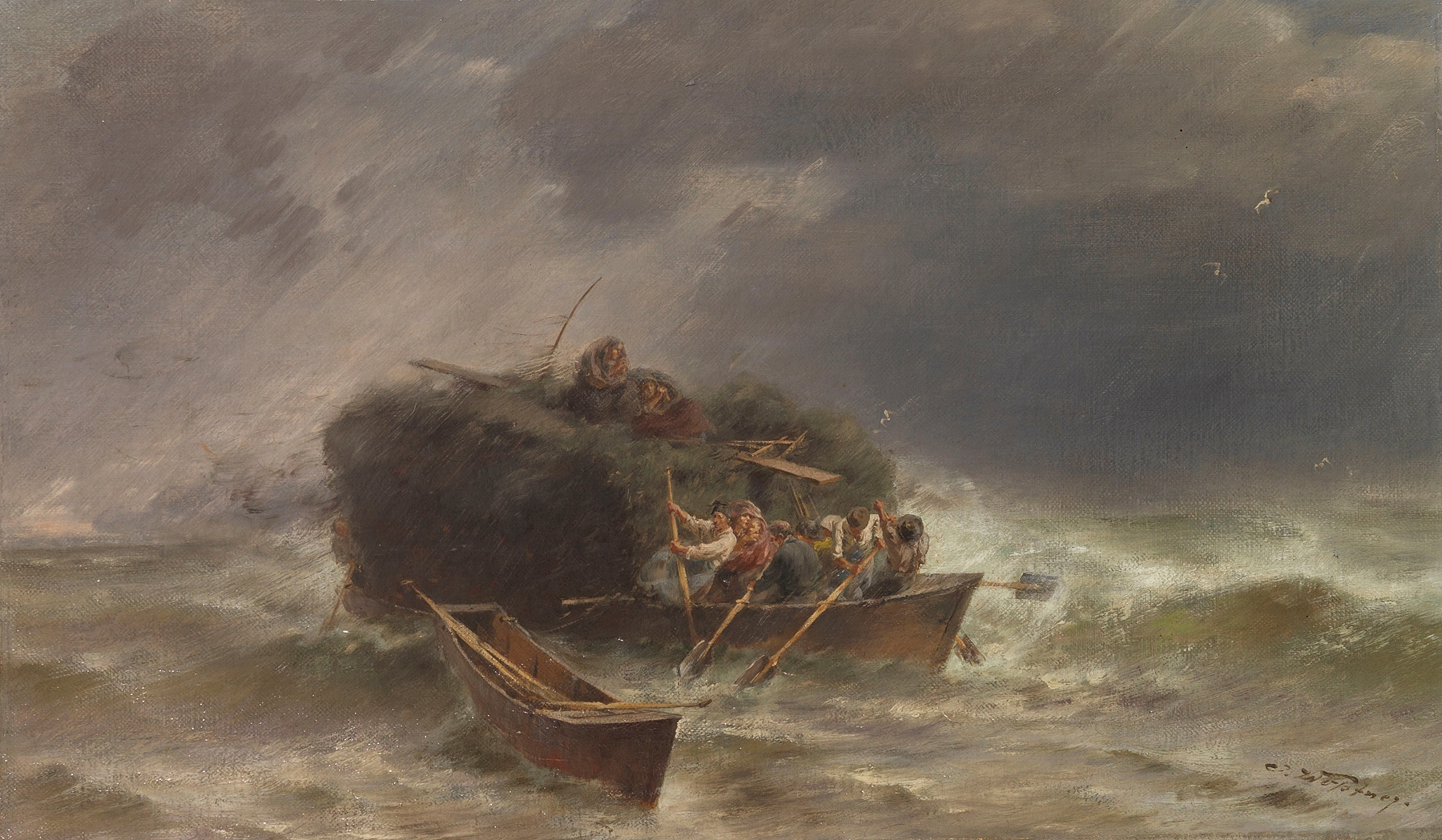
Did the painter know this moment would outlive them? Stürmische Überfahrt, a striking testament to resilience, captures a fleeting serenity amidst turmoil that whispers to the soul. Look to the center where tumultuous waves crash against a fragile boat, the crests forming an almost sculptural backdrop. The artist employs a muted palette of deep blues and grays, punctuated by the silvery glints of moonlight reflecting off the water's surface, inviting the viewer into a world of contrast.
Notice how the figures, clinging to the boat's edge, are rendered with defined brush strokes, their postures conveying both urgency and an unexpected calmness in the face of chaos. Delve deeper into the tension present in the artwork. The juxtaposition of the violent storm and the steadfastness of the boat creates a compelling narrative of struggle and survival. The weariness etched on the sailors' faces reflects a shared humanity in the face of the elements, suggesting a profound connection between man and nature.
This emotional undertone resonates with viewers, echoing the universal experience of upheaval and the quest for tranquility. In 1920, during a period marked by post-World War I uncertainty, Stürmische Überfahrt was painted when Joseph Wopfner was grappling with his own artistic identity amid societal upheaval. Working in Germany, he sought to convey the perseverance of the human spirit against overwhelming odds, a theme that resonates deeply in the cultural context of the time, when many were searching for meaning and hope beyond the chaos that surrounded them.