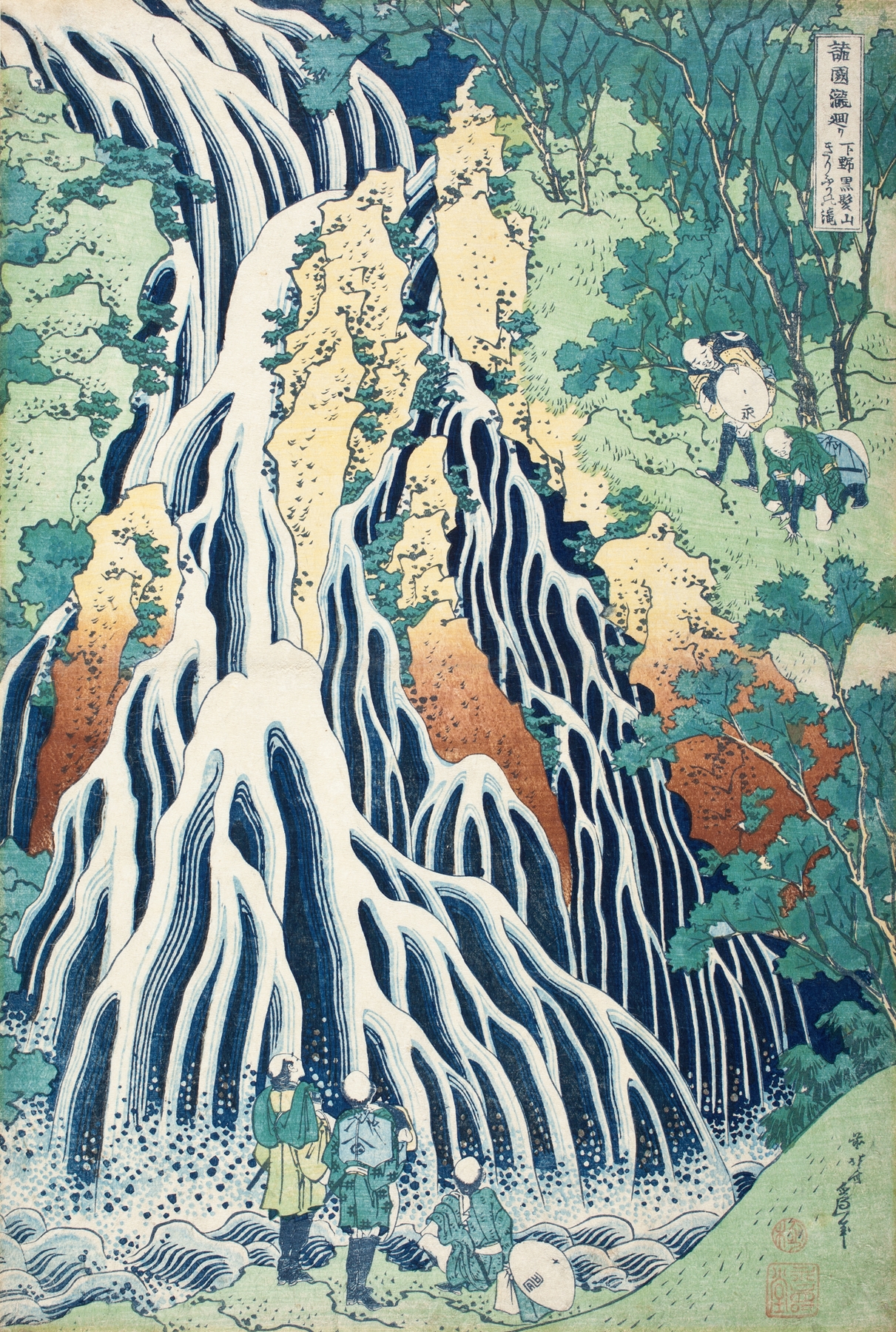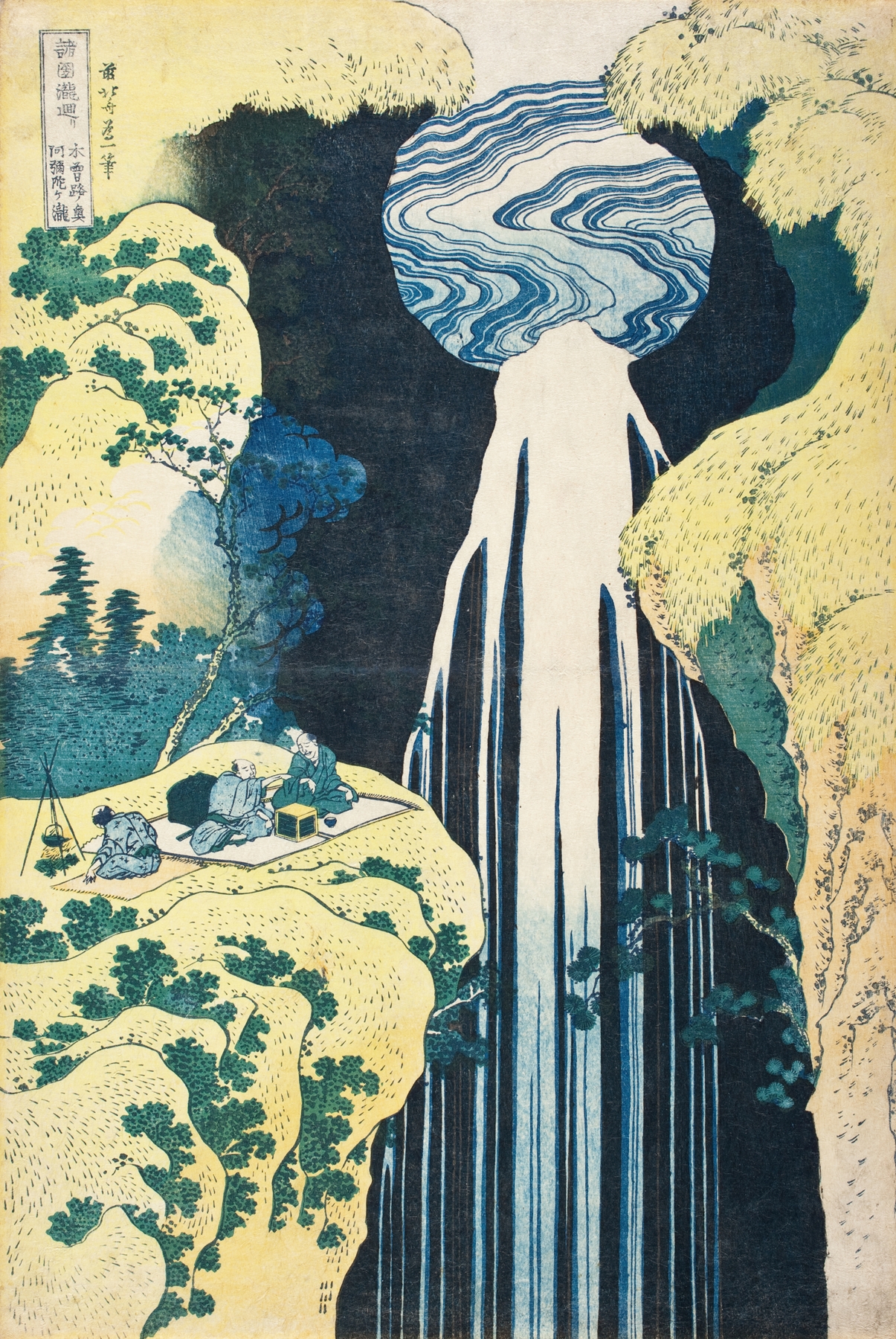
“Between color and silence, truth hides.” In the intricate world of art, it is the obsession with detail that unveils deeper meanings. Look closely at the cascading waters of *The Amida Falls in the Far Reaches of the Kisokaidō Road*. Notice how the layers of blue and white blend seamlessly, creating a movement that breathes life into the scene. The towering cliffs frame the waterfall, while the delicate strokes in the foliage draw the eye towards the lush greenery surrounding the tumultuous flow. The subtle interplay of light and shadow reveals Hokusai’s mastery, capturing not just a moment in time, but a harmony of nature’s elements. Beneath the surface, the work speaks to the tension between man and nature, a theme echoed in the figures nestled within the landscape. The travelers, dwarfed by the grandeur of the falls, embody the human struggle against the overwhelming force of nature. This juxtaposition reflects an obsession with both the beauty and peril of the natural world, inviting contemplation on our place within it. The calmness of the colors belies the tumult of the waterfall, suggesting a deeper narrative of serenity amidst chaos. In 1833, Hokusai was immersed in the ukiyo-e tradition, living in Edo (now Tokyo). This period marked a significant evolution in his work, reflecting the influences of both Western art and traditional Japanese aesthetics. The artist was nearing the end of a prolific phase, driven by his relentless pursuit of capturing the transient beauty of the world around him, a fitting backdrop for the creation of this remarkable piece.