The Black Countess — History & Analysis

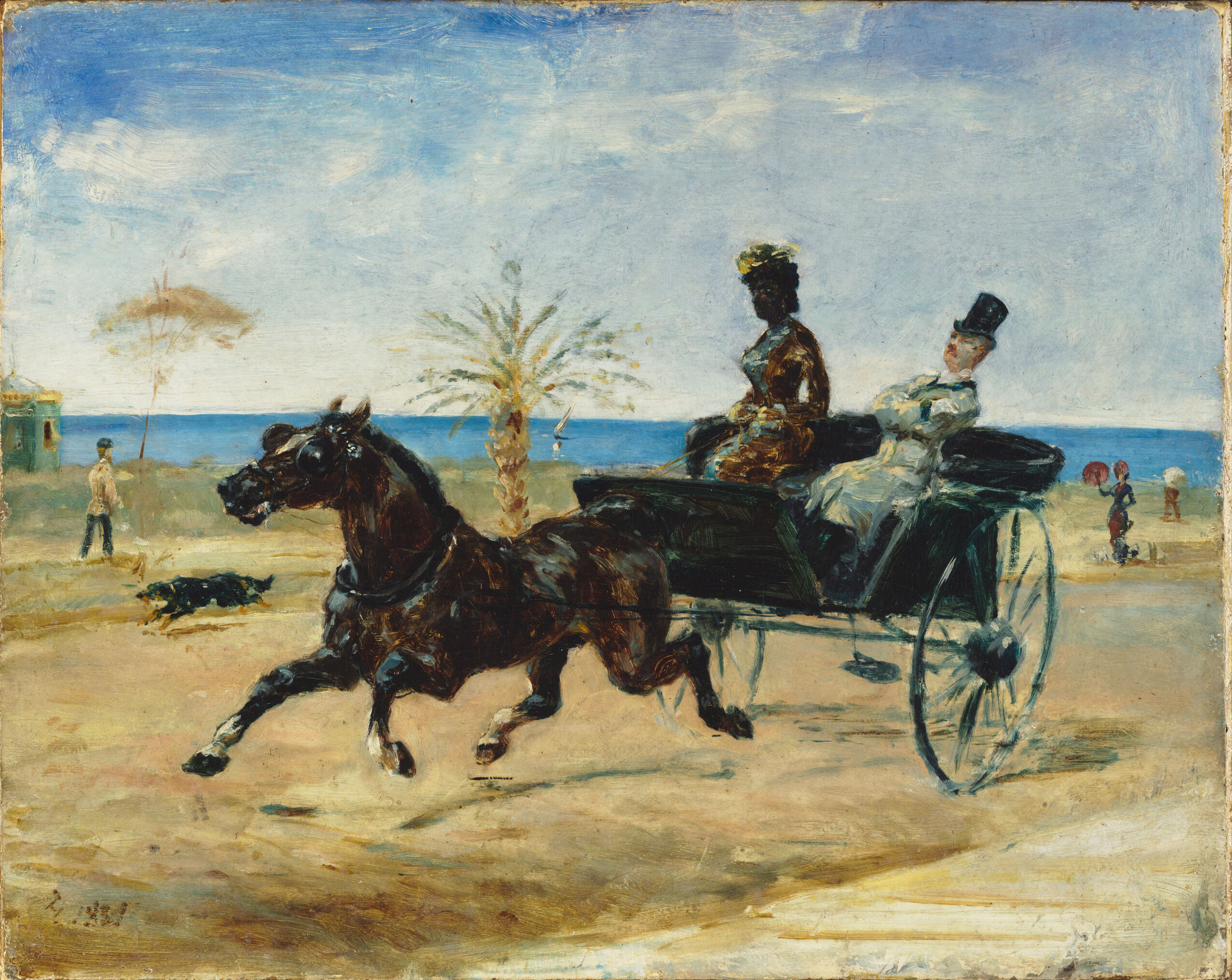
Did the painter know this moment would outlive them? In The Black Countess, the vibrant colors and bold lines capture a fleeting essence, anchoring the viewer to a world that transcends time. Focus first on the figure at the center; the countess, draped in deep black fabric, is poised yet enigmatic. Her gaze, both inviting and distant, draws you in, while the contrasting tones of her garment against the lighter background amplify her presence.
Notice how the brushwork varies across the canvas: the smooth strokes of her face juxtaposed with the rougher textures suggesting the hustle of the cabaret scene around her, crafting a deliberate disconnection between her and the lively environment. Beneath the surface, the painting reveals complex emotional layers. The black of her dress symbolizes both elegance and mourning, hinting at personal loss or societal constraints, while the vibrant colors surrounding her suggest a world full of life, perhaps at odds with her inner turmoil. This tension between isolation and exuberance captures the duality of existence, inviting viewers to ponder their own struggles and desires.
Created in 1881, the artwork emerged during a vibrant period in Parisian art, while Toulouse-Lautrec was deeply entrenched in the nightlife of Montmartre. He was grappling with the effects of his physical ailments, yet his artistic expression flourished. The swirl of bohemian culture and the rise of modern art movements influenced his work, allowing him to transform a moment into a timeless reflection on beauty, sorrow, and the human experience.