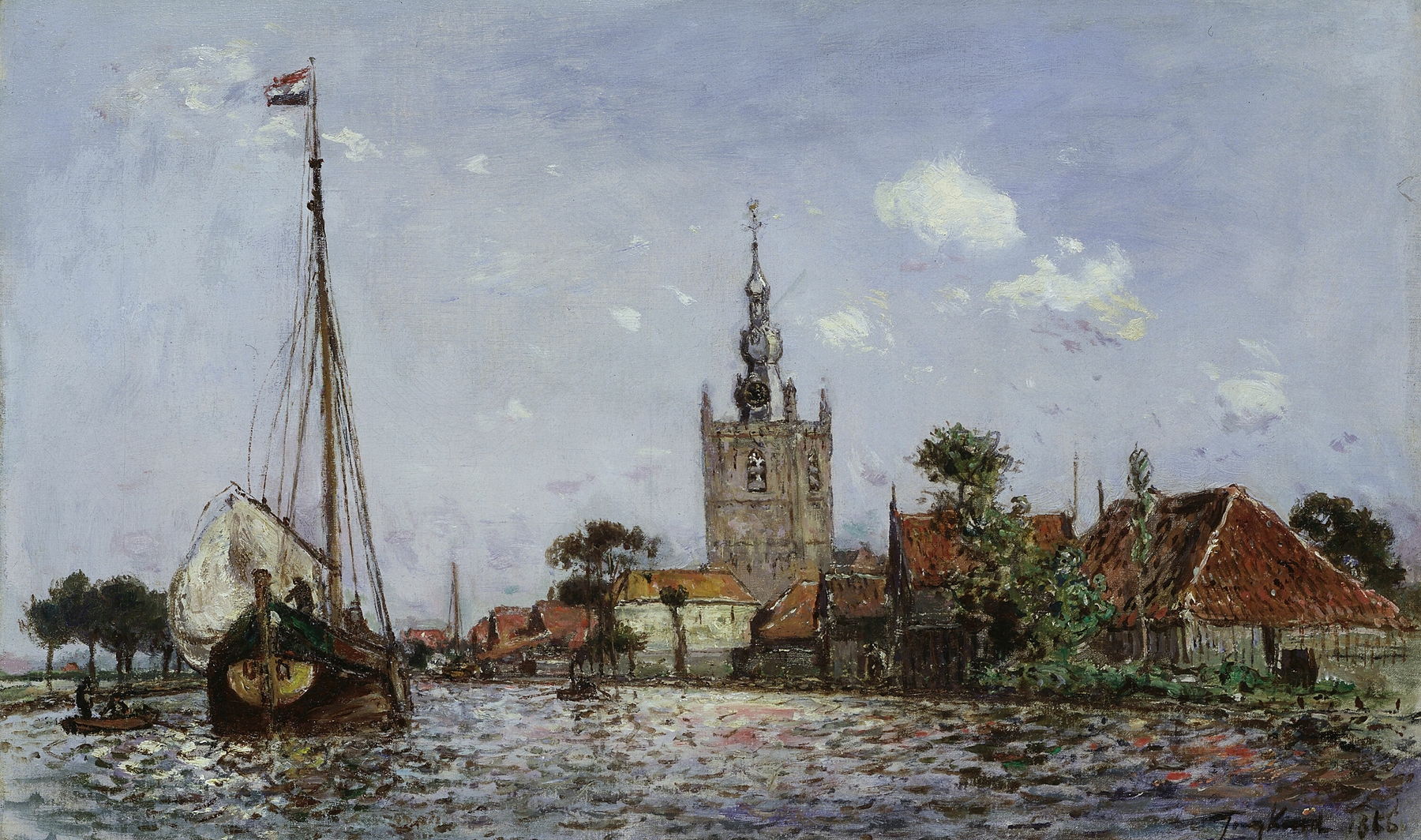
The Church of Overschie — History & Analysis
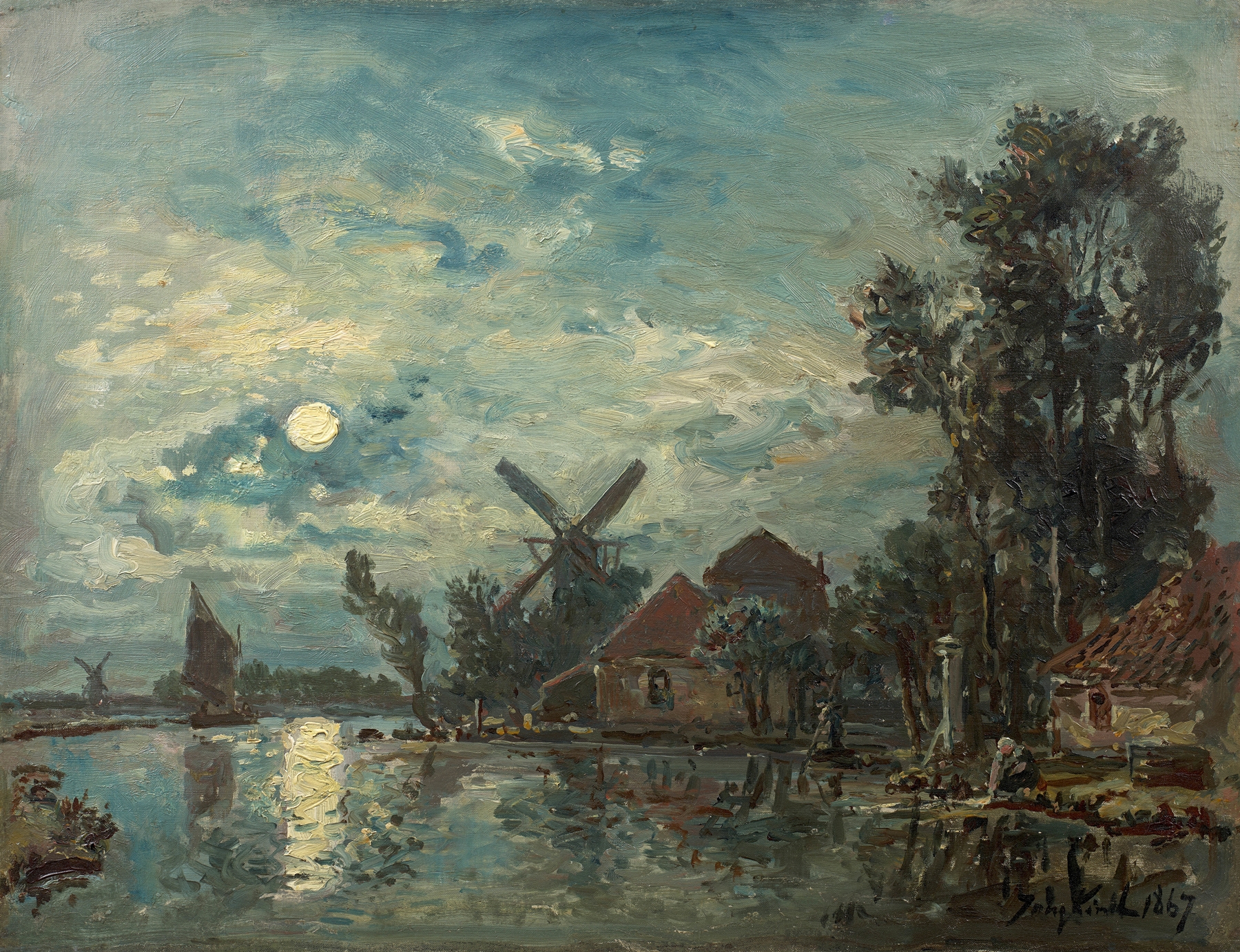
Can beauty exist without sorrow? The interplay of light and shadow in this work suggests that they are inextricably linked, each enhancing the depth of the other. Look closely at the horizon where the church's steeple rises, piercing the soft, luminous sky. Notice how the light gently bathes the structure, illuminating its façade while the surrounding landscape is cloaked in a delicate shadow. The muted tones of the fields create a contrast that highlights the sacred architecture at the center, drawing your gaze immediately to its towering presence. The brushwork is fluid, almost ethereal, capturing the transient quality of daylight as it dances across the scene. As you explore further, pay attention to the subtle details that reveal a tension between tranquility and unease. The church, a symbol of hope and refuge, stands resolute amidst a serene yet somber landscape. The shadows elongate, hinting at the encroaching twilight, perhaps representing the passage of time or a moment of introspection. This visual dichotomy invites contemplation on the impermanence of beauty, suggesting that even amidst the serene, there is an awareness of loss. Johan Barthold Jongkind created this piece in 1866 while living in the Netherlands, a time marked by significant transitions in both his life and the art world. He was deeply influenced by the Impressionist movement, striving to capture fleeting effects of light—a pursuit that aligned with the broader artistic shifts toward modernity. This work reflects his growing mastery of color and light, positioning him as a pivotal figure in the evolution of landscape painting during this period.