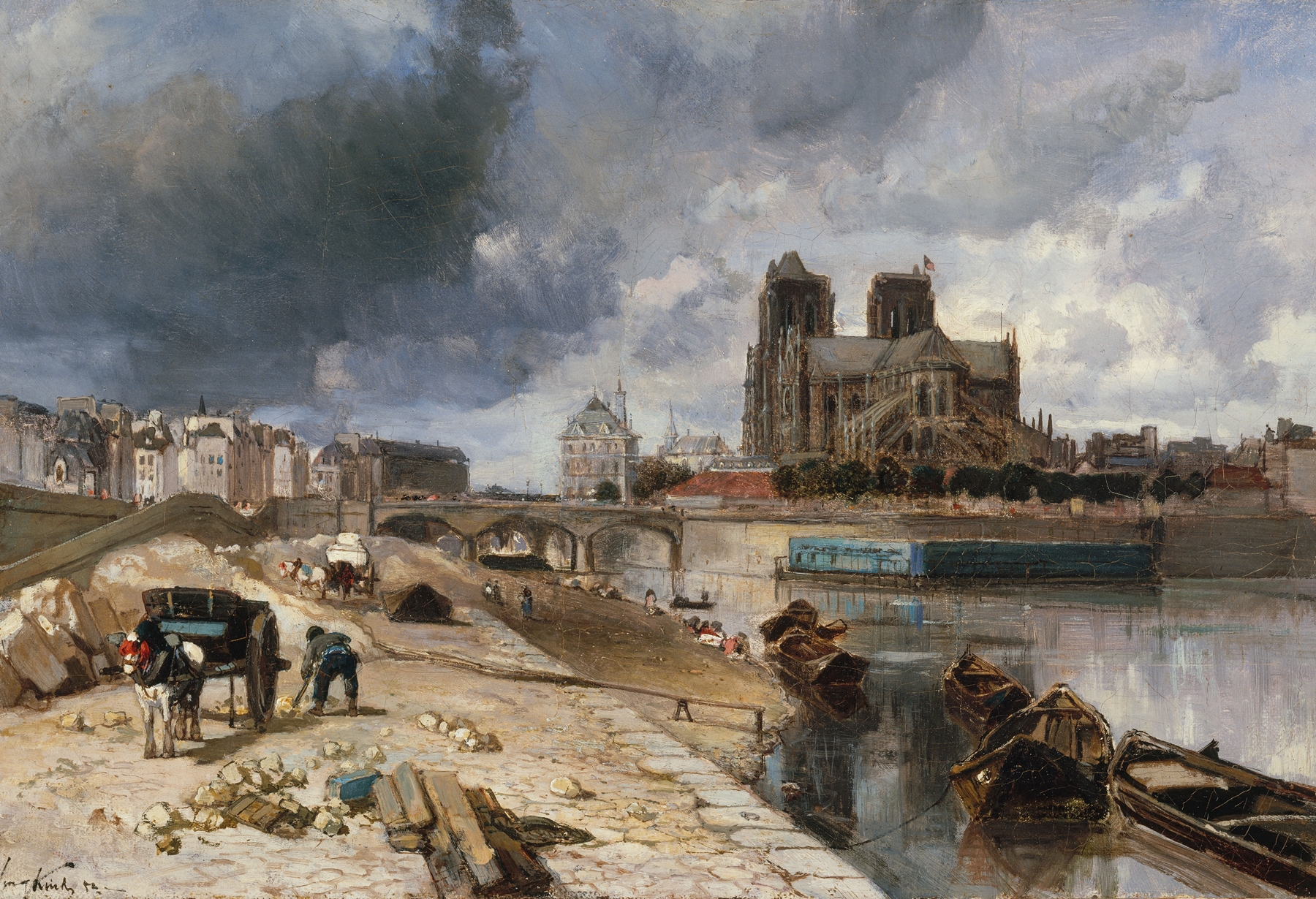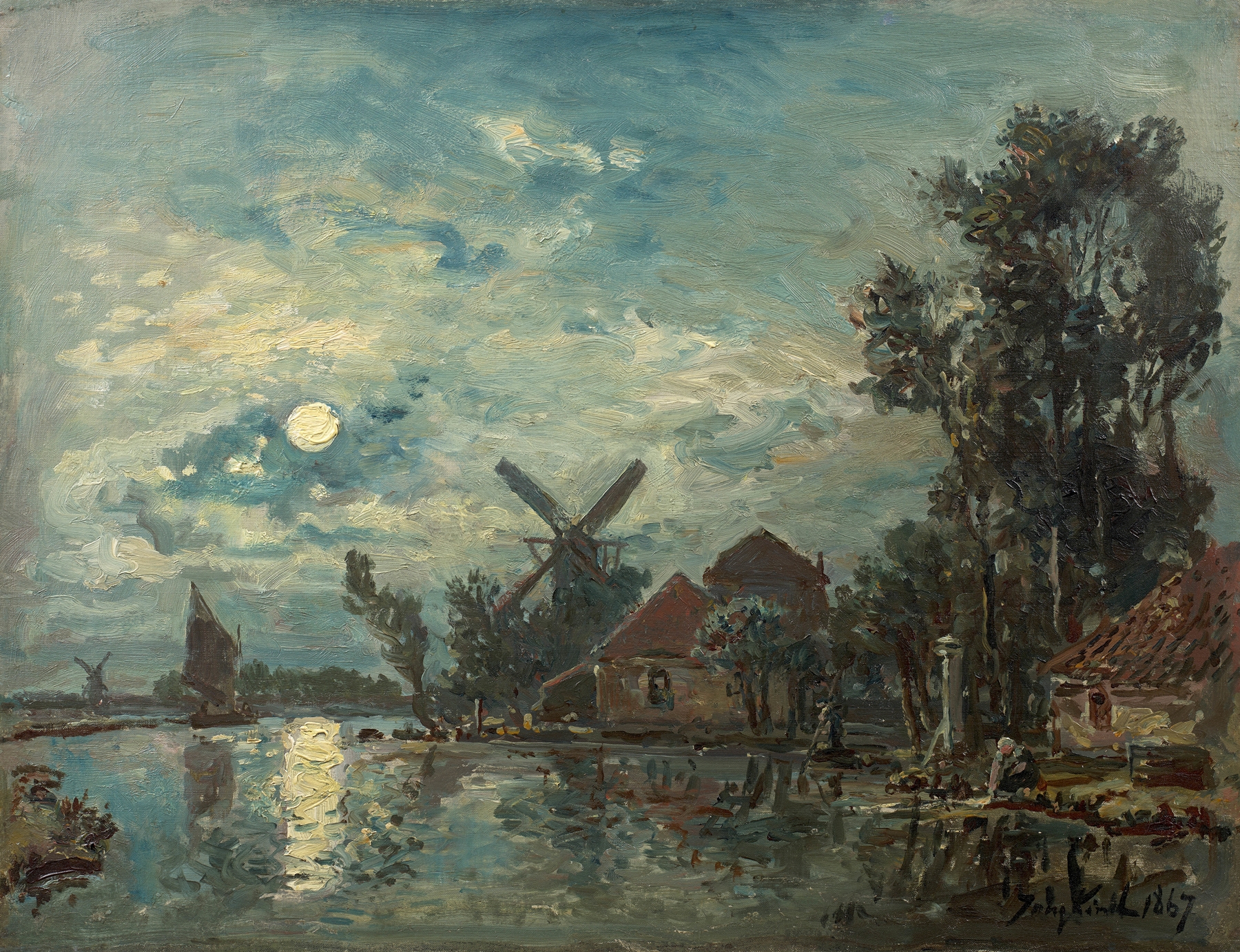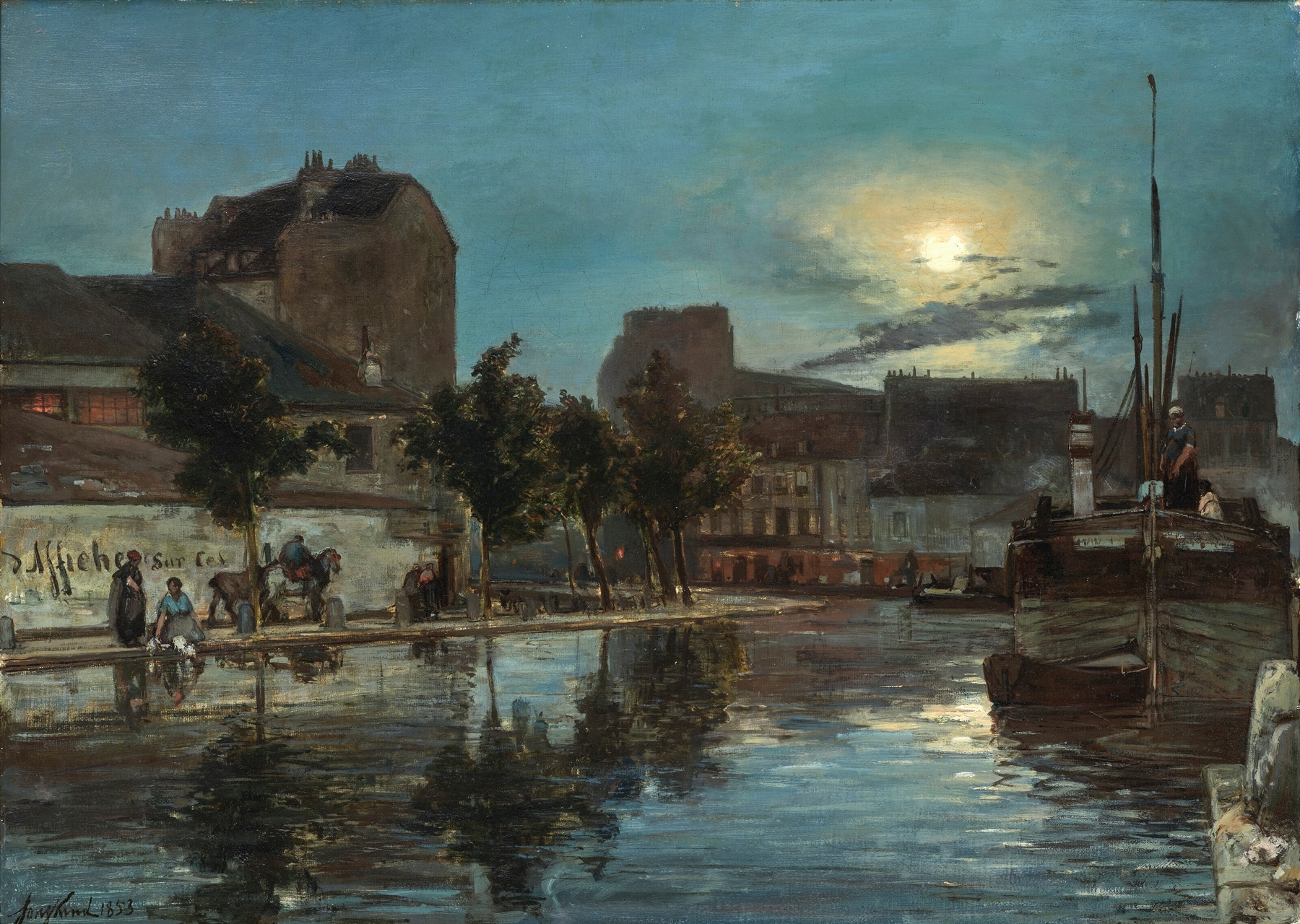
“Every silence here is a confession.” In the stillness of a moment, the viewer is invited to question the layers that lie beneath the water’s surface. It is an artistic illusion that beckons us to ponder what secrets might be submerged, hidden from sight, yet echoing in the quiet reflections above. Look to the left at the gently arching bridge, its delicate structure framed by the lush greenery that hints at life just beyond the scene. Notice how the light dances upon the water’s surface, creating a shimmering pathway that draws the eye deeper into the composition. Jongkind employs a palette of soft blues and greens, juxtaposing the lively reflections with the tranquil stillness of the canal, inviting contemplation on the passage of time and the interplay of reality and illusion. The painting embodies a tension between the serenity of the landscape and an undercurrent of nostalgia. The figures, almost ephemeral, exist in a state of suspension, their presence fleeting yet impactful, as if whispering stories of the past. The stillness of the water contrasts starkly with the vibrant brushwork, suggesting that what we perceive is but a fleeting moment in a continuous narrative. This delicate balance creates a captivating emotional depth, provoking questions about memory and the ephemeral nature of our experiences. In 1853, Jongkind created this piece while living in France during a significant period for the Impressionist movement. At that time, he was establishing his style, often influenced by the changing light and atmosphere of his surroundings. His work, while not yet fully embraced in his own time, would later profoundly influence artists like Monet, as the landscape of Paris was on the cusp of transformation.