Environs de Grenoble — History & Analysis
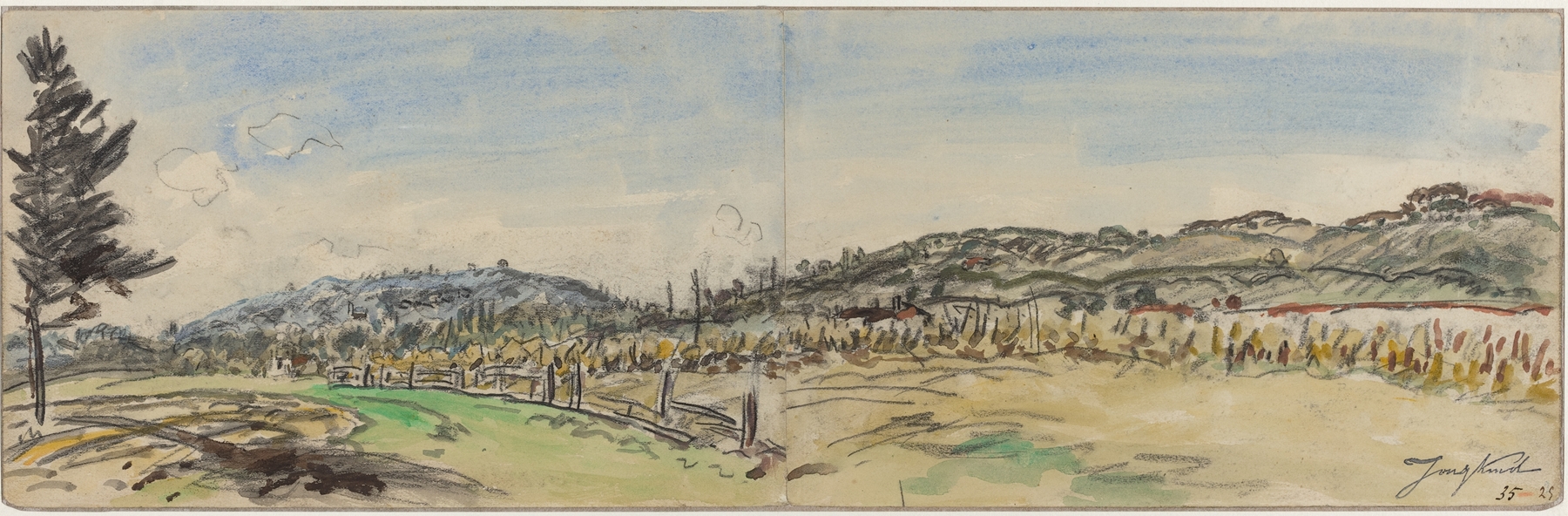
Did the painter know this moment would outlive them? In Environs de Grenoble, the essence of nature is captured with a fleeting clarity that suggests both reverence and inevitability. Look to the right at the delicate interplay of brush strokes that form the rolling hills, a gentle embrace of greens and browns, cradled by a luminous sky. The soft, diffused light bathes the landscape, highlighting the glistening reflections on the water, creating a sense of tranquility. Notice how the artist’s swift, fluid technique evokes movement, as if the trees sway gently in the breeze and the river ripples with life.
Each stroke appears spontaneous yet deliberate, forming a seamless connection between the earth and sky. Hidden within the serene beauty of the scene are the emotional tensions of transience and permanence. The vibrant colors suggest the vibrancy of life, while the distant mountains loom as silent witnesses to the passage of time. The contrast between the dynamic foreground and the still, imposing background evokes a sense of both immediacy and eternity, urging the viewer to consider the delicate balance of nature's fleeting moments.
This interplay resonates with the human experience of seeking permanence in a world of change. Johan Barthold Jongkind painted this piece in 1873, during a period of artistic evolution in Europe, as Impressionism began to flourish. Living in France, Jongkind found himself influenced by the changing light and landscapes that surrounded him, a reflection of the broader exploration of capturing the ephemeral nature of reality. As he grappled with his own artistic identity, he contributed to the foundation of Impressionism, paving the way for future generations of artists who sought to celebrate the beauty of the moment.