The Cross in the Mountains — History & Analysis
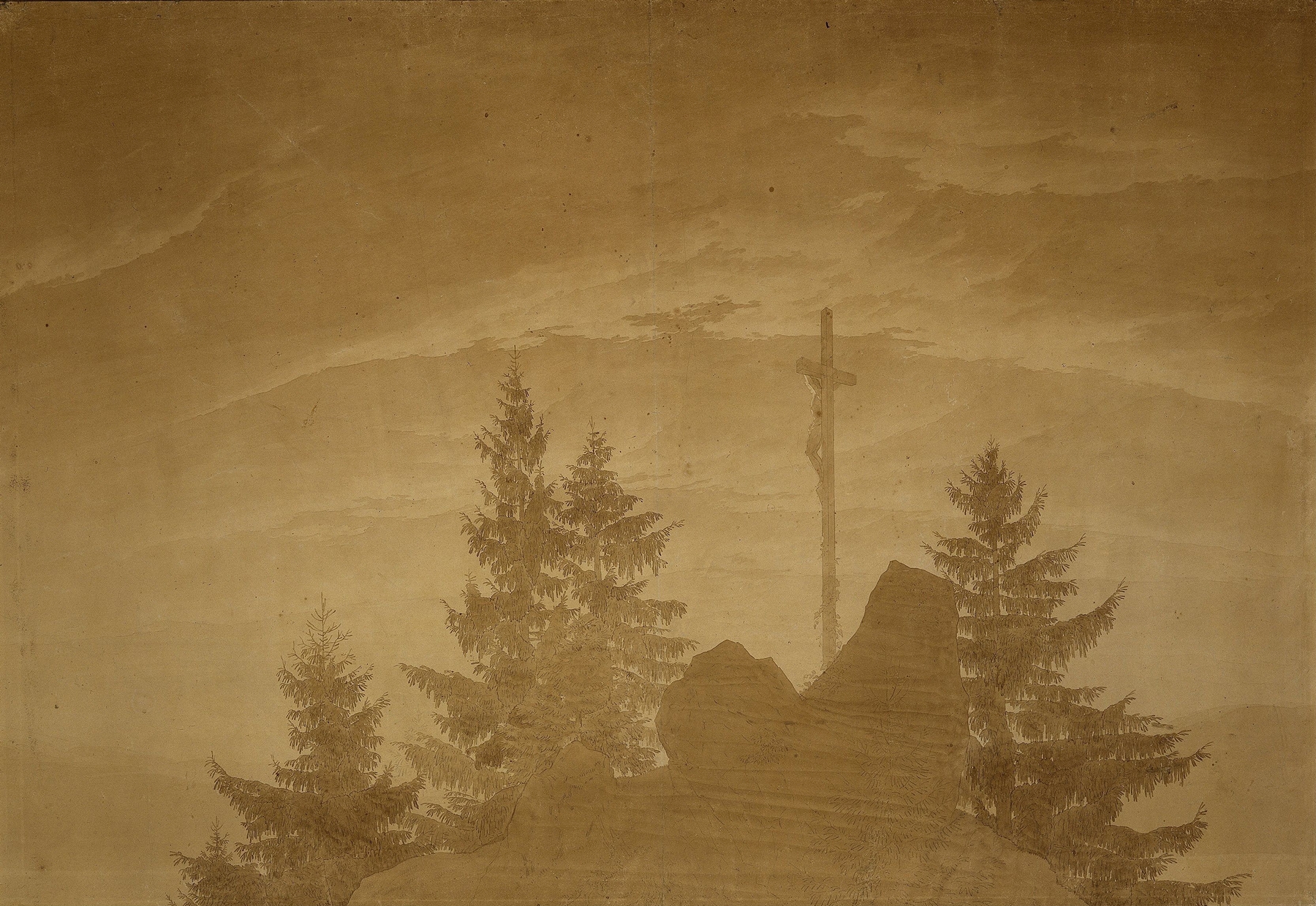
What if silence could speak through light? In the stillness of dawn, a solitary cross emerges against a vast, ethereal landscape, inviting contemplation and reverence. Look to the center of the canvas, where the stark white cross stands resolute, contrasting against the deep blues and soft grays of the mountainous terrain. The juxtaposition of light and shadow draws your gaze, guiding you from the rugged peaks to the tranquil valley below. Notice how the mist swirls around the base of the cross, instilling a sense of mystery, while the dim sunlight begins to break through, hinting at a new day.
Friedrich's masterful brushwork captures the delicate interplay between nature and spirituality, creating a meditative atmosphere. The cross itself serves as a focal point for deeper reflection. It symbolizes not only faith and sacrifice but also the enduring presence of the divine amidst the overwhelming forces of nature. The vastness of the mountains in the background evokes feelings of isolation and introspection, while the gentle light emerging from the fog suggests hope and renewal.
This tension between grandeur and vulnerability resonates with the viewer, making the landscape both a literal and metaphorical journey. In 1812, amid a period marked by Romanticism’s exploration of nature and emotion, Friedrich created this work in Germany, where the interplay of spiritual themes and awe-inspiring scenery was becoming increasingly significant. The artist was grappling with personal losses, which influenced his depiction of landscapes as reflections of internal states. During this time, he sought to express the sublime, believing that nature could convey profound human experiences, a defining characteristic of his oeuvre.