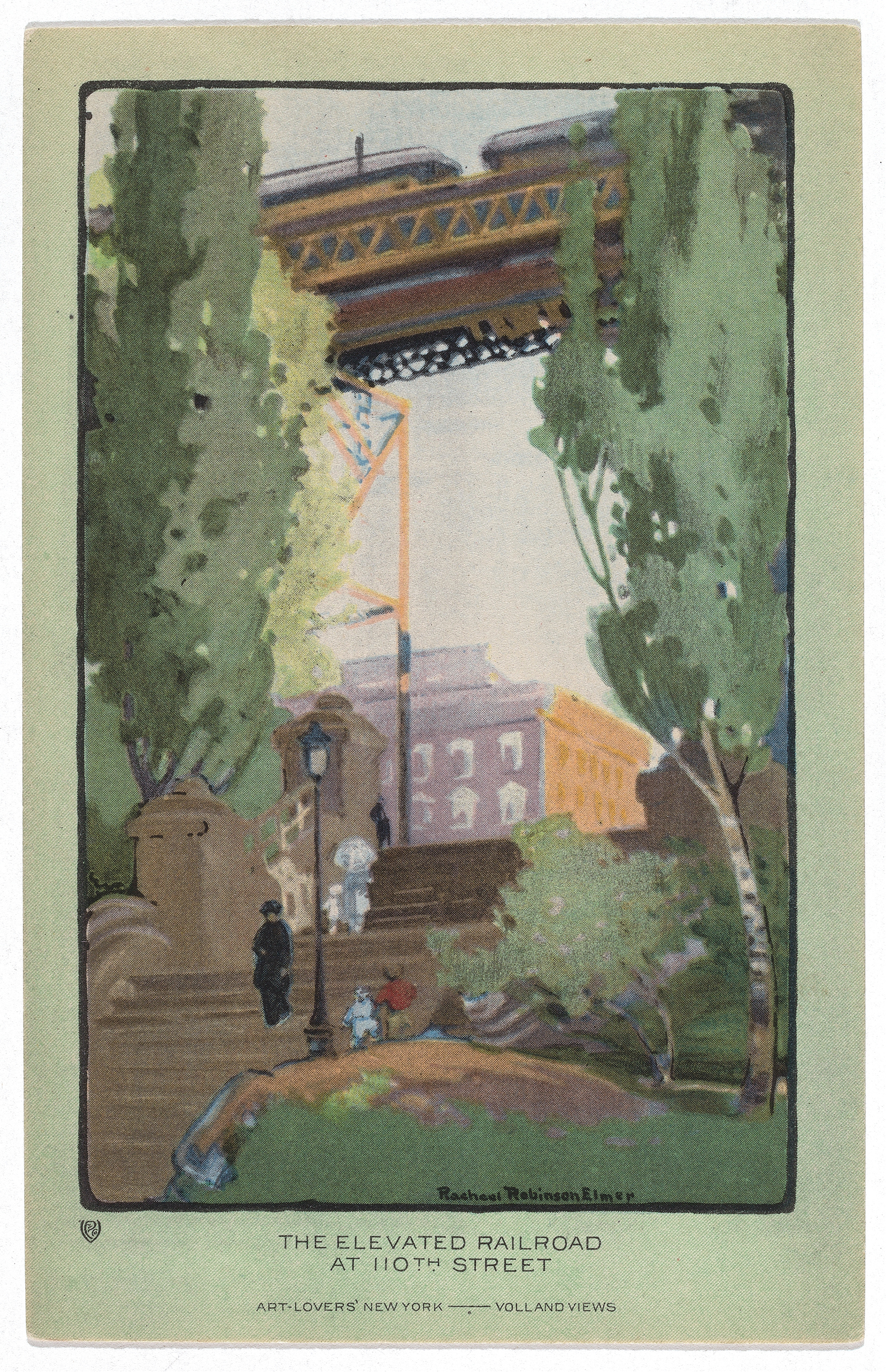
The Elevated Railroad at 110th Street — History & Analysis
“Every brushstroke is a heartbeat remembered.” In the delicate colors and poignant lines of The Elevated Railroad at 110th Street, we confront the weight of loss and the passage of time, evoked through a landscape that is both familiar and haunting. Look to the right at the towering iron beams of the elevated train, stark against the skyline. Notice how the soft hues of twilight envelop the scene, casting long shadows that stretch like memories across the cobblestone streets below. The careful rendering of the structure contrasts with the fluidity of the surrounding foliage, blending industrial might with nature's resilience.
The muted palette, rich in grays and pastels, invites a somber contemplation of the changing world. As you delve deeper, consider the emotional tension between the bustling city life above and the stillness that lingers below. The train, a symbol of progress, also represents the distance created between people and their connections. Each figure, perhaps lost in thought, embodies the collective yearning for something beyond the chaos—a connection that seems to slip away like the fading light.
The juxtaposition of rigid architecture and organic life tells the story of transformation, loss, and the inexorable march of time. Rachael Robinson Elmer created this work in 1914 while living in New York City, a period marked by rapid urban development and change. The rise of the elevated railroad was integral to the ongoing transformation of urban life, redefining how communities interacted. In her personal life, Elmer was navigating her own journey as a female artist in a male-dominated field, capturing the essence of an era in which both the city and its inhabitants were evolving at a profound pace.