The Fountain of Ahmet III, Constantinople — History & Analysis
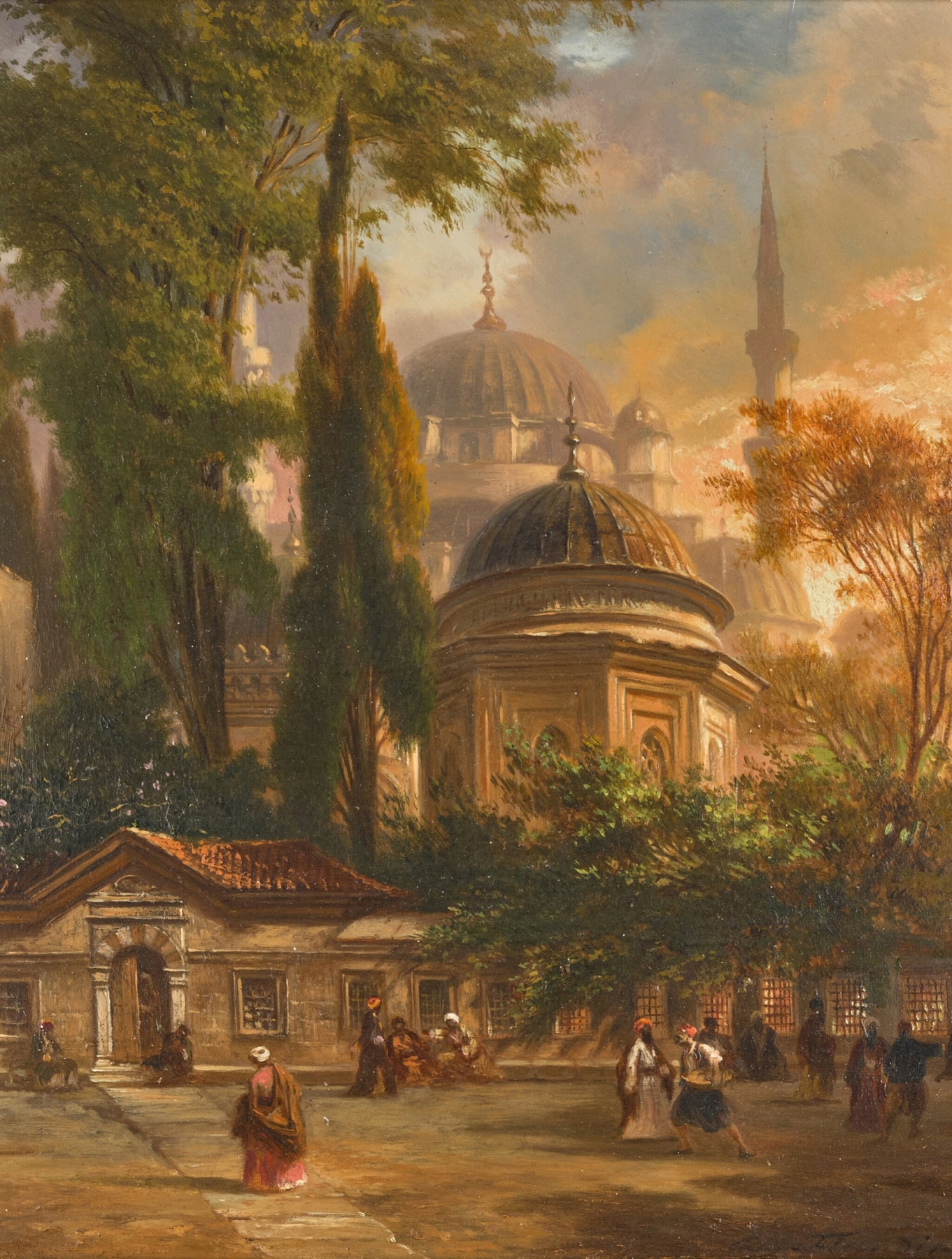
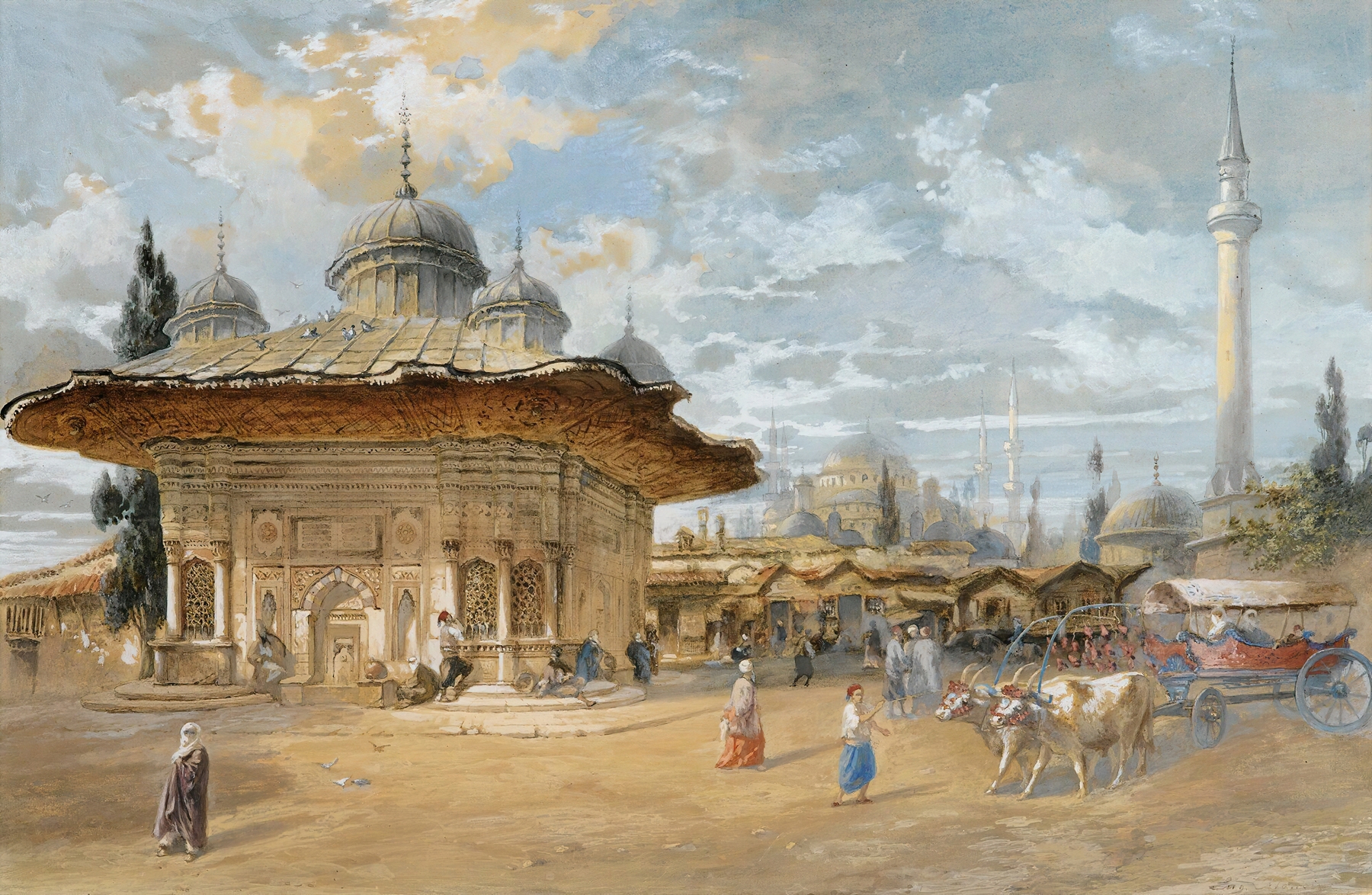
Is this a mirror — or a memory? The shimmering waters of a fountain reflect not just the sky above but the hopes and dreams of a city steeped in history. Look to the center of the composition, where the ornate fountain rises majestically, crowned with intricate carvings that whisper tales of an opulent past. The play of light dances across the surface of the water, creating a dynamic contrast between the cool blues and greens and the warm ochres of the surrounding architecture.
Notice how the delicate shadows accentuate the artistry of the marble and the lushness of the surrounding greenery, drawing the viewer's eye into a dialogue between nature and human ingenuity. The interplay of light and reflection here encourages contemplation on the passage of time. The fountain itself stands as a symbol of vitality and resilience, contrasting naturally with the decaying details of the buildings in the background. Each droplet cascading down serves as a reminder of impermanence, inviting viewers to ponder the delicate balance between beauty and decay.
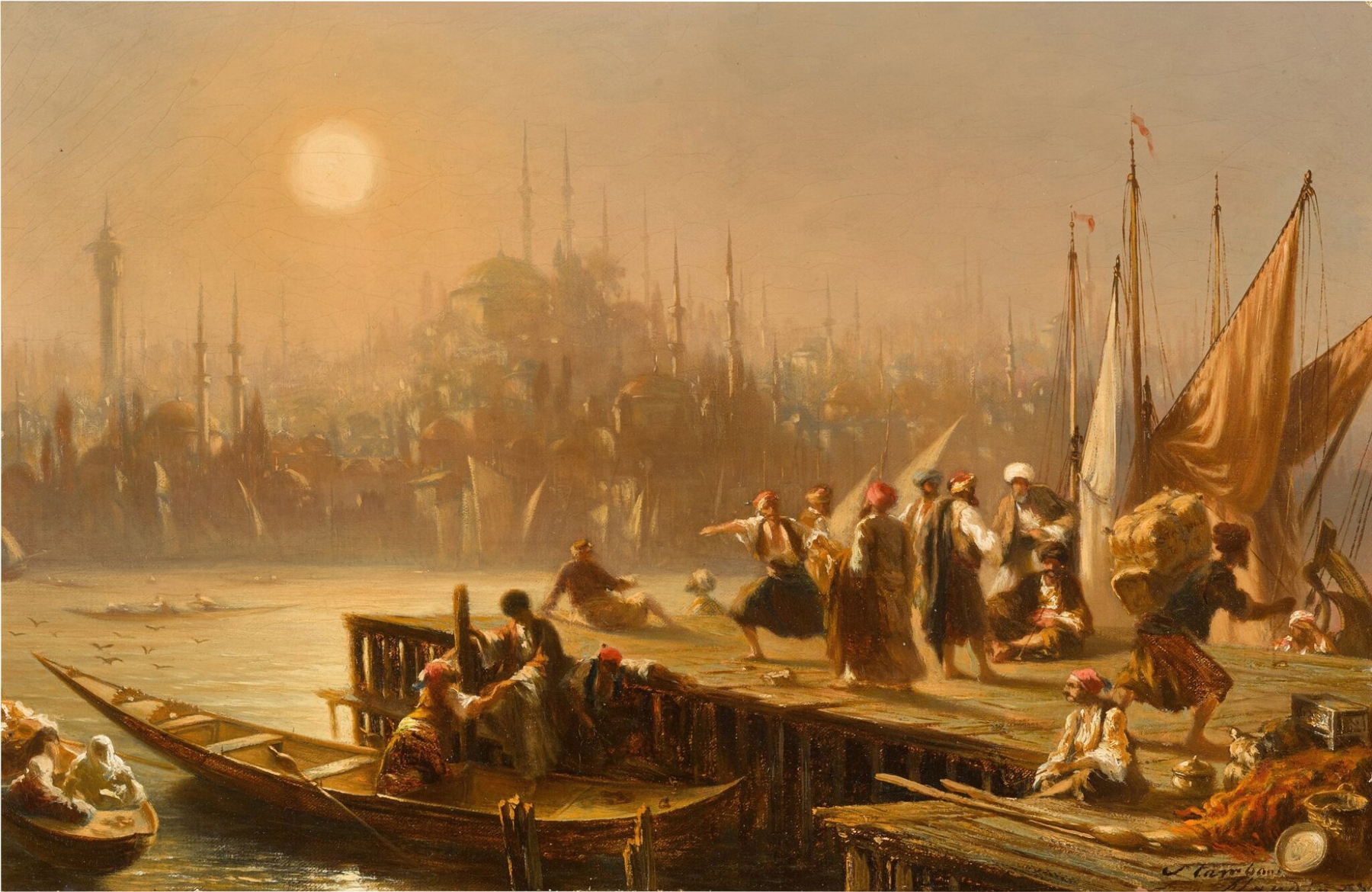
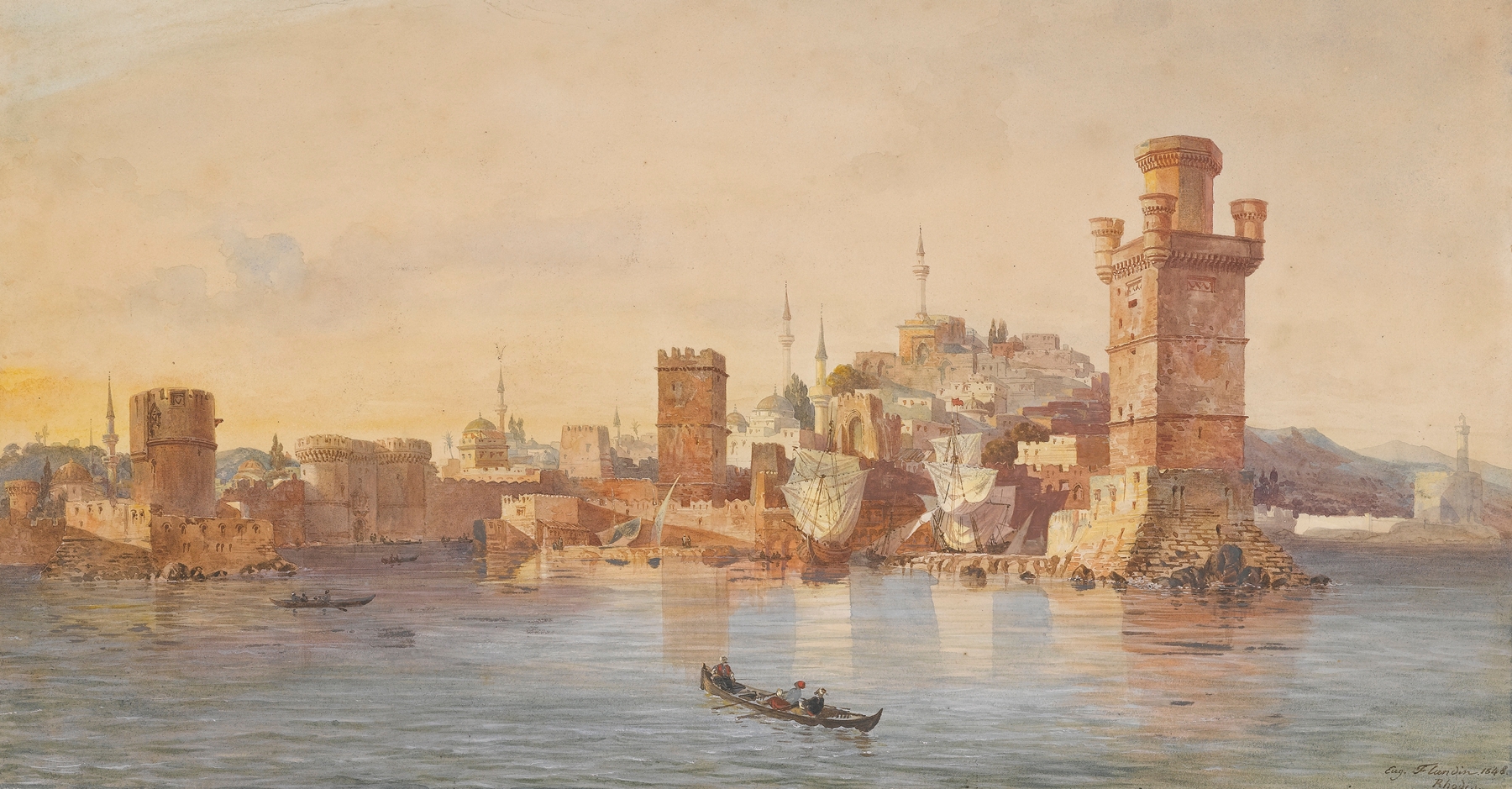
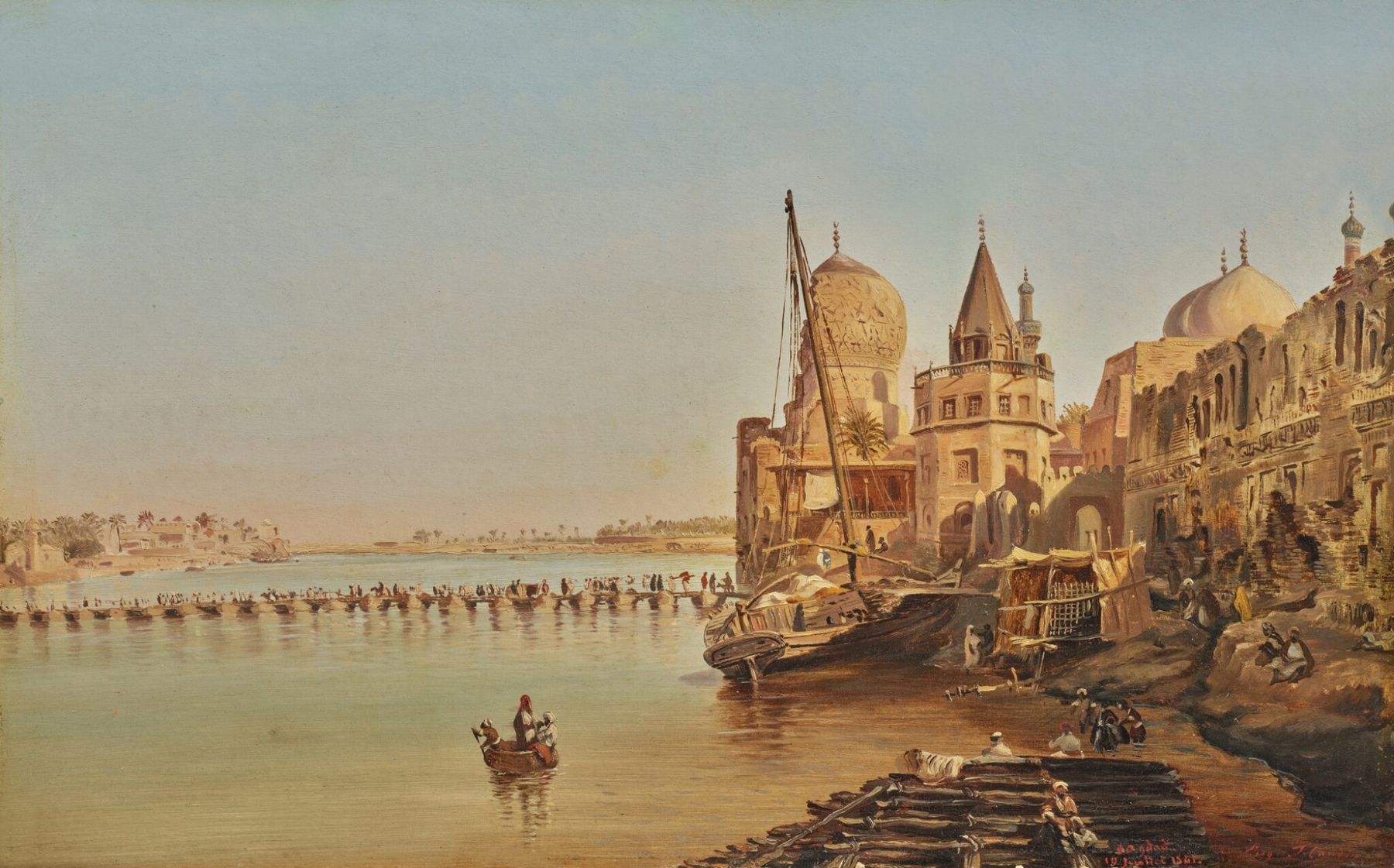
The scene is imbued with a sense of hope, suggesting that even in a world marked by change, there remains a sanctuary of serenity. Created during a period of exploration and discovery, this work emerged from Eugène Flandin's travels in the mid-19th century, when Western artists were drawn to the East's exotic allure. Flandin was capturing the essence of Constantinople, a city at a crossroads of cultures. This painting reflects not only his artistic journey but also a moment when Europe gazed with fascination upon the rich tapestry of the Ottoman Empire, seeking to understand and portray its complex beauty.