The Fountain Of Sultan Ahmed III, Constantinople — History & Analysis
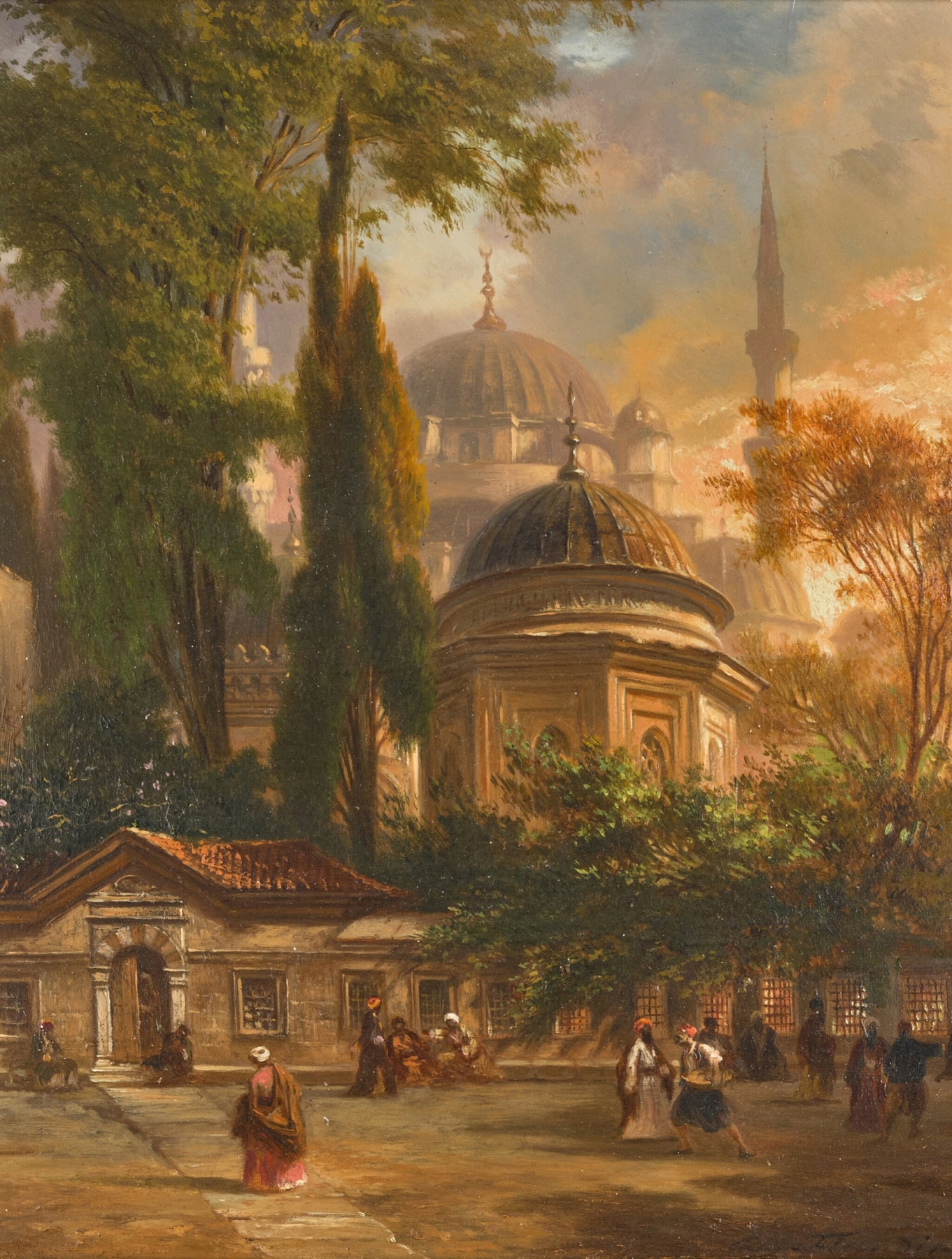
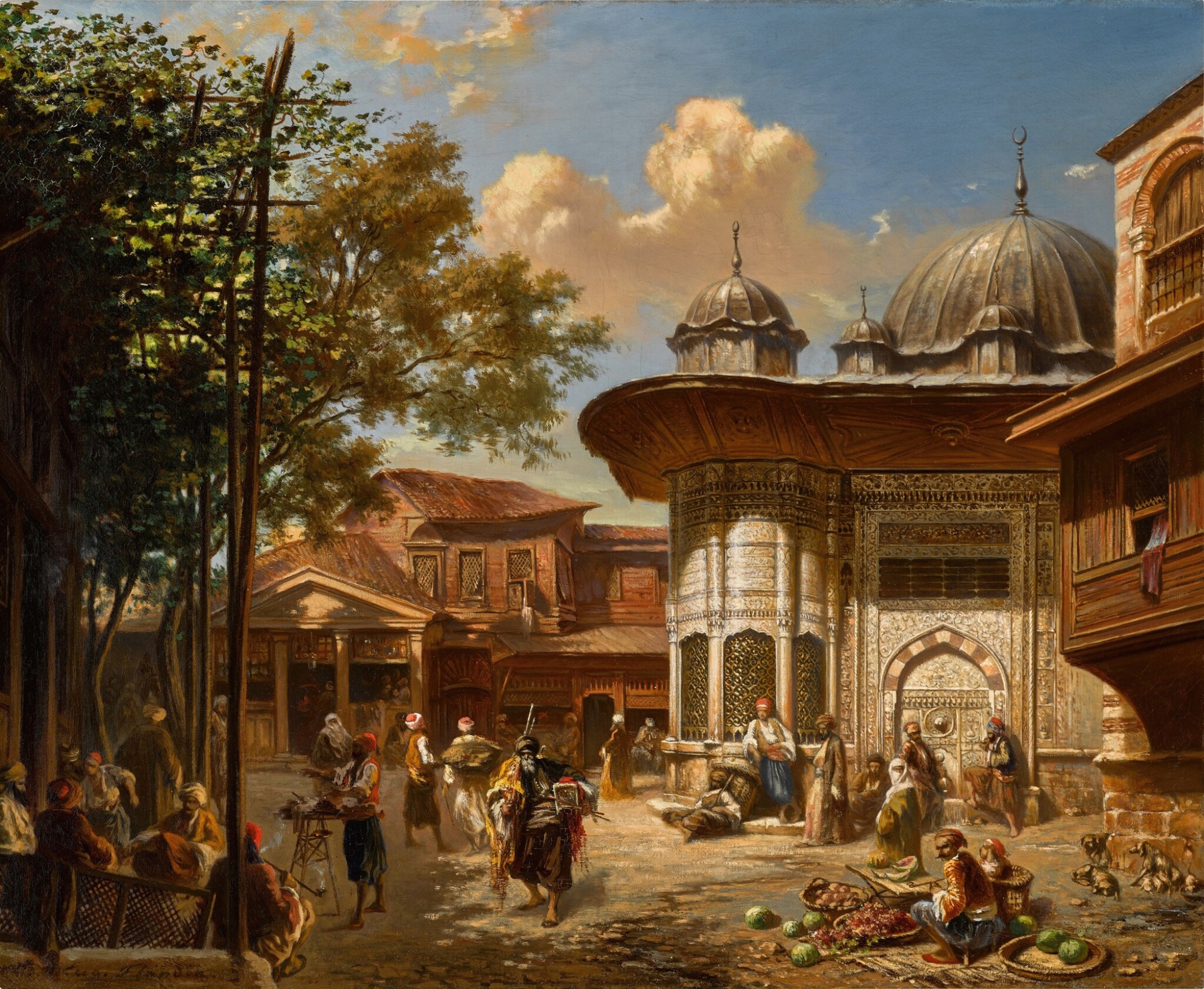
Did the painter know this moment would outlive them? In the heart of Constantinople, the Fountain of Sultan Ahmed III stands as a testament to human desire—an eternal blend of beauty and ambition, captured in brushstrokes that yearn for immortality. Look at the intricate details of the fountain's façade, where ornate decorations come alive under the gentle caress of sunlight. Notice how the vivid blues and greens of the tiles create a harmonious dialogue with the surrounding architecture. The fountain’s elaborate calligraphy dances across the surface, inviting the viewer to explore the stories etched in every curve, revealing both grace and opulence.
The careful composition draws the eye upward, mirroring the aspirations of a city forever reaching for the sky. Yet amid the splendor lies a deeper narrative. The water, flowing freely, symbolizes the passage of time, a constant reminder of both abundance and transience. The juxtaposition of the permanence of stone against the fleeting nature of water evokes a tension between the desires of humanity and the inevitable decay of all things.
Each drop that cascades carries whispers of history, a longing for connection that echoes through the ages. Eugène Flandin painted this work during a time when the fascination with the East was at its peak in the 19th century. Traveling in 1837-1838, he became enamored with the rich cultures of the Ottoman Empire, capturing the grandeur of its monuments as both a witness and a participant in a transformative era of art. This piece reflects not only Flandin's artistic journey but also the collective desire of his contemporaries to immortalize the beauty of a world in transition.