The Indian’s Vespers — History & Analysis
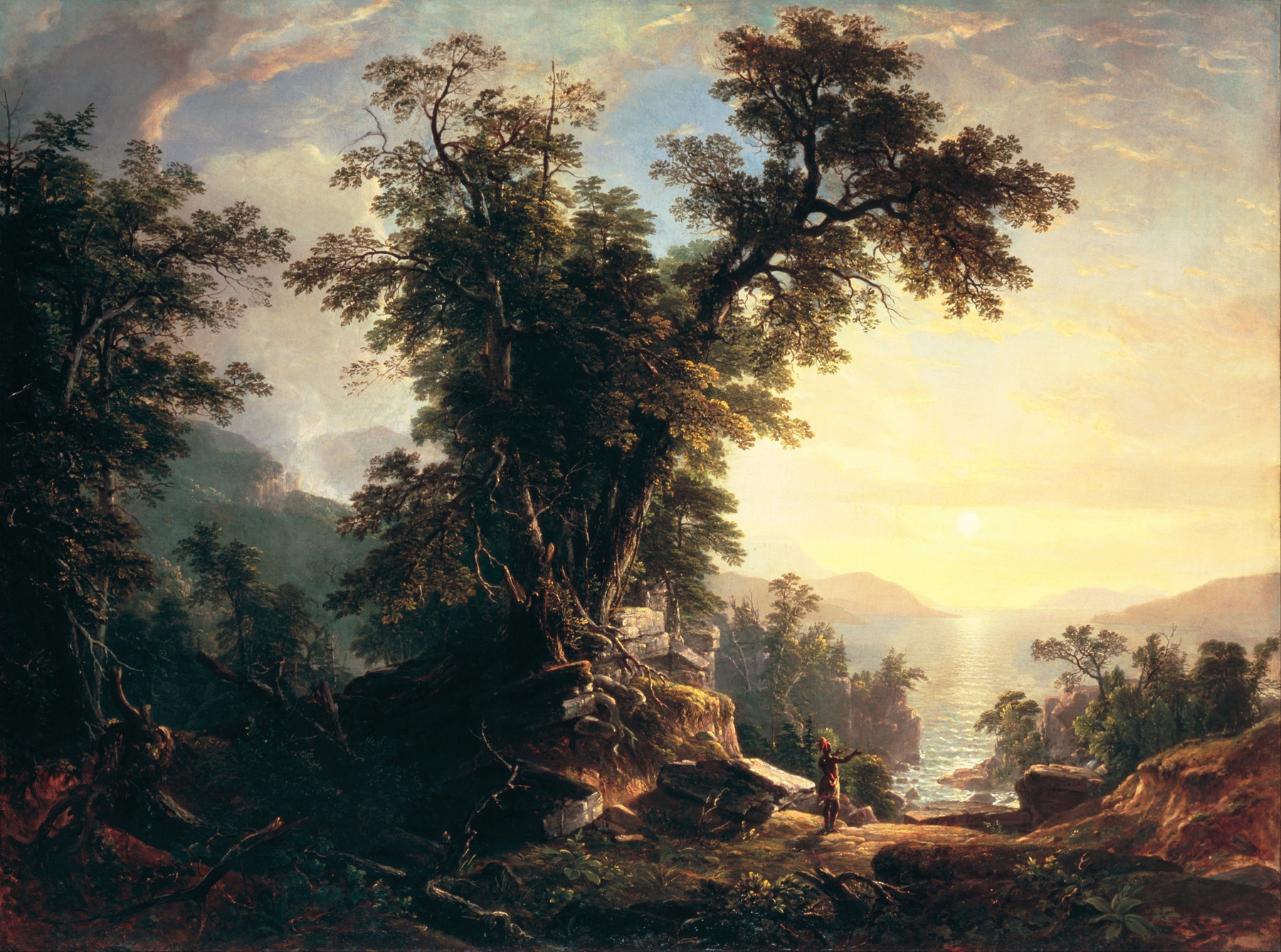
Can paint confess what words never could? The silence within The Indian’s Vespers stirs the imagination, hinting at unspoken truths buried beneath layers of resilience and violence. It invites us to peer into an emotional landscape where the weight of history lingers, urging us to confront the narratives often left unvoiced. Look to the left at the figure of the Native American, framed by the soft glow of twilight.
Notice how the fading light casts long shadows, emphasizing his introspective posture, while the vibrant hues of the surrounding foliage draw the eye towards the vibrant greens and earthy browns of the landscape. The composition is a delicate balance of serenity and tension, with the soft contours of nature cradling the figure, yet the viewer senses an underlying unease — an awareness of what lies beyond this peaceful moment. The juxtaposition of light and duality in the painting speaks volumes. The tranquility of the scene is pierced by an invisible thread of conflict; the figure's reverence contrasts starkly with the violence that has encroached upon his existence.
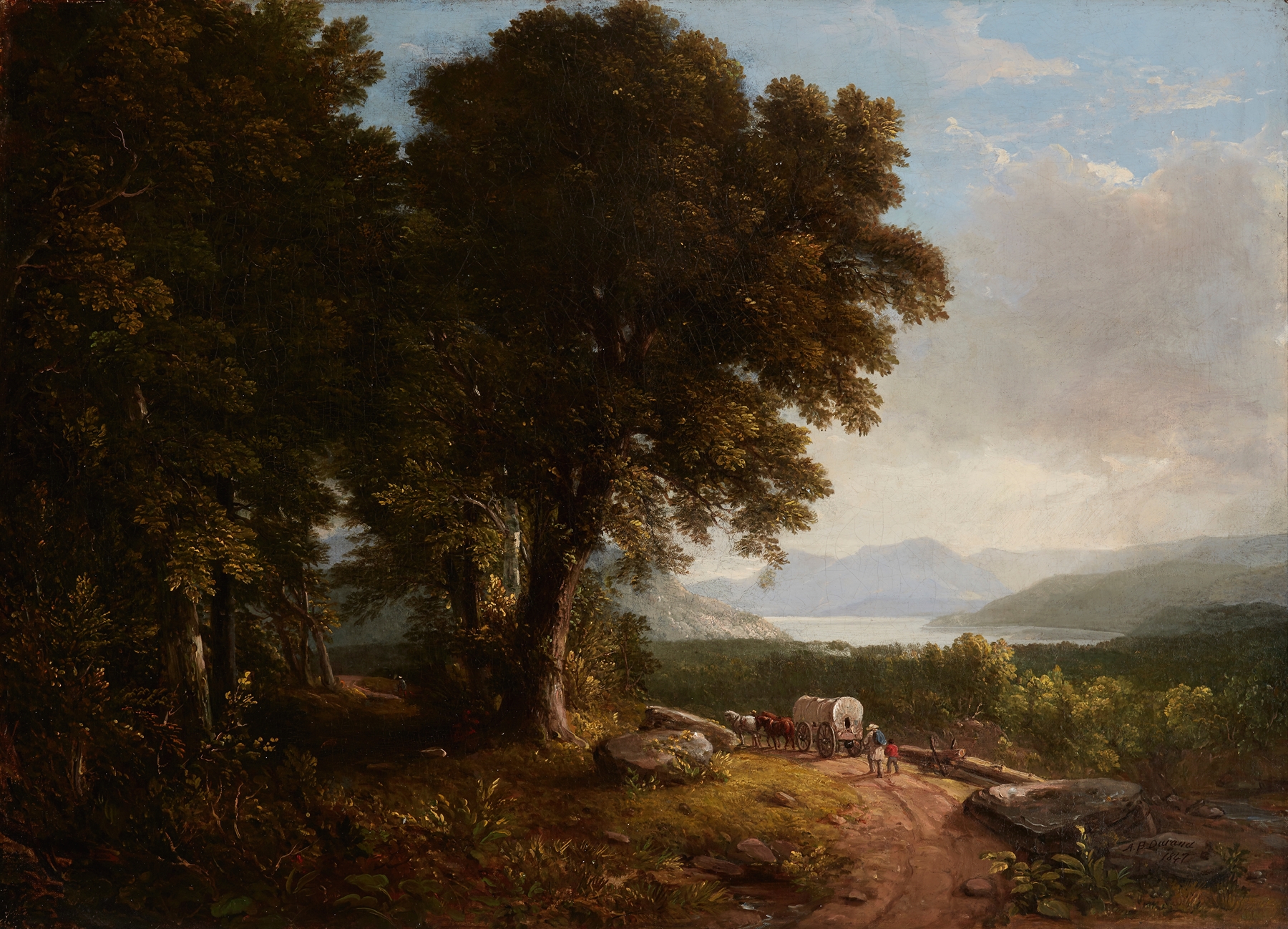
Each brushstroke embodies the complexity of cultural displacement and the weight of ancestral memory, suggesting that, though serene on the surface, the soul remains enmeshed in a struggle that transcends time. Asher Brown Durand created this painting during the mid-19th century, a period marked by the romanticism of landscapes and an emerging awareness of indigenous issues in America. While working in the Hudson River School tradition, he sought to elevate the plight and presence of Native Americans, positioning his own experiences against the backdrop of a nation grappling with the consequences of expansion and conflict.