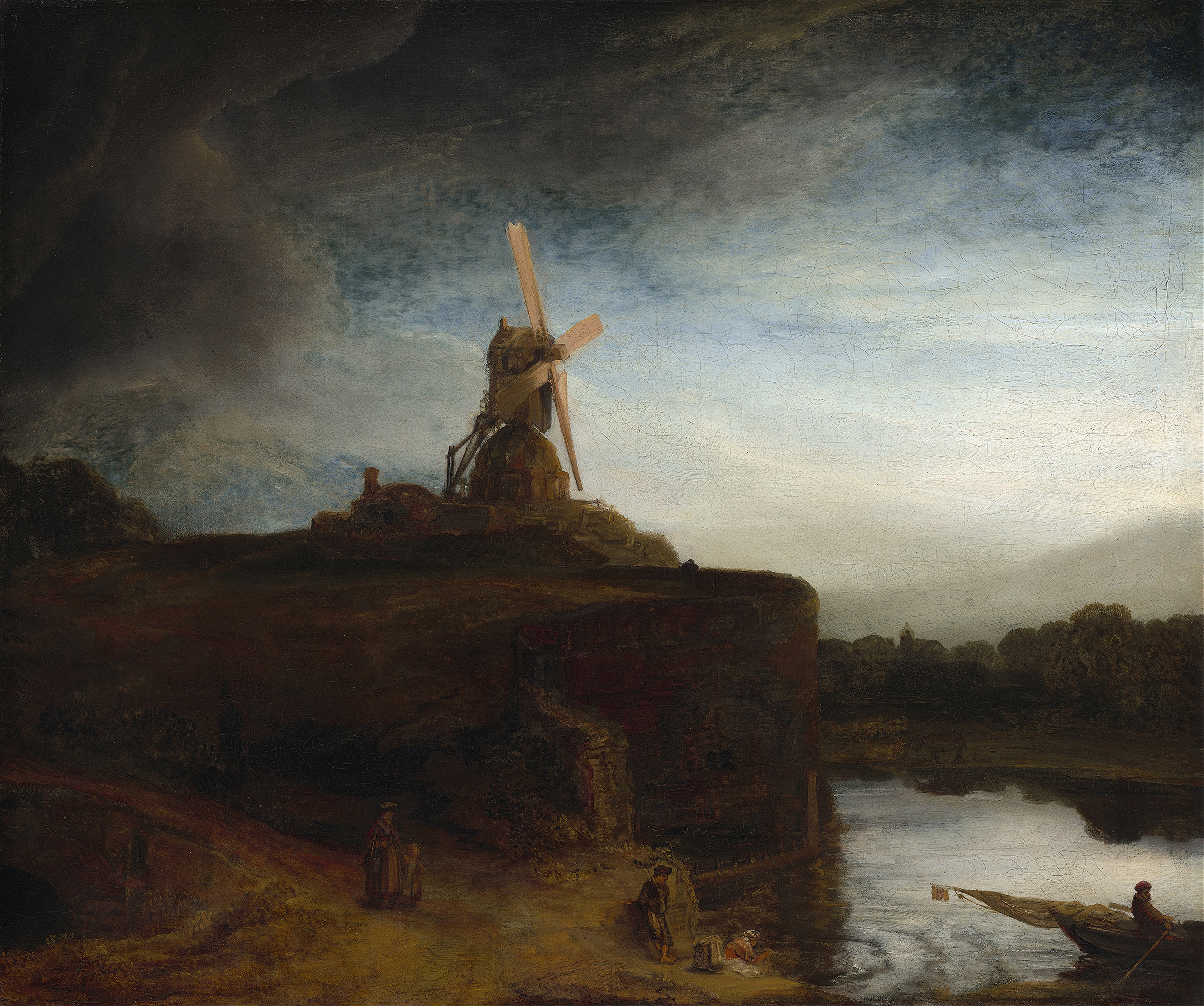
What if beauty was never meant to be finished? In *The Mill*, light dances through the landscape, weaving an intricate illusion that beckons the viewer deeper into timelessness. Focus on the bold interplay of light and shadow that defines the sprawling mill at the center. Notice how the soft, golden hues of the sky descend upon the weathered wooden structure, illuminating its details while casting long, dramatic shadows across the surrounding land. The composition draws your eye from the lively foreground, where figures engage in their daily toil, to the serene backdrop of trees and distant hills, creating a harmonious balance that feels both alive and monumental. As you delve further, observe the contrast between the human presence and the vastness of nature, reflecting the eternal struggle between industry and the tranquility of the landscape. The mill, an emblem of progress, stands resolute amidst ephemeral beauty—its solidity a counterpoint to the fleeting moments captured in the brushstrokes. The emotional tension lies in the juxtaposition of labor and leisure, urging contemplation of how these forces coexist and shape our lives. During the years 1645 to 1648, the artist experienced both personal and professional upheaval while living in Amsterdam, a city vibrant with artistic innovation. This period marked a transition in his style, as he began to explore complex themes of light and shadow—an exploration that would ultimately lead to masterpieces that resonate with emotional depth and visual beauty.