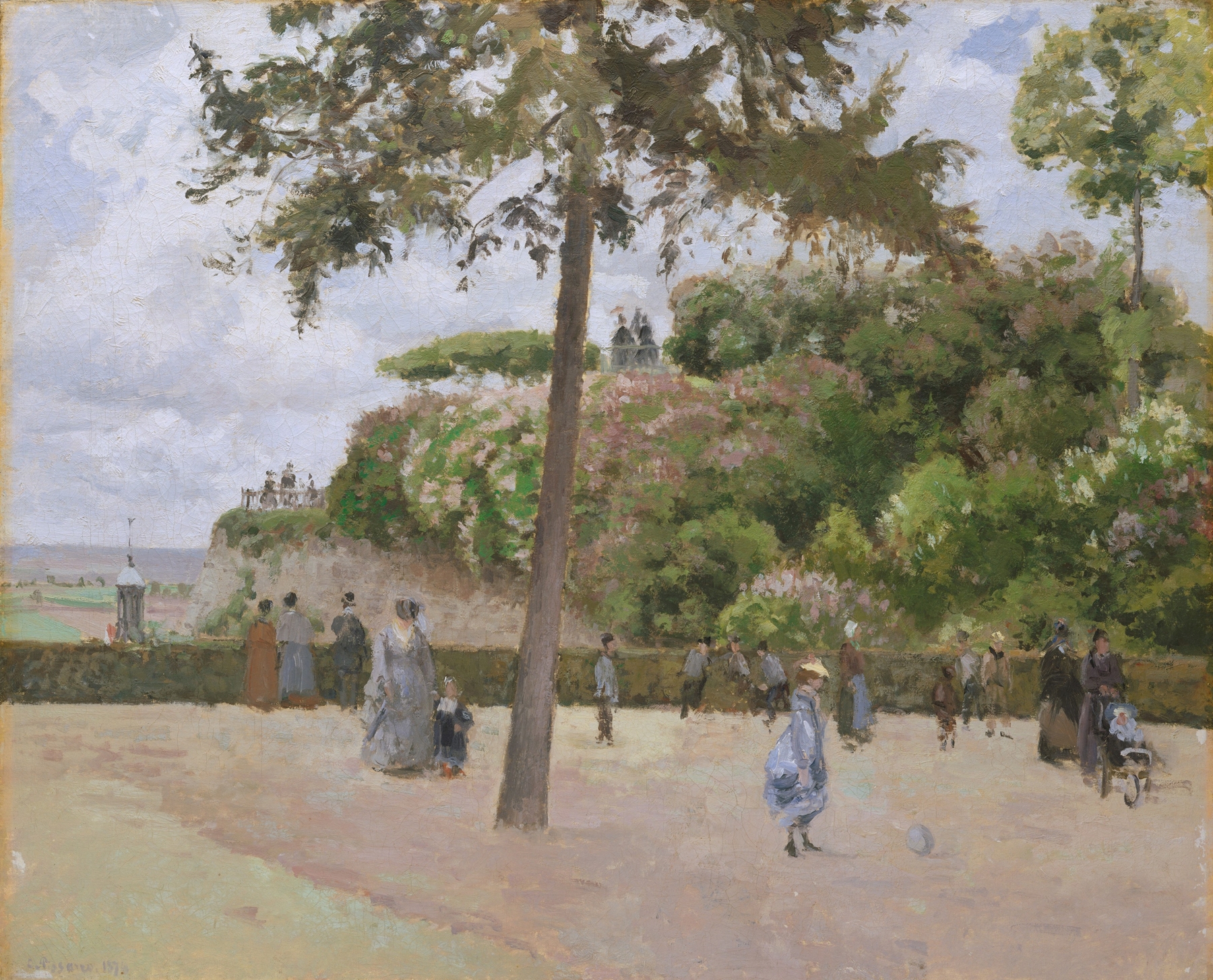
The Public Garden at Pontoise — History & Analysis
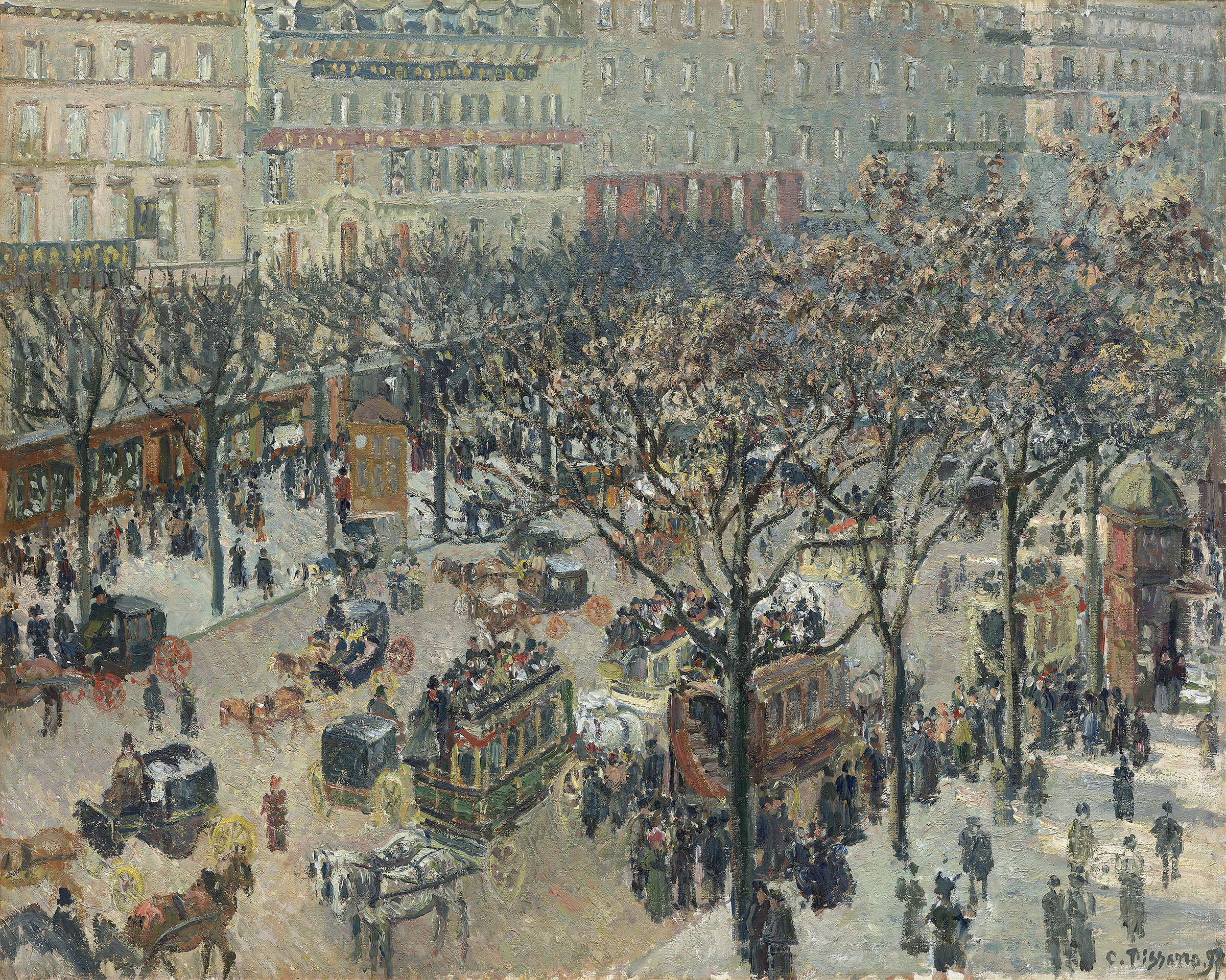
In the heart of Pontoise, sunlight flickers through the leaves, casting playful shadows on the cobblestone path. The air vibrates with laughter and the distant chatter of families enjoying the vibrant blooms. Children dart about, their joyous chaos a vivid contrast to the serene landscape that envelops them, an invitation to pause and revel in the simple beauty of the moment. Look to the left at the vivid clusters of flowers that spill from the garden beds, their colors a riot of reds, yellows, and purples. The artist’s brush strokes create a flurry of movement, suggesting both the vitality of nature and the animated scene unfolding within it. Notice how the light filters through the trees, illuminating patches of grass where picnicking families gather, each figure rendered with soft, flowing lines that blend harmoniously into the landscape. Beneath the cheerful surface lies an undercurrent of tension—a delicate balance between tranquility and the frenetic energy of life. The juxtaposition of the garden’s order against the disarray of children finding joy in their small-world chaos suggests a deeper commentary on the fleeting nature of happiness. Each figure, lost in their moment, is an echo of the impermanence that defines human experience, reminding us that chaos and beauty coexist. In 1874, while living in Pontoise, Camille Pissarro painted *The Public Garden at Pontoise* amidst a burgeoning Impressionist movement. The artist was exploring new ways to capture light and atmosphere, reflecting the changing times in both his personal life and the greater world of art. This period marked a significant evolution in his style, as he embraced the spontaneity of outdoor scenes, capturing their essence with both immediacy and intimacy.