The Boulevard Montmartre on a Winter Morning — History & Analysis
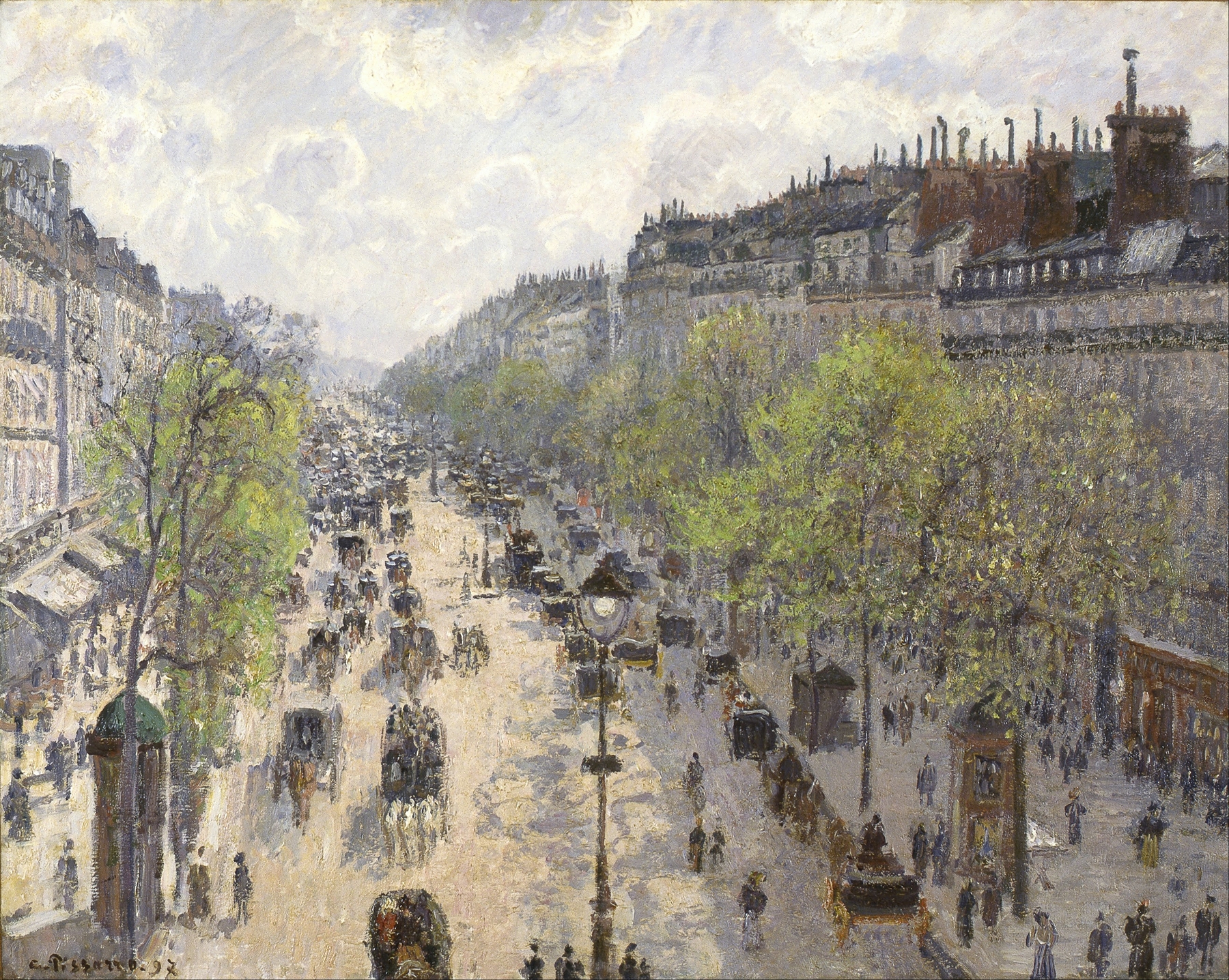
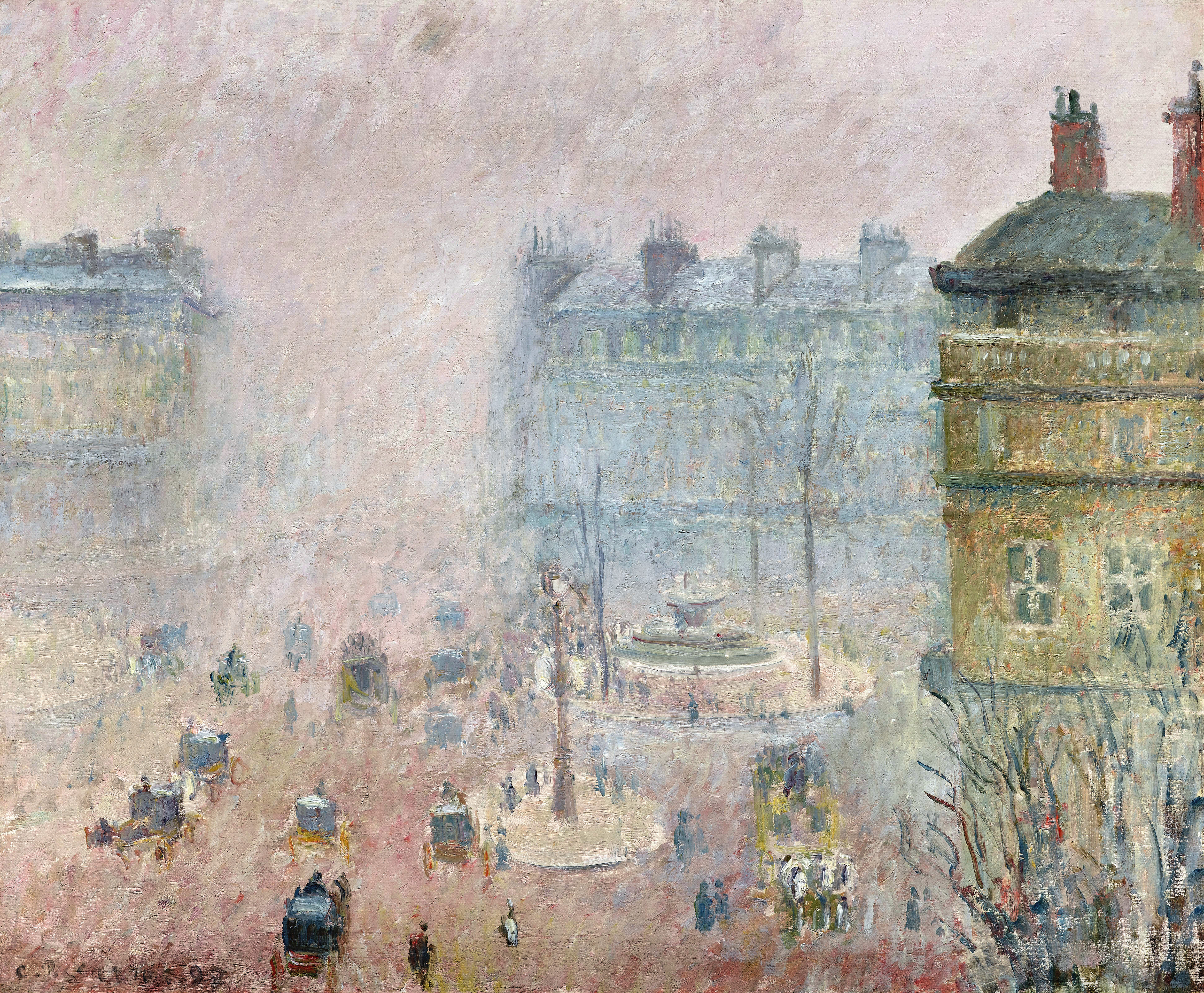
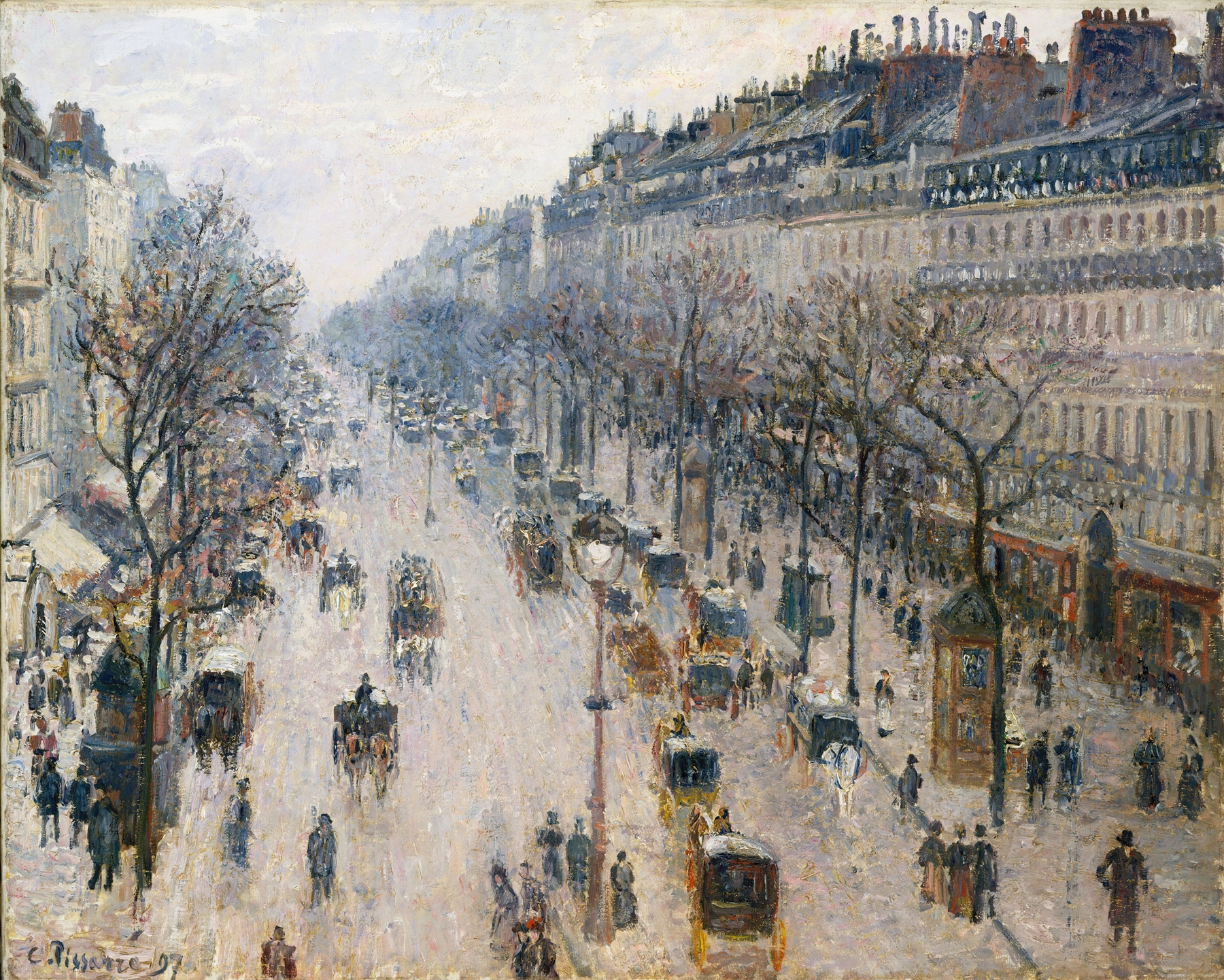
“Every silence here is a confession.” The quiet of a winter morning envelops the bustling streets, where every footprint on the snow tells a story of struggle and survival amidst a vibrant cityscape. Notice how your gaze is drawn to the white-draped streets in the foreground, where figures clad in heavy cloaks move briskly, almost ethereal against the soft palette of blues, whites, and muted browns. The application of paint captures the chill in the air, as the brushstrokes create a sense of movement, lending vitality to what might seem a stark scene. Vans of light filter through the trees lining the boulevard, illuminating details, while the distant rooftops rise like solemn witnesses to the stories unfolding below. Yet beneath the serene surface lies an undercurrent of tension, a reflection of the societal upheaval of the time. The workers, seemingly engaged in routine, convey an unspoken struggle against the oppressive chill, hinting at broader themes of class disparity. Look closer at the shadows cast by the trees; they intertwine with the figures, suggesting the weight of history and the lingering presence of past violence in the very fabric of the city. In 1897, Pissarro painted this scene during a time of personal hardship; he faced health issues and growing disillusionment with the Impressionist movement that had once embraced him. Living in Paris, the city itself was experiencing rapid changes, marked by social tensions and political unrest. This environmental backdrop infused *The Boulevard Montmartre on a Winter Morning* with a complex emotional depth, bridging the beauty of everyday life with the reality of struggle.