Boulevard Montmartre, Spring — History & Analysis
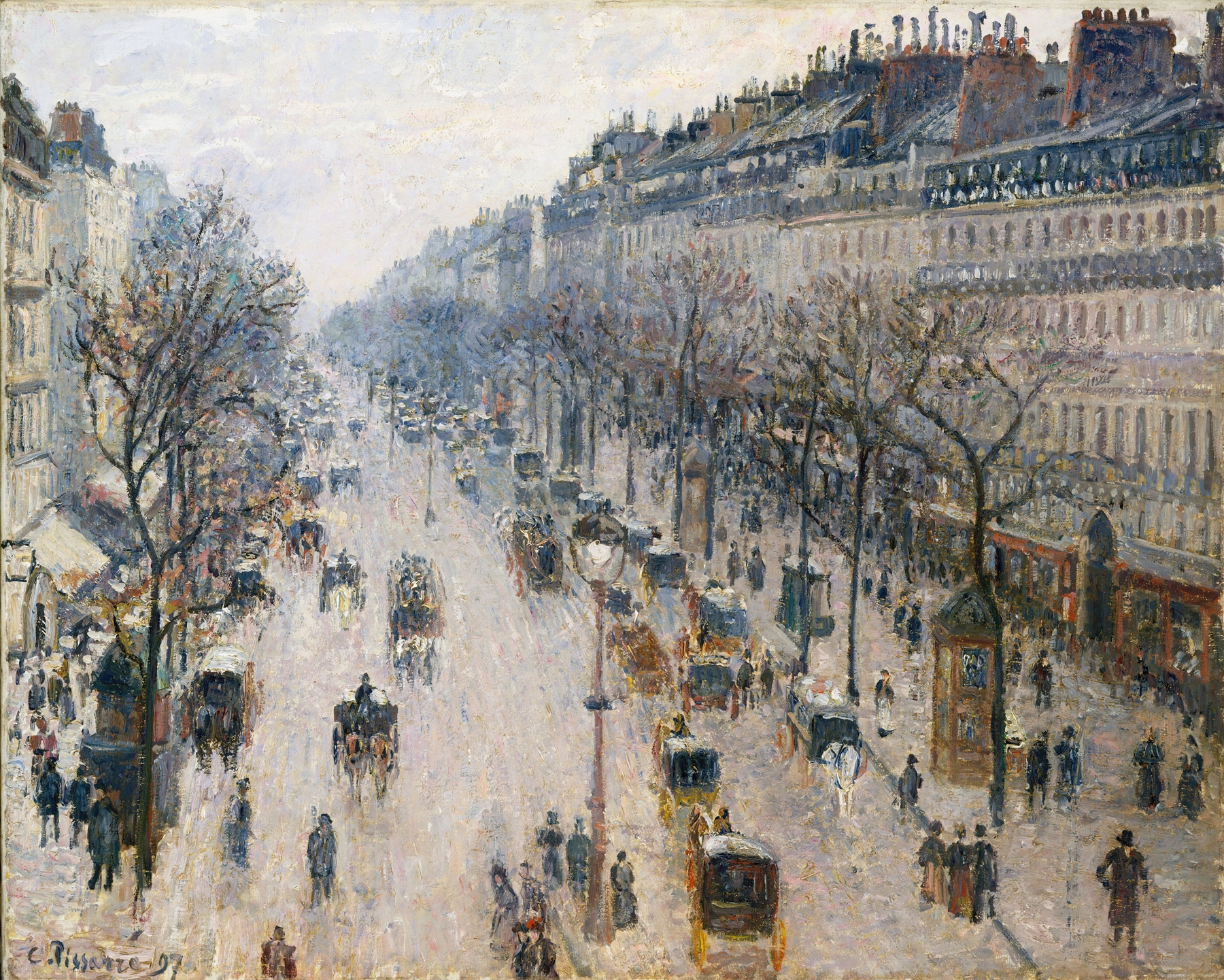
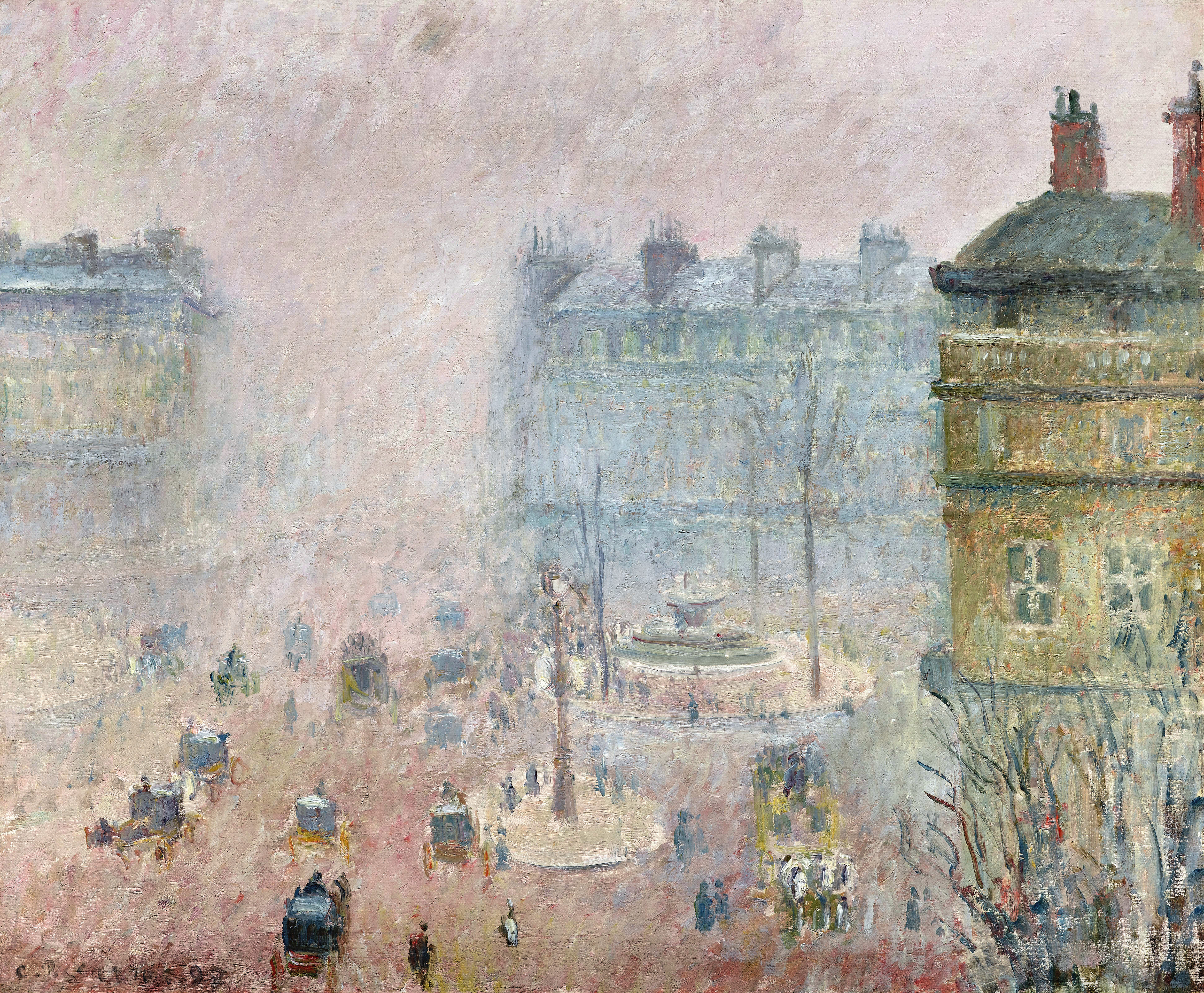
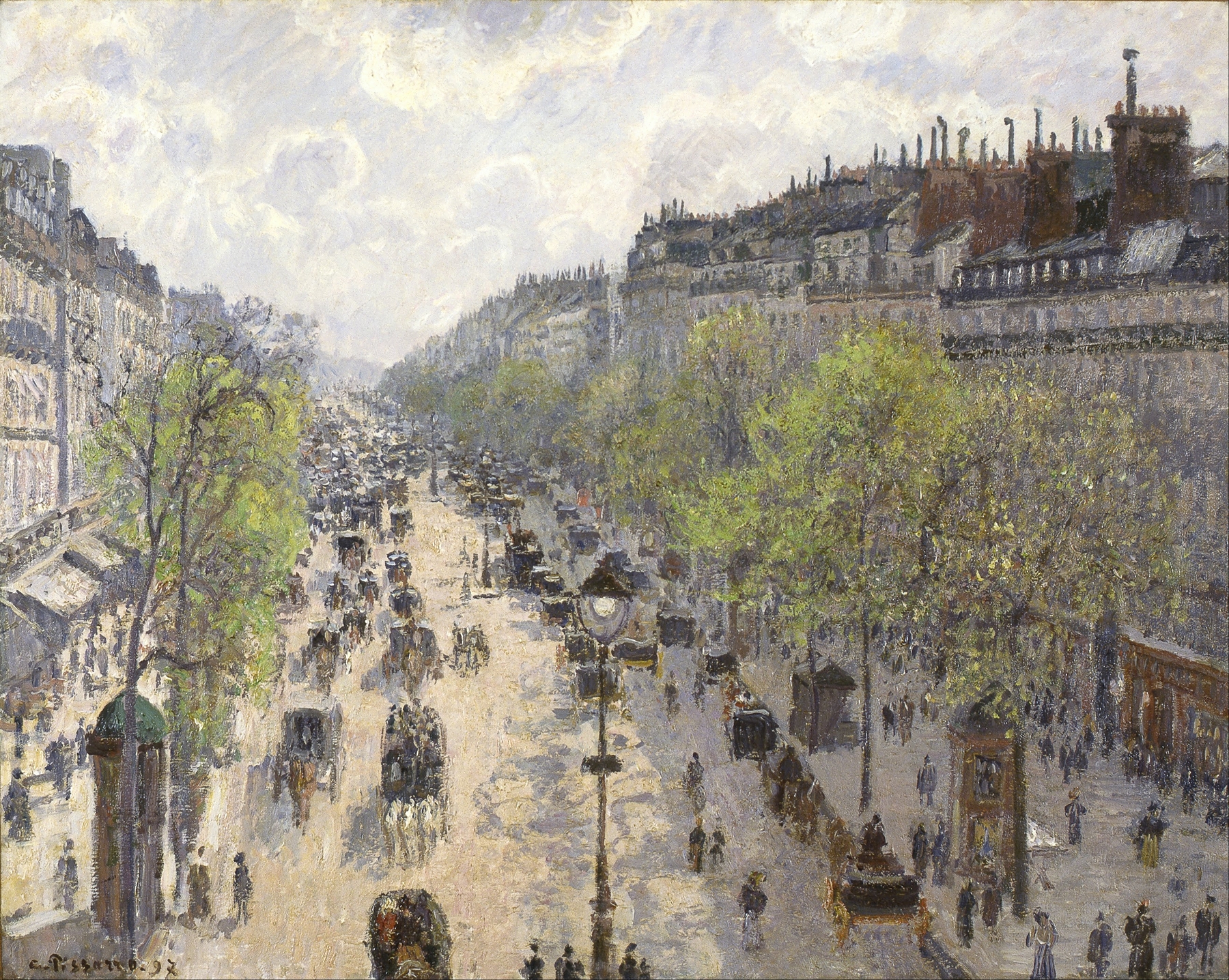
Could a single brushstroke hold eternity? In *Boulevard Montmartre, Spring*, light dances through the vibrant colors, embracing the fleeting moments of life and shadow that define existence. Focus on the lower third of the canvas, where the bustling crowd meanders along the avenue. The light filters through the leaves of the trees, casting dotted shadows on the cobblestones. Notice how Pissarro captures the energy of spring with dashes of lively greens and soft floral tones, while the darker hues ground the scene, hinting at the complex interplay between nature and urban life. The composition draws your gaze towards the distant buildings, their soft outlines blurring like a dream, while the gentle movement of the figures creates a sense of rhythm and continuity. Within this seemingly simple scene lies a rich tapestry of emotions. The interplay of light and shadow reflects the dualities of life—joy and melancholy, movement and stillness. Each figure appears absorbed in their own world, yet the shared space amplifies the feeling of connection amidst the chaos. The shadows linger, suggesting that every moment, however vibrant, carries the weight of what lies beneath, reminding us of the transient beauty of life. In 1897, Camille Pissarro painted this piece while living in Éragny, France, amidst a vibrant Impressionist community. By this time, he had established himself as a pivotal figure within the movement, advocating for the importance of capturing the essence of everyday life. This period saw a growing interest in urban scenes, reflecting the rapid changes of society, making this work not just a depiction of a place, but a commentary on modernity itself.