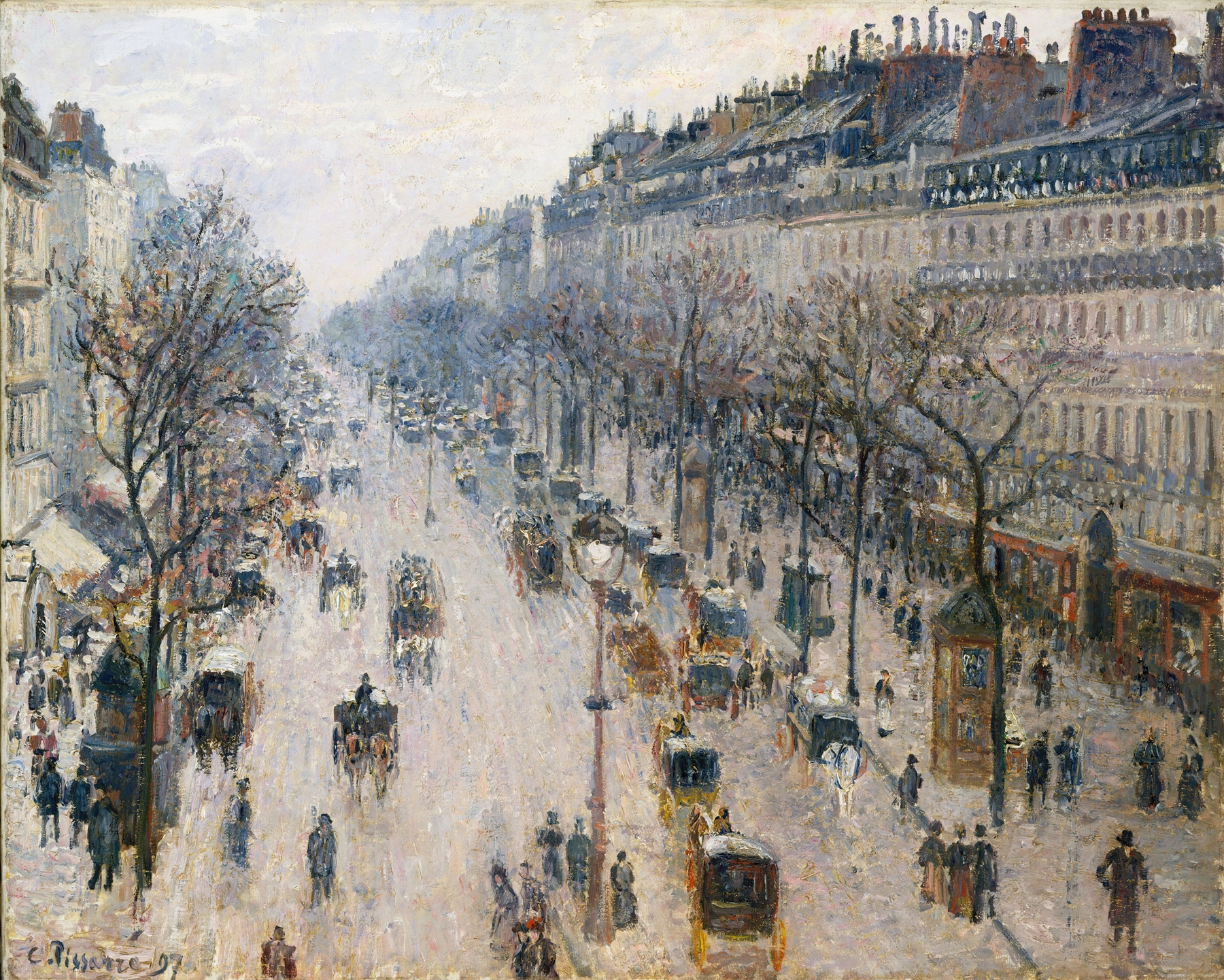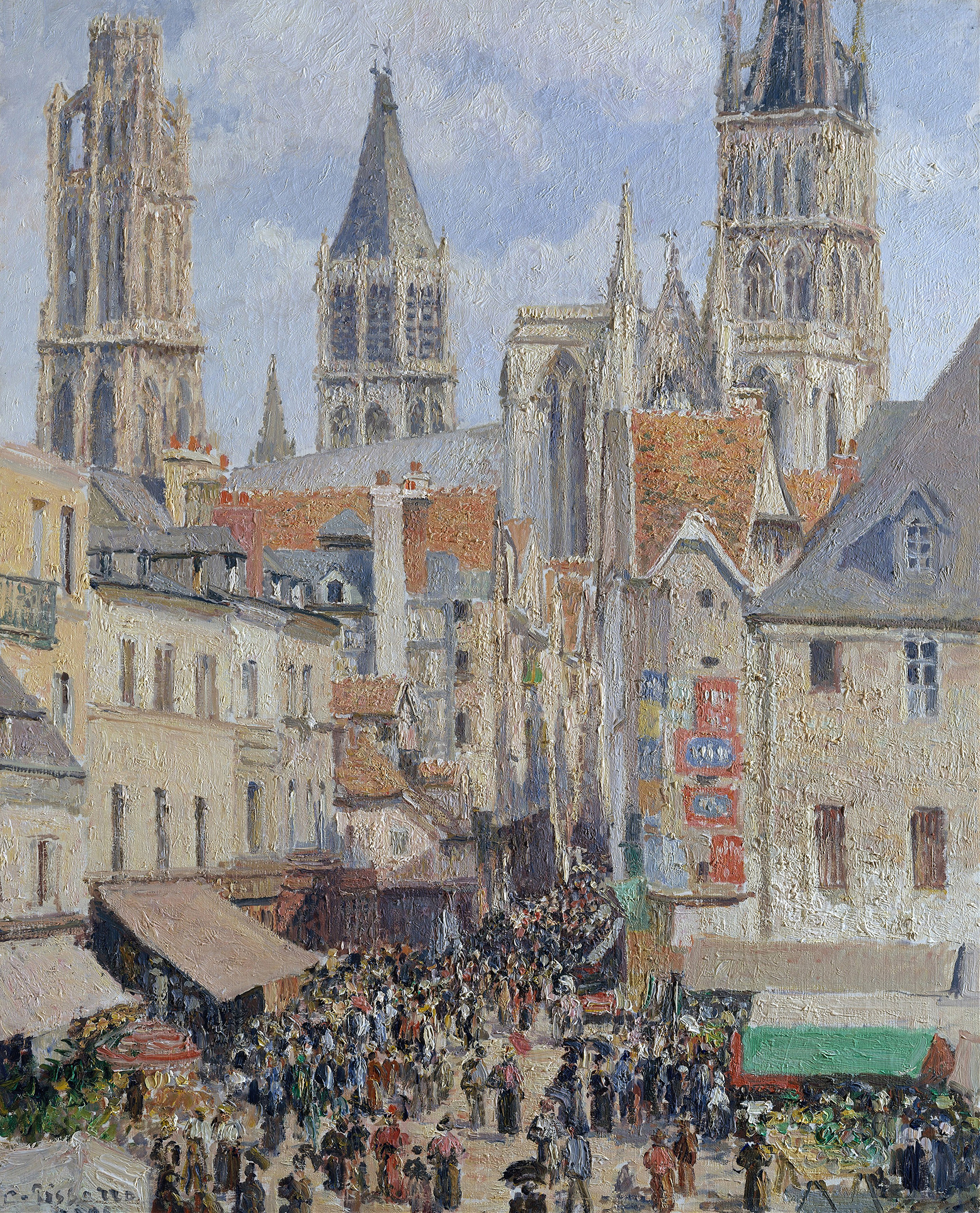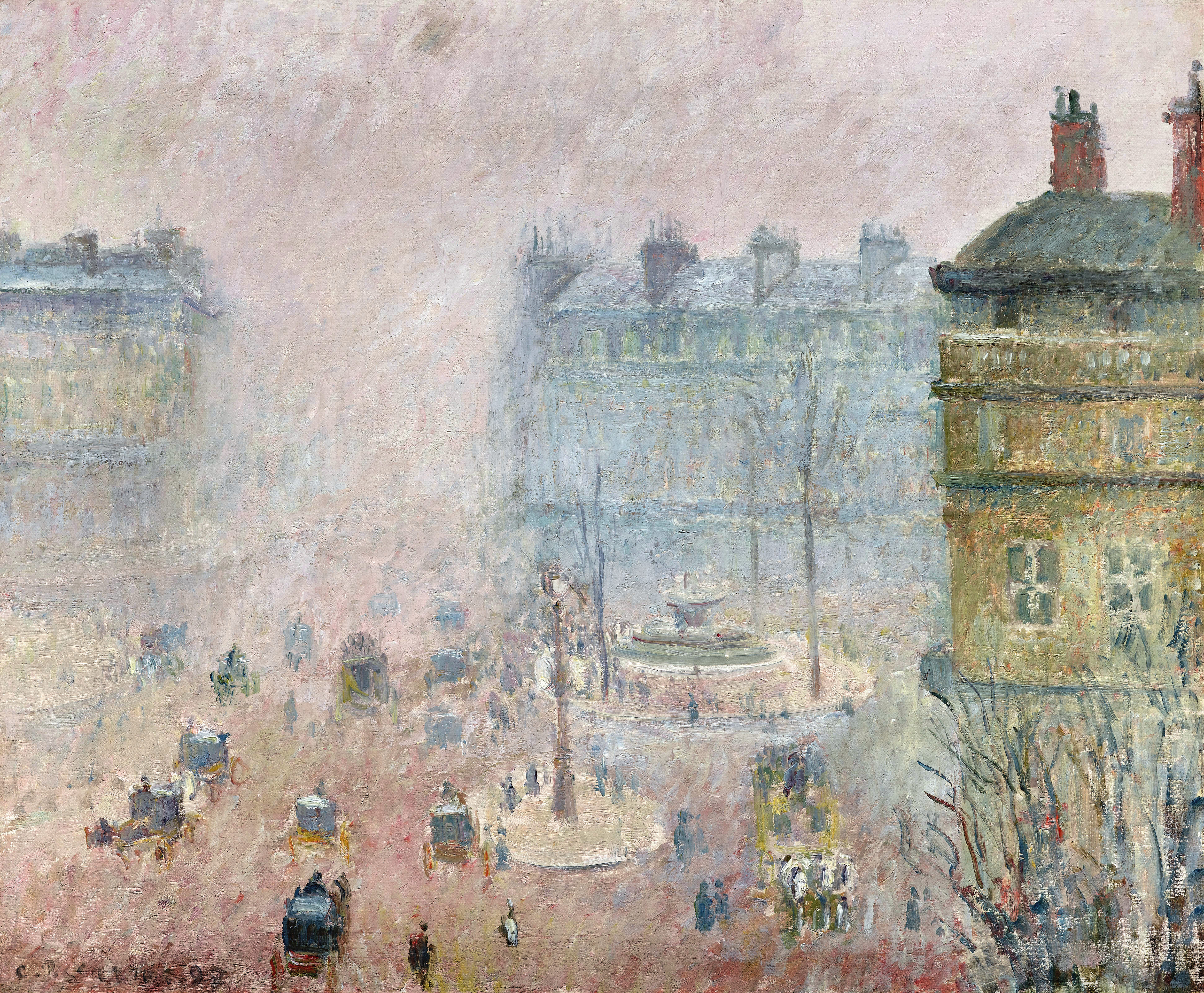
When did color learn to lie? In the delicate haze of *Place du Theatre Francais, Fog Effect*, the ordinary transforms into an extraordinary ballet of light and emotion. Look to the center, where the figures almost dissolve into the mist, their outlines softened by the ethereal embrace of fog. The palette is an intricate weave of cool blues and muted grays, punctuated by warm ochres that suggest the fleeting glow of street lamps. Notice how the brushstrokes blend and swirl, creating a sense of movement that pulls the viewer into the scene, inviting them to wander through the fog, alongside the ghostly silhouettes. Hidden within this atmospheric masterpiece lies a profound commentary on perception. The mist obscures and distorts, symbolizing the complexities of human experience where vision can often be clouded by emotion. The juxtaposition of the vibrant hints of color against the monochromatic backdrop evokes a tension between joy and melancholy, inviting reflection on the nature of clarity versus obscurity. The feeling of ecstasy is present yet elusive, encapsulating the transient beauty of a moment caught between reality and illusion. In 1897, when this painting was created, Pissarro was deeply engaged with the principles of Impressionism, seeking to capture the effects of atmosphere and light. Living in Paris, he was witnessing a rapidly changing city, where the modern world and its industrialization were reshaping the landscape. This period marked a significant evolution in his work, as he began to focus more on the interplay between urban life and nature, tapping into the emotional resonance of everyday scenes.