The River Driva — History & Analysis
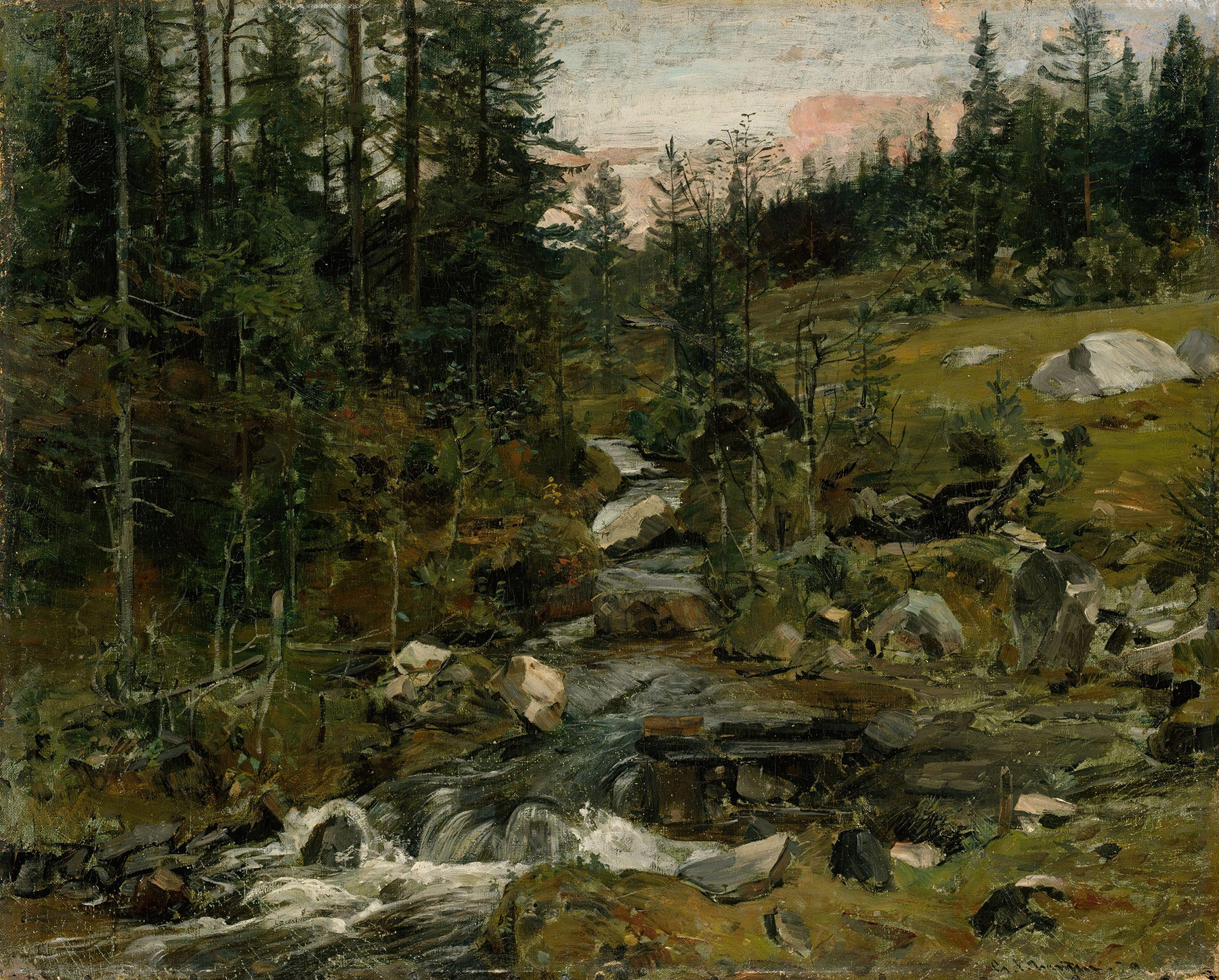
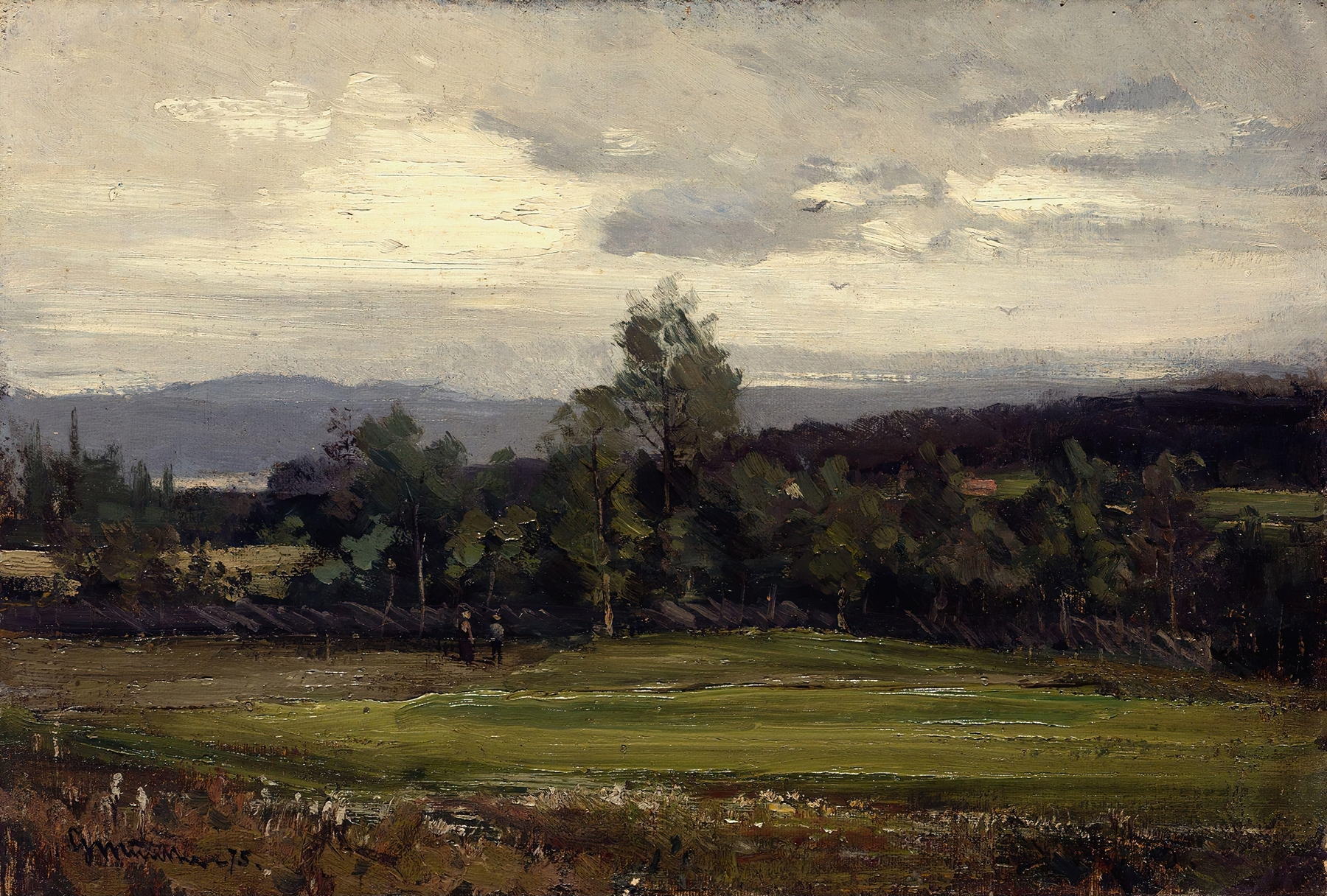
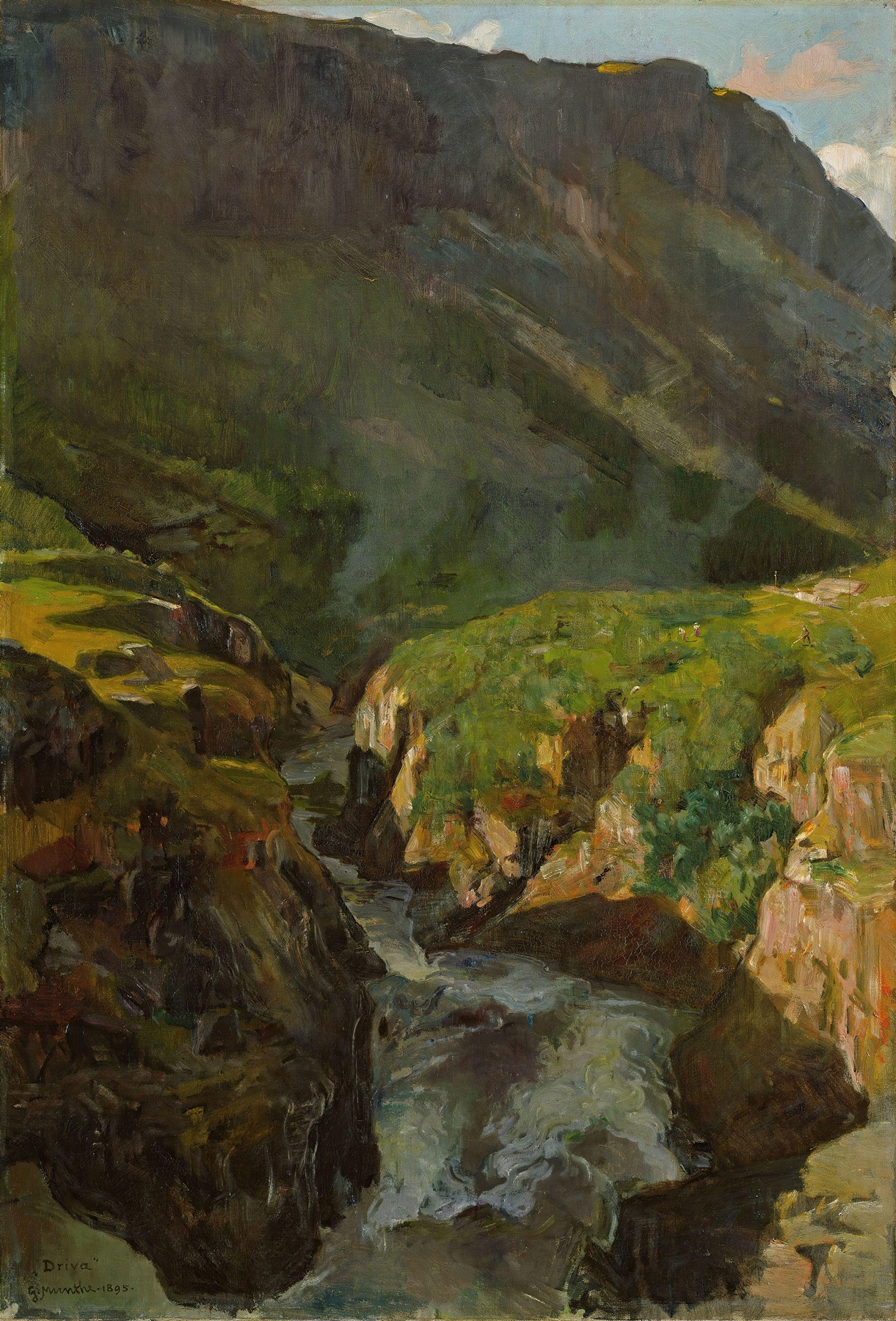
Can beauty exist without sorrow? In Gerhard Munthe's The River Driva, an ethereal landscape unfolds, inviting contemplation on the interplay between joy and melancholy. Here, a serene river winds through the canvas, embodying both the stillness of nature and the emptiness that lurks beneath its surface. The scene speaks to the viewer in a language of silence, urging an exploration of the depths that lie hidden within idyllic beauty. Look to the left, where the river’s gentle curves draw your eye into the heart of the composition.
Notice how delicate strokes in cool blues and greens harmonize with the warm golden hues of the glimmering sky. The artist employs a soft focus, creating an almost dreamlike quality that envelops the viewer, while the textured brushwork suggests an intimate connection with the landscape. Every element seems carefully crafted to evoke a sense of tranquility, yet the shadows cast across the water hint at an underlying tension. Delve deeper into the contrast between the luminous surface of the river and the darkened foliage that lines its banks. This juxtaposition invites reflection on feelings of isolation often veiled by outward beauty.
The emptiness suggested by the tranquil expanse may mirror a longing or a yearning, while the distant mountains loom like memories—beautiful yet haunting. The serene landscape becomes a canvas for both peace and introspection, leaving an indelible mark on the soul of the observer. Munthe painted The River Driva in 1895, during a period when he was exploring the complexities of light and color in Norwegian landscapes. A contemporary of the Symbolist movement, he was influenced by emerging ideas about nature and emotion. His works from this era reflect a search for deeper meanings, as he sought to convey not just the physical beauty of his homeland, but also the emotional landscapes that accompany it.